
Fleeing Afghanistan After Its Fall Was ‘Like An Avalanche’
Shock, disbelief and numbness overtook Eman Darwish as she was forced to flee her country.
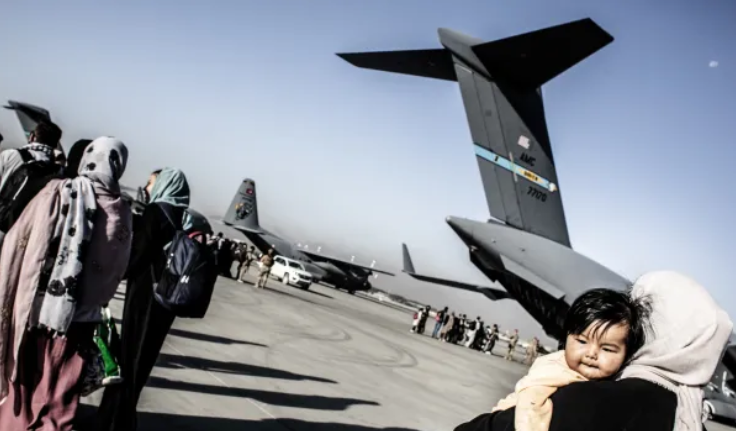
Eman Darwish came to the United States in 2002 to pursue both undergraduate and graduate studies as part of an educational initiative for Afghan women. (Her name is a pseudonym used to protect her family.) She returned in 2009, armed with what she describes as “the gift of education.”
“I never had any intentions of staying longer,” says Darwish, now 41. “For me, home was always Afghanistan. I never wanted to leave my home.”
Darwish returned to Kabul to contribute to her country’s reconstruction efforts. During that time, she was introduced to an Afghan American whom she eventually married. The couple had two children and separated in early 2020, less than a year before the United States’ hasty and calamitous withdrawal from Afghanistan after 20 years of occupation.
The evacuation unfolded with stunning speed. The Taliban swept through Afghanistan’s provinces in a matter of days, taking control of Kabul on August 15, far faster than U.S. intelligence had projected. Thousands of Afghans flooded the airport. Desperate people clung to departing aircraft, falling to their deaths. Those devastating images came to define Americans’ departure.
The psychological toll on evacuees has been profound. Research on Afghan refugee populations shows elevated rates of post-traumatic stress disorder, depression and anxiety. A 2024 study published in the Journal of Immigrant and Minority Health found that Afghan evacuees from the 2021 withdrawal experienced “anguish over mass family separation, traumatic memories of life and service in Afghanistan, and isolation and lack of control in a new country.” Studies of Afghan refugees in Western countries have found that between 44 and 53 percent meet criteria for PTSD; many also experience symptoms of depression and anxiety.
Darwish is now an independent consultant working outside of Washington, D.C. The following is an account of her last day in her country, in the immediate aftermath of its collapse, as told to Simran Sethi. It has been edited for length and clarity.
On August 17, 2021, I managed to board one of the last commercial flights leaving Afghanistan. It was the day of the collapse, around 10:30 at night. The entire [Hamid Karzai International Airport] was empty because by then the Taliban were already inside the country, inside Kabul. Everything had collapsed, and I was stranded at the airport. I didn’t want to go back to my apartment where family members were living with me.
I was a government employee, and I assumed that if I tried to return at that hour, there was no way I would make it in one piece. And even if I did, I would be jeopardizing the safety of the other family members staying with me.
I followed a complete stranger who said, “Let’s go to the other side of the airport.” We boarded a plane that had its lights off and didn’t have any permission to fly. Ten minutes later, it departed. None of us knew where it was headed, but we all knew that staying in Kabul would have meant endangering ourselves and our loved ones.
It was all an accident. I had no intention of getting on that plane. I just wanted to get somewhere safe. We took the best chance we had at safety, and that happened to be this plane.
As I reflect back, there is a part of me that saw everything collapsing. But I think I was in denial. I had lived a large part of my life as a refugee in Pakistan, another part in the U.S. as a student. I felt unwelcome in these places. Finally, I went back to Afghanistan in 2009, and I felt this was somewhere I could grow my roots in. I felt that sense of belonging I had craved all my life.
My sister was staying with me in Kabul when everything started unraveling before the collapse, a colleague I worked closely with in the government was assassinated. It was one of several targeted killings happening across Afghanistan, and it shook me badly. I had signed up for a government job, but I never intended to put my family members, including my children, in danger.
I told my sister I thought Kabul was no longer safe and urged her to return to the UK, where she had resettled and become a citizen. This was during COVID, so there was quarantine to deal with, as well. She agreed to go back, but she insisted on taking my two kids, ages 8 and 9, with her. Her reasoning was simple: If the situation improved, she would bring them back, but if it didn’t, she didn’t want me to take that risk. In hindsight, that was the best thing that could have happened. I don’t think we would have been able to get on that plane as a family. At the time, I agreed reluctantly. Now, I’m so grateful. They left Kabul three days before the collapse.
Even until that last moment, I was hopeful. The US forces were there. The embassies were operational. There was no way Kabul would collapse, even though the provinces were collapsing rapidly, within a span of 10 to 12 days. It hit us like an avalanche, the pace at which it unfolded.
I wasn’t fully prepared, but on the day of collapse, everyone had gone to the airport, hoping they would be able to fly somewhere safer. I had friends and family members reaching out, all telling me to get to the airport. I kept telling them I would be one of a few thousand individuals there, and there was no way there would be any plane large enough to accommodate all of us, so I stayed behind. Then around one in the afternoon, a former colleague notified me that the president had fled the country. That is when it dawned on me: there is no reason for me to stay. There is no hope.
I had five minutes to pack everything. What I packed in a little backpack was my passport, a wallet that contained pictures of my loved ones and one set of spare clothes. All the memories of twenty years, packed in a small backpack, and nothing else. I didn’t have the time or luxury to think it through.
It was a day of complete mayhem. We didn’t have any functional transportation. I lived on the west side of the capital, an hour and a half from the airport. There were no taxis, the streets were packed with people and cars—bumper-to-bumper traffic because everyone was trying to get somewhere safe. I had to walk with my cousin, who was staying with me, all the way to the middle of the city. We walked for about an hour before we found a taxi.
We arrived at the airport around 3 p.m. and it was so crowded. Thousands of politicians, government employees, businessmen and women with their families—all stranded there, all desperate. Around 8 or 8:30 p.m. we heard gunshots and everyone panicked. A family member called us and said they were outside. That they could pick us up now or not at all. It was our last chance. I could not risk bringing harm to my family. My cousin left. I stayed.
I never found out who was firing those shots. But by then, everyone knew the Taliban had entered the airport.
By 10 p.m. I remained there with just a handful of others. I assumed I might be safer if I stayed at the airport because I didn’t have any way of getting back home. And, again, even if I got there safely, I had my cousins and other family members, all females, staying with me. God forbid, if something were to happen to me, let it be here. Let it be to me only.
I saw a man standing beside me and reached out to him: “You’re here, I’m here as well. There is only a handful of us. What are your hopes? What are you planning to do?” He said if nothing happened, he was going back home. I asked if he had a car. He said yes, it was parked outside. I asked if he could drop me somewhere safer, and I would manage the rest. My uncle lived closer to the airport, and I thought maybe I could seek refuge there for the night. He graciously said he would be happy to help.
About thirty minutes later, he shouted, “Run after me.” I didn’t know what he meant … maybe it was perceived danger or maybe he saw the Taliban. I wasn’t thinking. I ran.
He reached a plane parked on the other side of the tarmac. It was on the opposite side of the airport, not the place where planes normally depart from. I saw him reach there and thought maybe this was a safer place to seek refuge.
The plane was small, with stairs, but the lights were completely turned off. We reached the top of the stairs, and the flight attendant saw him and then me. I looked at her and said, “I don’t have any documentation. I don’t have any visa. All I have is my passport and my [U.S. permanent] resident card. I don’t have any boarding pass. You’re my last hope. If you’re able to allow us in, good. If not, that’s okay, I understand as well.” She didn’t say anything. She allowed us to pass. The guy went in and I followed him. We were the last to board.
Inside, I saw less than 20 other people. I looked around the plane and couldn’t locate a familiar face.
I was thinking there was no way any plane would take off on the day of collapse. I hadn’t seen any [depart] earlier in the day either. Maybe everyone was seeking refuge for the night, was my thinking. Tomorrow everyone would go home.
Then 10 to 15 minutes later, the plane started taking off. I was in complete disbelief.
There are so many feelings you go through at that moment. You’re numbed, you’re shocked; it’s like an avalanche of thoughts. I looked at the guy beside me—the same guy I had followed—and asked, “Do you know where we are headed?” He had no idea.
It was dead silent the entire time. Normally Afghans are very chatty. Even as strangers, there’s that warmth in their interactions. They’re good at small talk. But no one had the bandwidth to engage in conversation. All of us were trying to take in that time and space to process everything that had unfolded, how quickly it all happened. A lot of us were also dealing with survivor’s guilt because of the loved ones we had to leave behind. We were numb.
An hour later, we asked the flight attendant where we were going. She had no idea. The plane had to make an emergency landing in Georgia to refuel. When we landed there, we were surrounded by security forces because we didn’t have permission to land. They provided us with fuel and then we went to Ukraine. We landed there because one of the pilots was Ukrainian. That’s how he was able to land at a Ukraine airport.
There I got to know the individuals around me. There were a lot of people from our military: commandos, special forces. A lot of them were unable to bring their families. They were on the Taliban’s high-kill list, given their history and involvement. There were also people from the National Directorate of Security, and the first vice president’s son and his family.
We were interrogated for a few hours. But, by then, they knew the situation back in Afghanistan. Since I had a Green Card, I was able to book a flight to Doha, and then from there to the U.S. I was reunited with my children three long months after I evacuated.
I know that what I went through pales in comparison to what others endured. But in my lifetime, I have experienced three collapses of my country. All my life I have been uprooted from one place, then re-rooted in another, then uprooted again. That’s a lot to deal with. That displacement, and the emotional turmoil that comes along with it, has been heavy for everyone to deal with.
None of us had the time to say goodbye, and we got no closure. You invest 20 years of your life. You live there, you build relationships, you build a home, you build a family and then suddenly, one day, everything is gone. At the speed of light, you wake up and feel like you no longer have ground to stand on. That’s how it felt. A lot of us not only left families behind, but we also left our careers behind, we left all our savings, we left everything we worked for. Coming back to the U.S., we had to start from scratch.
Having been through a turbulent 40 years of war and conflict and displacement, I think we [Afghans] are good at that. But there’s also exhaustion that comes with it—that you constantly have to start from scratch. You just wonder, “How many times do I have to experience this? What does it mean to be at peace? What does it mean to live in peace?”
Every time I try to have that conversation with my immediate family, my mom says, “Be grateful you have a second chance at life. Not many people have that.” But I don’t say that in an ungrateful way. I am grateful for everything life has thrown my way—the good and the bad. But I should also be able to air some of those emotional baggages that we have been carrying generation to generation; that shouldn’t take away from how grateful I feel. In no way am I being dismissive, but resilience is something we have become accustomed to. Not by choice, but by circumstance.
We have a saying back home that an Afghan’s cheapest luxury is hope. That’s what we try to hold on to on a daily basis. We haven’t had any other choice. Resilience has been the only option offered to us, as we are reminded many times. You have to make it work.
Simran Sethi is a Media Fellow at the Nova Institute for Health, which provided financial support for this series.
The name “MindSite News” is used with the express permission of Mindsight Institute, an educational organization offering online learning and in-person workshops in the field of mental health and wellbeing. MindSite News and Mindsight Institute are separate, unaffiliated entities that are aligned in making science accessible and promoting mental health globally.


Author

Related Articles
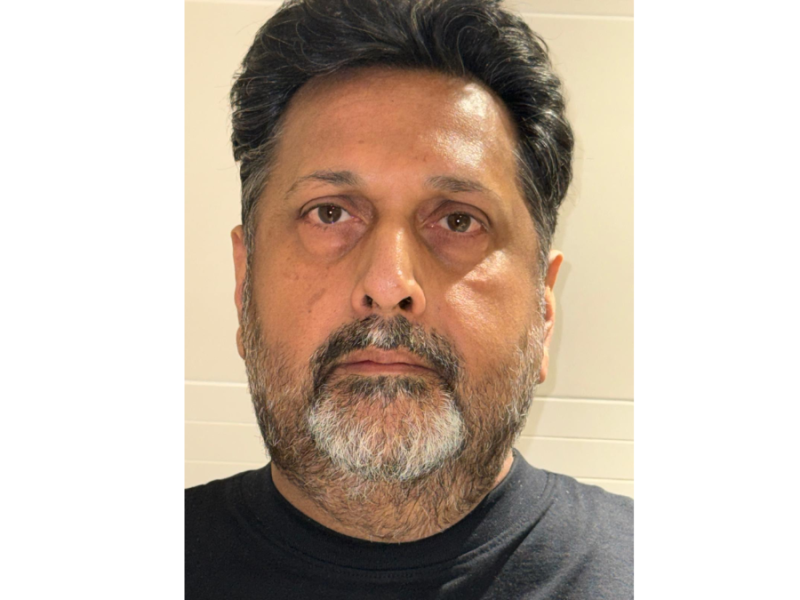
A Father’s Story: Harpinder Chauhan on Being Torn from His Family by ICE
One year ago today, Harpinder Chauhan, who had come to the U.S. from England nine years earlier on an investor’s visa, was detained by ICE. He was deported back to England in June.
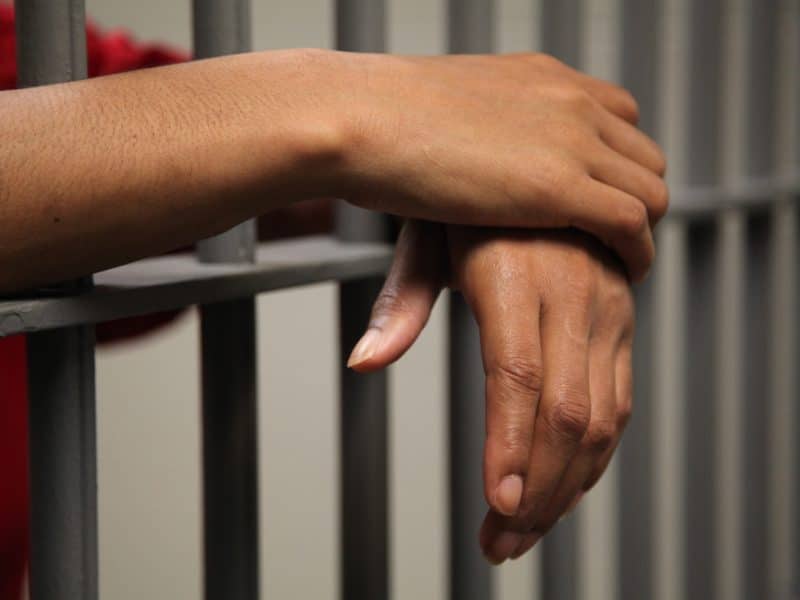
Fighting in War Still Didn’t Prepare Me for the Prison Mental Health Crisis
Nine years ago, I began serving as a volunteer peer counselor at the prison I’d transferred out of, providing support to people in the mental health unit. I’ve learned that trauma affects us all, and I’ve felt a growing sense of purpose.
Driving with ADD: Medication Was the Answer for One Teen Driver
Teen driver Hannah Henderson, who has attention deficit disorder, says medication helped her focus on the road.
