
UCLA ‘Filling the Void’ In Public Health Guidance After 2025 Wildfires
The research includes a 10-year study on the impact of wildfires on physical and mental health.

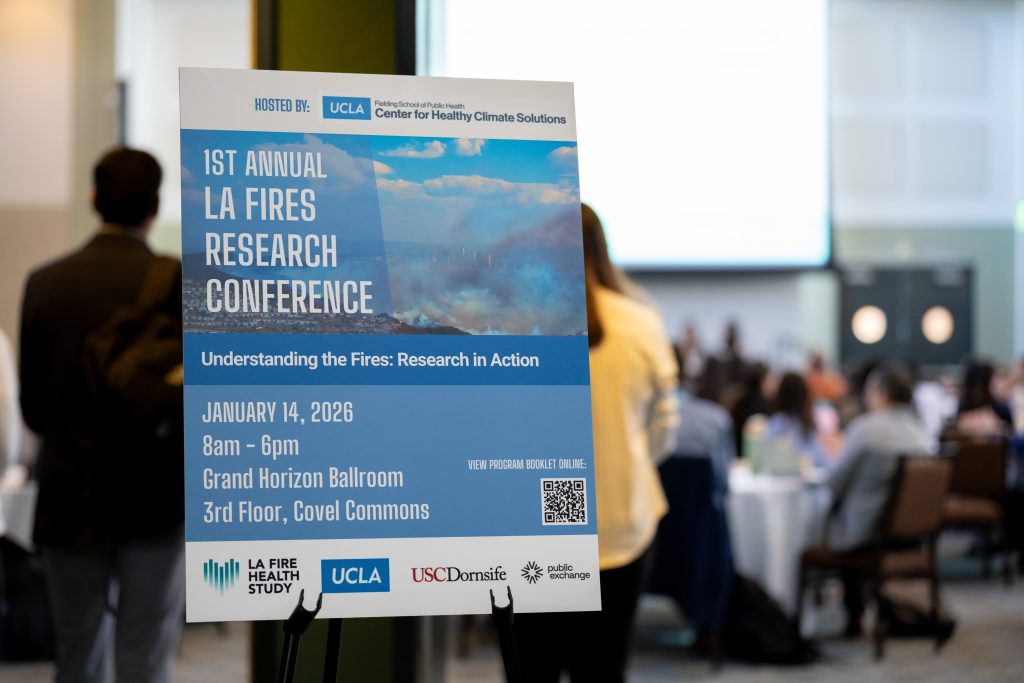
It’s a little more than a year after the devastating January 2025 wildfires in Los Angeles County, and the UCLA Fielding School of Public Health has been tracking their impact and funneling support to the community ever since.
Work began almost immediately, protecting staff and students at risk and supporting those who were displaced by the fires, said Dr. David Eisenman, a physician and professor in the Department of Community Health Sciences and director of the UCLA Center for Public Health and Disasters.
In January, Eisenman reflected on the lingering impact of the blazes, including the psychological: “Right now, we are studying the mental health consequences in the community, and we would expect to see elevated rates of depression, post-traumatic stress disorder and anxiety among people who were evacuated from the fires.”
After the wildfires, which killed at least 31 people and destroyed 18,000 structures, the faculty, students and staff rallied to do outreach ranging from tracking the health of firefighters to training recovery and construction workers how to do their jobs safely, according to a UCLA press release.
They also began the largest on-going study of the fire’s public health impact and set up free health and safety testing into communities hardest hit in the Altadena and Palisades fires.
“This is truly an example of mission-driven research,” said UCLA Chancellor Dr. Julio Frenk, distinguished professor in the Fielding School’s Department of Health Policy and Management. “It connects not only different disciplines but different levels of analysis, and it connects with communities and policymakers to ensure that discoveries are translated into action.”
Among the research is a planned 10-year-study looking into the short- and long-term impact of wildfires on health. According to the Atlantic, preliminary data shows higher rates of depression, anxiety, and perceived stress in LA County one year on.
And an on-going effort led by UCLA Fielding faculty that studies how mental health issues impact homelessness has expanded to focus on how the wildfires factor into these issues.
“In southern California, and around the world, emergency preparedness for natural and man-made disasters is essential,” said Dr. Michael Jerrett, professor in the Department of Environmental Health Sciences at the UCLA Fielding School. “This fire was quite unique in the sense that we had an enormous amount of human infrastructure burned [and] that has led to a myriad of toxic effects that we’ve haven’t seen in a large urban area before…UCLA is really trying to fill the void, that we may have seen from federal government agencies, in supplying the public with credible public health guidance.”
The name “MindSite News” is used with the express permission of Mindsight Institute, an educational organization offering online learning and in-person workshops in the field of mental health and wellbeing. MindSite News and Mindsight Institute are separate, unaffiliated entities that are aligned in making science accessible and promoting mental health globally.


Author

Related Articles
‘Broken Bones, Burning Eyes: How ICE Deploys ‘Less than Lethal’ Weapons on Protesters
According to an NBC investigation, DHS officers repeatedly used “less lethal” weapons in ways that would violate their own policies.

Does Contemporary “McMindfulness” Reinforce Our Suffering?
A Buddhist teacher and professor argues that a commodified mindfulness solely focused on the self is only a stopgap fix.
“No Beds”: Despite Improvements, Detroit’s Shelter System Continues to Let Families Down
When a Detroit mom and her two sons faced homelessness last year, she spent months calling the city daily for beds – in vain.
