
How Olympic Athletes Navigate Disappointment
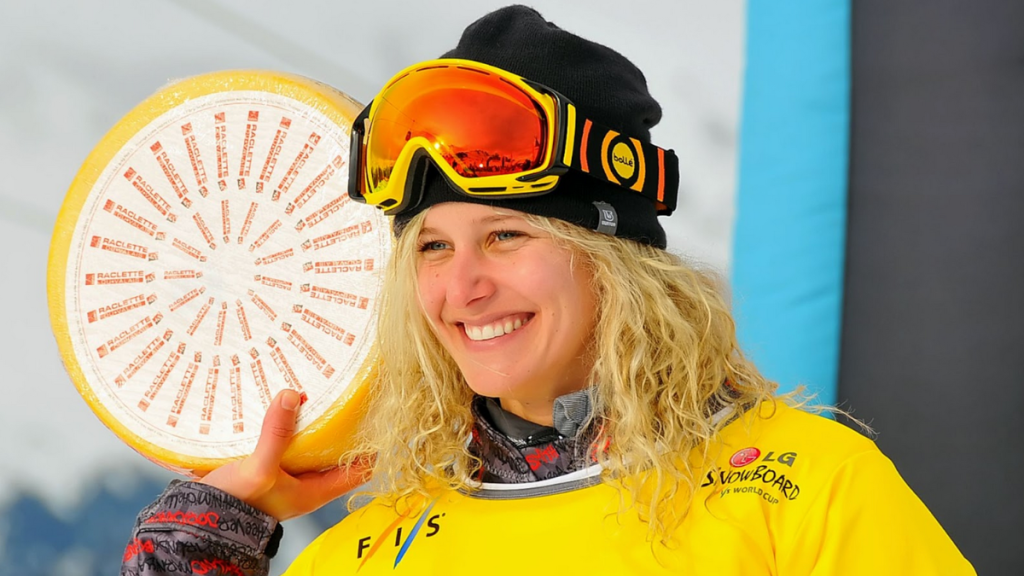
Lindsay Jacobellis viewed setbacks as opportunities for growth rather than threats. Thankfully, that’s something we can all train for.
The truth is, disappointment is the rule rather than the exception for most Olympians. Few competitors leave with medals, and silver or bronze might feel like failure to competitors who spent a lifetime envisioning gold.
“They have a dream that many of them have had since childhood, and in some cases it dies right in front of the world,” psychologist Michael Gervais said. But, he added, “The best have a framework to move through it.”
Snowboarder Lindsey Jacobellis found her framework the hard way. Twenty years ago, when she looked set to clinch an Olympic gold medal, Jacobellis attempted a stylish grab moments before crossing the finish line.
But amid the anticipatory celebration, she fumbled, losing the gold to an opponent who passed her in the seconds it took her to recover. Jacobellis was crushed. Worse yet, she couldn’t hide from the disappointment. The five-time Olympian was asked about it at Olympic games that followed – including two where she failed to even make the finals.
She still feels a twinge of pain watching any sports competition. While the winner celebrates, “I immediately feel for that other individual” who lost, Jacobellis told The New York Times. Over the next 16 years, Jacobellis thought about retiring, but she kept going, starting psychological training in 2016. In 2022, she won gold, twice.
Elite athletes need the resilience to cope with failure. It’s also a critical emotional skill for general life. Ideally, we’d view challenges as opportunities for growth rather than threats, within the proper context – and, thankfully, that’s something we can train for.
Jessica Bartley, senior director of psychological services for the U.S. Olympic & Paralympic Committee, explains how sports psychologists prepare athletes, getting them to not only visualize and prepare for success, but to also practice how to respond when things don’t go well.
One practical way to overcome disappointment in the moment is to use positive mantras, Gervais said. As a coach for elite athletes, including Olympians, he encourages clients to write down their self-talk, like “I’m a tough competitor,” along with three pieces of evidence to back up what they’re telling themselves.
“It needs to be believable,” he said.
Gervais says that when one’s motivations extend beyond just winning, “disappointment is painful, but it’s not terminal.” Process-oriented goals, centered within one’s locus of control – effort, preparation, and improvement, for example – give people something to hold onto even when other outcomes might disappoint. Research has found that a sense of purpose can help mitigate the impact of day-to-day knocks.
And, as in just about every case, support matters. Interestingly, one expert stressed that a perception of support can be most important – he asks athletes to think about who supports them and how often, to remind them of the community they have and who to turn to. Young people especially need genuine community with people who value them beyond their special skill.
Speedskater Shani Davis, who is Black, experienced a great deal of criticism following his success, which many suspected was racially fueled. Davis credits good friends with helping him stay strong amid the harmful chatter. “My identity wasn’t just tied to being a speedskater, but having real-life friends I grew up with who really know who I am as a person,” he said.
The name “MindSite News” is used with the express permission of Mindsight Institute, an educational organization offering online learning and in-person workshops in the field of mental health and wellbeing. MindSite News and Mindsight Institute are separate, unaffiliated entities that are aligned in making science accessible and promoting mental health globally.

Author

Related Articles

As ICE enforcement and detentions continue to surge, immigrant communities are in anguish
The Trump administration’s anti-immigration push has intensified the deep anguish of many who came to the U.S. to escape trauma.

A New York school district locked Akwesasne Mohawk children with disabilities in boxes. No one got fired.
The Salmon River Central School District confirmed that special education staff used wooden boxes to confine disabled students in 2025.

The Strongest Suicide Prevention Tool May Be a Steady Paycheck
Studies on suicide’s relationship to several factors show that when people’s basic needs aren’t met, they are more likely to kill themselves.