
Kids Lonely, Isolated Without Friends To Play With in Person
As families connect virtually, it’s becoming easier for kids to play online. That makes it harder to organize real-life playdates.

Greetings MindSite News Readers.
In today’s Daily, a look at “social thinning” and its impact on youth mental health. A new NYC charter school plans to open this fall – 12 hours per day, 7 days per week, even in summer (though that will be optional). Detroit teachers seek protections for immigrant students and teachers in their new contract. And what Olympians can teach us about disappointment.
But first, listen to this baby laugh; it’s contagious.
Social Thinning – Our Neglect of Community – Is Hurting Youth Mental Health

Though this HuffPost news story on social thinning focuses on children in the United Kingdom, it’s a phenomenon I’ve observed in real time at my daughter’s school. Just as families have grown accustomed to connecting over FaceTime, it’s become easier than ever for kids to play online, chatting and playing together on major games platforms.
Because of this, though, it’s now extremely difficult to organize real-life playdates, where kids physically share the same space and use their imaginations to explore, question, and build concrete connections.
It’s not just technology – there are also fewer free or low-cost spaces where children and adolescents can gather, making in-person playtime less accessible, especially as space at home continues to be scarce and unaffordable.
Across England and Wales specifically, more than 1,200 public youth centers closed between 2010 and 2023, reflecting a 70% fall in local funding for youth services, while the number of young people aged 16 to 24 experiencing mental health conditions rose from 19% to 26% between 2014 and 2024, according to the HuffPost story.
So perhaps it is unsurprising that in 2025, one-third of youth respondents to The Children Society’s Good Childhood Report said they don’t feel part of their communities and, in another survey, 70% of young adults aged 18 to 24 reported feeling lonely sometimes – more than any other age group.
This is a widespread issue – here in the US, a 2024 report found that only 58.5% of teens say they always or usually receive the social and emotional support they need, and a lack of support was associated with poorer mental and physical health. Social thinning certainly isn’t the only factor contributing to a rise in mental health troubles, but research suggests it’s a significant one.
Part of any solution to social thinning will be political – investment in schools and youth services, as well as in community space. But there are things you can do on a personal level to mitigate the impact of social thinning on the young people in your life.
You can even start at home. Millennials may remember public service announcements encouraging families to eat dinner together, at a table, or to reserve time each week for family game night, and these sorts of regular communal interactions, however small they may seem, make a difference. (In our Tuesday newsletter, we covered a study connecting family connection with a rich social life up to two decades later.)
From there, you can step right outside – meet your neighbors, regularly greet them, and extend help where you can. You might also look for local events to experience together.
Nana Owusu, head of clinical services at the British children’s mental health charity Anna Freud, says “children will watch how you engage with your community and use it as a template for their own behaviour.”
So get creative – look to your own imagination to find (or make) spaces for the young people in your life to safely, freely gather.
Owusu suggests looking to their interests, as well as local organizations: Is there a nearby group for arts, cooking, or sport? Might they want to get involved in some community volunteering? Above all, remember that your influence can work wonders.
“Feeling a deep sense of belonging at home is vital for a child’s wellbeing,” said Owusu. “Having a secure foundation will make it easier for them to engage in their wider community too.”
How Olympic Athletes Navigate Disappointment
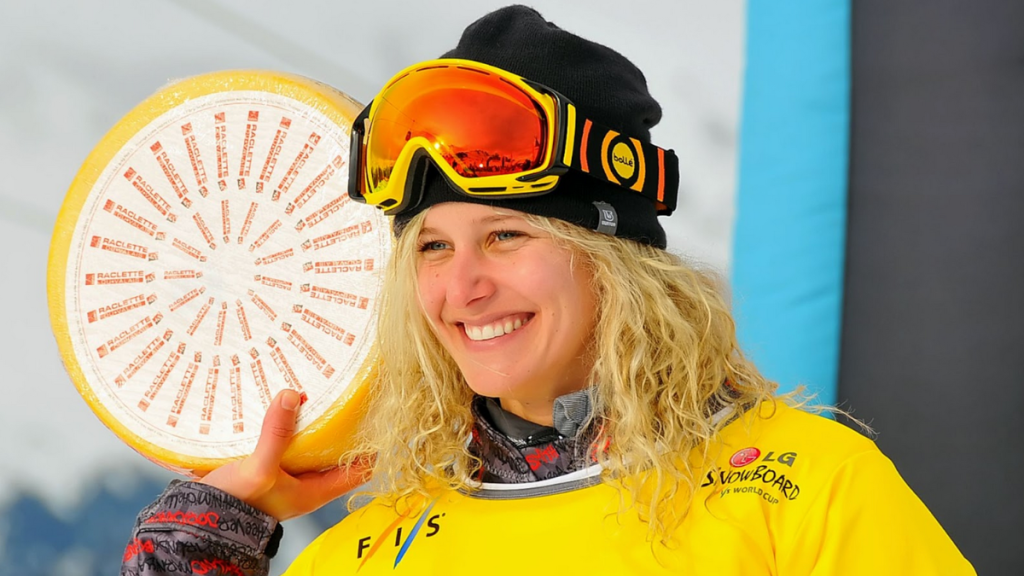
The truth is, disappointment is the rule rather than the exception for most Olympians. Few competitors leave with medals, and silver or bronze might feel like failure to competitors who spent a lifetime envisioning gold.
“They have a dream that many of them have had since childhood, and in some cases it dies right in front of the world,” psychologist Michael Gervais said. But, he added, “The best have a framework to move through it.”
Snowboarder Lindsey Jacobellis found her framework the hard way. Twenty years ago, when she looked set to clinch an Olympic gold medal, Jacobellis attempted a stylish grab moments before crossing the finish line.
But amid the anticipatory celebration, she fumbled, losing the gold to an opponent who passed her in the seconds it took her to recover. Jacobellis was crushed. Worse yet, she couldn’t hide from the disappointment. The five-time Olympian was asked about it at Olympic games that followed – including two where she failed to even make the finals.
She still feels a twinge of pain watching any sports competition. While the winner celebrates, “I immediately feel for that other individual” who lost, Jacobellis told The New York Times. Over the next 16 years, Jacobellis thought about retiring, but she kept going, starting psychological training in 2016. In 2022, she won gold, twice.
Elite athletes need the resilience to cope with failure. It’s also a critical emotional skill for general life. Ideally, we’d view challenges as opportunities for growth rather than threats, within the proper context – and, thankfully, that’s something we can train for.
Jessica Bartley, senior director of psychological services for the U.S. Olympic & Paralympic Committee, explains how sports psychologists prepare athletes, getting them to not only visualize and prepare for success, but to also practice how to respond when things don’t go well.
One practical way to overcome disappointment in the moment is to use positive mantras, Gervais said. As a coach for elite athletes, including Olympians, he encourages clients to write down their self-talk, like “I’m a tough competitor,” along with three pieces of evidence to back up what they’re telling themselves.
“It needs to be believable,” he said.
Gervais says that when one’s motivations extend beyond just winning, “disappointment is painful, but it’s not terminal.” Process-oriented goals, centered within one’s locus of control – effort, preparation, and improvement, for example – give people something to hold onto even when other outcomes might disappoint. Research has found that a sense of purpose can help mitigate the impact of day-to-day knocks.
And, as in just about every case, support matters. Interestingly, one expert stressed that a perception of support can be most important – he asks athletes to think about who supports them and how often, to remind them of the community they have and who to turn to. Young people especially need genuine community with people who value them beyond their special skill.
Speedskater Shani Davis, who is Black, experienced a great deal of criticism following his success, which many suspected was racially fueled. Davis credits good friends with helping him stay strong amid the harmful chatter.
“My identity wasn’t just tied to being a speedskater, but having real-life friends I grew up with who really know who I am as a person,” he said.
In other news…
Detroit-based artist and author DeAnn Wiley spent years working as a psychologist while making art in her free time, before transitioning out of the mental health field to focus fully on her art career. Originally working with acrylic paints, she eventually moved to working digitally, finding that the medium gave her more freedom as a disabled person.
“Homegrown,” the first book she both authored and illustrated, was published two years ago, and “Hazel’s Best Day,” featuring Wiley’s illustrations alongside words by Adiba Nelson, will debut next month.
She told WDIV-Detroit that she’s excited to showcase a disability pride parade in the book, and celebrate children of all shapes and shades. As Wiley puts it: “One of the things I try to do when I’m creating my art is think about who’s missing.”
New York City charter school to open 12 hours, 7 days per week: In an effort to reduce the mental and financial stress many parents face juggling work and childcare, Strive Charter School plans to be open 12 hours per day, 7 days per week – even in summer.
The official school day runs from 9 a.m. to 4:30 p.m., with childcare available before and after, from at 7 a.m. to 7 p.m. Daily breakfast, lunch, and dinner is also provided, all at no cost to families. On weekends and in the summer, the school will operate like a totally optional day camp, and be open to drop-ins for as little as an hour.
School principal Rebecca Goodsell explained the thinking behind the school to Optimum News 12.
“The traditional 9 to 5 is really not what our community does anymore. And so you’re thinking about Uber drivers, Amazon workers, restaurant employees who all have kids,” Goodsell said. “In order to get them to school and from school on time and have child care while they’re at work, there’s really nothing that exists currently that really caters to that need and for free.”
Detroit teacher union seeks contract protections for fearful immigrant families and teachers: As negotiations for a new union contract approach, the Detroit Federation of Teachers seeks to secure terms that will strengthen support for students and educators affected by immigration enforcement, according to Chalkbeat Detroit.
Union leaders say the request is driven by months of unanswered pleas for better training and clearer protections as federal immigration enforcement has intensified since the start of the second Trump administration. At least five district students have been detained since then, spreading fear, especially in neighborhoods with a high number of immigrant students.
“Parents are still afraid,” DFT president Lakia Wilson-Lumpkins said. “If you go into some of those neighborhoods, where you would normally see hundreds of parents walking their kids to school, you don’t see those parents. That has truly hurt our classrooms.”
The union also wants the contract to reinforce the district’s sanctuary commitments, and some members also suggested immigration-related training for all staff, and new protections for immigrant employees who currently have no specific safeguards.
The name “MindSite News” is used with the express permission of Mindsight Institute, an educational organization offering online learning and in-person workshops in the field of mental health and wellbeing. MindSite News and Mindsight Institute are separate, unaffiliated entities that are aligned in making science accessible and promoting mental health globally.

Author

Related Articles

Waiting for Word on Relatives Under Attack in Iran
Iranians in the US are caught between two “unrepentant regimes,” says Iranian-American writer and professor Shervin Malekzadeh.
Will the Pursuit of Profit Suck the Benefits Out of Psychedelics?
Many new programs have removed the most transformative, curative and life-affirming parts of the psychedelic experience.

New Mexico to Probe Allegation that Epstein Ordered the Burial of Teen Girls Near His Ranch
New Mexico has announced it is probing into an allegation that Epstein ordered the bodies of two girls to be buried on Zorro Ranch.
