
A Better Way to Treat Addiction in Seniors
As overdose deaths rise among older adults, Baltimore’s REACH Health Services offers groundbreaking addiction care for seniors that combines medication with intensive peer support. Plus a look back at a historic fight against solitary confinement. And more.

Welcome Back MindSiters,
In this month’s Diagnosis: Injustice, we’ll highlight a visual essay about the men who fought back against solitary confinement in California prisons with a hunger strike. We’ll also take a look at what happened to the whistleblowers in an Alabama prison following the release of the Oscar-nominated documentary The Alabama Solution.
But, first: we’ll look at a Baltimore clinic attempting to find a better way to care for older adults with addiction — from our friends at Tradeoffs.
Let’s get into it…
Addiction Care for Older Adults
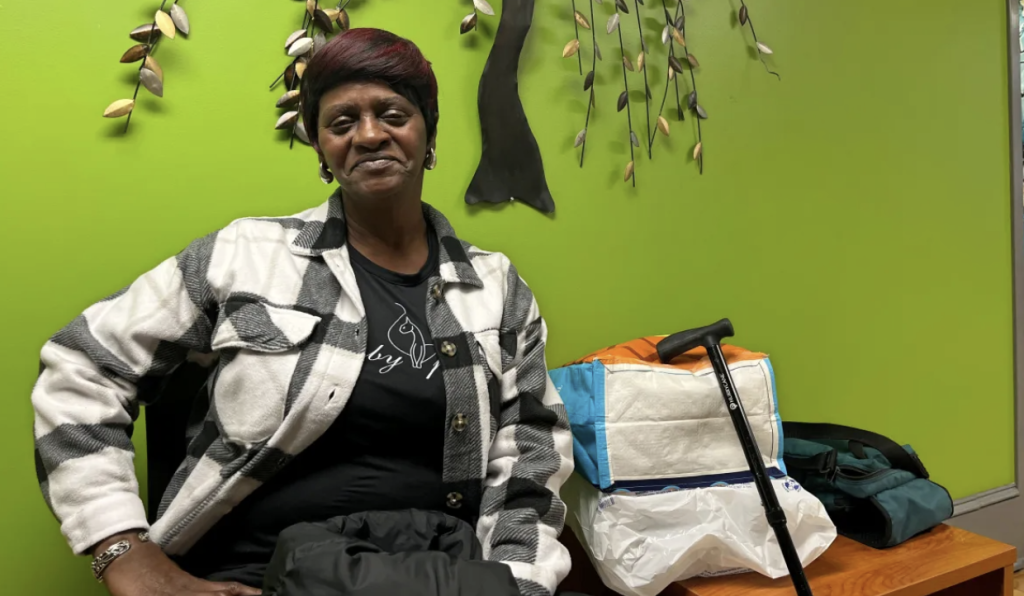
America is aging and so is its opioid epidemic.
In 2023, the number of people who died from an opioid overdose declined among every age group but one: those over 55. In that group, overdose deaths rose by 4% to nearly 19,000. Today, about one million seniors are living with the addiction while also grappling with health problems like arthritis, diabetes and heart failure.
For many, hunger, loneliness and a lack of housing compound the problem – and make it difficult to provide these seniors with the help they need.
“You fall in between the cracks. I mean you just fall,” Phyllis Lindsay told Dan Gorenstein, host of Tradeoffs, in a recent episode. “There’s just nothing there to help you.”
She knows what she’s talking about. Lindsay is 61 and has been in recovery from heroin addiction for 20 years. She’s one of two peer recovery specialists at REACH Health Services, a methadone clinic in Baltimore. While a methadone clinic might not seem like the ideal place to receive wrap-around services, REACH is doing its best to fill the gaps, and it offers a model for how to do that with this older population others, experts say.
Most of the patients who walked into REACH are like Renee Gray. After nearly three years of addiction to heroin and cocaine, her physical health — joints, blood pressure, teeth and vision — is in decline. In October 2023, the pain in her hip had gotten so bad that not even the heroin could help.
“Crying and twisting and turning on the floor. When I think about it, it makes me feel bad. But I was really crying because I was in so much pain,” Gray told Tradeoffs. “Then, using them drugs too, it seemed like the drug was making it worse.”
Her daughter recorded her and played it back for Gray the next day. It made her feel small and confront the truth, she said.
“I don’t care who’s getting high, who’s doing what. Renee ain’t going to do it,” Gray told her daughter.
Seventy-two hours later, she walked into REACH and began a partnership with Lindsay, who models self-care for her clients and has accompanied Gray to have her eyes checked and her teeth pulled — procedures Gray had been dreading. .
“She sees that I’ve been through this process,” Lindsay said. “I take care of myself. I get checkups. And she’s like, if Phyllis can do it, then I can too.”
Much of REACH’s work can be boiled down to three key steps: treat addiction, repair trust and coordinate care. The staff has created a more trusting and less paternalistic environment by having an “open door policy” that allows patients to return no matter how many times they’ve relapsed.
Once patients grow more aware of their health needs, REACH staff hops into care coordination mode, chasing down referrals and arranging transportation. Staff even does a bit of social work by linking patients to get food stamps and affordable housing.
“We see our role as getting people connected to the care that’s already in the community,” Walters says. “Helping to facilitate that, helping them to follow through.”
To learn more about how REACH is helping change the game in elder addiction, read or listen to the full Tradeoffs story here.
Looking into Solitary
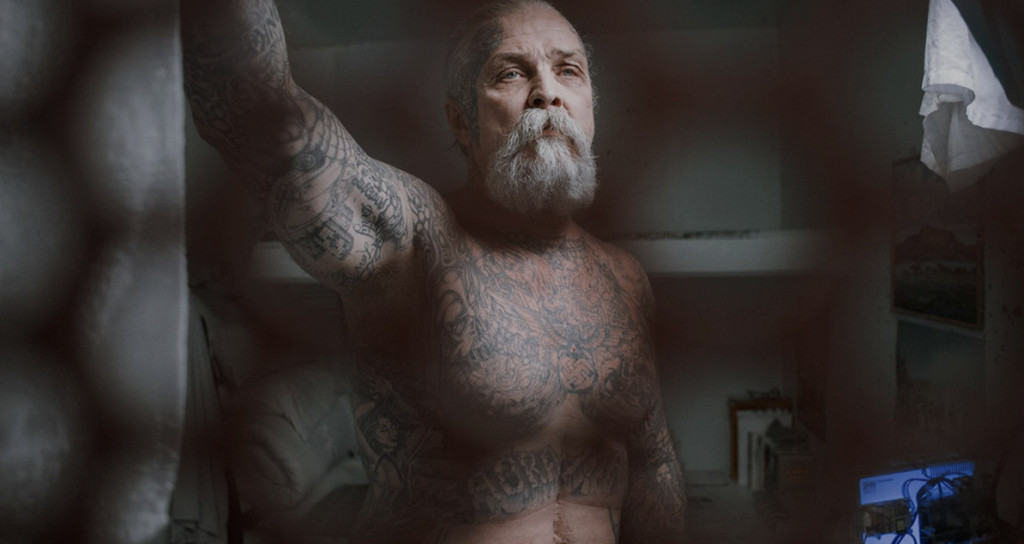
In July 2013, thousands of California prisoners took action to improve their lives: They launched a history-making hunger strike to protest the state’s practice of subjecting incarcerated people to indefinite solitary confinement.
At the time, hundreds of people in Pelican Bay State Prison had been in solitary for over a decade — most for being labeled as gang members. After 60 days and a lawsuit, the hunger strikers won major policy changes in the state including an agreement to move most people in long-term solitary to new units, giving many a new chance at parole.
Since then, many of the men have returned to society and are working to rebuild their lives, make sense of the trauma they endured – and help others inside. In a stunning visual essay, The Marshall Project and Catchlight, a photojournalism organization, revisited the story in text and photographs by Brian L. Frank. The images are mostly taken at Alcatraz, the former federal prison that closed in 1963 and now serves as a national park and tourist attraction.
Frank had previously photographed men inside the Pelican Bay Security Housing Unit (SHU) in 2014.
“It was a traumatizing and defining experience,” Frank said. “To think that I might be the only human from outside the prison they really spoke to, maybe in 10 years. It was something that stuck with me.”
Participants in the project include strike leaders like Sitawa Jamaa and hunger striker Jack Morris. Morris spent over 30 years in solitary confinement, came home in 2017 and now runs a reentry program for a community health clinic.
“When I think of guys having to do time in solitary confinement, I can’t even begin to make a suggestion as to how to endure that,” Morris told the Marshall Project. “Because I don’t know I could survive again.”
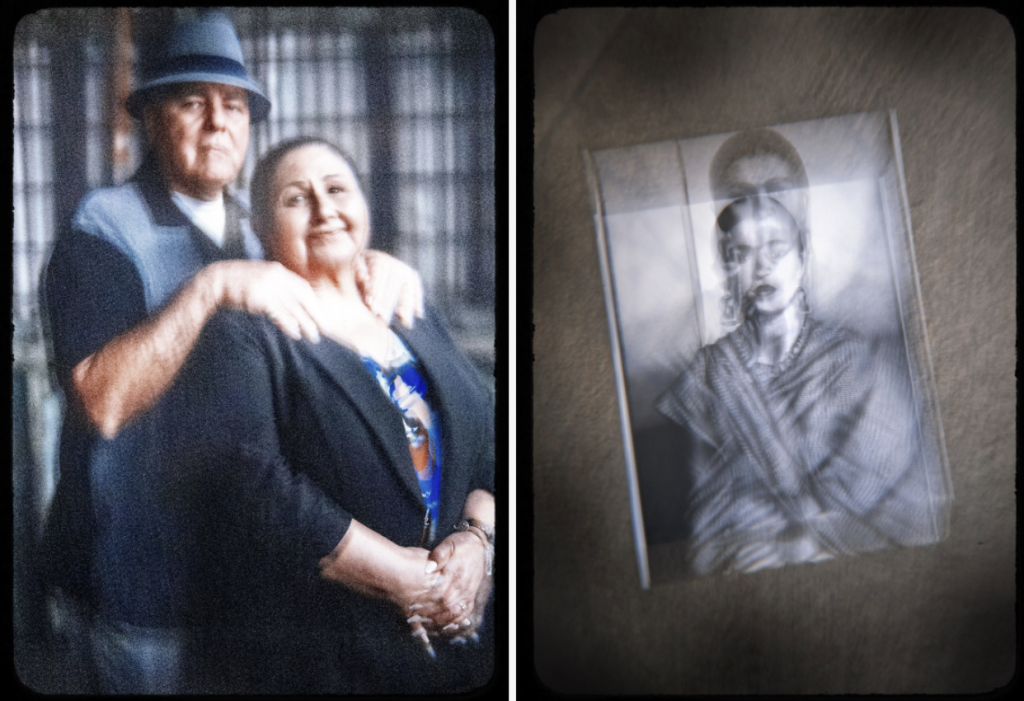
Psychologist Craig Haney studies the mental toll of long-term isolation and interviewed more than 100 men in the SHU at Pelican Bay. His research found that their prolonged isolation led to paranoia, anxiety, despair, anger and, eventually, numbness.
“I had guys ask me, ‘Where are we in the world, where are we in the state?” Haney told the Marshall Project. “They could have been on Mars because they never got visually in contact with the world around them.”
When the unit was built in the late 1980s, it represented a new kind of incarceration with human contact between guards and detainees mostly eliminated.
“When you’re in the SHU, you don’t feel,” said Frank Reyna, who spent 20 years in solitary at Pelican Bay. “If you feel, you start getting weak. When people die, you just move on. You lose your emotions.”
To read the full essay, listen to the interviews and experience the photography, click here. This story was produced in collaboration between The Marshall Project and CatchLight as part of a three-year Mental Health Visual Disk Reporting Initiative.
Whistleblowers Moved Back to Solitary
What is life like inside Alabama prisons? The 2025 Oscar-nominated documentary The Alabama Solution gives us a glimpse of the horrifying realities via grainy footage shot on contraband cell phones.
For the footage, we can thank incarcerated activists Raoul Poole, Robert Earl Council (aka Kinetik Justice) and Melvin Ray. Their efforts have put the trio in hot water again, illustrating a main point of the film — that the Alabama Department of Corrections retaliates against incarcerated people who try to publicize the conditions inside.
In mid-January, the three men were transferred to an isolated unit in Kilby Correctional Facility, where they are being held in extreme solitary confinement, according to an attorney for the men. Poole, Council and Ray are currently the only people in the five-cell unit, according to reporting by the Appeal.
While David Gespass, an attorney who has represented Council in past litigation, said he was not given a reason for their transfer, a social media post by a co-producer of the film said the move occurred after a nonviolent work strike in December.
“Given the history of institutional violence in the Department of Corrections, including beatings by guards…they’re afraid for their lives,” Gespass said of the three men.
The videos and interviews gathered in the film show a side of Alabama prisons that officials would rather not talk about: filthy, flooded living spaces, people sleeping all over the floor, officers asleep at their posts. The film premiered at Sundance Film Festival and was released on HBO Max in October.
The footage also depicts heavily drugged people, unconscious men being rushed to the infirmary by other detainees after an overdose and pools of blood.
We’re in these walled-off secret societies,” Poole says in the film. “These are state institutions. But it’s one of the only state institutions that the public or the media has no access to. How can a journalist go into a war zone, but can’t go into a prison in the United States of America?”
To read the Appeal’s story, click here.
Until next month,
Josh McGhee
The name “MindSite News” is used with the express permission of Mindsight Institute, an educational organization offering online learning and in-person workshops in the field of mental health and wellbeing. MindSite News and Mindsight Institute are separate, unaffiliated entities that are aligned in making science accessible and promoting mental health globally.


Author

Related Articles

College Sports Has an Emotional Abuse Problem
Two sisters were recruited from Croatia to play college basketball in the US. They say their coach derided and insulted them – and that there were few safeguards to protect them.

Autism and Alzheimer’s May Be Linked, Study Suggests
New discoveries are pushing researchers to consider that autism and Alzheimer’s may offer insight into the other.
He Almost Killed His Father. Now He Helps Others At Risk.
In today’s newsletter, we explore how one man healed after a dangerous psychotic break that nearly led him to murder.
