Waiting for Word on Relatives Under Attack in Iran
Iranians in the US are caught between two “unrepentant regimes,” says Iranian-American writer and professor Shervin Malekzadeh.

Hello MindSite News readers,
Just when it seems like things can’t get worse, they do: The unprovoked attack on Iran launched by the United States and Israel over the weekend has resulted, already, in hundreds of civilian deaths, grief and anguish, both in Iran and neighbouring countries. We share a personal take from just one of many of the desperate families here waiting vainly for news of their loved ones.
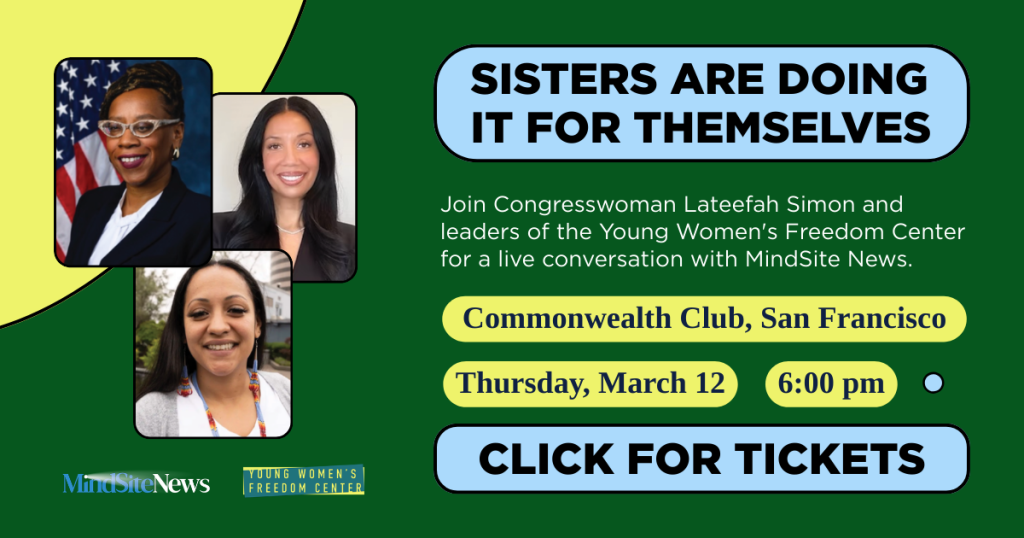
In other news, we’re pleased to invite Bay Area readers to our March 12 event at San Francisco’s Commonwealth Club with Congresswoman Lateefah Simon and the Young Women’s Freedom Center – details are below. Plus, calls for the release of Ya’akub Ira Vijandre, a Muslim Filipino photojournalist featured in our “Unseen” series. And more.
Insomnia, Pain and Dread: The Anguish of Awaiting Word from Relatives in Iran

It’s Monday, and my husband is clutching his cell phone like an amulet, urgently scrolling for news or a text from his family in Iran.
As the country is pounded by bombs from Israel and the United States, internet and cell phones have been cut off – he cannot reach even one brother, sister, aunt, uncle, niece, nephew or cousin in his large and loving extended family.
He has not been able to sleep for three days. As he reaches for yet another coffee, his hand trembles.
As for myself, I wake up sweating after a nightmare: one of my high-spirited sisters-in-law vanishing in an attack on Shiraz, a city in south-central Iran. Now retired, she used to work as a teacher in a girls’ school.
I thought of her when I read about the 158 young schoolgirls and 17 others killed in an air strike on an elementary girls’ school in southern Iran – part of the bombing campaign unleashed by the US and Israel.
When my husband and I got married in California, his sister sent us a video via WhatsApp in which she and our other relatives paraded posters of us around their home – dancing, singing and waving scarves in a celebration that went on for hours.
During the pandemic I served as her weekly English teacher and she as my on-and-off Farsi coach – our video-call lessons always marked by animated conversation and laughter. But today our home is quiet as a crypt.
Trump, who claims to be a “peace president,” has repeatedly broken national and international law.
He has ordered deadly strikes on fishermen in the Caribbean and Pacific, kidnapped Venezuela’s president, and now has launched an illegal and unprovoked war with Iran that some commentators have dubbed “the Epstein War” – a wag-the-dog effort to distract the country from allegations in the Epstein files, including one from a 2016 lawsuit that Trump raped a 13-year-old girl in Epstein’s New York mansion, an account corroborated by the young teen’s Epstein handler.
I think about one of my MAGA cousins in Georgia, who opposed our “endless wars” after her son returned home for a Mideast tour in the military with PTSD and a ravenous depression. I want to talk about all this with her, and see how her ailing cats are doing, but I’m too dispirited to call.
The launch of a new war – Iran has responded by striking U.S. bases and assets in neighboring states – comes on top of flagging confidence in the economy, ICE officers killing adults and detaining children, and what experts call Trump’s “unmistakable” signs of serious dementia.
Iranian-American writer and professor Shervin Malekzadeh notes that the US’s authoritarian turn leaves Iranians living in the US caught between two “unrepentant regimes,” both devoted to violence at home and abroad.
“When the course of events renders Chicago, New Orleans, or Minneapolis indistinguishable from Mashhad, Karaj, or Tabriz, then our reward is perspective,” he writes in The American Prospect. “We know that Iran anticipates what may happen in the United States, that the pair of murders by the equivalent of roving basijis in the Twin Cities are a dress rehearsal for the brutality yet to come.”
As Muslims Across the U.S. Face Mounting Stress, We Revisit Our Story about a Detained Filipino Journalist
“Today we have made it to the tenth fast of Ramadan,” Muslims for Just Futures wrote last week in a newsletter. “We approach the end of the first third of Ramadan, the third of Mercy, and move tonight to the third of forgiveness.”
In the email, the organization wished mercy and forgiveness for all its readers, and called for the government to release five Muslims currently held by ICE.
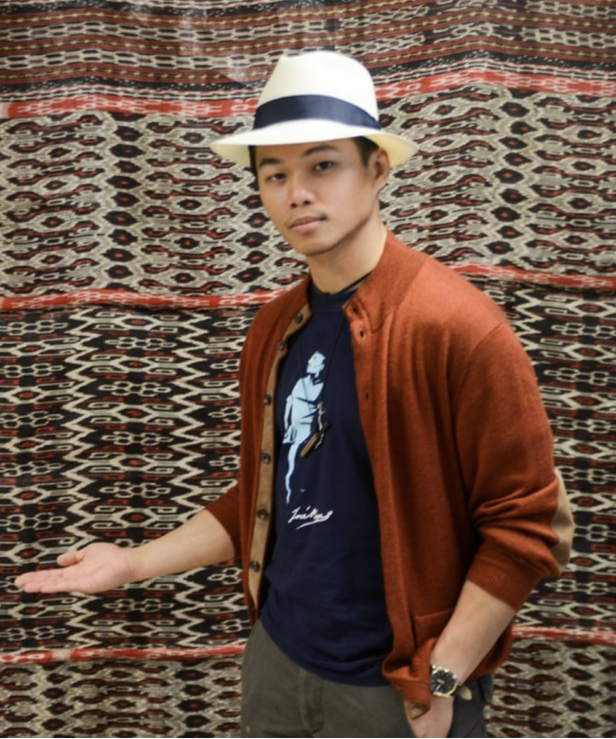
One of those five is Ya’akub Ira Vijandre, a Filipino photojournalist, senior safety specialist for American Airlines and DACA recipient who ICE detained last October at gunpoint, citing social media posts extolling Islamic principles.
Even in custody, he has remained “an active community member and organizer… sharing notes on his daily experiences during Ramadan in detention via instagram – you can find them here,” wrote Sana Siddiq, a regional director for Muslims for Just Futures.
We heard about him first-hand from his cousin in MindSite News’ “Unseen” series written and reported by Simran Sethi, a fellow of the Nova Institute for Health. Ira Vijandre’s story is one of a number of moving testimonies in “It’s More Horrific Than What Is Being Told,” Sethi’s powerful audio series on Filipinos targeted by ICE.
Muslim Americans are facing mounting stress from actions taken by the Trump administration. Throughout this Ramadan, Muslims for Just Futures are also remembering 56-year-old Nurul Amin Shah Alam, a legally blind Rohingya refugee from Myanmar, who was found dead last month after being left by CBP outside a locked Buffalo doughnut shop.
As Siddiq wrote in their newsletter: “He was detained for a year by ICE. Border patrol agents then released him, abandoning him five miles away from his house, without notice to his attorney or his family. He was missing for five days before his body was found, out in the freezing cold… [He] should be with his family this Ramadan, and I urge us to keep him in our duas [prayers].”
As a result of ICE raids on places of work and worship, “the level of anxiety among people is at its highest; we’ve never seen something like this,” said Imad Hamad, executive director of the American Human Rights Council. War in the Middle East is now adding to that stress for those with family in the region.
In other news….
“The Pitt” has won over fans and critics for its unflinching portrayal of what it’s like to practice medicine. The second season, like the first, follows one long shift in a Pittsburgh emergency department – in real time. Its attention to detail is part of its appeal, but, as Dhruv Khullar writes in The New Yorker, “what’s special about the show is that it offers a kaleidoscopic view of how societal problems have come to pervade medicine.”
It’s worth taking a look at the piece as well as the show to “see the everyday heroism of health-care workers, whose devotion to patients often comes at the expense of their own well-being, as they labor to keep a medical system from going over the brink – barely. Paradoxically, a place full of misery and pain, the emergency department, ends up feeling soothing and safe. No matter how bad things get, you can take comfort in knowing that you’re in competent hands.” – Samir Chadha
Worried you’re not getting enough sleep? It might be making you feel sleepier. This recent New Scientist piece looked at emerging research around sleep perception, which seems to indicate that our impression of our night’s sleep can be more important than how the sleep actually went. In one study, 249 participants with depression both tracked their sleep for 13 weeks and reported how well they thought they’d slept. Those two measures ended up differing wildly, and it was the second – their beliefs about their sleep, rather than the reality – that predicted their performance in cognitive tests. — Samir Chadha
The name “MindSite News” is used with the express permission of Mindsight Institute, an educational organization offering online learning and in-person workshops in the field of mental health and wellbeing. MindSite News and Mindsight Institute are separate, unaffiliated entities that are aligned in making science accessible and promoting mental health globally.

Author

Related Articles
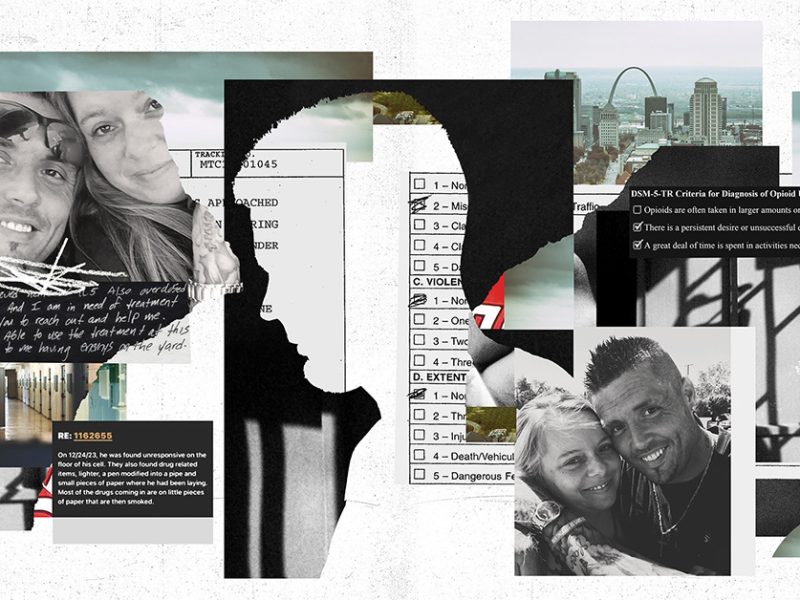
How Medicaid is Helping People Leaving California Prisons
Changes to federal law allows Medicaid to provide health and other services to people exiting prisons. California and some other states are making use of the program, but expansion efforts will depend on the Trump administration.
Google and Meta Found Negligent in Apps’ Mental Health Harms
Meta, Instagram’s owner, and Google, Youtube’s owner, neglected to protect a user from their apps’ addictiveness, a jury rules.

The College Mental Health Crisis
Experts say more preventive care is needed to combat the growing mental health crisis affecting college students.
