
Generation Cancer: Millennials Struggle With Death at an Early Age
More young adults are being diagnosed with cancer. Even for those who survive, the experience can be destabilizing and isolating.

Hello, MindSite News readers!
In this issue, we look at the emotional side of the much-reported rise in cancer diagnoses among young people – and a young widow who traveled to DC this spring to call for better funding for cancer research.
Plus, remembering “Country” Joe McDonald, not just for his music but for his lifelong advocacy against war and for veterans.
“We Were 80-Year-Olds in 25-Year-Old Bodies”: A Look at the Emotional Plight of Young People with Cancer, as More and More Are Diagnosed

Shay Martin, a young widow who lost her husband to colon cancer, was in Washington DC this March to fight for more funding for cancer research – much of which has been slashed by the Trump administration.
Last year, the Washington Post ran a wrenching long-form piece about her and her husband called “She’s Pregnant. He’s Dying,” exploring and documenting her young husband’s “greatest wish”: to fight his cancer long enough to meet his baby.
Tanner Martin was diagnosed with Stage 4 colon cancer at age 25 in November 2020. He pushed himself to finish college and get a job, but exhaustion from treatments eventually forced him to stop working. In 2024, when his treatment seemed to be working well, he and his wife Shay decided to start a family.
But then, as the Post reported: “Just days before the baby shower in April, the call came: The last-resort IV chemo regimen that had been keeping Tanner alive had failed. The baby was due in 57 days.”
The vividly-reported story also includes analysis about what some researchers have called “Generation Cancer.” The Post reported that 200,000 people ages 15 to 49 would be newly diagnosed with cancer in 2025, adding to the more than 2.1 million Americans, like Tanner, already living with the disease after diagnosis as a young adult.
Tanner’s nightmarish predicament – to not know if he’d be able to meet his child – encapsulates part of what some researchers call a “biographical disruption”: the fact that a cancer diagnosis destabilizes young people through pivotal years in their life, potentially denying them crucial milestones.
That impact can persist even if their cancer proves treatable. Developing cancer so young – when most of their peers are working, dating, having children or planning new adventures – can leave them isolated and reeling.
Between 2000 and 2021, the annual mortality rate from cancer overall fell by more than 27%, and the rate of new cases fell by 5.7%. But, as the Post points out, that overall fall is largely driven by an even bigger fall in diagnoses for those aged 50 or older – those under-50 have seen their rate of diagnosis rise by roughly 10% since the millennium.
A 2024 study broke that risk increase down – Millennials and Gen X were more likely to be diagnosed with 17 types of cancer than older generations. Those born in 1990 had the biggest increases in pancreatic, kidney, small intestine, liver (in women), and uterine cancers.
Why? Part of it might be down to well-known risk factors, like obesity and lack of physical activity, but researchers are looking into other modern changes – younger generations’ greater exposure to microplastics, rising consumption of so-called ultra-processed foods, a sleep cycle disrupted by screens, artificial light and frequent travel, and a high rate of drinking and smoking.
Colon cancer is often pointed to as a particularly concerning rise – in the US, the Post found that “young people of Native American descent like Tanner have the highest rate of colorectal cancer of any racial and ethnic group… and the sharpest rate of recent increase.”
In the UK, where bowel cancer rates have risen 75% in under-24s since 1990, researchers are hoping that a century’s worth of tumor and gut bacteria samples might provide some answers.
Much of this research will come too late for Tanner, and thousands of others, but we can still heed researchers’ recommendations for more mental health support. In his case, Shay reached out to an old classmate who had become a “death doula,” helping people through the process of dying.
Tanner wasn’t initially thrilled at the idea, but came to find their conversations empowering – like those around choosing a future burial plot. “Instead of making us sad, it made us laugh,” he said. “I patted the ground when I lay on my future spot and I was like, ‘Aww, there’s no shade.’”
Tanner chronicled part of his journey on Instagram and TikTok – Shay, who as Tanner neared death recalls crying for 18 hours straight, said “it was nice to find support, because we felt like we were 80-year-olds in 25-year-old bodies.” Tanner’s last video was a pre-recorded one announcing his death, in which he said he believed in “something after this.”
Shay continues to advocate for cancer patients and their caregivers – she spent the first week of March (which is Colorectal Cancer Awareness Month) traveling with a nonprofit and imploring lawmakers to reverse cancer funding cuts from the “One Big Beautiful Bill.”
“I will be in Washington, D.C. for four days,” Shay Martin told reporters. “I hope Tanner is proud of me. I am trying to do many things in his honor.”
Just weeks before Tanner died, his wish did come true: He got to cradle his tiny daughter in his arms, at last. The Post recorded the moment Tanner got to hold baby AmyLou: “I’ve been so excited to meet you … ” he said, his glasses misted over by tears. “I love you so much. I’ve been waiting for this for so long.”
See also: Millennials talk about their cancer diagnoses, toxins and tech fueling rise in cancer among Millennials, cancer realities at a young age (Washington Post) and Youth Mental Crisis ‘Most Pronounced’ in Wealthier countries: An Interview with Sapien Labs (MindSite News)
In other news…
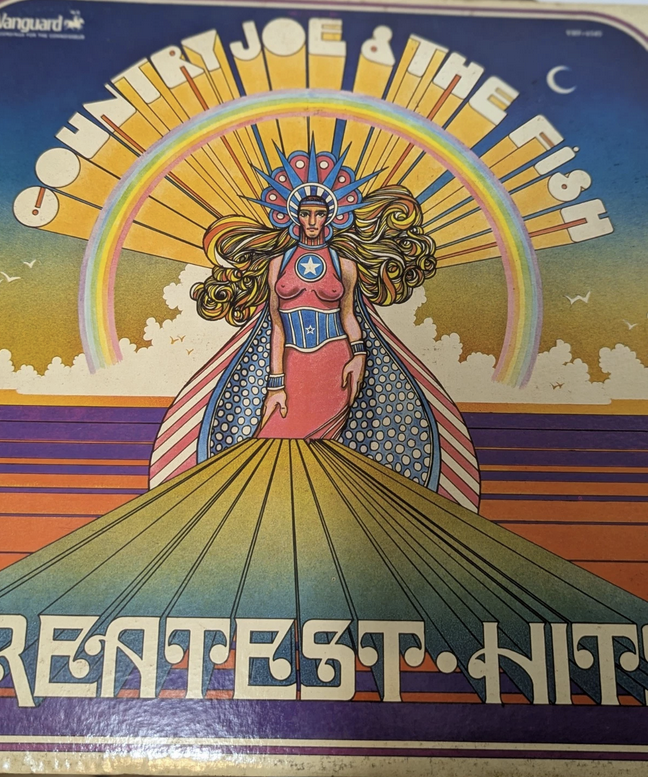
Rest in peace, “Country” Joe McDonald, who died this Saturday at 84, at home in Berkeley, California, as Berkeleyside reports. I’d been thinking about him on Friday, when I visited Mr Mopps’, the children’s bookstore run by his son, Devin. “Country” Joe wrote one of the sixties’ great anti-war anthems – the “I-Feel-Like-I’m-Fixin’ to Die Rag” – and sang it with his band at Woodstock.
That performance featured a “four-letter rebuke” to the Vietnam War, and the song’s taunting lyrics remain sadly timely: “Now come on mothers throughout the land, pack your boys off to Vietnam / Come on fathers don’t hesitate, send your sons off before it’s too late / and be the first one on your block / to have your boy come home in a box.”
“Country” Joe, who was involved with singer Janis Joplin in the sixties, had served with the Navy in Japan, and sympathized with veterans as well as anti-war protestors – one of his biggest contributions to the country’s mental health approach was to help bridge the gap between those two camps. He’d lived in Berkeley since 1965 (he oversaw the construction of its Vietnam Veterans War Memorial in 1995), was married four times, including to Kathy McDonald, his wife of 43 years, and had five children and four grandchildren. And he kept on singing.
The name “MindSite News” is used with the express permission of Mindsight Institute, an educational organization offering online learning and in-person workshops in the field of mental health and wellbeing. MindSite News and Mindsight Institute are separate, unaffiliated entities that are aligned in making science accessible and promoting mental health globally.

Author

Related Articles

Millennials Weigh Having Children On Their Own Terms
Not having children is also a valid path, and one that everyone should consider, Merle Bombardieri argues in her 1981 book.

Waiting for Word on Relatives Under Attack in Iran
Iranians in the US are caught between two “unrepentant regimes,” says Iranian-American writer and professor Shervin Malekzadeh.

Will the Pursuit of Profit Suck the Benefits Out of Psychedelics?
Many new programs have removed the most transformative, curative and life-affirming parts of the psychedelic experience.
