
Family of 6 in ICE Detention for 9 Months ‘Dying on the Inside’
After nine months in Dilley Immigration Processing Center, “we forgot what it feels like to be free,” a recent high school graduate wrote.

Greetings, MindSite News Readers.
In today’s Daily, heartbreaking testimony on the horrors facing children detained at Texas’ Dilley Immigration Processing Center and a look at the toll on Afghan girls forced to pose as boys to help their families survive.
Plus, the surprising mental health benefits associated with sauna use, and one stay-at-home dad’s frustrations with dad representation in literature.
But first, delight in this: After decades of eyeing a sign offering “free oysters to any man 80 years old accompanied by his father,” at their favorite local oyster house, Jimmy Rush, who just turned 80, and his 99-year-old father, Jim, visited Wintzell’s Oyster House in Mobile, Alabama, who made good on the promise. NBC’s Today Show has more.
‘Their Bodies and Minds Are Being Destroyed…and They’ll Never Fully Recover’: A Family Pleads for Release from ICE Detention Center in Texas
Ten months ago, Habiba El Gamal’s life looked very different. Named one of Colorado’s “best and brightest” students, she’d recently graduated from high school, been awarded a scholarship from the Colorado Springs Gazette, and had her sights set on Harvard Medical School.
Today she’s in federal detention, locked inside the Dilley Immigration Processing Center in Texas, writing letters that she hopes will convince the U.S. Senate to help her and her family get out. “We forgot what it feels like to be free,” the 18-year-old wrote.
Habiba, her mother, and four younger siblings have, in the words of their attorney Eric Lee, “been detained at the Dilley concentration camp for nine months and counting.”
It’s been so long that fellow detainees call them “leaders,” people new prisoners can go to for guidance, their lawyers told the Texas Tribune. They were placed there after their father and their mom’s husband, Mohamed Sabry Soliman, was charged with a violent attack on mostly Jewish protesters gathered to support Israeli hostages.
The family insists they knew nothing about it, explaining that he was absent and uncommunicative, and have disavowed him entirely, according to their attorney, and immigration judges have repeatedly ruled they should be released, but they remain behind bars, their mental and physical safety compromised.
Over 59 pages of handwritten letters and children’s drawings now with the US Senate Judiciary Committee, the family describes deplorable conditions and treatment: food with visible mold and worms, refusal to treat a 5-year-old with 13 dental cavities, and a mother being denied scans to explore a mass under her rib cage – despite a doctor’s referral and a family history of cancer.
In a statement, Lee said that the children’s letters “will be read by future generations as proof that they were victims and witnesses of a great historic crime.”
Dilley had been closed under the Biden administration after years of complaints, but was reopened under the second Trump administration, and the facility – run by for-profit company CoreCivic – remains open despite numerous allegations of unacceptable conditions, including unsafe water.
The psychological toll is severe. Habiba’s 5-year-old brother has reportedly started wetting himself, despite long ago being potty trained. His twin sister is tormented by a recurring nightmare: at least three times each night she wakes up screaming, saying she’s “chased by something but can’t escape because of the fence and locked gates.” “
This prolonged detention has and continues to destroy our lives. It is slowly killing us on the inside,” wrote their 16-year-old brother. “Our mental health is at great risk. It is rapidly deteriorating with every day we spend here. Our lives are without purpose. We are just waiting for this nightmare to end.”
A 13-year-old friend of the family was recently deported after attempting suicide with the facility’s plasticware, and Lee worries for the El Gamal children. “Their bodies and minds are being destroyed by the White House and they’ll never fully recover. It keeps me up at night knowing that it is possible that any day, I could get a call saying that one of these kids has taken their life.”
What makes the administration’s refusal to release the family even more confounding, says Lee, is their significant community support in Colorado – a GoFundMe has raised nearly $100,000 – the fact that they have vetted sponsors ready to house them, and their strong case for asylum based on the dangerous gender biases facing them in Egypt.
For now, they remain, in Habiba’s words “six innocent people, including 5-year-old twins, trapped in a nightmare we didn’t create.”
No Good Choices: The Plight of Afghan Girls Forced to Present as Boys Under Taliban Rule
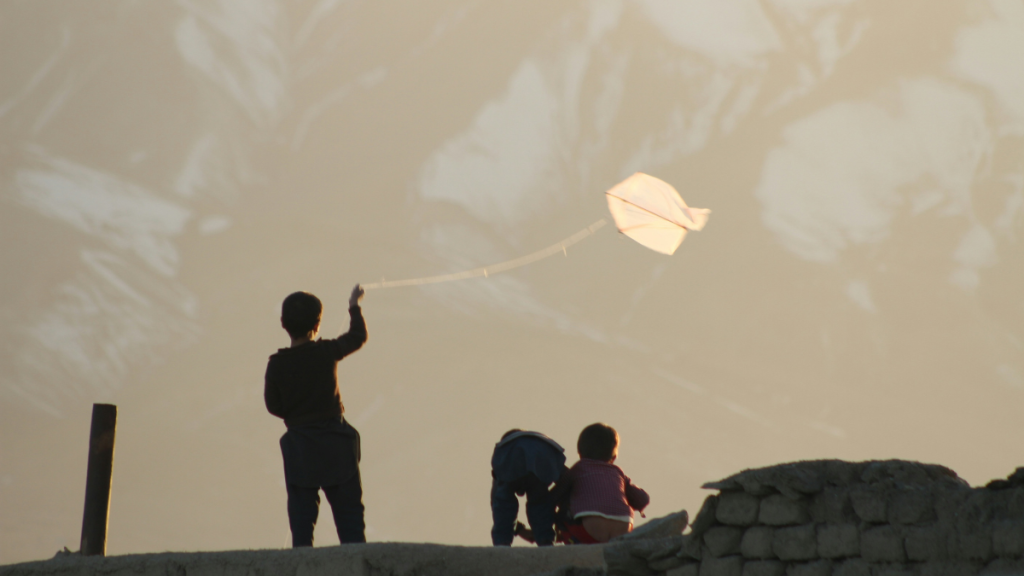
Bacha poshi is a term for a centuries-old practice in Afghanistan – when girls disguise themselves as boys. In a patriarchal society living under harsh Taliban rule, Afghan women hold few freedoms – they are barred from most employment, and can be randomly prevented from even appearing in public without a male guardian. Survival is a challenge for most households, even those with men: The United Nations estimates that approximately 85% of Afghans are surviving on less than a dollar a day, and says the situation for women “markedly worsened” after the Taliban came to power in August 2021.
No wonder then, that “the practice of bacha poshi persists and rises,” Sahar Fetrat, a researcher at Human Rights Watch, told NPR. Forced to live under what Fetrat describes as “the Taliban’s vision of a society built on total female subordination,” families with no fathers or sons turn to girls in an effort to meet basic needs.
Beyond providing for a family, dressing as a boy allows a girl to act as a mahram, or male guardian, for her mother, sisters, aunts or any family members – without her, they might not be allowed to simply move through public space without Taliban interference. The girls who take on this role don’t leave unscathed, though. While dressed as boys, they “face abuses, including sexual abuses outside the home, child labor, severe psychological, physical and identity-related harms,” Fetrat said.
NT, a mental health counselor from western Afghanistan who asked to be identified only by her initials, said that while the practice does help families survive, it can also wreak havoc, specifically on the mental wellbeing of girls who reach adolescence and have to leave their male identities behind. One 16-year-old using the name Omid has moved about as a boy since age 3. It wasn’t her choice, but her mother’s – one made following the death of her father. Because of it, she’s experienced freedoms her sisters can only imagine: playing outside, visiting shops, walking without scrutiny on public streets. Omid even has friendships with local boys. But now that puberty has hit, it’s likely she will have to give it all up. That shift can be traumatic, NT said.
No longer able to blend in among boys, the sudden expectation “to conform to the feminine traits and behaviors required by conservative society,” causes some girls tremendous mental strife. In the end, Fetrat told NPR, there are no good choices for women and girls in Afghanistan – bacha poshi is just one of many imperfect survival strategies with a lasting human cost.
Turn Up the Heat – The Surprising Antidepressant Properties of Saunas
Did you know that regular sauna use has been linked to reduced risk of cardiovascular disease, respiratory illness, and even depression? Of these, the connection to heart health is the clearest.
“The evidence is robust; it’s consistent,” cardiologist Setor Kunutsor told NPR. Based at the University of Manitoba in Canada, he’s been involved in many of the studies uncovering these associations. Much of this exciting data comes from Finland – an ideal population for sauna-focused research, with 3 million saunas to its 5 million people.
One 2015 study that followed 2,315 middle-aged Finnish men for about 20 years linked frequent sauna use (four to seven times per week) with a 40% to 60% lower risk of cardiovascular disease and death compared to those who only went once a week.
“We know temperature has an effect on disease, but we were surprised by the magnitude of the effect,” Kunutsor said.
The benefits might come from sauna’s ability to prompt physiological responses like the ones that occur during exercise: intense heat forces the heart to work harder, blood vessels to dilate, and the body to adapt in ways that pay dividends after you’ve cooled down.
According to Knutson, data from Finland suggests “optimal benefits” occur with 15-minute sessions at least three times per week.
Research conducted within the past decade also suggests that sauna use may help treat depression. One small randomized controlled trial saw a significant reduction in symptoms of depression after just one session of whole-body heating.
“High heat administered for a time-limited period is an antidepressant – and a pretty good one,” said Wisconsin-based psychiatry researcher Charles Raison. “The pathways in the brain and body that mediate thermoregulation overlap spectacularly with the pathways that mediate mood, desire, the state of emotions.”
In other news…
Unemployable, incompetent, and floundering: Across literature, full-time fathers are useless – and that’s a problem, Eric Magnuson writes in a personal essay for The Atlantic. It’s a realization he came to after searching for himself among stay-at-home dads in fiction.
“I never used to be a reader who needed to see himself in a novel. But as a dad who takes pride in bringing fun and, if I may say so, some skill to the role, I’ve grown tired of cultural stereotypes that reduce stay-at-home fathers to undignified buffoons,” he says.
We’re more aware now about the psychological harm wrought by stereotypes about masculinity, but it seems that awareness hasn’t translated into positive depiction.
Revisiting stay-at-home-dad novels published since 2020, Magnuson repeatedly found “avatars of resentment and disaffection,” with fathers putting their children in physical danger, living as addicts or cheaters, or simply spiraling under society’s judgment. His search took him through newspaper archives, library collections, and bookselling sites, tracing fictional stay-at-home dads all the way back to the 1970s.
He discovered just 83 titles featuring full-time, non-single dads, with only one book depicting “a father who wasn’t crumbling under the stigma of his role,” Magnuson says. That bright spot? Nicholson Baker’s 1990 novel “Room Temperature,” showing “finally, a father who, just like me, calmly went about his parenting as if it were the most natural thing he could do.”
The name “MindSite News” is used with the express permission of Mindsight Institute, an educational organization offering online learning and in-person workshops in the field of mental health and wellbeing. MindSite News and Mindsight Institute are separate, unaffiliated entities that are aligned in making science accessible and promoting mental health globally.

Author

Related Articles
Generation Cancer: Millennials Struggle With Death at an Early Age
More young adults are being diagnosed with cancer. Even for those who survive, the experience can be destabilizing and isolating.

Millennials Weigh Having Children On Their Own Terms
Not having children is also a valid path, and one that everyone should consider, Merle Bombardieri argues in her 1981 book.

Waiting for Word on Relatives Under Attack in Iran
Iranians in the US are caught between two “unrepentant regimes,” says Iranian-American writer and professor Shervin Malekzadeh.
