
‘Uprooted Over and Over, You Are Nowhere’: A Refugee from Bhutan Ties Forced Relocation to Shocking Suicide Rates Among Fellow Exiles
Ohio nonprofit leader Sudarshan Pyakurel on third country relocation and other immigration policies that retraumatize highly vulnerable Bhutanese refugees in the U.S.
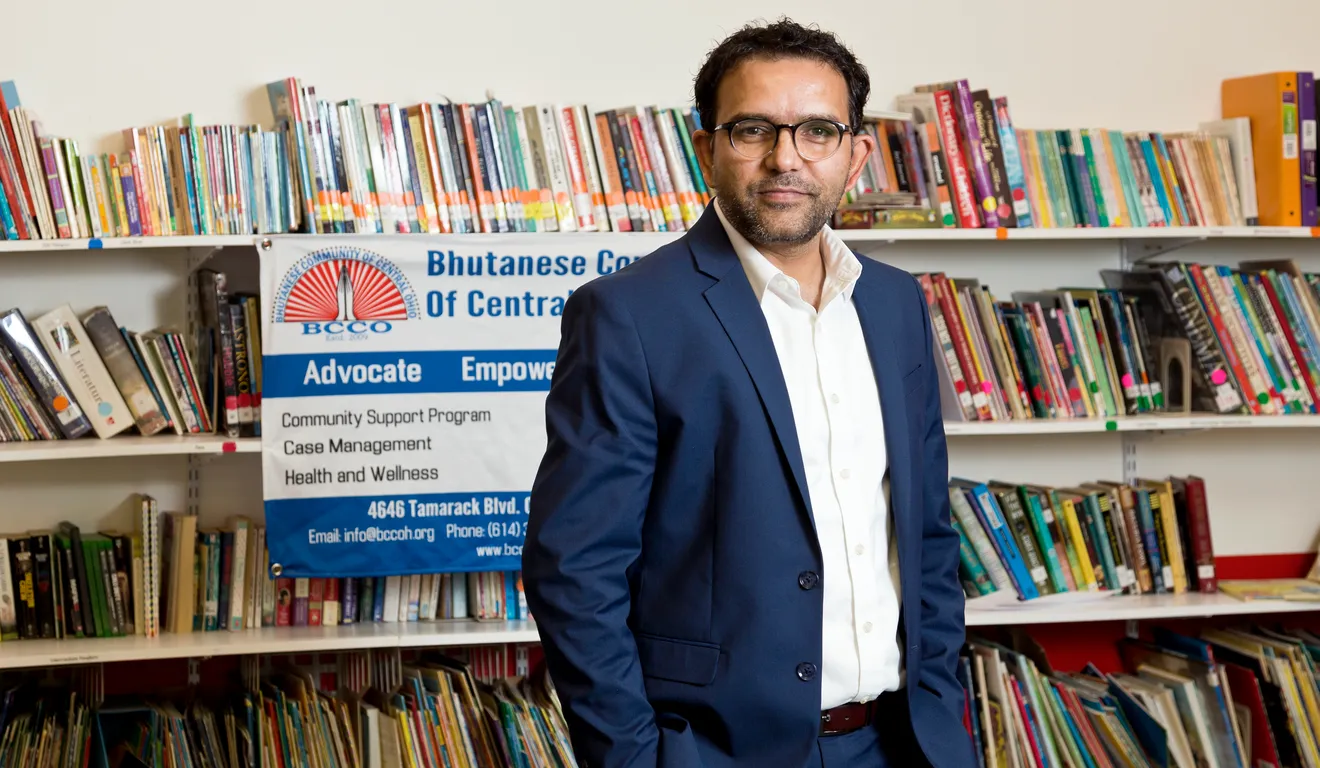
This article is part of Unseen: The Impact of Trump’s Draconian Immigration Policies on Asians in America, an ongoing series supported by the Nova Institute for Health.
Sudarshan Pyakurel, MA, MSW-LSW, 45, was just 9 years old when he became the man of the house. His father, a Hindu priest, hid in the jungle at night to avoid the Bhutanese army. His older sister, 14, stayed away because girls her age were being raped. Pyakurel cooked food, followed signs his parents left behind for him, delivered their meal and came home — every day, knowing someone could track him, knowing his parents changed their hiding place daily so he couldn’t give them away even under pressure. His younger siblings were 7, 5 and 3.
This was southern Bhutan in the early 1990s, when the government’s “One Nation, One People” policy turned into persecution of Nepali-speaking citizens based in the region. The population — collectively known as Lhotshampas — comprised nearly one-sixth of Bhutan’s citizenry. The group was ultimately stripped of its citizenship, making the landlocked Himalayan kingdom into what Human Rights Watch described as one of the “highest per capita generators of refugees in the world.”
The forced expulsion was built on a broader framework of “Bhutanization” instilled in the 1970s and 80s, a policy built around citizenship laws coupled with selective cultural and religious practices that excluded Lhotshampas and eventually rendered most of them stateless.
Pyakurel spent eight years in a refugee camp in Nepal before completing graduate degrees in India — all while registered as a refugee. He arrived in Cleveland in February 2010 and is now based in Columbus, where he serves as founder and executive director of the Bhutanese Community of Central Ohio, a nonprofit providing critical support services to the largest Bhutanese-Nepali population in the United States. He is a licensed clinical social worker who also provides therapy to Lhotshampa community members for whom Western therapy is inaccessible due to cultural and linguistic barriers.
The Bhutanese community has one of the highest per capita suicide rates of any resettled refugee group in the United States, nearly twice the rate of the U.S. population as a whole. Researchers say these findings are likely underestimated, while the Centers for Disease Control and Prevention found them so alarming it triggered a multi-state study.
Adding to this challenge are current immigration enforcement practices that are reopening the very wounds around displacement the community has sought to heal. The refugee community has watched the U.S. government send dozens of people back to Bhutan — the country that expelled them or their family members. Once in Bhutan, those same deportees are, again, being expelled, leaving them trapped in what New Hampshire State Representative Suraj Budathoki (the first Bhutanese American state representative elected to U.S. political office) has described as “a stateless limbo.”
Through research and direct support, Pyakurel has spent more than a decade trying to understand the underlying causes of his community’s mental health challenges and to identify what forms of culturally attuned support might actually help. Simran Sethi, media fellow at the Nova Institute for Health, spoke with Pyakurel about the mental health toll of displacement, the limits of Western treatment models and what survival looks like when repeated, forcible relocation becomes the defining feature of the lives of an entire population.
The interview has been edited for length and clarity.
Simran Sethi: When did your family establish themselves in Bhutan?
Sudarshan Pyakurel: My great-grandfather migrated from Nepal in the late 1890s. My grandfather was born in Bhutan around 1910 and had older siblings who were also born there.
So, for generations, Bhutan — a country celebrated for its happiness indicators and heralded as model of wellbeing and harmony for the rest of the world — was your home. What happened?
We were rice farmers, part of the rural farming community, living in the countryside, minding our own business when, in the late 1980s, the government began to implement the “One Nation, One People” policy.
This came out of the Bhutanese Citizenship Act, which required people in the country to adhere to the language, dress and customs of the dominant religious group [the Drukpa lineage of Buddhism that gained political dominance through a monarchy descended from Tibet].
I was in second grade at the time, and this was part of a cultural code called Driglam Namzha. It’s a Dzongkha word that means a “national discipline.” We were made to wear the Drukpa dress, which is what the ruling class puts on. It is a very Tibetan-looking dress, designed for a cold climate, but the southern part of Bhutan is humid and hot, so it was very uncomfortable. Then [school] books started to very rapidly change. Nepali language was removed from the curriculum [replaced with the language Dzongkha]. Teachers who were of Nepali descent were fired. That was my experience as a 7-year-old, watching the changes around me.
The next year, when I turned 8 and things got very violent, people protested and asked for these rules to be changed. The government sent in the army. Schools, hospitals, and government facilities were shut down and converted into military barracks. [Lhotshampa] people were arrested and all manner of atrocities happened.
When I was 9 and then 10, we had to witness the persecution firsthand. I remember women in the neighborhood who were raped by the army. We had very frightening thoughts all the time. My dad was a Hindu priest and this was a persecution of the Hindu minorities. So, during the daytime, my parents would work on the farm. But during the night, they would hide.
Did you go into hiding with them?
My younger siblings and I would stay home while the army was patrolling. My older brothers were not with us, so I became man of the house. I had to cook food and then go out and find my parents, wherever they might be hiding. That was my daily routine: to follow some sign of where they were, take the food there and come back. Because there was always the chance that someone could be tracking me or could force me to give away their location, they changed their hiding place every day.
I also had an older sister who was about 14. We heard of [girls] who were 14 or 15 years old being raped by the army, so she would also go into hiding. She would only come home during the daytime, eat and go.
You are saying you became the man of the house at age 9. How old were your younger siblings?
One was 7, one was 5 and one was 3.
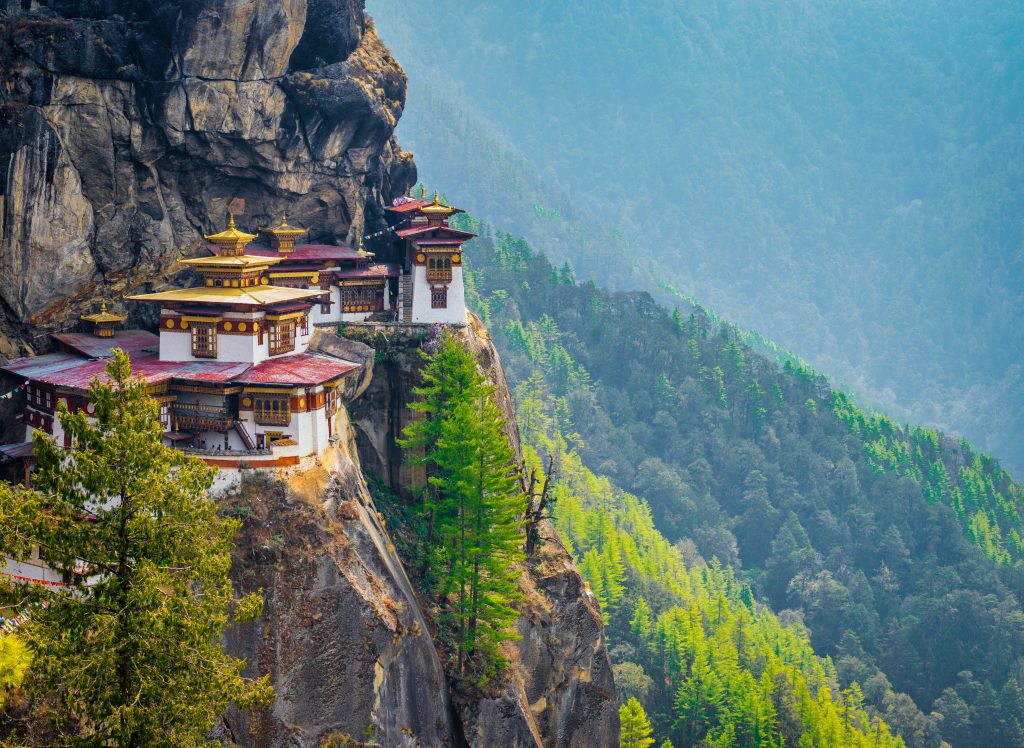
Over 100,000 Lhotshampas — who had been Bhutanese citizens for generations — were stripped of their rights and evicted from Bhutan during this period. You mentioned your dad was a Hindu priest and your family spoke Nepali and have roots in Nepal. Were these acts of religious persecution, ethnic cleansing or both?
Both. They were persecuting people who spoke Nepali regardless of their religion. That was ethnic persecution. But where it became more religious was that [the Buddhist monarchy] didn’t allow the Hindu community to practice their religion. In 1990 and 1991, we weren’t allowed to celebrate any Hindu festivals or wear our traditional clothes. Many priests were arrested. As the high priest in the village, my dad managed to get some protection. The community played a role in keeping him safe. But many junior priests were put in jail, where they were forced to eat beef, which is forbidden for Hindus to eat.
The human rights abuses during this time are well-documented. A 1992 Amnesty International report details rape, torture, assault and even beheadings …
That was a very traumatic experience. As conditions got worse, we had to leave. I was 10.
You have said: “No one was born a refugee, and anyone can become a refugee.” You and your family were part of roughly one-sixth of the Bhutanese population that ended up fleeing the country, the majority of whom the Bhutanese government classified as “voluntary migrants” after being forced to sign voluntary migration forms under duress, according to Human Rights Watch.
My family and I lived in a refugee camp for eight years in the eastern part of Nepal, then I went to India, where I completed my bachelor’s degree and my master’s degree. I was in law school before moving to the U.S. For 17 years, I was a registered refugee.
And from there, you ended up in … Ohio?
Leaving Bhutan was very, very painful and we always thought we’d be able to go back. In school, in the camp, even when I was in India, we always believed that one day it would be possible for us to return. We weren’t planning to come to the United States or Canada or anywhere. We wanted to go back to our home.
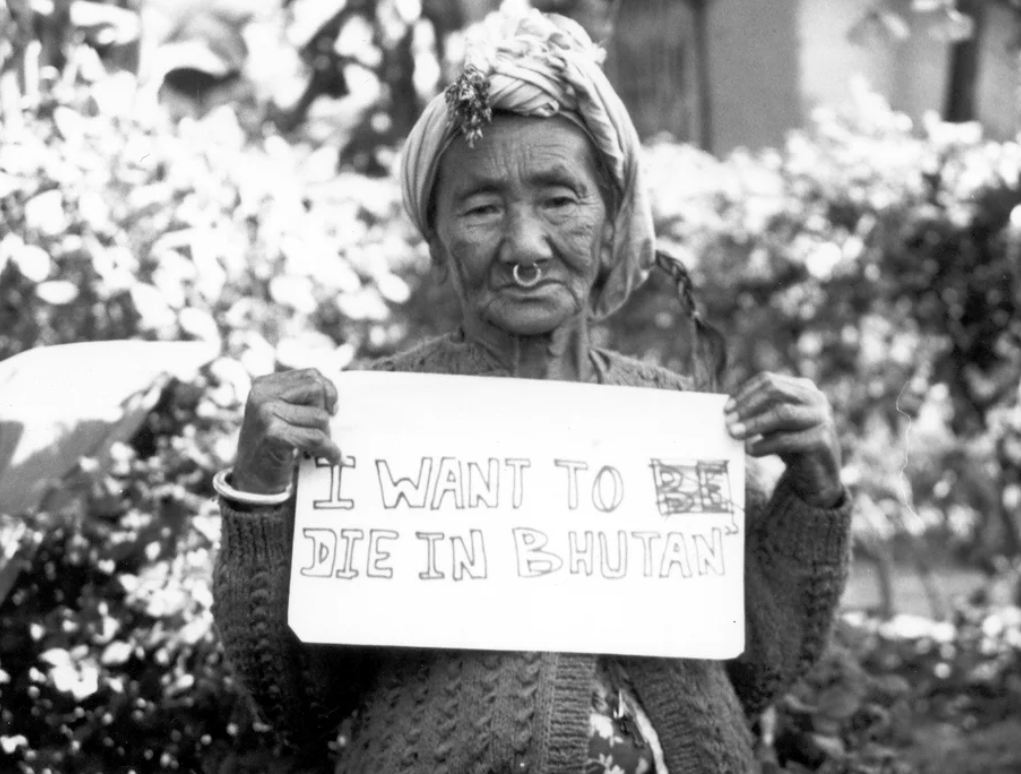
According to reports, Bhutan refused to allow a single refugee to return. In the last year we’ve heard a lot more about people being deported to third countries that are not connected to their nationality or place of residence. That third country resettlement is exactly what your community faced.
Yes. By 2006, we were already 15 years into the refugee crisis. Bhutan and Nepal tried to negotiate, but that didn’t go well. That’s when Western countries began to float the idea that the refugees could be resettled.
UNHCR, the United Nations refugee agency, facilitated the resettlement of refugees from camps in Nepal to the United States and a small handful of other countries starting in 2007 …
I heard about it, but I still wasn’t interested. I wanted to go back to Bhutan, and my family felt the same. But by 2009, it seemed like the only option was relocation to the United States. We took what was really the only option given to us.
There was a long vetting process. Then, the week before we were to fly, we were told we’d be going to Cleveland, [a place] I had never heard of.
We came at night on February 25th, 2010, into the middle of a brutal winter in Ohio. We weren’t prepared — no proper jackets, no boots, nothing.
That sounds like a lot.
We were glad there was a home [for us], but the resettlement agency took us to an apartment that was barely furnished, walked us through, and left. When I opened the refrigerator, there was meat and eggs. We were strictly vegetarian.
After a few days, we had to go to the resettlement agency office. They told us we could go to Goodwill to buy boots and jackets. I thought Goodwill was a big supermarket. And then we saw it. It was a shock. Anyway, that’s where we began — giving the food in the fridge to the neighbors and buying used winter clothes.
Within three months, R&P support ends.
You are talking about social service support from the Resettlement and Placement Program for refugees. This is a program that was in place to help people new to the country who had arrived from really challenging conditions get back on their feet. [Donald Trump shuttered the program in 2025, days after he started his second Presidential term.]
Yes, and you have to find work. I got a part-time job at a restaurant as a waiter but didn’t have any transportation. I worked from 5 to 9 — four hours, three days a week. It would take 1 hour and 45 minutes to get there, and then 1 hour and 45 minutes back home by public transit. My sister did the same.
The resettlement agencies were only concerned with finding us a job. If we had a part-time job, they’d say, “Great, hang onto it; we have other refugees to work with.” We barely managed to pay rent that first year. It was 2010, when America was going through an economic recession. The first two years went to just trying to pay bills.
By 2020 — 10 years in — we were still struggling. For a decade, it was primarily lack of information, lack of support, and not being prepared for what life here would require. Only in the last 5 years would I say I finally have an income to properly support myself.
In their 2021 paper on the racism Bhutanese young women of Nepali origin have faced, researchers Binaya Subedi and Arati Maleku write, “The community was isolated for more than 20 years in refugee camps in Nepal and, despite having ethnic and cultural ties, the community was never granted legal forms of citizenship in Nepal.” So there’s this sense of extreme displacement that’s then exacerbated by the conditions of where you relocate to …
America can feel like madness, to be honest. You have to face racism, economic precariousness and the burden of caring for your family while not knowing if something could happen to you at the workplace, or to your children in school.
You’ve dedicated your professional life to helping people navigate these migration stressors that are known contributors to immigrant mental health challenges. What difficulties do Bhutanese immigrants, in particular, face?
There are many. When it comes to mental health, we have one of the worst records in terms of per capita death by suicide.
I want to dive into that shocking data but, first, what inspired this work?
In 2010, when I was in Cleveland, I was one of few people who came to the U.S. with a college education. Many refugees had left rural areas and were in refugee camps for many years. I found out that many community members did not have the knowledge to even buy a transit ticket to get to the resettlement agency or to work. First, I’d go early to the Metro station and help them buy tickets. Then, I found people needed more help. Think about community members coming from a place where they didn’t have running water in their homes, indoor toilets, or electricity. They had to adapt to all of this at once.
In my free time, I would go door to door to new families arriving and provide orientation: “This is how the stove works; this is how the toilet works.” That’s how we began helping incoming families. That’s where my social work started.
Because I was active in the community, in 2011 other leaders said I needed a nonprofit to formalize the work. So we created a small nonprofit, mobilized volunteers and kept helping.
Then in 2013, my dad attempted suicide and was hospitalized. That was a big shock. He was well-respected, someone people would go to for help. That’s when I realized something much bigger was happening. I was attending a community class at the time, and I brought this to my professor. She explained to me what mental illness meant and I began looking into it.
When I came to Columbus for my master’s in social work, I began working with researchers collecting data to understand [my community’s] mental health crisis. Through our survey in 2015, we learned that in nearly every Bhutanese home there was at least one person struggling with mental illness, but nobody was willing to talk about it because of cultural taboos and stigma.
Asian culture plays a significant role here …
Mental illness in our community has also always been associated with the karmic cycle of life. Because of that, people don’t want to share. It feels like karma — like they have done something bad. And there is fear about what it means for their children’s marriage prospects if the stigma becomes known.
Initially when I tried to educate people, they’d say, “What will happen to my family if my neighbor learns that my son or daughter has a mental health problem?” That adds to the complexity.
But not addressing these issues can have devastating consequences. Especially in a community where, studies show, Bhutanese refugees die by suicide at rates nearly two times that of the general U.S. population.
The CDC did research on this in 2014. Since then, local service assessments and other research have all pointed in the same direction: twice or more than twice the national average. It’s horrific.
So we started doing events, bringing people together and educating them about suicide and suicide prevention. That work has been building for 11 years now. We haven’t achieved everything we wanted, but we have made significant changes in terms of education. The youth are more engaged and now even elders in their 50s and 60s reach out to us for help. But the suicide rate is still very, very high.
Why? What makes your community so vulnerable?
Primarily, relocation. Forceful relocation. You have been uprooted over and over and over again. Mentally, you are nowhere. Spiritually, you are homeless.
My ancestors moved from the western part of Nepal about 500 years ago. We were fleeing the Mughals and Islamic persecution. We stayed in Nepal maybe 100, 200 years, then had conflicts with the native people and relocated to Bhutan. One hundred years later, there was again a conflict, and we relocated to the United States. I don’t know what will happen in another 100 years, but as I’ve dug into my own ancestral history, the pattern is clear: uprooting and re-uprooting.
Relocation has become part of our inheritance. And that, of course, affects mental health. How could it not?
And that is, one could say, what rests underneath the factors you share in your mixed-method study: the hardships of “adjusting to a new environment, lack of employment and reliable social services, language barriers, identity concerns, and other psycho-social stressors” that result in “high rates of depression, anxiety, PTSD, alarming rates of suicide, and lower utilisation of mental health services.”
A 2021 paper you co-authored on Conceptualizing Mental Health Through Bhutanese Refugee Lens showed nearly half of those surveyed exhibited some level of anxiety and a staggering 95% of respondents demonstrated some level of depression, with one in four experiencing severe depression.
Bhutanese refugees tend to break records in the symptoms of complex trauma. And if you’re coming from that background — when you are so vulnerable, when you have been persecuted and uprooted not once, not twice, but so many times — it becomes accumulated trauma. When trauma lasts 10, 15 years and has multiple layers, it becomes complex trauma.
And there is also a lack of understanding among providers about the refugee population — what we call the “triple trauma paradigm.” You live through one trauma after another — without treating the previous one — before the next cycle begins.
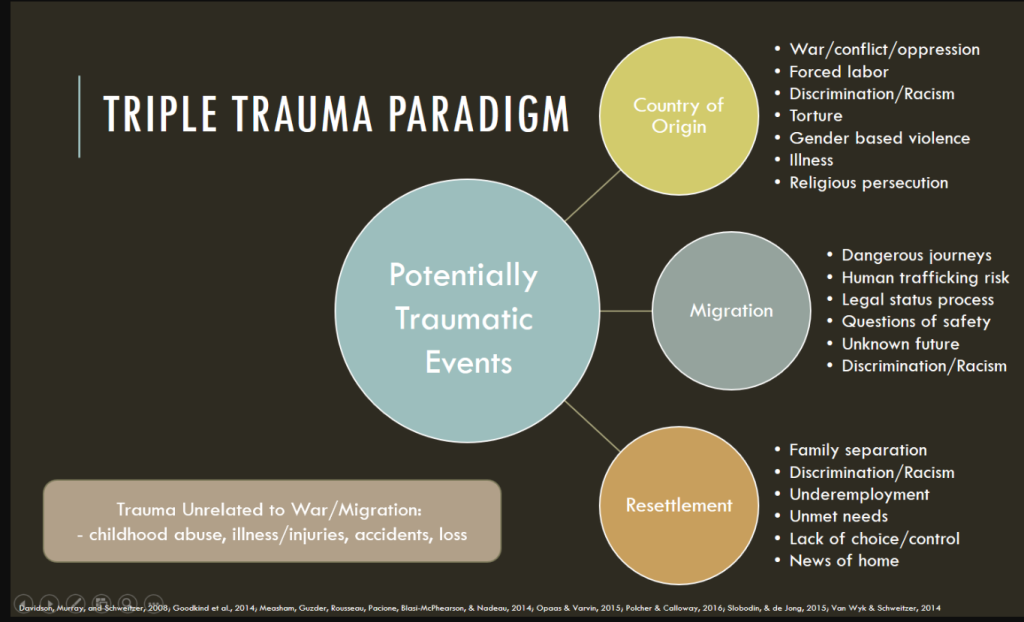
The trauma of occurrences in one’s home country, the trauma of actual migration, and the trauma of resettlement and beginning again.
You don’t know which layer to [peel]. The Western approach — talk therapy — tends to open wounds and just leave them open. The providers open traumatic conditions and then leave the individual to deal with them alone.
Your research highlights a range of obstacles to utilizing mental health services — transportation, the cost of sessions, language barriers, fears that interpreters might breach confidentiality and clinicians’ lack of understanding of the lived experiences of displaced Lhotshampas. Plus, the fact that in refugee camps the term “counselor” was associated with someone in a position of power who only interfaced with refugees when they were in trouble and were seen as punitive figures, not reparative. That’s a lot to contend with on a journey of healing.
Very much so.
And now there are the current issues with immigration policy and enforcement — and Bhutanese people being deported from the U.S. How is your community managing these new challenges?
We experienced a similar kind of persecution in the 90s. We see the same pattern and the same traumas are being retriggered.
My parents and their generation remember exactly how it all started in Bhutan. With the same language: “We are only going after criminals.” Only in Bhutan, they used to say “bad potatoes.” The army and the bureaucrats would come to community gatherings and say, “Do you know if you have one bad potato in the bag, all the potatoes go bad? We’re just removing that one bad one. Don’t worry, we won’t do anything to you.” People supported it in the beginning. Then slowly, they began touching the whole bag.
It’s the same scenario here. People were feeling better, they were on a path to healing — and now everyone has fear deep down. When we see the pattern now, it’s re-traumatizing. Old, young, men, women, educated, uneducated … everybody has doubts. The administration has spoken of re-evaluating refugees who are here and denaturalizing citizens. The cycle of trauma hasn’t ended.
We know that 49 Bhutanese have been deported back to Bhutan. The cases we’ve seen in Columbus involved very minor infractions with law enforcement — lack of understanding, not appearing in court and so on. Even when they did go to court, they pled guilty because that’s what they were told [to do]. Even in situations they could have avoided, because of lack of knowledge or lack of legal representation they made the wrong decision and they were deported.
But some of those who have been detained and deported have caused serious harm.
Are there some bad actors? Yes. But what we are saying is, if they have done something wrong, prosecute them here. Put them in jail here. We don’t have a country to go back to. The fear is, if we are deported from America, we become stateless.
The people who have been deported back to Bhutan were expelled by the government within 24 hours. They arrived; Bhutan gave them the equivalent of 10,000 Indian rupees [about $108 US dollars]; and dropped them at the border with no documents. Four of them were arrested in Nepal for illegally entering the country. [These deportees] call their family members here in the U.S. and tell them, “Bhutan hasn’t recognized us. We are living stateless on the streets of India and Nepal.” They are in a limbo state.
That’s a very big fear: to once again be rejected by the country that was your home and also by the place in which you have ethnic roots. It’s been reported that some have ended up in the very same refugee camps in Nepal they had left as children. What from culture can suture these wounds?
People are becoming more economically stable, and that’s bringing more security. But what we also see are remedies based in the home or community. Gardening has been extremely helpful for older populations because they were farmers. When they return to the land, they feel that connection. Hindu religious activities and rituals — group chantings, listening to religious texts together, going on pilgrimages — and being able to meet with family members and celebrate together. These seem to help far more than talk therapy.
Asians come from collectivist cultures. The healing is in community.
Exactly. Right now, we need to hold together, support each other as best we can and not allow division when someone says, “I’ll spare you if you’re an engineer,” or something like that. Our religion reminds us we are interconnected and should be caring and standing up for others.
Yes, we have to be very careful; this is a difficult time. But we have lived through difficult times before. When the good time comes, we can think about many things. Right now, it’s all about survival.
Simran Sethi is a media fellow at the Nova Institute for Health, whose financial support enabled Sethi to report the series Unseen: The Impact of Trump’s Draconian Immigration Policies on Asians in America, including this interview. This story is reported and produced by MindSite News and co-published by The Xylom, a nonprofit news outlet covering global health and environmental disparities. Subscribe to their newsletter here.
The Bhutanese Community of Central Ohio is a community-based nonprofit dedicated to helping newly resettled Bhutanese refugees as well as established Bhutanese Americans. Information about legal rights can be found in our ICE Encounters and Family Preparedness guides.
Other stories in our UNSEEN series include:
Collateral Damage: The Emotional Toll of Trump’s Immigration Policies on Asian Children and Families
A Father’s Story: Harpinder Chauhan on Being Torn from His Family by ICE
“It’s More Horrific Than What Is Being Told”: Filipinos Speak Out About Being Targeted by ICE
The Trauma and Resilience of Afghans: An Interview with Dr. Qais Alemi
Fleeing Afghanistan After Its Fall Was ‘Like An Avalanche‘
The name “MindSite News” is used with the express permission of Mindsight Institute, an educational organization offering online learning and in-person workshops in the field of mental health and wellbeing. MindSite News and Mindsight Institute are separate, unaffiliated entities that are aligned in making science accessible and promoting mental health globally.


Author

Related Articles
Formerly Incarcerated Mentors Are Changing Lives in California
Peer support specialists provide valuable mentorship and emotional support — grounded in hard-earned personal experience.
Are These the Words of a Sane Man? Trump: “A whole civilization will die tonight”
As Donald Trump posted unhinged rants – using words that are almost the definition of genocide – members of Congress, columnists and even Marjorie Taylor Greene called for using the 25th amendment to declare him mentally incompetent and remove him from power.

For High School Athletes, Running Can Benefit Mood and Focus Just as Much as Physical Health
The parts of your brain devoted to memory and learning are actually bigger in people who exercise regularly.
