
Even Under Financial Pressure, Young People Point to Reasons for Hope
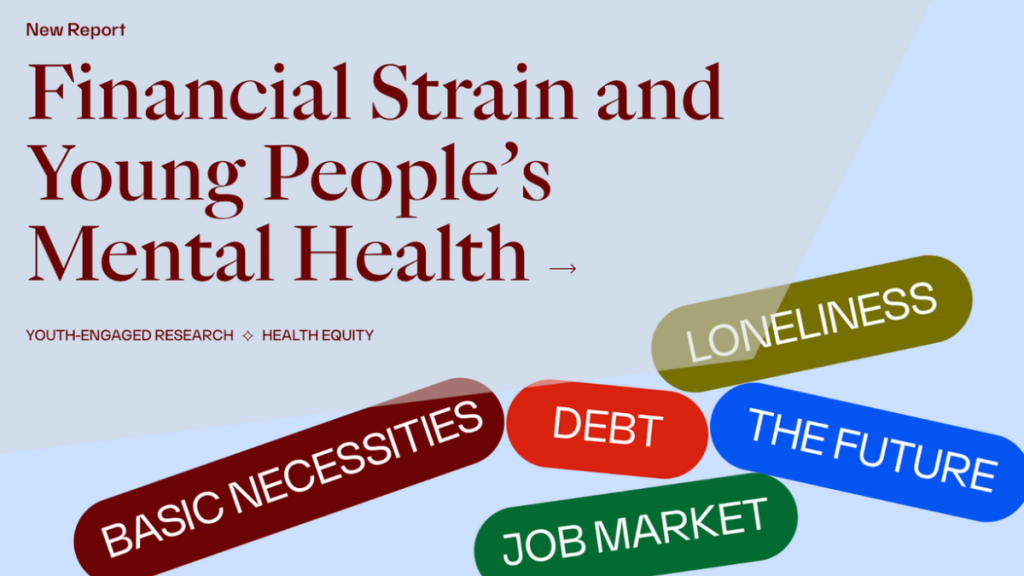
Youth across the country are being squeezed by inflation and the rising cost of living, but they are still finding sources of strength and hope, according to research from Hopelab in partnership with Data for Progress.
Young people under financial stress are more likely to report poor mental health than their more financially comfortable peers, “yet nine in 10 are able to name at least one meaningful source of hope in their lives, including having people who love and believe in them, as well as their own creativity, problem-solving skills, and belief in their own inner strength,” the study reported.
However, most youth who reported financial strain – at a time when 57% of U.S. adults call their finances “fair” or “poor” – are feeling the impact on their mental health. Among the study’s key findings:
– Unlike peers who feel comfortable financially, young people under financial strain are nearly two times more likely to rate their mental health as fair or poor (62% vs. 34%).
– Nearly two-thirds (63%) say problems affording basic necessities “directly harms their mental health, describing worry, pressure, and constant stress.”
– Just 45% feel optimistic about their own future, and only 18% feel hopeful about the country’s future.
– The gap between comfortable and struggling youth is especially evident in terms of higher education: Only 29% of financially strained young people “feel confident they can afford college, compared with 62% of their more comfortable peers.”
However, most felt a sense of hope related to their relationships with family, friends, mentors, and community organizations emerged as central to that sense of hope.
The report points to some basic sources of help that should be expanded immediately, including meals for students, stable housing and free or low-cost health care, child care and summer camp programs, as well as community programs offered by places like the YMCA and the Boys and Girls Club.
“Even in the midst of financial strain, young people are not giving up on themselves or on each other,” says Amy Green, head of research at Hopelab. “This research is both a warning and an invitation: If we meet their courage and honesty with real support and policy change, we can help ensure that hope has room to grow.”
(We’ll highlight some of the voices of youth interviewed in a coming story, and you can read the entire report here.)
The name “MindSite News” is used with the express permission of Mindsight Institute, an educational organization offering online learning and in-person workshops in the field of mental health and wellbeing. MindSite News and Mindsight Institute are separate, unaffiliated entities that are aligned in making science accessible and promoting mental health globally.

Author

Related Articles
What ICE Detention Does to a Child
As Immigration and Customs Enforcement agents apprehend more children, it raises a simple question: What does immigration detention do to a child’s mind and body?

Problem Gambling Is Quietly Becoming an Adolescent Crisis
A 2026 survey from Common Sense Media found that one-third of boys age 11 to 17 reported gambling in the past year.

Dad’s Dementia Helped One Kenyan Researcher Find Purpose in Her Career
Sharing that “dementia is a disease of moments,” a Kenyan researcher teaches families how to better care for their loved ones.
