
College Sports Has an Emotional Abuse Problem
Two sisters were recruited from Croatia to play college basketball in the US. They say their coach derided and insulted them – and that there were few safeguards to protect them.

Greetings, MindSite News Readers.
In today’s Daily, a close look at the hazards of emotional abuse in college sports — and allegations that coaches evade consequences for inflicting harm. As Michigan’s residential treatment beds for youth rapidly disappear, children and their families pay the price. And Detroit-area organization Autism in the D has a series of events this weekend for families seeking fun, community, and support.
But first, meet artist and former magician Peregrine Church, who, in an effort to spark joy in gloomy weather, created an art technique that only reveals his sidewalk creations in the rain.
College Sports Has an Emotional Abuse Problem. One Lawsuit Just Proved It.
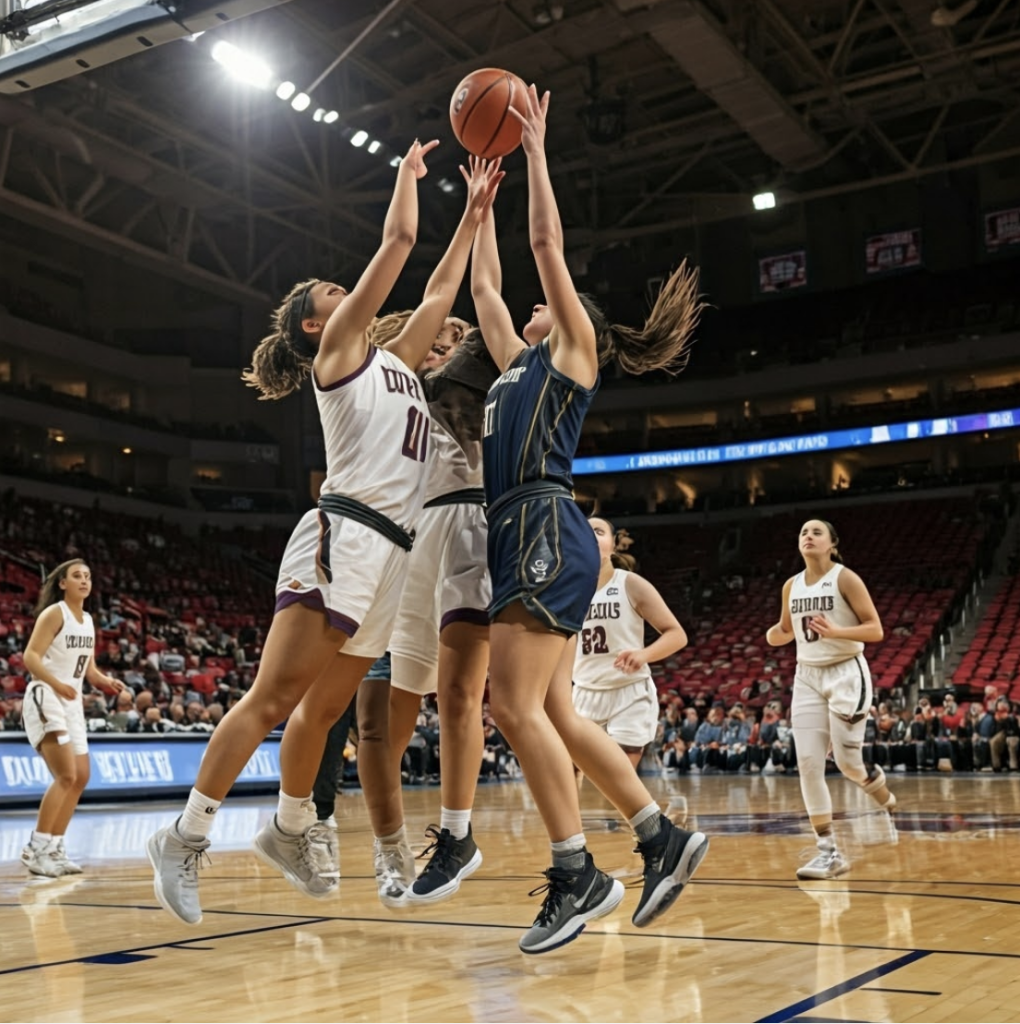
Twins Marta and Marija Galic grew up playing basketball on the courts of Zagreb, Croatia, and their love and talent for the game eventually carried them all the way to San Francisco, where they’d been wooed to play for head coach Molly Goodenbour at the University of San Francisco. Goodenbour had visited Croatia multiple times to recruit the pair, offering each a full five-year scholarship and convincing their parents, over dinner in the family garden, that their daughters would be in good hands. They weren’t.
Almost immediately after arriving at USF, the twins say, they encountered Goodenbour’s true nature as a coach. “Practices felt like entering a war zone,” Marta told NPR, going on to describe an anxiety-induced pre-practice ritual she developed: splash cold water on her face, mime the Superman pose in the mirror, and empty her bladder.
The habit stuck, even after she says she was denied permission to use the restroom during one grueling layup drill — causing her to soil herself — and still, she said, Goodenbour refused to let her step away to clean up. According to NPR, Goodenbour claimed to be unaware of the incident and said players are allowed to exit the court to use the bathroom.
As time went on, Marta said she was subjected to insults, including “lazy,” “worthless,” and “piece of shit.” Marija recalls that Goodenbour told her that their teammates weren’t interested in playing with her. “How do you deal with that? How do you look at yourself and say nobody wants me on their team?” Marija recalled Goodenbour saying.
The abuse took a toll — particularly on Marija, who developed panic attacks, nightmares, and eventually suicidal ideation. She can’t even pick up a basketball anymore, she said. NPR reported that Goodenbour declined its requests for an interview and noted that she argued in legal filings that her comments to the twins were “solely about their basketball performance” and not personal. During the trial she testified that she called out players when they quit in drills, but never called them names.
The Galic twins’ experience is all too common in college sports. Studies find that emotional abuse is the most prevalent form of harm in athletics, characterized by verbal attacks, manipulation, and controlling behavior. But while universities have clear protocols for physical and sexual abuse, emotional abuse is rarely addressed with the same urgency.
The NCAA, which oversees more than 550,000 student-athletes, has no emotional abuse policy, and takes little accountability for student-athletes’ safety, with a representative telling NPR that individual schools are primarily responsible for that. SafeSport, an organization created by Congress following the Larry Nassar sexual abuse scandal, mostly routes emotional abuse complaints to national governing bodies that often lack the resources to act on them. And when universities investigate their own coaches, a conflict of interest is built in, sports attorney Martin Greenberg said.
Goodenbour, for example, faced similar allegations at two prior programs, including a suspension at UC Irvine for what the school’s athletic director called a pattern of “insensitive and abusive remarks,” and player complaints of emotional and verbal abuse at California State University, Chico before that.
The Chico State allegations were reported by the Chico Enterprise-Record, revealing that the university’s internal investigation found no wrongdoing, and that Goodenbour said her coaching style required “a period of adjustment for all players.”
In 2021, the Galic twins sued Goodenbour and USF, alleging intentional infliction of emotional distress and institutional negligence. A jury awarded $750,000 in damages to Marija alone, concluding that only she met the legal threshold for severe emotional distress. Though USF had the damage amount reduced, Marija won it back on appeal, and Marta finally reached a settlement last month. The twins’ attorney, Randy Gaw, argued that the power dynamic between a student-athlete and their coach was central to the case.
Despite it all, Goodenbour is still at USF, her contract recently renewed through 2028. There is no federal policy governing emotional abuse in college athletics, no independent body with the authority to investigate it, and no mechanism to stop an abusive coach from simply moving on to a new program.
The case offers a reminder of how far there is to go to safeguard the emotional and mental health of student athletes.
Michigan Can’t Care for Its Most Vulnerable Kids. So It’s Sending Them Away.
Michigan’s youth mental health infrastructure is in freefall, Bridge Michigan reports. Six years ago, there were 1,200 youth residential treatment beds across the state. But in the years since, 16 residential treatment facilities have closed, leaving fewer than 400 beds available.
The collapse has created a “perfect storm” of surging youth mental health needs, high staff turnover, and facilities so overwhelmed by severely ill patients that some simply can’t safely sustain operations, said Dan Gowdy, president of the Association of Accredited Child and Family Agencies.
Vista Maria, formerly the state’s largest treatment program for girls, lost its workers’ compensation insurance at the end of 2025 because staff injuries — broken knees and dislocated shoulders among them — had become too severe.
“I can’t keep staff safe,” Kathy Regan, CEO of the now shuttered Vista Maria, said in an interview last fall. “They’re getting their asses handed to them.” It closed in December.
The closing of Vista Maria may be warranted for other reasons as well, based on statements given at a press conference in February by eight girls and women. They said they were sexually abused and mistreated, including by being kneeled on until they couldn’t breathe, resulting in broken vessels in their face and eyes, the Detroit News reported.
“We believe what happened at Vista Maria was a real-life version of ‘The Hunger Games,” attorney Michael Jaafar told the newspaper. He has spoken with more than 50 girls and women who spent time at the facility and plans to file a lawsuit against it. “They came to Vista Maria, most of them because they were abandoned by their parents or by society, and they came there for protection…The protection they needed from Vista Maria did not happen.”
Documents from the Michigan Department of Health and Human Services (MDHHS) about the facility also showed dozens of violations in 2025, according to the I-Team at Local 4 Detroit. (See the MindSite News investigation for more national reporting about the troubled teen industry.)
With few in-state beds left for its most vulnerable youth, Michigan has been quietly shipping them throughout the country. It’s like “throwing them to the wolves,” said Laura Marshall of Cedar Springs, whose son was court-ordered to a long-term treatment facility in Wyoming. “We had no control over where he was going,” she said. “There really isn’t any way as a parent to be able to vet what’s really going on.”
In at least one case, the out-of-state treatment worked, but it was extremely expensive. Eleanor Middlin was 15 when her family drove her 11 hours to a Missouri boarding school, spending $90,000 out of pocket on care Michigan couldn’t provide. “I’m alive because of it,” she said.
As of September, 152 youth in the state’s direct-placement program were living in out-of-state facilities, some as far away as Hawaii and Arizona — more than double the 74 placed out of state in 2023, and up another 30 from the 122 distance placements in 2024.
The state spent more than $13 million on related costs last fiscal year, and that number is still climbing. For families, particularly those without the means to research and personally select privately funded out-of-state care, the distance intensifies the crisis. The path forward is uncertain. For families currently navigating the system, community and connection with others facing the same circumstances is the most reliable resource.
Lawmakers admit that notable change is unlikely this year, with an election forthcoming and term limits binding some state legislators, including Michigan Gov. Gretchen Whitmer. “I just don’t see it as something that they’re going to be willing to tackle,” said Republican State Rep. Matt Bierlein.
He is hoping that a 2022 voter-approved change to term limits, allowing officials to serve up to 12 combined years across both chambers, will provide lawmakers the time to build the knowledge and skill to enact meaningful change. In the meantime, mental health providers and advocates are calling for trauma-informed care models, increased specialized bed capacity, and intentional state investment in training clinicians and other frontline staff who care for children and teens.
In other news…
Autism in the D: When Tiera Moultrie’s oldest son was diagnosed with autism, she felt overwhelmed. It was the middle of the pandemic and her family and friends were undereducated about the condition. Still, she knew she needed community and support to connect her child to the best care. So she turned to the internet, launching a parent support group on Facebook for autism families in Metro Detroit. Six years later, the active group has become Autism in the D, a nonprofit with a current goal to build a sensory-adaptive gymnasium in Detroit for neurodiverse children.
This weekend, AITD kicks off its biggest public celebration yet, with three days of events designed to raise awareness and funds for the project. On Friday, April 10, a shopping night at Swank-A-Posh benefits the organization, with 10% of proceeds going directly to AITD. Saturday, April 11 will bring a sensory-immersive pop-up at Chandler Park Fieldhouse. And Sunday, April 12, the weekend will close with an Autism Awareness Walk at DMC Children’s Hospital Brush Mall. The path is 1.31 miles, representing the 1 in 31 children diagnosed with autism. All are welcome. For more information, visit https://www.autisminthed.com/.
The name “MindSite News” is used with the express permission of Mindsight Institute, an educational organization offering online learning and in-person workshops in the field of mental health and wellbeing. MindSite News and Mindsight Institute are separate, unaffiliated entities that are aligned in making science accessible and promoting mental health globally.

Author

Related Articles

Autism and Alzheimer’s May Be Linked, Study Suggests
New discoveries are pushing researchers to consider that autism and Alzheimer’s may offer insight into the other.
He Almost Killed His Father. Now He Helps Others At Risk.
In today’s newsletter, we explore how one man healed after a dangerous psychotic break that nearly led him to murder.

Fallout Over Supreme Court Ruling on Conversion Therapy
Despite the Supreme Court ruling, conversion therapists can still be sued for a practice the United Nations calls “torture.”
