
“Eating Bitterness” (吃苦): Civil Rights Advocate Annette Wong on How ICE Policies Harm People of Chinese Descent
About one-third of people who have died in ICE custody since January 2025 are of Asian origin, the majority of whom are of Chinese descent.
This story is part of Unseen, a MindSite News series by Simran Sethi on the impact of federal immigration policy on Asian communities and supported by the Nova Institute for Health.
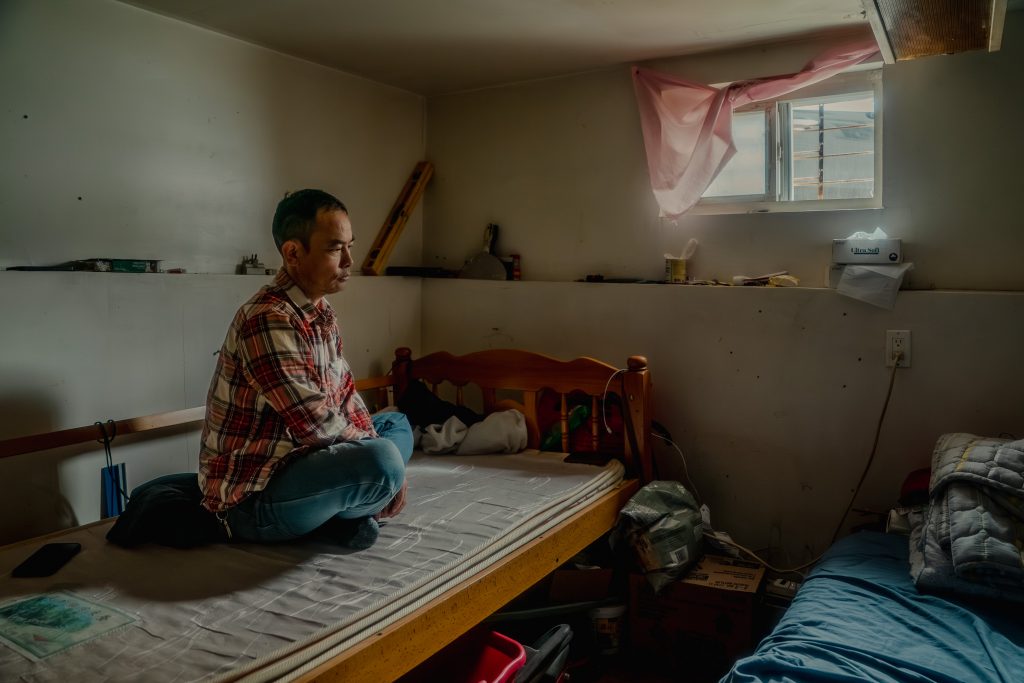
On August 5, 2025, Chaofeng Ge, a 32-year-old Chinese national, was detained by ICE. Four days later, he was dead. The detainee death report filed by ICE states Ge was found “with a cloth ligature around his neck” but the lawsuit filed by his brother Yanfeng tells a more complicated story, stating Ge was found “hanging by his neck, with his hands and legs tied behind his back.”
The lawsuit alleges Ge was left isolated because no one at the facility spoke Mandarin, likely exacerbating the mental health challenges Yanfeng had said his brother faced. Officials at Dauphin County Prison – the facility where Ge had been incarcerated before he was placed under ICE custody – maintain they shared records with ICE detailing Ge’s past suicide attempt, the detainee death report states Ge arrived without a medical transfer summary and denied any past mental health challenge. Not one member of GEO group – the corporation that runs the ICE facility in which Ge was detained – has reached out to the family to clarify events or even to offer condolences.
Ge is part of a devastating, but largely unreported, statistic: About one-third of people who have died in ICE custody since January 2025 are of Asian origin. People of Chinese descent comprise the highest number of those deaths.
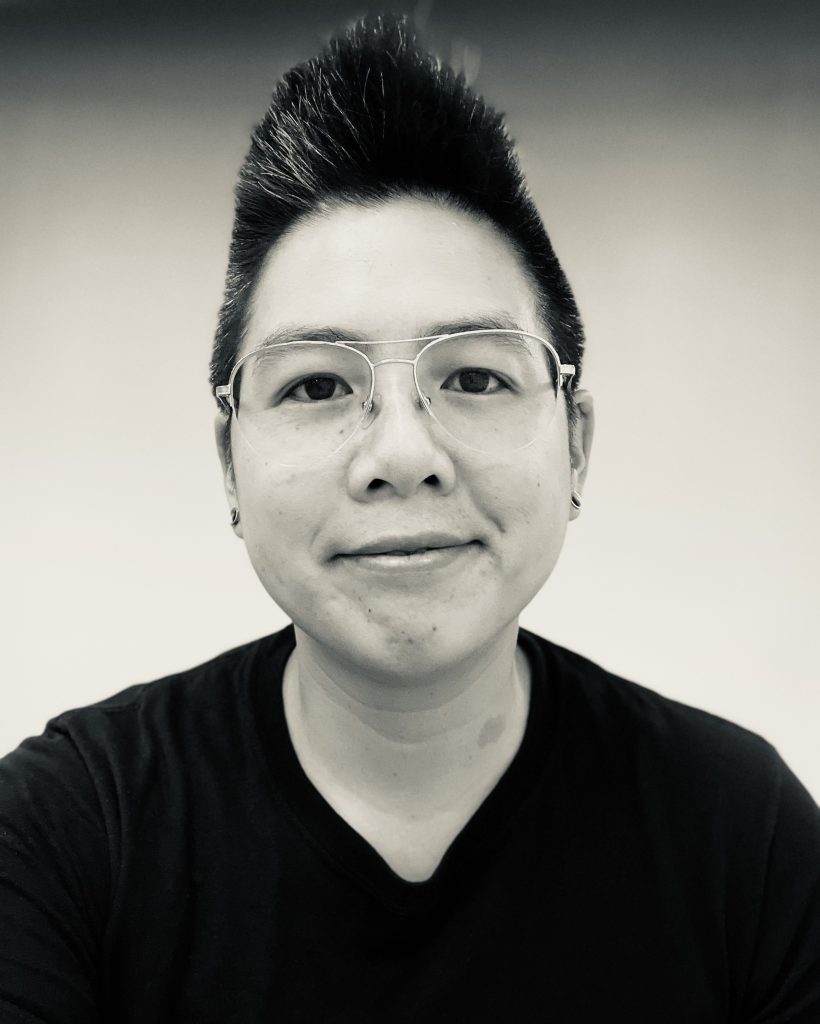
Annette Wong, the managing director of programs of the community-based civil rights organization Chinese for Affirmative Action (CAA), is the daughter of immigrants from China and Hong Kong. She explains the historical precedents underpinning current policy and why many people of Chinese descent – the third largest immigrant group in the United States – are suffering in silence.
The interview took place after the U.S. Supreme Court hearing on Donald Trump’s executive order attempting to end birthright citizenship. At time of publication, the Court had not yet issued a ruling. It has been edited for length and clarity.
Simran Sethi: A March 2026 analysis of ICE data by the nonprofit Stop AAPI Hate indicates there has been almost a quadrupling of arrests of people with roots in Asia and the Pacific Islands under Trump versus Biden. Chinese make up 26% of these arrests, the most of any Asian group.
Who in the community is most vulnerable?
Annette Wong: Some are visa holders who, under Trump, are facing exclusion and threats of enforcement action. The processes around F-1, H1-B [education and work] visas are more difficult and have higher fees than in the past. There is more scrutiny in traveling. Students in protests are getting arrested. They’re getting squeezed.
Another group that we’re seeing get the squeeze are asylum seekers: people claiming lack of freedoms and oppression in the home country. It is very common for Chinese community members to try to claim asylum because of religious persecution and human rights abuses.
A couple of years ago, we saw what the Biden administration called a “surge” at the Southern border. This included Chinese people who would go on this very dangerous route through the Darién Gap [a treacherous overland crossing connecting North and South America] and up through Mexico. Mostly they’re just looking for a better life. They had no economic opportunities in China. Society is much more stratified there and opportunities to break out of your situation are not as easy to come by as is promoted in the United States.
There are great advocates supporting people coming through the border, but not many are Chinese. So, at one point, CAA sent staff down to San Diego to provide language support. Customs and Border Protection was just letting people out into the street [after processing]. We got a chance to meet a lot of those folks who, you know, you’ve taken this dangerous journey. You can’t read any signs. You don’t know where to go – and you’re dumped on a street corner.
Spanish translation is generally available in immigration processing and enforcement but – despite the fact that Asia is the second largest region of origin for immigrants to the United States – Asian language translation is not.
It’s mind-blowing that for the Department of Homeland Security, where a large majority of their work is to deal with people from other parts of the world, language access is not a higher priority. It should be foundational when a government entity is giving out an immigration benefit like USCIS [United States Citizenship and Immigration Services] does, or is about enforcement, detention and deportation like ICE.
Two weeks after Trump started his second term, the Executive Office for Immigration Review, within the United States Department of Justice, rescinded a 2023 directive ensuring noncitizens who came before immigration court would have access to interpretation and translation in their preferred language. And while the ICE website states they have a language access program, they scrapped both required Spanish language training and the AI-translation technology that was supposed to assist in translation in 50 languages.
When you’re detained, you’re already in a vulnerable, precarious situation. Then you have the added layer that you can’t communicate with the people who hold power over you. You can’t ask for the most basic things to have your needs met, whether it’s “Hey, I’m in pain,” or “I need a medication,” or whatever it might be. That’s the health side. But there’s also the legal side. How are you supposed to understand the proceedings against you – why you’re even in there in the first place? Let alone understand how to get access to legal help.
So it’s not just, “Oh, it’s frustrating to not be understood.” Language access isn’t doing someone a favor; there are significant consequences.
We can really see the consequences of that in the tragic case of Chaofeng Ge, a man who came through the southern border in late 2023 in hopes of a better life. The online news site Documented reports that those who knew him describe him as “kindhearted and overly trusting” and suspect that he had an undiagnosed intellectual disability. He died in ICE detention in early August 2025.
His hands and feet were bound but ICE is claiming that it was somehow a suicide. That would be very difficult to do, which is why it’s being questioned. And there were definitely language access issues at play.
In a news article that quoted Mr. Ge’s brother, he said his brother was in a lot of distress and unable to communicate – that the only way they could communicate was for Mr. Ge to write things down. And then that paper would be passed along until they could get it translated, which is ridiculous. Any government body is aware that there are telephonic and digital tools we can use to improve language access, which could have been the difference between life and death for Mr. Ge.
This problem isn’t new. Mr. Ge was detained at Moshannon Valley Processing Center, one of the biggest federal immigration detention facilities in the country that was, until March 2021, a federal prison. In a 2024 report on the facility written by the Social Justice Lawyering Clinic at Temple University, the majority of Moshannon detainees reported “medical and mental health care issues.”
according to a recent report from the Sheller Center for Social Justice at Temple University.
The report was written about the state of the detention center under the Biden administration and states: “Those in detention who do not speak English recounted how they get treated worse by staff. One person shared that he was told that toilet paper and soap were unavailable, while those who spoke English were provided with the same basic necessities. Another non-English speaker explained that when he asks for anything, such as access to one of the tablets to connect with loved ones, staff refused to help him …”
Language plays a key role in how people are treated. It’s very sad that in a country like the United States that’s not something that’s just a given.
And we’re not talking about a small population or an obscure language. We’re talking about one of the largest populations and most widely spoken languages in the world. It feels like a terrible cycle: People don’t recognize Asians are being impacted by these policies so there’s nothing in place to support Asians who are being impacted.
I think you’re right. And – I’m not blaming the people put in these positions – but, if we were to pull up statistics on requests for language assistance in immigration detention, I imagine the number of requests for Chinese is quite low, even despite the growing numbers of Chinese people that are [detained]. They are not going to be willing to speak out, to say, “Hey, I was mistreated,” or “Hey, I need language access.”
People are very afraid to ask for those kinds of things because it feels like an accommodation … a favor. But it’s not. It’s a fundamental civil right.
What’s behind this?
Part of it is because of the culture of silence. We Chinese love our sayings and there’s one that comes to mind: “The gun shoots the bird that sticks its head out” – 枪打出头鸟 in Mandarin. It essentially means, don’t put a target on your back. It connects to the violent repression of people who make themselves known to power and is rooted in what we could call both intergenerational trauma and intergenerational wisdom. It’s kept people alive through revolutions, war and political repression and persecution.
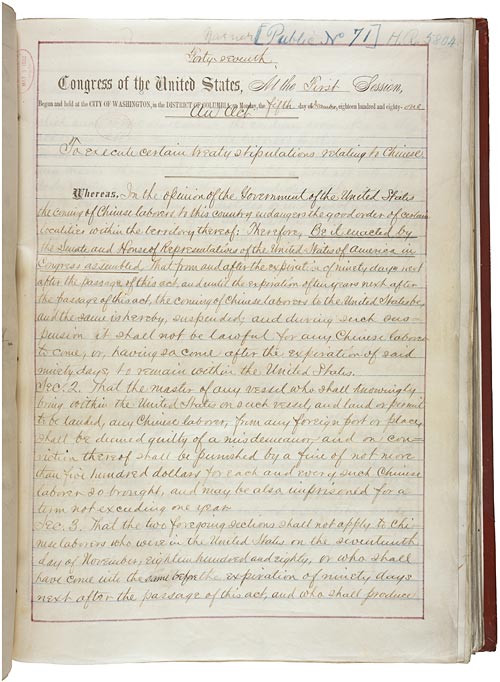
That cultural expression is informed by history. We can trace a direct line from current immigration policy back to legislation from hundreds of years ago, starting with a bill from 1803 banning the “importation” of any “any negro, mulatto, or other person of colour, not being a native, a citizen, or registered seaman of the United States” [sic]; the Page Act of 1875 that prohibited laborers from “China, Japan or any Oriental country” and “women for the purposes of prostitution” from entering the United States; and the better-known Chinese Exclusion Act.
Princeton University historian Beth Lew-Williams explains that the Chinese Exclusion Act “built a form of U.S. border control that operates through fear” and “made established flows of transpacific migrants suddenly unauthorized, criminalizing Chinese for their mere presence in the nation. Chinese exclusion made people deportable and, in so doing, created a uniquely precarious subjecthood shared by millions in America today.”
Definitely. In the very literal sense, we are back in a place where [even] birthright citizenship is being questioned. We already did that and here we are re-litigating … literally re-litigating.
There are things where it’s an actual repeating of history and then there are the things that maybe are more metaphorical. For example, Japanese concentration camps. [Today] it’s not Japanese people, but what do you think all these new detention centers are? They’re essentially modern-day concentration camps. People are in very inhumane conditions, sleeping on floors with Mylar blankets. No reliable access to clean food or clean water. No reliable access to showers. You can’t call that anything but a concentration camp.
While we don’t have something so explicit to say that Chinese people are now being excluded like we did with the Chinese Exclusion Act, the travel bans that have come down the pipe – the targeting of asylum seekers from certain countries – these are modern-day exclusion laws.
And it’s happening at the state level, as well. Just over the last couple years, CAA has been involved in a few campaigns in Florida and Texas where they’re bringing back land bans, trying to say nationals from nine different countries – China included – are not allowed to own property. That’s some backward stuff that we thought we left behind, but history is definitely repeating itself. We’re still fighting that today.
The violence that preceded the Page Act and Chinese Exclusion Act also has historical precedent. The Los Angeles Chinatown Massacre of 1871 was one of the worst mass lynchings in U.S. history. Chinese community members were targeted by a mob of white and Hispanic men, resulting in the murder of 18 Chinese men, including a 15-year-old boy, more than 10% of the city’s Chinese population. How does that connect to what we see now in terms of xenophobia and violence?
Certain sentiments that start off as stereotypes, maybe even seemingly innocent ones, can translate into how people treat their neighbors and how institutions make decisions. This is true whether the sentiments already exist or they’re being inserted into a society. It becomes easier and easier to pass policies that treat different people differently when there are deeply rooted biases against them.
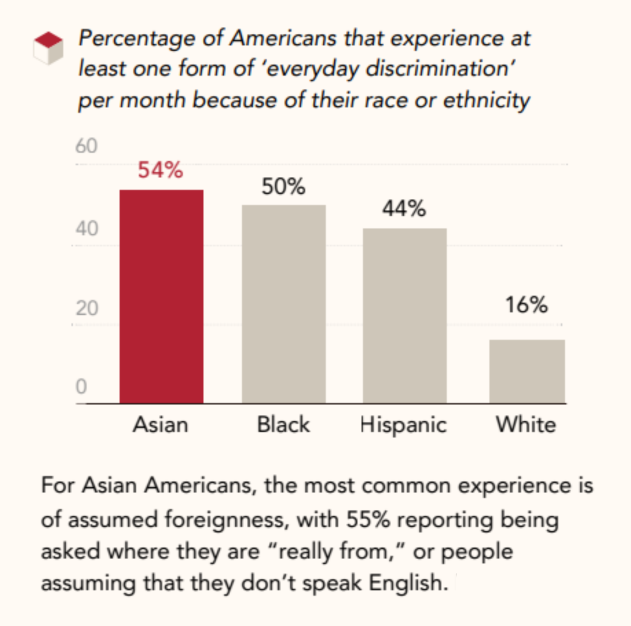
A March 2026 report on the State of Chinese Americans survey states, “U.S.-born Asian Americans continue to be viewed as perpetual outsiders, facing race-based discrimination and questioning of their belonging at higher rates than any other racial group in the nation.” An earlier report on that same survey found that “27% of Americans believe people of Chinese descent living in the U.S. are more loyal to China than to the U.S.” Does this surprise you?
This perpetual foreigner myth – like, where are you really from? – has been around for Asians for decades and, unfortunately, not much has changed. How else can the white establishment justify continuing to dehumanize people, except to keep reiterating these “othering” kinds of stereotypes and rhetoric? “Chinese people are not from here. They’re unassimilable. They’re never gonna be one of us. They’re always going to be loyal to China.” Even if you’re a fifth-generation Chinese American, that’s the line of attack: to dehumanize Chinese folks so the “othering” becomes easier: “We can make policy that’s anti-Chinese because they’re not one of us anyway.”
That xenophobia and “othering” of Asians has been shown to lead to depressive symptoms, lower self-esteem and a lack of belonging.
I’m not a trained mental health expert but, from a general standpoint, the mental health impact of being “othered” is both profoundly deep and, at the same time, also invisible.
How does it connect back to immigration policy?
Immigration is one of the most complex areas of law, and policies are changing every day, making it harder for immigrants to know how to proceed with court filings, access social services, and seek safety. That’s on top of the losses and trauma that may have already happened that resulted in migration itself and the grief of separation from family, of leaving the only home you’ve known. Then when you get to this new place, there’s all this discrimination and fear around enforcement. All of these things are compounded. It can be psychologically crushing.
Even people who are just trying to follow the rules are living in this constant state of chronic uncertainty. “Am I doing it right? Am I gonna be stopped? Am I going to be detained? Am I going to be targeted for some reason?” Of course we’re gonna see things like fear, anxiety, depression, hypervigilance and trauma responses. That stress puts people in constant survival mode. And we are not meant to live in survival mode long-term. It’s incredibly bad for mental health and physical health.
Chinese for Affirmative Action is recognized by the Department of Justice and partially accredited, so we can provide limited-scope immigration legal service, even though we don’t have immigration attorneys. We are definitely seeing a decrease in the number of people who are seeking naturalization [citizenship of those who are foreign-born]. It’s more difficult to get a fee waiver and the price has increased. And people are also hearing on the news that people who were maybe unsuccessful getting asylum have been arrested after their interviews. Getting asylum versus naturalization is totally different, but if I were somebody who’s thinking of getting naturalized and I had to go to the same office where asylum applicants are getting detained, I’m gonna think twice about going to a naturalization interview.
These are people who are in the process of getting citizenship …
But for somebody who may not speak English well, who is feeling tentative about the process to begin with, the psychological impact of the policies can lead to very tangible impacts.
And people may be managing multiple struggles at once. LGBTQIA+ folks are also being directly targeted by this administration. Can you speak about those intersectional challenges?
Like [Black lesbian writer Audre] Lorde says, there’s no such thing as single-issue struggle because people don’t live single-issue lives. There is the heaviness of attacks on queer communities – restricting gender-affirming care, re-opening the door around conversion therapy, restrictions around rights of domestic partners, et cetera. And, for those who are also immigrants, there is another layer of compounding attacks on identity. That means you’re not able to live fully into any of the identities you hold. If you can’t be a fulfilled person, that takes a toll on mental health and well-being.
Despite these mental health challenges, social stigma and factors such as lack of language accessibility make it really challenging for Chinese and other Asians to get help.
Suffering in silence is very real in Chinese culture and mental health is definitely not highly talked about, especially not in a public space.
There’s a saying about “eating bitterness” – 吃苦 – that I feel is pretty foundational. 吃苦 is a cultural concept about enduring hardships. It’s an idea that persevering through difficult times builds character or leads to some future reward as part of a higher end. Saying something is difficult or that you’re struggling is perceived as complaining. Voicing pain is seen as weakness and a lack of mental and physical fortitude – maybe even shameful.
Shame has been shown to be a significant barrier to getting emotional support for many Asians cultures, but it ties into maintaining collective harmony.
Exactly. It’s that concept of “face” – 面子– and “saving face” or 保全面子: the idea that there is shame in having one’s vulnerability witnessed by other people.
In Chinese culture, it’s not so much about individual ego, it’s more about collective status. In the same way that you wouldn’t expose your own vulnerability, 保全面子 is about helping others to save face, as well.
I’m not naming these frameworks as virtues to hold at all cost, but as a way to provide context and help people understand why Chinese immigrant community members may not speak out about their personal immigration situations – or the impact of the federal administration’s policies. It’s also why acknowledging the mental health impacts of migration and seeking mental health support are so highly stigmatized.
What’s your message for Chinese immigrants trying to navigate these times?
I don’t mean for all of this to sound so bleak, because resilience is such an important part of immigrant history and organizing. Part of the immigrant spirit is taking initiative to step out and explore something that has not been done before. For folks that may be struggling, [I offer] that reminder that within you is strength and agency.
When people are struggling with these immigration challenges, they tend to isolate. Especially if they are being “othered.” But there is a growing chorus of directly impacted people and allies that are willing to stand together. We’re seeing communities coming together that have not done so before; people who had not been willing to speak up before, now speaking up. Despite what’s happening in the world around us, there are people around us who care.
Simran Sethi is a media fellow at the Nova Institute for Health. Financial support from Nova enabled Sethi to report the series Unseen: The Devastating Impact of Federal Immigration Policy on Asians in America, including this interview.
The name “MindSite News” is used with the express permission of Mindsight Institute, an educational organization offering online learning and in-person workshops in the field of mental health and wellbeing. MindSite News and Mindsight Institute are separate, unaffiliated entities that are aligned in making science accessible and promoting mental health globally.


Author

Related Articles
‘I Can’t Focus on My Schoolwork’: A High School Student Agonizes That Her Parents Will Be Seized While She’s in Class
As Trump and the Supreme Court dismantle the system that protected millions of immigrant families who fled danger, children wonder: Will we be next?
A Three-Year-Old Tries to Cope Without his Beloved Papi
When a parent is taken away by ICE, a child’s world implodes. The long-term consequences include depression, anxiety and post-traumatic stress disorder.
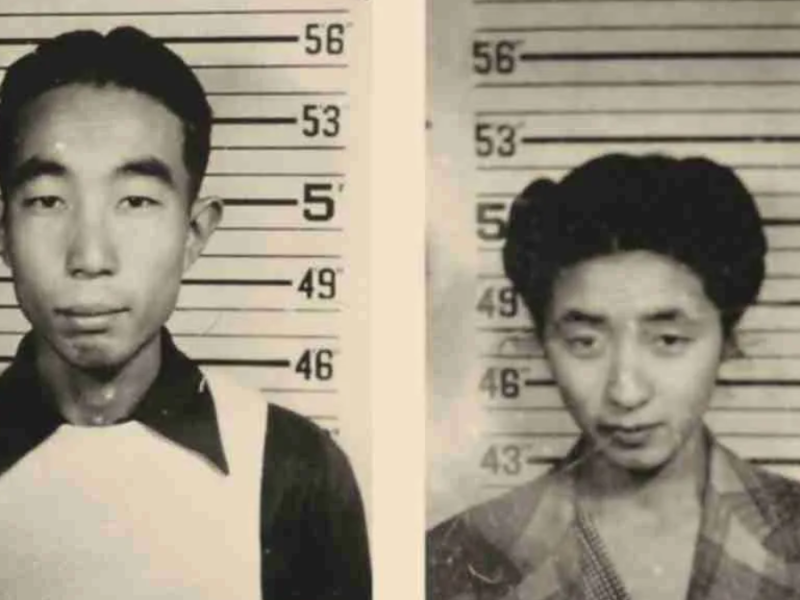
‘Remembering Is a Form of Protest’: Japanese Prison Camp Survivor Satsuki Ina on the Trauma of Detention
Satsuki Ina on Japanese American imprisonment, the legacy of cultural trauma,
and speaking out against detention centers.