
Most Americans Think Trump Mentally and Physically Unfit to Be President
59% of Americans think Trump is not mentally sharp enough to lead the country, according to the Washington Post/ABC News/Ipsos poll.

Greetings, MindSite News Readers.
In today’s Daily, 59% of Americans polled say Trump is mentally unfit to be president, and 36 physicians and mental health experts, including Nobel laureates, have called for Trump’s immediate removal from office. And as new, deadly opioids show up in the nation’s drug supply, a Tennessee medical examiner is using sleuthing techniques to identify the culprits – a critical strategy for tackling the overdose crisis. Plus, why moments of silence are critical to our overall well-being.
But first, hearing this little girl introduce her baby sister to their father simply tickled me.
Poll shows Americans are weary of Trump as leading medical experts call for Donald Trump’s immediate, lawful removal from office
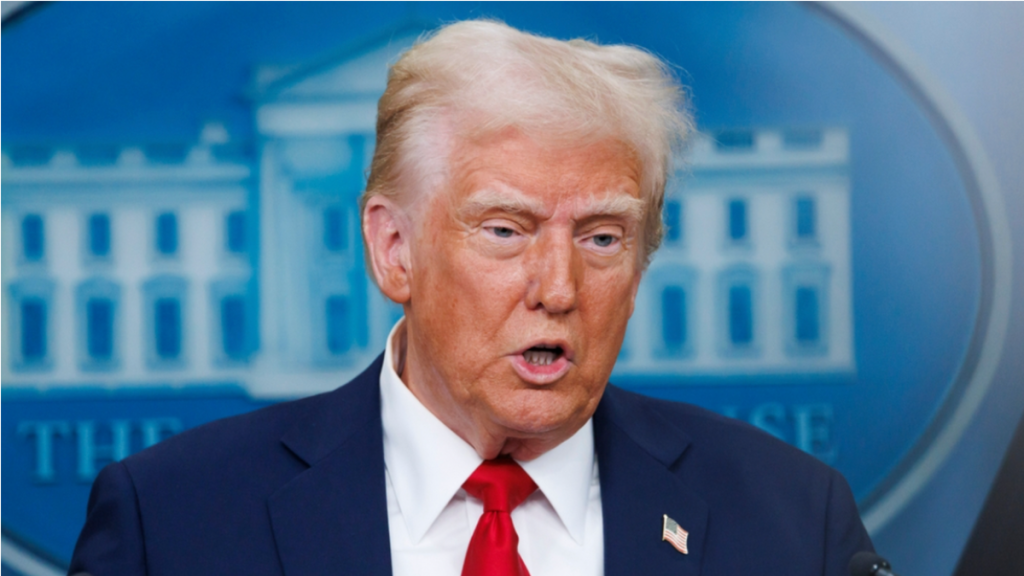
Most Americans say President Trump is mentally and physically unfit to serve as commander in chief, according to a new Washington Post/ABC News/Ipsos poll.
Fifty-nine percent of respondents found Trump lacked the mental fitness to run the country, and 40% found him incapable of leadership, according to an article in The Hill.
In addition, 55% of people surveyed said Trump was not physically fit enough to be president, and more than half (54%) said he was not a strong leader.
On top of that, 67% felt that Trump does not carefully consider important decisions.
This poll was released a day before a press release from the International Physicians for the Prevention of Nuclear War called for Trump’s immediate removal from office.
In the release, thirty-six leading physicians and other doctors with expertise in mental health called for Trump’s immediate, lawful removal from office for medical reasons.
“His mental instability, coupled with his sole, unchecked authority to launch nuclear weapons, makes him a clear and present danger to the safety of all Americans,” wrote psychiatrist and violence expert Dr. Bandy X. Lee, one of the signatories, in her Substack column yesterday. The Senate offices of Sheldon Whitehouse (D-RI) and Jack Reed (D-RI) entered their statement into the Congressional Record.
“While they did not offer diagnoses, the experts were informed by voluminous evidence from the historical record of the president’s bizarre and impulsive behavior, rambling digressions, factual confusions, unexplained sudden changes of course in strategic matters, both national and international, and his deeply impaired judgment,” wrote Lee, who edited the 2017 bestseller, “The Dangerous Case of Donald Trump.”
“Since they circulated their concerns among medical colleagues, Mr. Trump has exhibited more signs of grandiosity, e.g., posting images of himself on social media shaking hands with God, acting like Jesus, and dressing as a Pope,” Lee wrote in her Substack. “And he has continued nocturnal bingeing on social media posts that are filled with accusations of multiple conspiracies against him, as often as 150 times a night.”
“Most worrisome are his outbursts of extreme, seemingly uncontrollable rage, such as his threat to destroy Iran, saying, ‘A whole civilization will die tonight, never to be brought back again,’” Lee wrote.
For decades, a professional norm has governed how mental health clinicians who belong to the American Psychiatric Association talk about public figures: Don’t diagnose someone you haven’t examined. Known as the Goldwater Rule, it was established in 1973 by the APA after the 1964 presidential campaign. In a published survey of around 2,000 psychiatrists titled “The Unconscious of a Conservative,” over 1,000 questioned presidential candidate Barry Goldwater’s mental fitness for the office. Last week, a group of 36 leading psychiatrists and other physicians and mental health professionals determined that the norm should be temporarily set aside, as Lee reported in her Substack.
In the formal statement entered into the Congressional Record, the group of medical professionals, composed of individuals “holding both conservative and liberal ideologies, identifying as both Republicans and Democrats, from different backgrounds, races, ethnicities, and religions,” stopped short of diagnosing Trump. Instead, they documented a pattern of behavior: impulsive decision-making, factual confusion, erratic strategic reversals and extreme rage that they argued constitute a clear and present danger to public safety.
The experts’ concern is pointed: The nation is in an unsanctioned war and the president alone holds authority to launch nuclear weapons, including a first strike, with no review process and no override mechanism. This authority, they note, becomes a grave danger to the American people and a hazard to the health of the planet. In the face of such conditions, these experts argue, remaining silent is unethical.
For a full look, see the medical experts’ statement in the Congressional Record. – Diana Hembree and Courtney Wise
‘Please look harder’: A medical examiner hunts a lethal, silent killer

When a 52-year-old man was found dead in his South Knoxville, Tennessee apartment last October, the scene around him pointed to a drug overdose — but toxicology reports showed nothing but caffeine and nicotine in his system. Dr. Darinka Mileusnic-Polchan, chief medical examiner for three counties in the greater Knoxville area, wasn’t satisfied. After decades of tracing the final moments of the dead, she knew an elusive killer was hiding in his blood. “Please look harder, please look harder” Mileusnic urged.
She sent the blood sample to two other labs before finding her answer: The victim had died after ingesting cychlorphine, a compound in a new class of opioids called orphines that are 10 times more powerful than fentanyl.
According to the New York Times, cychlorphine has claimed at least 50 other Knoxville-area lives since October. So far, 11 orphine variants have been found worldwide, and in at least 14 states. Just a few sand-sized grains kill swiftly, often before the body has time to produce the typical signs of an overdose. Cychlorphine’s novelty means it isn’t included in standard toxicology screens and high costs for additional testing means that orphine casualties — lumped together as “unspecified narcotics” on many death certificates — are likely underreported.
These facts make medical examiners like Mileusnic critical agents of public health. Since 2010, her office has published annual overdose fatality trends, tracking which drugs are driving deaths in the region. After noticing an odd trend among certain cases, she began to push for more testing, which later revealed cychlorphine.
Mileusnic also has formed a strong coalition for public health. Her office meets regularly with law enforcement, public health officials and street outreach workers, sharing the kind of ground-level intelligence that saves lives. When orphines entered the picture, that meant quickly spreading the word that multiple doses of naloxone, the overdose reversal drug better known as Narcan, are needed to bring someone back, rather than the standard single dose typically used for fentanyl. When the forensic center’s director noticed a spike in overdose deaths among day laborers, the task force responded by pushing naloxone directly into that community.
The result is measurable. In 2024, overdose deaths in Knox County dropped 36% from the year prior — one of the sharpest declines in the country. “I’ve always seen part of the medical examiner’s job as prevention,” Mileusnic said.
Most communities don’t have Knoxville’s resources. Many jurisdictions rely on elected coroners with no medical training and shrinking budgets, where the pricey but necessary follow-up tests Mileusnic uses to pinpoint a poison are a luxury they can’t justify. In those places, cychlorphine moves invisibly, and the deaths it leaves behind, experts say, are often counted as something else.
In other news…
Why we need to sit with our silence: “All of humanity’s problems stem from man’s inability to sit quietly in a room alone,” 17th-century philosopher Blaise Pascal said. It’s extreme perhaps, but he had a point. Between podcasts, music and news, Americans listen to nearly four hours of audio each day according to a recent survey, and for many people the stream rarely stops. The habit is as dopamine-driven as any screen addiction, experts told The Washington Post. The brain feels rewarded by on-demand stimulation, causing silence to feel unbearable over time. “If it stops, you go into a kind of withdrawal state” marked by irritability, anxiety and most commonly boredom, psychiatrist Dr. Clifford Sussman said.
Beyond reduced attention spans, excessive stimulation deprives our brains of critical time in what experts call the “default mode network,” which gives our minds a chance to reflect, said psychologist Gloria Mark. “When we’re not involved in some kind of cognitive task, the part of the brain called the default mode network takes over, [which] helps us regulate our emotions, helps us make sense. It’s how we form internal narratives about ourselves,” she said.
Fortunately, the habit is reversible. Mark suggests replacing audio or screens with something that provides deeper stimulation and still rewards your brain. “Be with people more,” she says. “If you’re having a conversation with another person, give them your full attention.” In addition, Sussman recommends a three-day audio fast to reset dopamine-seeking behavior. “Stay away from the audio, the screens, drugs and alcohol – anything that gives you instant gratification – and just do activities that require a lot of patience,” Sussman said. In his experience, most people feel the worst of withdrawal symptoms gone by the end of the third day.
How do you use AI? Mental health providers should routinely ask patients how they use AI chatbots for emotional support — just as they ask about sleep, diet, and substance use habits. The answers can reveal critical information about a patient’s stressors, coping habits and other subjects they might be too afraid to discuss with a human according to a recent paper published in JAMA Psychiatry, NPR reports.
“People often use the chatbots to talk about things that they can’t talk about with other people because they’re so worried about being judged,” said psychiatrist Dr. Tom Insel, former director of the National Institute of Mental Health. Unlike human therapists, who retain the ability to challenge ideas, chatbots are built to affirm. Leaning on them too heavily can erode one’s ability to confront and change harmful thoughts and behaviors.
The name “MindSite News” is used with the express permission of Mindsight Institute, an educational organization offering online learning and in-person workshops in the field of mental health and wellbeing. MindSite News and Mindsight Institute are separate, unaffiliated entities that are aligned in making science accessible and promoting mental health globally.

Author

Related Articles
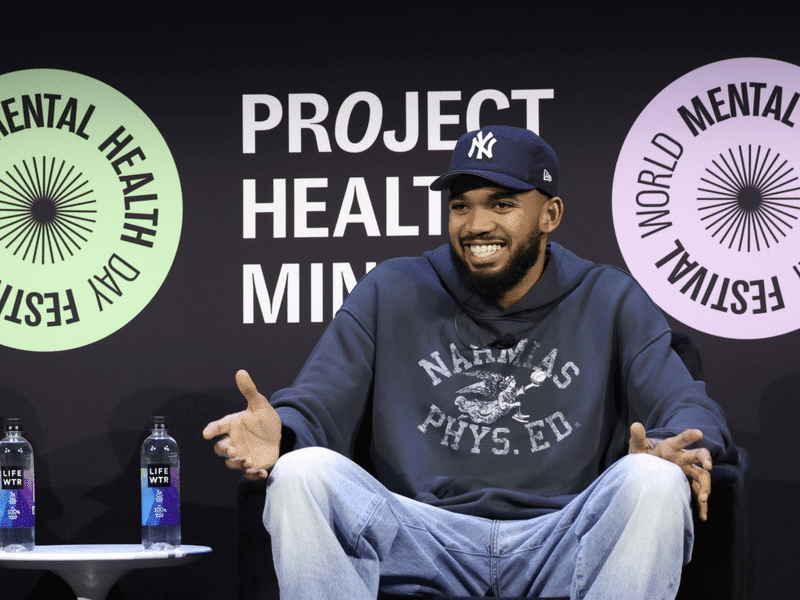
Star Athletes Open Up About Mental Health at Healthy Minds Festival
Athletes shape how Americans picture strength, which puts them in a unique position to show that male vulnerability belongs in that picture.

Nature Rx: A Prescription That May Save Your Life
A healthcare movement that “prescribes” time outdoors and in community to people struggling with their mental health.

Cornell Assault Prompts Parents to Talk With Their Sons
Sexual assault on campuses nationwide is still a grave problem.