
‘My Heart Aches for You’: An Excerpt from The Poet and The Silk Girl
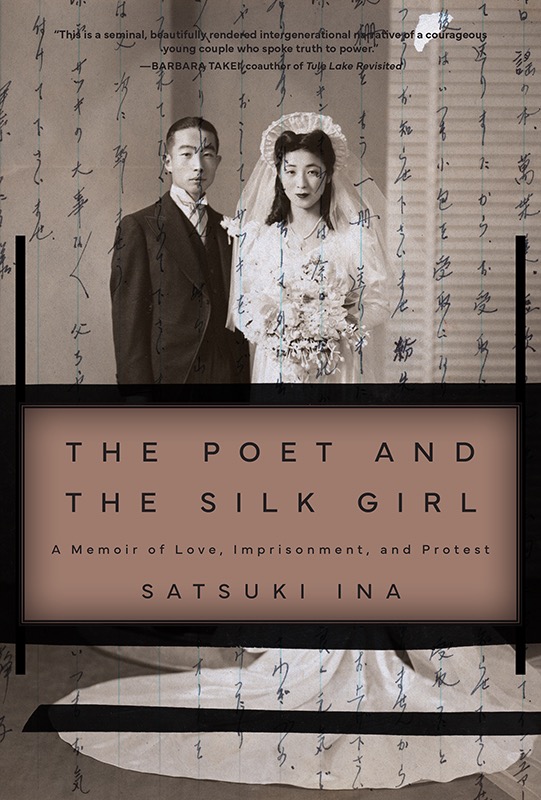
Dr. Satsuki Ina was born in 1944 inside the Tule Lake Segregation Center, a maximum-security prison camp in Northern California. Her parents – both U.S. citizens – were newlyweds when the United States government forced them through six wartime concentration camps, stripped them of their citizenship and labeled them enemy aliens. Dr. Ina grew up to become a psychotherapist, activist, documentarian and, eventually, the person who gave voice to not only her own family’s silencing but that of her Japanese American community, through her piercing memoir The Poet and The Silk Girl, recently released in paperback.
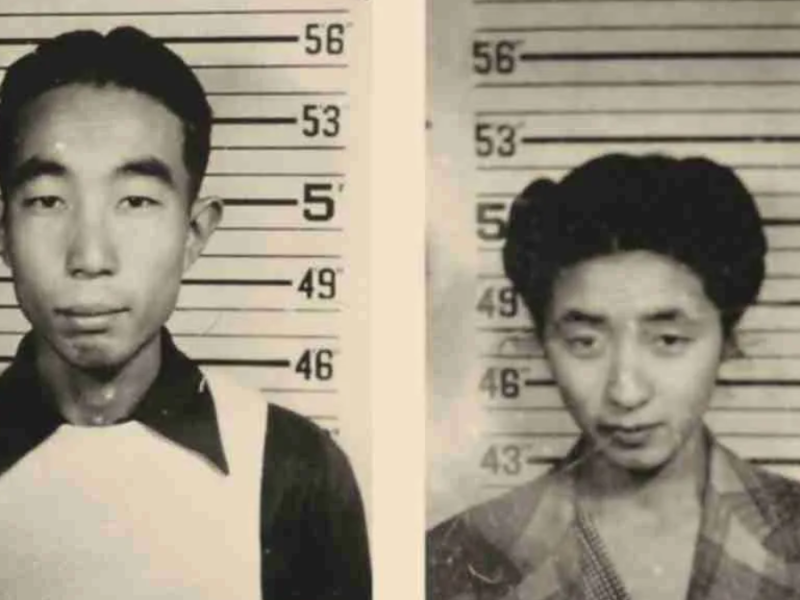
Dr. Ina’s father Itaru was a gifted poet born in San Francisco. Her mother Shizuku was born in Seattle but raised in Japan, only to return as a young “silk girl,” a cultural ambassador of the Japanese silk industry. Her book uses family letters, her father’s despairing haiku and her mother’s diaries, to tell their story and that of the unjust World War II hysteria that upended their lives.
The chapter excerpted below highlights Dr. Ina’s travels to Laredo, Texas with a group of Japanese American survivors and descendants to visit a shelter serving immigrant families just released from detention. It is the passage she read aloud during this year’s New York Day of Remembrance, an annual event honoring the memories of people of Japanese ancestry unjustly incarcerated during World War II in the hopes that the horrors and injustices of the prison camps would never return. — Simran Sethi
An Excerpt from “The Poet and The Silk Girl”
It was only in the last half of my forty years as a psychotherapist that I began to study the effects of trauma. The concept had never been used to describe our prison camp experience, nor had the idea that the effects of trauma could be passed on to the next generation. A whole world of understanding opened up for me when I realized that false imprisonment of an entire community could have a profound and intergenerational impact. The silence and un- conscious coping responses of a generation that experiences such an overwhelming and life-changing injustice can lead to an “other” orientation to life, lasting for generations. We survivors and descendants become vigilant about how we are perceived by others, and meeting the standards set by the dominant culture for beauty, success, and belonging becomes our paramount goal, leading us to inhibit, even abandon, our true selves. These attitudes and behaviors are crucial for victims’ survival, but as with other forms of trauma, they often remain even after the immediate threat has passed. Sadly, for people of color today, the threat of being unjustly targeted has far from passed. The US continues to enact racist policies of incarceration, deportation, and travel bans. In a social system fraught with anxiety about the COVID pandemic and seeking a scapegoat, violent anti-Asian hate crimes have proliferated.
Our 2019 protest at Dilley, Texas, was the beginning of what has grown to become a national Japanese American social justice organization, proudly channeling our cultural heritage into a mission of solidarity. Tsuru for Solidarity would become our moniker, combining tsuru, the Japanese word for cranes symbolizing peace and hope, with our commitment to reach out to work together across communities to bring social change. Breaking down the walls that have purposely divided and alienated us from one another will be essential for building a true democracy in America.
An important component of Tsuru for Solidarity’s work today is to conduct Healing Circles for Change. This group process was inspired by a precious moment we experienced while visiting a service center in Laredo, Texas, near the Mexican border. Through our allies in South Texas, we had heard about the Laredo Immigrant Alliance, where families recently released from both Karnes and Dilley detention facilities could find temporary shelter while awaiting their asylum hearings or searching for family members in the US. Providing care on a shoestring budget, volunteers, including undocumented students, offered food, shelter, and information to families, mostly mothers with young children.
Our intention was to bring a small donation collected from our group to cover the cost of a washing machine so that families could wash diapers and clothing. There were twenty of us, a Buddhist minister and several survivors and descendants. We parked our rented cars and walked along wooden fences with laundry hung to dry in the sun. As we entered the worn and modest building, we could hear the laughter of children playing games and the gentle sounds of mothers quieting crying babies. They had all just been released after weeks or months of incarceration. Among the women, worn and anxious, and the men, silent and sullen, we were afraid of being seen as intruders. Grief weighed heavily in the room.
Volunteers welcomed us warmly, and in an impromptu attempt to connect with the families, we created a circle of chairs around the room. Curious about the motley crew of Japanese Americans who had traveled from California, mothers with children in their arms joined the circle along with volunteers. We brought strands of colorful paper cranes that lit up the faces of the children. Often when Tsuru for Solidarity members debriefed after a protest action, we would sit in an informal circle to share our experience. Now, that process magically unfolded in a room full of strangers. One of the volunteers served as translator. We began by briefly sharing our stories and our purpose for being in Texas. My brother Kiyoshi, usually quite shy and reticent, stood up to speak. He talked about having been incarcerated as a child for four years; deeply moved by the situation, he offered these words of hope: “I’m almost eighty years old now. I want you to see that I survived, that I’m okay. You must be strong. Do not give up hope. You too will be okay.” The woman beside him, carrying a toddler in her arms, stood up to speak. Black strands fell from the rubber band holding her hair back; her clothes were rumpled and faded, and tears streamed down her face. As she spoke, the translator struggled to keep her own composure. “I have just spent four months in a terrible place,” she said. “I feared for my children. We were hungry and afraid every day. When I hear that you were in prison for years, my heart aches for you. I cannot imagine your suffering.”
Excerpted from The Poet and The Silk Girl: A Memoir of Love, Imprisonment, and Protest by Satsuki Ina. Reprinted with permission from Heyday © 2024.
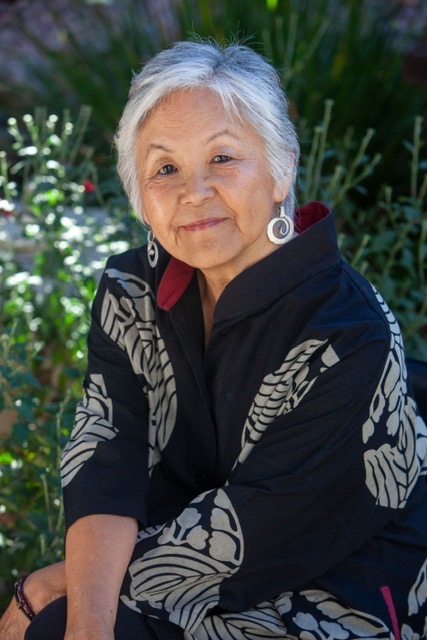
Satsuki Ina is a licensed psychotherapist specializing in community trauma and author of The Poet and The Silk Girl. She helps victims of oppression to claim not only their voice but also their power to transform the systems that have oppressed them. Her activism has included cofounding Tsuru for Solidarity, a nonviolent, direct-action project of Japanese American social justice advocates working to end detention sites. Ina has produced two documentaries about the World War II incarceration of Japanese Americans, Children of the Camps and From a Silk Cocoon. She has been featured in the New York Times, the Los Angeles Times, TIME, Democracy Now! and the documentary And Then They Came for Us. A professor emerita at California State University, Sacramento, she lives in the San Francisco Bay Area.
The name “MindSite News” is used with the express permission of Mindsight Institute, an educational organization offering online learning and in-person workshops in the field of mental health and wellbeing. MindSite News and Mindsight Institute are separate, unaffiliated entities that are aligned in making science accessible and promoting mental health globally.


Author

Related Articles
‘I Can’t Focus on My Schoolwork’: A High School Student Agonizes That Her Parents Will Be Seized While She’s in Class
As Trump and the Supreme Court dismantle the system that protected millions of immigrant families who fled danger, children wonder: Will we be next?
A Three-Year-Old Tries to Cope Without his Beloved Papi
When a parent is taken away by ICE, a child’s world implodes. The long-term consequences include depression, anxiety and post-traumatic stress disorder.
‘Remembering Is a Form of Protest’: Japanese Prison Camp Survivor Satsuki Ina on the Trauma of Detention
Satsuki Ina on Japanese American imprisonment, the legacy of cultural trauma,
and speaking out against detention centers.