
Child Brain Development Undermined By Lack of Social and Economic Opportunity

Greetings, Mindsite News readers.
In today’s Daily, a new study affirms a “rising tide of research” pointing to socioeconomic opportunity as a key factor in child brain development. Moms in Connecticut have greater access to postpartum mental health support thanks to an expanded postpartum depression hotline. And a pair of sisters share how they’re able to bond despite one’s inability to speak.
Plus, experts say that the Trump administration’s recent claims of “new mental health funding” are false — but they’re grateful that previously promised funds are finally being released.
But first, meet Robert Thompson, a high school sophomore in Walled Lake, Michigan whose PSA on the mental health of student-athletes earned the “Best in Show” prize at the 58th Michigan Student Film Festival. He also won a Society of Professional Journalists Excellence Award in the Sports Reporting category. “People think, and especially a lot of young athletes think, that if you don’t make it to D-I, Division I NCAA collegiate athletics, then you’re a bust,” Thompson told CBS Detroit. “Everything you’ve been doing your whole life is for nothing.”
Researchers looked at everything shaping a child’s brain. One factor won by a mile.

Sociological research has long linked the conditions in which a child lives and grows to their future development. Now a new study by researchers at the Washington University School of Medicine published in the journal Science affirms and extends that idea.The researchers found that socioeconomic opportunity, more than any other factor, shapes how a young brain grows, NPR reports.
Researchers analyzed brain scans from more than 2,300 nine- and ten-year-olds drawing on data from the federally-funded Adolescent Brain Cognitive Development Study. They found that environmental factors including household income, education and neighborhood quality are associated with brain differences that are measurable with MRI scans. Preteens growing up in neighborhoods with lower incomes and limited social support showed brain differences tied to less sleep and more stress. The new study adds to what Dr. Theodore Satterthwaite, a professor at the University of Pennsylvania who co-wrote a perspective paper accompanying the new investigation, called a “rising tide of research” pointing to the same conclusions.
Seeking to take an unbiased look at the myriad factors affecting child brain development to measure their impacts, researchers said they were surprised by how strongly socioeconomic opportunity correlated with brain differences. “Something is going on in these neighborhoods,” said Scott Marek, the study’s lead author and an assistant professor of radiology at Washington University’s Mallinckrodt Institute of Radiology. “We need to find out how socioeconomics is becoming biologically embedded.”
Earlier research had emphasized links between brain development and factors like IQ and mental health. Those certainly still matter, said study co-author Nico Dosenbach, also a professor at Washington University, but they’re less dominant variables than socioeconomics. The impact found in this study is so profound, in fact, that Dr. Satterthwaite said that earlier studies linking cognitive performance to brain differences without taking socioeconomics into account “may require reevaluation.”
Notably, the affected brain regions involved sensory processing and motor control rather than higher functions like attention or memory. The apparent link runs through circuits that keep a person awake and alert. These circuits are altered when children get less sleep, face more stress, or spend heavy time on social media — which all become more prevalent where economic, educational and social opportunities are scarce.The opportunity – and need – for further research is immense.
How Connecticut is closing the gap in postpartum mental health care
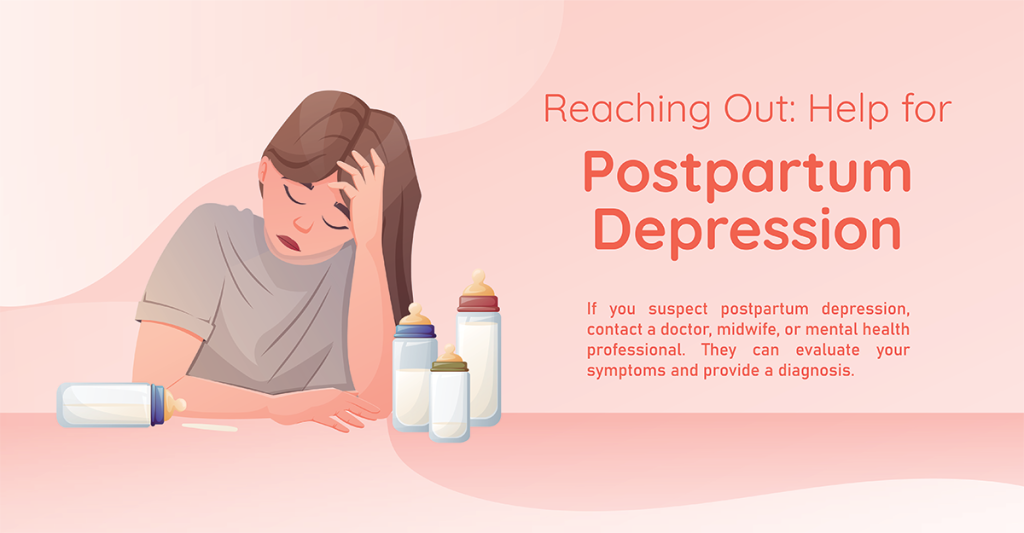
Not long after Emily Fields gave birth to her daughter Emma, she found herself unable to sleep, eat or even be near her own child. Not knowing what was happening or what to do, she called her own mom for support. “I was just anxious,” Fields told Connecticut Public Radio. “The water’s up to here; I was just treading the water.” Things got worse for the married middle school teacher before they got better. Pretty soon, she found herself feeling unable to return to the classroom. What Fields was experiencing was postpartum depression, a serious but common complication following birth.
According to the Centers for Disease Control, about 1 in 8 experience the condition after giving birth, with symptoms ranging from sadness and anxiety to guilt, emptiness and suicidal ideation. Left untreated, postpartum depression poses serious risks to both mother and child, including death. Still, getting treatment can be its own struggle. Fields, a Norwalk resident, lives in one of Connecticut’s 50 federally-designated Health Professional Shortage Areas, where securing quality, relevant mental health care is an uphill battle.
In response to that shortage in maternal mental health, Connecticut has taken an innovative approach. Rather than try to conjure more providers, the state funds a hotline that puts specialized postpartum psychiatric expertise directly in the hands of the doctors mothers already see — OB-GYNs, primary care physicians and pediatricians. Established in 2023, ACCESS Mental Health and Substance Use for Moms is staffed in real time by reproductive psychiatrists from the Yale School of Medicine, and is free for both doctors and patients. The number of mothers served by the service has ballooned in two years from 67 in 2023 to 368 in 2025.
It became a lifeline for Fields. After multiple antidepressants failed to bring relief, she reached a crisis point, asking her husband to drive her to the emergency room at Stamford Hospital. There, geriatric psychiatrist Marco Christian Michael called the ACCESS hotline with Fields’ consent and connected her in real time to a reproductive psychiatrist specializing in postpartum depression. Together, the two doctors found a medication that finally worked. Better still, ACCESS connected Fields to outpatient therapy that accepted her insurance within days.
“Rather than a mom or provider calling down a static list — which can be time-consuming and often unsuccessful — our resource and referral team does that outreach in real time, confirming availability and narrowing options to those that are actually viable at that moment,” said Elizabeth Garrigan, an assistant vice president at Carelon Behavioral Health. Connecticut state government contracted the company, which boasts more than 150,000 providers across the U.S., to staff the hotline with resource specialists and capture usage data. “In short, it’s less about increasing supply and more about navigating the existing system efficiently,” Garrigan said.
The program also works to address the socioeconomic disparities that shape maternal mental health. ACCESS offers moms extra support when they need it for all sorts of issues, including navigating insurance, accessing a diaper bank or securing food and housing. One doctor described the partnership as a two-way street, sharing that it helped him identify community services of which he’d been previously unaware.
The focus on social factors matters: one study found that women with low socioeconomic status were 11 times more likely to be clinically depressed after giving birth, while another found that new mothers in disadvantaged neighborhoods faced higher risk. The disparities extend to survival itself. In 2024, Black women are three times more likely than white women to die from pregnancy complications, according to the CDC. The ACCESS organizers want to close these harmful gaps.
For Fields, the help that ACCESS provided was transformative. The combination of medication and therapy did more than improve her mood – it sparked her back to life. Once unable to be around children, including her own, Fields is once again at the front of a classroom, and totally in love with her adorable baby girl.
The name “MindSite News” is used with the express permission of Mindsight Institute, an educational organization offering online learning and in-person workshops in the field of mental health and wellbeing. MindSite News and Mindsight Institute are separate, unaffiliated entities that are aligned in making science accessible and promoting mental health globally.

Author

Related Articles

Nature Rx: A Prescription That May Save Your Life
A healthcare movement that “prescribes” time outdoors and in community to people struggling with their mental health.

Cornell Assault Prompts Parents to Talk With Their Sons
Sexual assault on campuses nationwide is still a grave problem.
The Unseen Toll: Depression, Anxiety Plague Black Women a Year After Being Fired by DOGE
When Trump cut DEI programs and allowed DOGE to gut the federal workforce, hundreds of thousands of Black women lost their jobs. Many are still reeling.