
Hoping to Not Be a Burden, Teens Struggle With Racism, Mental Health on Their Own
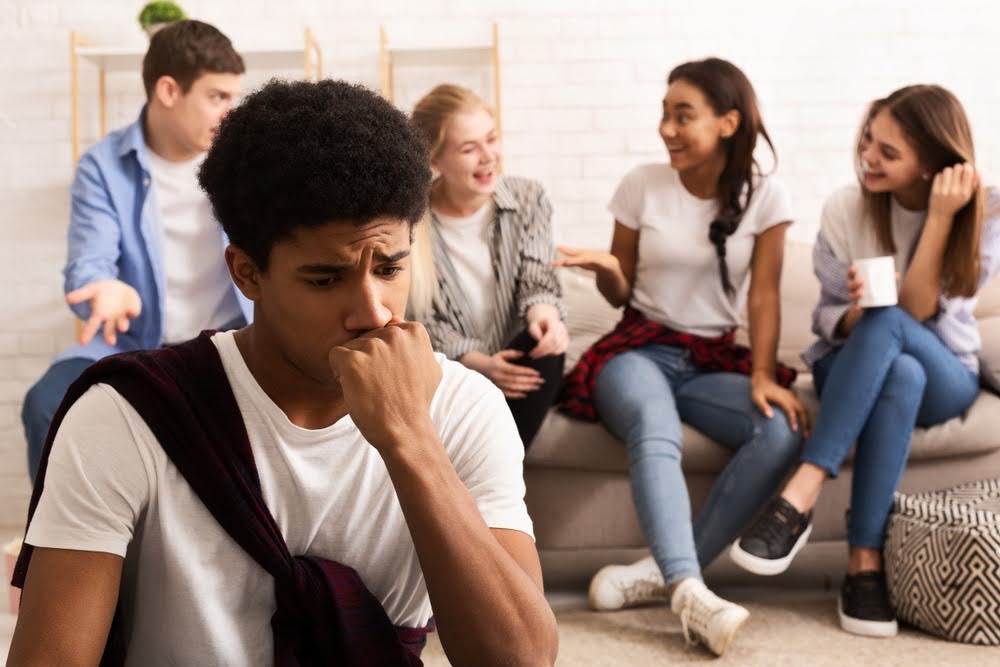
California’s youth are far from alone in their struggle with mental health — and a recent report suggests the scale of the crisis is hard to overstate. Ninety-four percent of California youth aged 14 to 25 report mental health concerns in an average month, with stress and anxiety topping the list, according to the 2026 California Children’s Report Card created by the California non-profit Children Now. For Black and Latino teens in particular, that struggle often plays out in isolation.
Part of the problem is structural, David C. Turner III, an assistant professor of Black Life and Racial Justice, told CalMatters. Turner, who also serves as a senior adviser at the Alliance for Boys and Men of Color, points to systemic racism, the overcriminalization of Black children and an education system that regularly pushes students out instead of supporting them.
“The overcriminalization of young people in schools oftentimes forces them to disengage from education,” he says. “It demonstrates to these young men that they don’t matter, their opinions don’t matter, how they learn doesn’t matter, and it creates a very dehumanizing environment for them.” That environment, he argues, is part of why many never make it to college. “Schooling has been a place of violence for them. When I say violence, I mean like having their spirit broken.”
That structural weight shows up in daily life, too. Elias Avalos, a 17-year-old senior and the child of Salvadoran immigrants, spent his junior year of high school juggling four advanced placement classes until he hit a wall. “I’ve been dealing with feelings of burnout and unbelonging for a while,” he says. Skateboarding offers relief, allowing him to de-stress from work.
With no model at home for processing emotions, he learned to keep things to himself, partly out of fear that anything he told a therapist would make its way back to his parents. “I didn’t want to be a burden to my family and friends with my problems,” he says. “Everyone is going through something. It’s just something I got to get out of myself.”
Through his internship at the RYSE Youth Center in Richmond, where he researches factors influencing young people’s mental health, Avalos is learning how isolation plays out beyond his own life. Others are navigating neglect, poor coping skills and a lack of youth-centered spaces to turn to for help, just like him. “I know many people in my neighborhood that have to sleep on the streets, sell drugs to support their families and people that I know lost their lives,” he says. “It’s a harsh reality that youth in Richmond really do face.”
As Avalos deepens his understanding of the issue, 16-year-old Bryce Collins has channeled his own experience into action. When he was about 12, he began to notice that non-Black people watched him differently when he entered certain spaces. Lately, the unique pressures of navigating life as a young Black man, preparing for college and navigating family sometimes lead him to shut down.
“Being a young Black male lets me know how I have to approach some of these areas… I can’t do what everybody else does,” he says. “I don’t get the privilege. I have to hold myself to a higher standard because that’s not how society views us typically.”
Still, isolating is a habit he wants to break. “My goal is to find better ways to manage my mental health besides going unresponsive to people,” Collins says. Since October, he’s worked with Students Deserve, an organization fighting to end the school-to-prison pipeline and expand mental health spaces in Los Angeles Unified School District.
Both teens’ stories point to a need for policies that meet kids where they are. Children Now backed a 2024 law allowing minors 12 and older to consent to their own mental health treatment and is now pushing Senate Bill 363, which would require insurers to report treatment denials. “We need to be responding with care, treatment, and services rather than with punishment,” says Kelly Hardy, one of the report’s lead authors. For teens like Avalos and Collins, that could mean the difference between carrying the weight alone and finally setting some of it down.
The name “MindSite News” is used with the express permission of Mindsight Institute, an educational organization offering online learning and in-person workshops in the field of mental health and wellbeing. MindSite News and Mindsight Institute are separate, unaffiliated entities that are aligned in making science accessible and promoting mental health globally.

Author

Related Articles


Future Friends, a Concert Series to Reduce Loneliness and Increase Belonging
The Future Friends concert series pairs live music, phone-free social events, and mental health resources to fight loneliness on college campuses.
California Orders Sacramento County to Work With Five Cities to Reduce Homelessness
New legislation requires Sacramento County homelessness efforts to be coordinated among five cities to bridge funding gaps and shelter needs.