
Meta Pays $17 Billion Settlement for Lawsuit Over Child Harm
Meta will pay up to $17.1 billion and reshape how its platforms operate after 47 states argued that they are harmful and also addictive to children by design.

Greetings, MindSite News readers.
In today’s Daily, a review of Meta’s landmark settlement, in which the company will pay up to $17.1 billion and reshape how its platforms operate after 47 states argued that they are harmful and also addictive to children by design. Plus, how the Trump administration excluded The Trevor Project from the revived 988 LGBTQ+ suicide prevention hotline — even though the nonprofit helped build it.
But first, have you heard of “Wheaties Grandma?” For her 80th birthday, Roberta Eaton’s children gifted the tennis lover tickets to the Cincinnati Open to see her favorite player, Coco Gauff. It was the gift of gifts for a loving mother, wife and friend who survived breast cancer and now cares for her husband, who is navigating dementia.
The family was elated to send Eaton to the event, with daughter N’Jeri noting on Threads that Gauff is “the only person she prays for more than us.” Eaton was even upgraded to courtside seats. Better yet, Gauff saw the posts and met with Eaton following her tournament win, even giving her the racket she played with as a souvenir. Check out the entire joyous journey here and here.
Meta’s $17 Billion Reckoning for Teen Social Media Addiction

Meta agreed Wednesday to pay up to $17.1 billion to settle claims from 47 states, the District of Columbia and U.S. territories. The plaintiffs argued that Facebook and Instagram violated child privacy and states’ consumer protection laws, endangering children through addictive design. The sum is among the largest a tech company has ever paid to the states. According to the New York Times, the deal ended a bellwether federal trial in Oakland where California, Colorado, Kentucky and New Jersey had sought roughly $200 billion for violations of child privacy and consumer protection laws.
A separate $1 billion settlement with Texas over similar allegations was also announced. Funds there will support youth mental health services and grants for Texas schools, pushing the company’s combined total payout above $18 billion.
For child and adolescent users under age 18, the Times noted, Meta will impose two-hour daily limits on Instagram and Facebook. It will restrict usage between midnight and 6 a.m. and silence notifications during school hours (8 a.m. to 3 p.m.). It will also curb features that psychologists have tied to negative self-image, like beauty filters and visible “like” counts, while tightening age verification and parental controls.
“The focus of this case was to protect our kids: stopping notifications and alerts at night and when they are in school, encouraging them to take breaks from social media, protecting them against harmful features,” Colorado’s attorney general, Phil Weiser said in a statement. He also noted that Meta agreed to more than what courts might have ordered.
The full scale of the payout will depend on whether other social media corporations also settle and agree to penalties and changes to their products. Meta will release nearly $12 billion up front, but will only issue the remaining $5 billion if Snap, TikTok and YouTube also settle. “This framework will only work if all our peers join us,” Meta’s chief legal officer C.J. Mahoney said in a blog post. “Because teens move fluidly across dozens of apps, we need an industrywide solution.”
The slew of lawsuits from states and school districts alike borrowed from the legal playbook used against Big Tobacco in the 1990s. They are chipping away the defense of social media companies by leaning on Section 230 of the Communications Decency Act, which immunizes platforms against liability for what their users share and post.
Analysts believe the historic settlement points to Meta’s understanding that they stood to pay far more at trial. The company and YouTube were ordered to pay $6 million in a personal-injury case they lost back in March. Just this month, a New Mexico judge ordered Meta to pay nearly $1 billion in penalties for violating that state’s consumer protection laws.
“The cost of maintaining infinite scroll, auto play, filters, etc., is just too big a risk for the company,” said Stuart Benjamin, a Duke School of Law professor and the co-director of the university’s Center for Innovation Policy. “And they have concluded that they’ve just got to end that risk one way or another.”
Another group of federal cases, of which some states are a part, is being heard in Oakland. Meta said it will continue to fight those lawsuits, and is confident it can defeat any additional personal injury claims.
This action is the latest in a global reckoning with the dangers of social media. Last year, Australia became the first country to ban use of social media for anyone under 16, and Denmark, France, Germany, Spain, India, Indonesia and Malaysia have each passed or floated versions of the same rule. Last month, the European Union took its first step toward a ban that, if implemented, would be the largest in the world.
Some of these restrictions already exist in Europe, said Vincent Joralemon, director of the Life Sciences Law and Policy Center at the Berkeley Center for Law and Technology. The changes Meta agreed to are “significant, but not totally revolutionary,” Joralemon said, adding “I do think that using these platforms as a minor will start to look pretty different than it did five years ago.”
State officials were buoyant over the win. “This is a monumental public health victory for young people in D.C. and across the country, and the safety features Meta is required to install will fundamentally and immediately change how young people use Instagram and Facebook,” District of Columbia Attorney General Brian Schwalb said in a statement. Meta is the first social media company to settle, he said, but it “will not be the last.”
The crisis line for LGBTQ+ youth is coming back, but without the group that built it
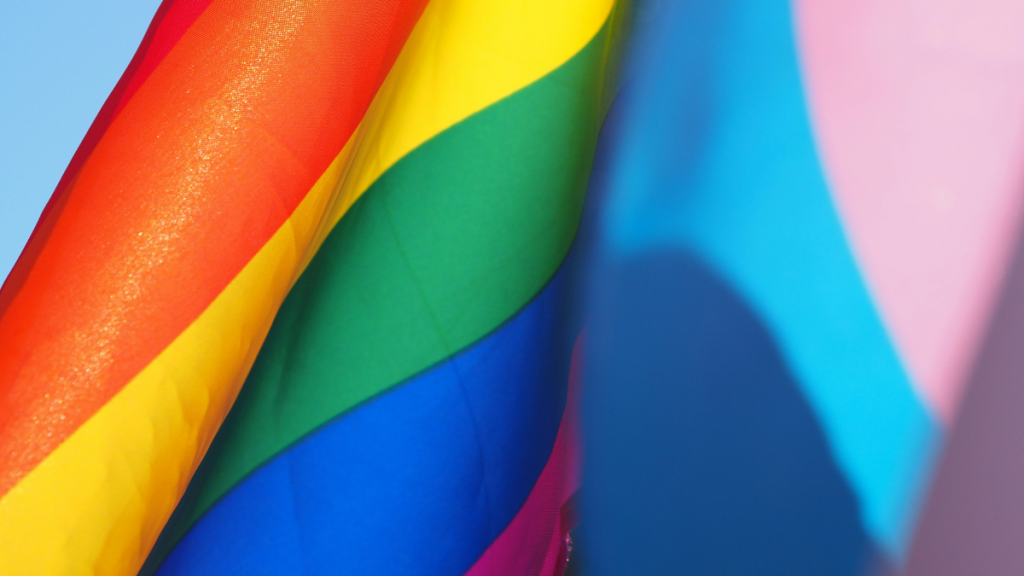
The federal government’s Substance Abuse and Mental Health Services Administration abruptly shuttered its specialized 988 crisis hotline service for LGBTQ+ youth, commonly known as “Press 3,” last summer. (It claimed it wished to “no longer silo” LGBTQ+ callers.) The “Press 3” option is slated to return this fall — but without the support of The Trevor Project, which piloted the program.
The Trevor Project served as the crisis line’s first provider and once handled roughly half of its contact volume. “The 988 Lifeline administrators informed us that The Trevor Project’s proposal to join the restored ‘Press 3’ LGBTQ+ youth specialized services was rejected,” the nonprofit’s CEO Jaymes Black said in a statement to The Advocate earlier this month. “The exclusion of our nearly 30 years of expertise is of course disappointing.” It was also deliberate and unsurprising.
Congress swiftly took action to restore the service last year, directing the Trump administration to allocate $33.1 million to supporting LGBTQ+ services. But when applications for partners reopened, the network’s administrator limited them to “current and active” 988 providers. This cut out The Trevor Project, which had been removed from the 988 provider network. The other six centers involved in the old network stayed “active” because they also served the general population.
Moreover, every organization tied to “Press 3” must comply with Trump’s Executive Order 14168. That mandate directs the federal government to recognize only two sexes, directs agencies to not ask for gender identity on forms and bars federal funds from being used to “promote gender ideology” — a mandate squarely at odds with The Trevor Project’s work advocating for trans and nonbinary youth.
Asked point-blank by The Advocate about who was selected, by what criteria and whether the new service will provide affirming services to trans callers at all, SAMHSA officials touted the size of its broader network and did not address whether counselors will be allowed to acknowledge trans and nonbinary identities, names and pronouns. They also did not explain why The Trevor Project’s application was rejected. Vibrant Emotional Health, the nonprofit administrator receiving $255 million to run the 988 network, didn’t respond to a request for comment.
The decision to exclude The Trevor Project from the hotline and follow Trump’s executive order threatens lives. Black said that The Trevor Project will keep pushing for the service to follow clinical best practices for all LGBTQ+ young people, “including and especially transgender youth,” who carry a disproportionately high suicide risk. In the meantime, its own crisis lines remain open 24/7, all 365 days of the year, to any LGBTQ+ young person who needs them.
In other news…
Humane elder care has become a luxury item, host Anna Sale declares on the latest episode of Slate’s Death, Sex, and Money podcast. She speaks with writer Anna de la Cruz to explore an essay published earlier this year in which de la Cruz details the challenges of caring for her two aging parents living with dementia at the same time. She also talks about why she was forced to make the choice to split their care along two paths in two different countries: her mother in the U.S. and her father in Mexico.
The name “MindSite News” is used with the express permission of Mindsight Institute, an educational organization offering online learning and in-person workshops in the field of mental health and wellbeing. MindSite News and Mindsight Institute are separate, unaffiliated entities that are aligned in making science accessible and promoting mental health globally.


Author

Related Articles

Rumors of Kids Quitting College En Masse Are Exaggerated
This week: what the data says about Gen Z students quitting college, and why postpartum mental illness is more than depression.

Why Is Georgia Blocking Recovery Homes for Substance Abuse?
Georgia towns are using zoning loopholes to shut recovery homes down, even as addiction and mental illness surge statewide.

Why Are Mothers Punished for Parenting?
Those of us who roamed freely as kids can be arrested for letting our kids do the same.