
These 9/11 Survivors Found Healing in Helping Others
Twenty-five years after the World Trade Center attacks, survivors share their stories and how helping others sparked post-traumatic growth.
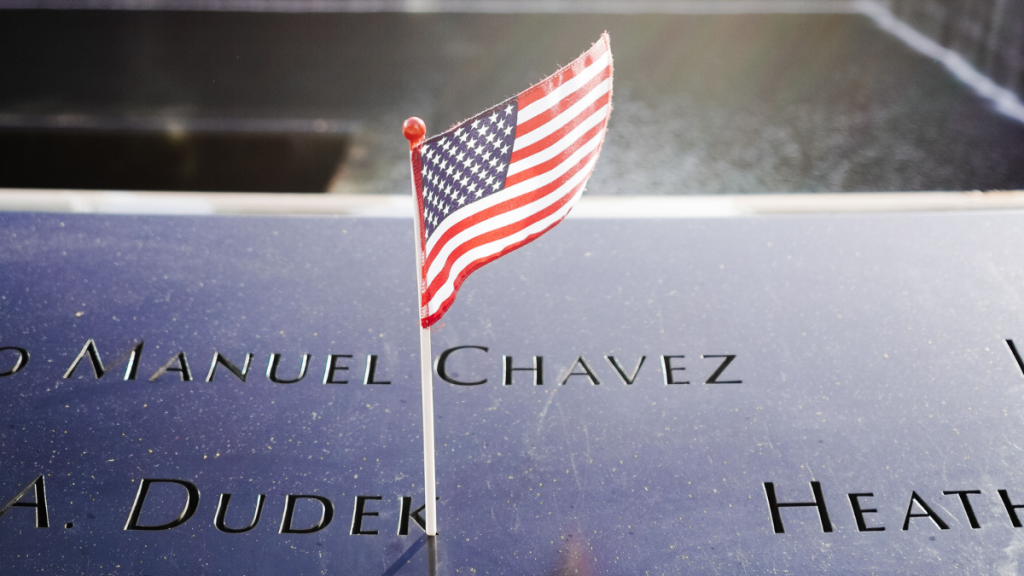
On the morning of September 11th, 2001, Lolita Jackson was in a meeting at Morgan Stanley’s offices in the South Tower of the World Trade Center when a plane suddenly struck the North Tower. Following the instructions of building security, Jackson and many others, including her longtime friend and colleague Tom Swift, rushed to evacuate. But, for a moment, Swift stepped back to call his wife. He would never make it out of the building — one of nearly 3,000 people killed that day.
The loss shattered Jackson and the other surviving members of their tight-knit team. “For the life of me, I just don’t know why he died on 9/11 and I didn’t,” Doug Brown, who worked alongside Jackson and Swift, told The Washington Post. “It just was so random.” But what came after the devastation is an atypical story about that morning — one of what psychologists call post-traumatic growth.
The term describes the measurable ways in which some people rebuild themselves after catastrophe. “We’ve been focused in mental health on symptoms of disorder for a long time and not looked at the other side of the picture,” says Richard Tedeschi, a psychologist and executive director of the Boulder Crest Institute for Posttraumatic Growth. Trauma can shatter our most basic assumptions about the general safety of the world and our future in it. Though reconstructing those beliefs is often painful, it can also change people or the better. One of the most reliable pathways through trauma, Tedeschi says, is helping others.
Jackson and her Morgan Stanley friends did just that. “People recognized, okay, working at these firms, making the money I was going to make, maybe that’s not all there is,” Jackson said. “I think for a lot of us, particularly those of us affected by someone we knew really well dying, that was enough to shake people up.” She soon left finance for a new career in public service, eventually landing in the mayor’s office and helping to train the New York City employees who would help residents recover from Hurricane Sandy. Better yet, she leapt into her personal passion and began regularly performing as a jazz singer. In the years since the attacks, she’s graced stages from NYC to Edinburgh, Scotland.
Brown, for his part, jumped into volunteering as a tutor to help elementary students improve their reading. He found the work so fulfilling that, after a few years, he transitioned to full-time employment with literacy nonprofits.
Their friend Nancy Karole Kennedy, who remembered passing Red Cross volunteers as they all fled the towers, soon became a disaster-response volunteer herself. She later worked for the Red Cross. “I wanted to be a person running in instead of a person running out,” she said. Kennedy is now director of development for the cancer center at Hackensack Meridian Health, where many of the patients that her work supports are 9/11 survivors and first responders who became ill from exposure to debris and toxins from the attacks. “I’m a kinder person than I was before,” Kennedy said. “It made me more compassionate.”
Critically, experts note that post-traumatic growth and suffering often coexist. Finding meaning in horror by helping others doesn’t erase the pain. But believing you’ve learned something from the worst day of your life can restore a sense of agency, says Eranda Jayawickreme, a psychology professor at Wake Forest University who studies post-traumatic growth. “You don’t feel like this passive victim of the cosmos,” he said.
Twenty-five years after the attacks, Jackson and her friends remain close and continue to heal by sharing as much light and goodness as possible with others. Theirs is the aftermath of trauma that Tedeschi wants more survivors to realize. “When [people] go through something that seems horrific and impossible to live with, it’s not the end of the story,” Tedeschi said. “The story looks pretty grim at times… but there’s a pathway through it that leads to things that are just surprising.”
The name “MindSite News” is used with the express permission of Mindsight Institute, an educational organization offering online learning and in-person workshops in the field of mental health and wellbeing. MindSite News and Mindsight Institute are separate, unaffiliated entities that are aligned in making science accessible and promoting mental health globally.


Author

Related Articles
MindSite News Welcomes Jariel Arvin as Our New Reporting Fellow
A Boston transplant – by way of Vietnam – sprouts local roots to help MindSite News deepen its Bay Area connections.

The Return of Prison Journalism
A look at the American Penal Press Contest, a reboot in its second year.
Meet Chicago’s First Street Psychiatrist
Sam Jackson was once a student of James Withers. This week, the pioneer of Street Medicine watched Jackson take over Chicago’s Street Psychiatry pilot program.