
The Healing Front: Away from Battle Lines, Helping Torture Survivors Rebuild their Psyches
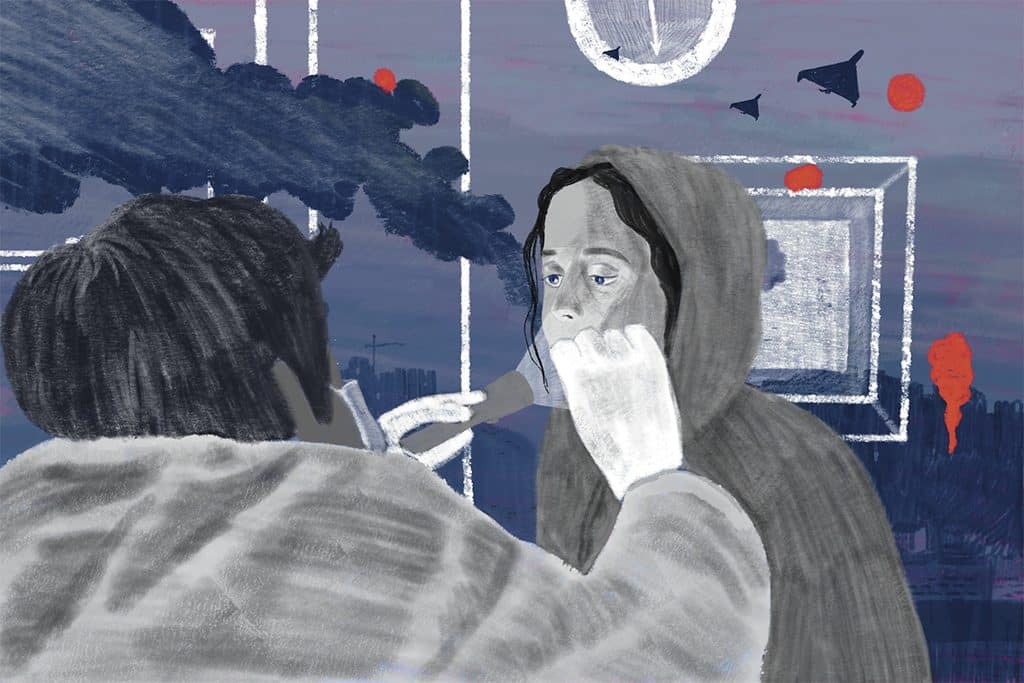
In wartime Ukraine, a Chicago psychologist found a country under fire building a rehabilitation network for torture survivors. Back home, he watched his own government pull the ground out from under similar efforts to help survivors in the U.S.
This story was originally published in the Chicago Reader. It is republished here with permission.
Andrew Geddert, 45, has a knack for finding his way back to Ukraine.
Before he became associate manager of clinical training at Rogers Park’s Marjorie Kovler Center, where he supports immigrant survivors of torture, Geddert spent five years with the Mennonite Central Committee in Zaporizhzhia, a city in southeastern Ukraine.
He arrived in 2015, a pivotal moment for peacebuilding work. Russia had annexed Crimea the year before and was backing armed separatist groups that had seized much of the Donbas. In an ethnically mixed region, home to both Russians and Ukrainians, Geddert and local pastors maintained spaces where people with conflicting views on the war could keep talking.
The COVID-19 pandemic pulled Geddert home to Chicago, and Russia’s full-scale invasion in 2022 pulled him back to Ukraine, shifting his work to emergency humanitarian aid. Zaporizhzhia became a front line, and peaceful dialogue was no longer possible.
In the summer of 2023, Yahad-In Unum, a French organization founded to identify Holocaust sites in the former Soviet Union, began documenting Russian war crimes in eastern Ukraine. It contacted Heartland Alliance International, Kovler’s parent organization, because thousands of Ukrainians tortured in Russian captivity were coming home with little support for handling their trauma.
Could Geddert, a licensed clinical psychologist, and Kovler, a global pioneer in torture rehabilitation, help Ukraine figure out what it would take to build a system to treat thousands of survivors in the middle of a war?
The initial idea was for the Kovler’s team to assess Ukraine’s rehabilitation landscape, identify gaps, and either strengthen what existed or bring in its own programming.
“But what I discovered was a little bit different than that,” Geddert said. What he found upended a basic assumption in his field: that survivors can begin to heal only once they’ve reached safety. Back in Chicago, he saw what happens when a government pulls support away. In Kyiv and in Chicago, survivors and the people who treat them now face the same question. What does healing look like when the source of harm never fully goes away?
What torture is designed to do
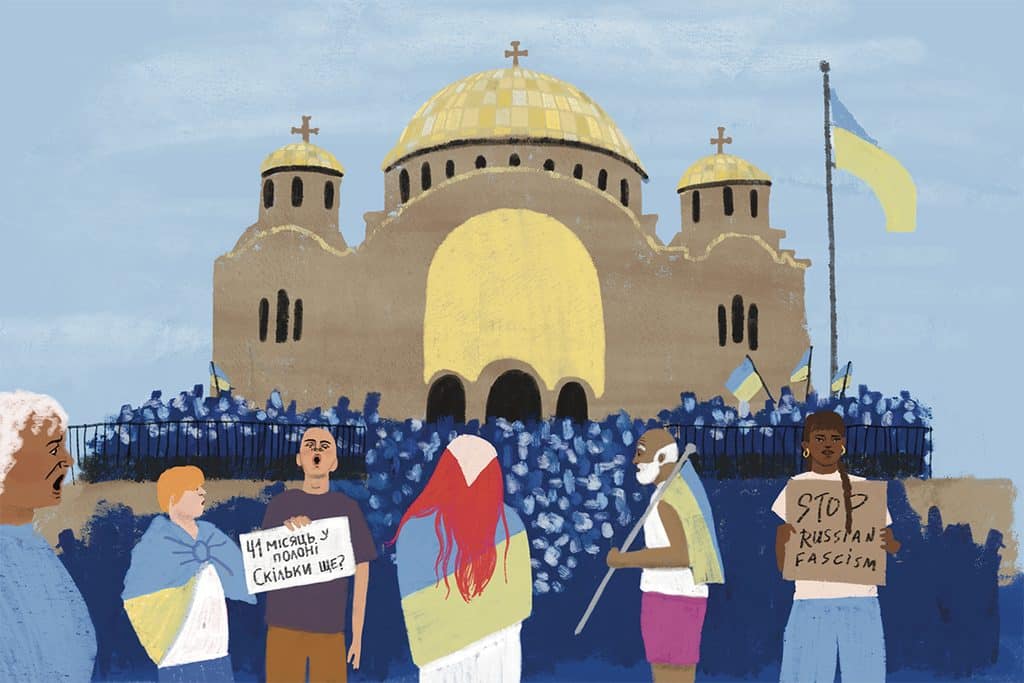
The mind heals more slowly than the body. Psychologist Nataliia Melnyk learned that serving in combat medical units and working with torture survivors.
Melnyk represents Ukraine’s Coordination Headquarters for the Treatment of Prisoners of War, whose main task is negotiating exchanges to bring soldiers and civilians home from Russian captivity. Torture, she said, is designed to “break” people: to make them doubt themselves, their families, communities, and government.
“Torture erases their sense of self; their personal boundaries are destroyed and take time to rebuild,” she said.
“It’s not about what voltage or how exactly they were hung by their hands. It’s the scale of the problem.”
—KSENIIA VOZNITSYNA, LISOVA POLIANA CENTER
Since Russia’s full-scale invasion, United Nations (UN) teams have documented a growing number of torture survivors among Ukrainians released from Russian custody. In 1,313 interviews with former detainees, 85% of civilians and almost all Ukrainian prisoners of war said they had been tortured or mistreated while held. More than 1,000 detainees have been subjected to sexual violence, according to the UN Human Rights Monitoring Mission in Ukraine. Because Russia doesn’t allow outside monitors into its 114 detention facilities, the full scale is likely larger.
The mission described Russia’s use of torture as widespread and systematic. To a lesser extent, it also documented that Ukrainian authorities tortured and mistreated Russian prisoners of war after capture, and that investigations into those cases have made little progress. The Ukrainian Prosecutor General’s Office is currently providing guidance in nine criminal cases concerning the alleged torture of Russian military personnel.
As prisoner exchanges between the two countries have become more frequent, more than 9,700 Ukrainians have come home from Russian captivity, and treating them on a large scale has become a challenge, according to torture rehabilitation organizations.
The effects of torture follow survivors home, if they have a home to return to; some soldiers learn their wives and children have died or fled, or that their homes lie in occupied territory. Divorce is becoming increasingly common, as are suicide and substance use disorder.
Kseniia Voznitsyna, director and chief doctor of Ukraine’s only government-run mental health center dedicated to reintegrating veterans, the Lisova Poliana Center for Veteran Mental Health and Rehabilitation, is careful about how she describes torture to journalists. The most visceral details are not the point, she said. What matters is that these methods are part of what she calls a brutal system, illegal under international law, that Russia is using to win a war.
“It’s not about what voltage or how exactly they were hung by their hands,” she said. “It’s the scale of the problem.”
A system built for scale
Lisova Poliana is a sprawling complex tucked into the forest outside Kyiv, along a quiet river. When the Chicago Reader visited last October, ping-pong balls clicked, and pool cues clacked in a spacious three-story atrium; outside, men chatted over a smoke. The center houses up to 220 veterans and has on-site therapists and medical rehabilitation specialists. Residents visit the library, organize soccer matches, and wander the wooded trails, where, in the wet chill of autumn, they might run into a local foraging for mushrooms with a dog. It may be their first free time in years.
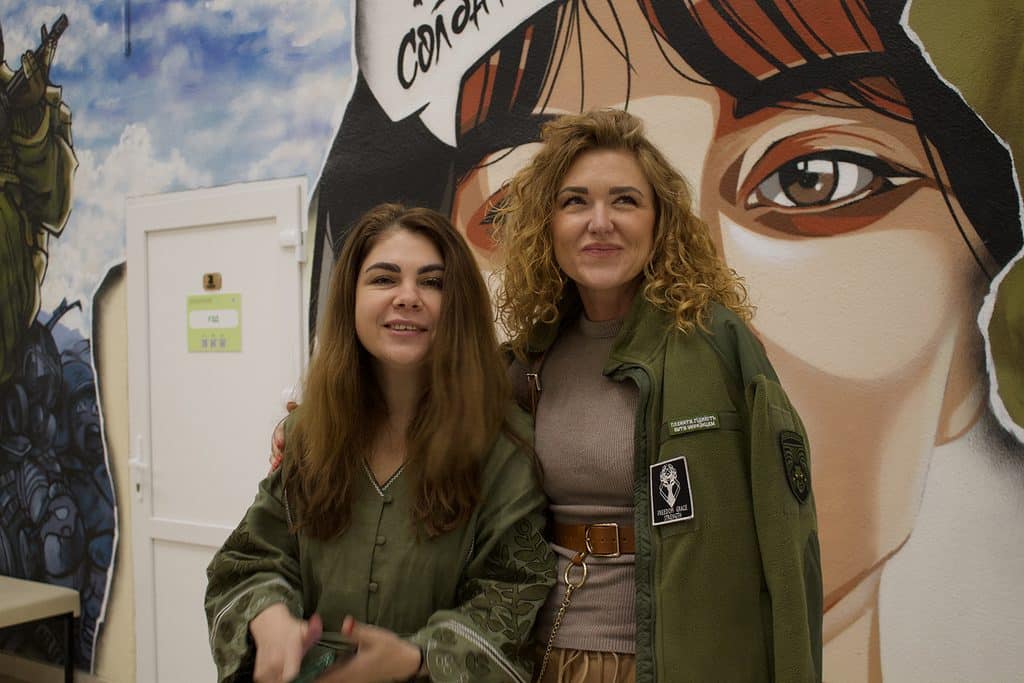
“In 2014 there was nothing—no system at all,” said Tetiana Sirenko, Lisova Poliana’s deputy director. “What exists now is simply a cosmic level of progress.”
On his first Ukraine trip for Kovler in March 2024, Geddert traveled from city to city, meeting a dizzying array of Ukrainian providers, including those at Lisova Poliana. He realized technical knowledge wasn’t the obstacle. These providers knew the model Kovler had established in the 80s: Survivors need housing, medical care, their families, and a legal record of what happened to them, all at once. (It works like Jenga. One loosened block can bring the whole tower down.) Ukraine lacked the resources to connect intensive, specialized work into one scaled-up system, Geddert said.
Every Ukrainian released from captivity goes through a mandatory process called “reintegration,” spending about three weeks at a medical institution or specialized center. They do not go straight home to their families because they arrive in such a vulnerable physical and psychological state that “sometimes they don’t even believe that they’ve actually returned,” Melnyk said.
First, medical and psychological specialists meet returnees at the exchange point and take them by bus to the nearest receiving hospital. Their acute wounds are treated before a medical quarantine, as infectious diseases run rampant in Russian prisons. A nutritionist-designed meal plan awaits, calibrated for bodies recovering from prolonged starvation, “but with familiar Ukrainian flavors,” Melnyk said.
The first 72 hours, called the “golden hours” by administrators, are paced carefully. Mundane freedoms are introduced slowly: deciding when to shower or use the toilet, choosing clean clothes, getting their own phone back. Specialists weigh how to tell survivors about family members who died while they were imprisoned. Some have been gone for as long as eight years. Ideally, this is when debriefing happens.
Trauma tends to be stored as fragments, flashes of emotion and sensation with no clear timeline. Putting the story in order helps people feel steadier. To engage the prefrontal cortex, which handles sequencing, reasoning, and meaning-making, trained psychologists guide returnees through a structured set of questions, such as “What happened first?” and “What happened next?”
“They might remember very specific details—smells, sounds—but not remember the face or name of the person who tortured them,” Voznitsyna said.
“Their painful ‘hot’ memories become more ‘cold’ so they stop being so painful,” Sirenko said.
Lisova Poliana trained more than psychologists. It also trained investigators and prosecutors, partnering with Ukraine’s Ministry of Internal Affairs to make as many debriefings as possible trauma-sensitive, and it trained family and community members who wanted to support loved ones coming home.
“I became a talking head for torture,” said Sirenko, who at one point was leading a Zoom training every single day.
Healing under fire
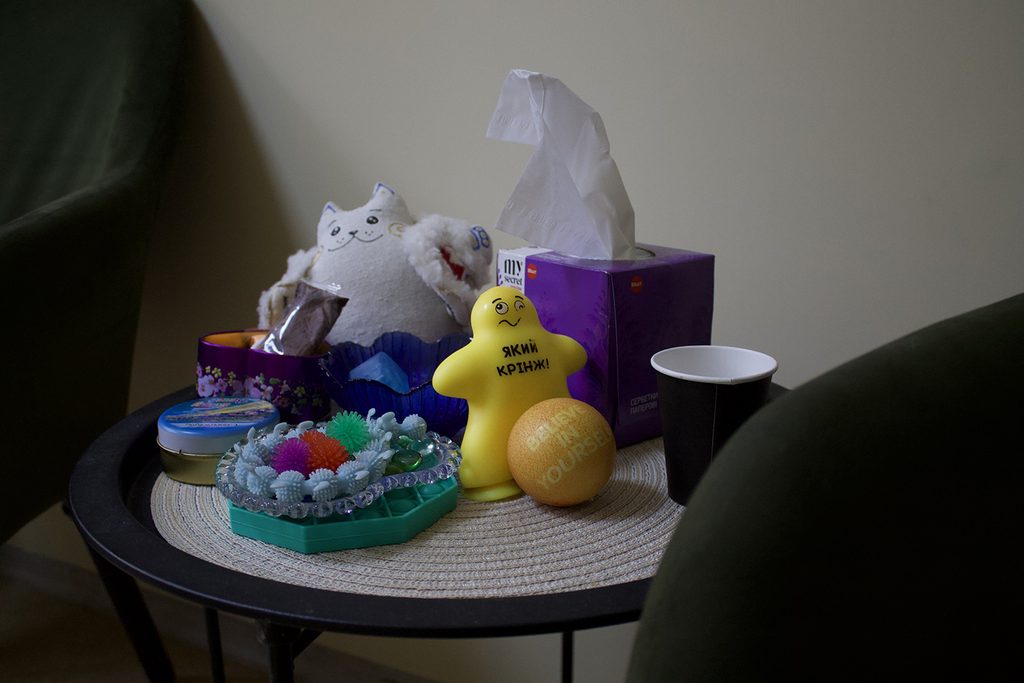
The whole process, Melnyk said, is about “restoring their mental connection to safety and normal life.” In Ukraine, though, safety is relative, and survivors reintegrate into a country still under missile and drone attack. That’s what sets Ukraine apart.
Most of the research on treating torture survivors was developed in western Europe and the United States, for refugees who had resettled far from the people who harmed them.
“In European centers, they work with people from Syria or Iran, refugees who already feel safe in the country they reached,” Sirenko said. “They don’t have to go back to Syria. But in Ukraine, the war is still ongoing. The danger is still here.”
In his report for Kovler, Geddert concluded that “the current network of Ukrainian torture treatment centers does not lag behind the international network of such centers in any way.” In fact, it was the other way around: Ukrainian leaders hosted international conferences to share what they had learned with the world.
Everyone in the country lives under the same invasion, so survivors aren’t alone in the face of the threat. That shared reality makes it easier for the government, families, civilians, prosecutors, and neighbors to understand what returnees have been through.
As Geddert wrapped up his work in Ukraine, he watched that kind of shared support erode at home.
An unraveling at home
On a leafy residential street, the Kovler Center stands shrouded in thick green vines. For nearly 40 years, thousands of people displaced by political violence from more than 80 countries have walked through the wooden doors of the former church.
Kovler was founded in 1987 in response to a wave of Central American refugees who had arrived in Chicago fleeing state-sponsored violence. A group of mental health professionals found their classical training inadequate for the people in front of them and, at survivors’ urging, pioneered a model of care built on empowering survivors through holistic medical care and psychotherapy, community integration, legal advocacy for political asylum, and documentation to expose human rights abuses.
In Ukraine, Geddert saw that survivors can heal even in the middle of a war, as long as a system is built to hold them up. Back in Chicago, he saw the opposite.
But basic stability comes first. Staff do not raise the subject of therapy until a person’s housing, work, and immigration status have been settled. At Kovler, building stability involves overcoming two kinds of isolation at once: “A sense of isolation from community is one of the impacts of torture,” Geddert said. “A sense of isolation is also one of the realities of being an immigrant at all.”
As many as 1.3 million refugees, asylees, and other displaced people in the U.S. are torture survivors, according to the Center for Victims of Torture. In October, President Donald Trump’s One Big Beautiful Bill Act cut off Medicaid for refugees, asylees, and trafficking survivors without green cards, impacting about 9,300 immigrants in Illinois alone. The law had already ended their eligibility for food assistance through the Supplemental Nutrition Assistance Program. The administration also slashed foreign aid that funded programs for torture survivors.
Geddert returned to Chicago the month Trump won his second term. By January 2025, when Trump took office, he had seen a spike in symptoms among his patients. People who had been stable and rebuilding their lives for years suddenly couldn’t sleep, couldn’t shake their anxiety, and were depressed. More opted for Zoom sessions instead of coming in person. U.S. Immigration and Customs Enforcement’s aggressive tactics made them feel, they told him, “back in the violence” they had fled.
In Ukraine, Geddert saw that survivors can heal even in the middle of a war, as long as a system is built to hold them up. Back in Chicago, he saw the opposite. Kovler was providing services for clients still waiting on asylum decisions as anti-immigrant policies, rhetoric, and violence, including the aggressive enforcement of Operation Midway Blitz—the federal immigration crackdown in the Chicago area—piled stress onto the stability their recovery depended on.
“There has always been, with these populations, a high degree of stress (and) uncertainty that they’ve been navigating—different forms of oppression and marginalization and racism,” Geddert said. “All of that is just heightened with the Trump administration.”
“A sense of isolation from community is one of the impacts of torture. A sense of isolation is also one of the realities of being an immigrant at all.”
—ANDREW GEDDERT, MARJORIE KOVLER CENTER
Then, last November, things got worse: Rahmanullah Lakanwal, an Afghan national from Washington state who had been granted asylum, allegedly shot two members of the National Guard outside the Farragut West Metro station in Washington, D.C. The Trump administration temporarily halted all asylum decisions pending further vetting and paused visas for Afghan nationals. It had already announced plans to rescreen the roughly 200,000 refugees admitted under President Joe Biden.
Seeking safety in another country after surviving state-sanctioned torture is a legal right under both U.S. and international law. But the process of winning that protection has become more demanding and “wildly overburdened,” according to Mary Kay Hazel, co-executive director of Heartland Alliance International.
“Judges are picking apart every tiny little detail of the personal statement,” Hazel said. Torture survivors’ well-documented difficulty recalling details, she said, is often misread as evidence of lying or fraud.
What Kovler brought home
Geddert still thinks about the self-organized network of men who survived sexual violence in Russian captivity and have lobbied the UN with letters documenting their experiences. That effort wouldn’t exist, he said, if people with lived experience hadn’t led it, and he believes survivors should shape more programming directly. Hazel agrees. “It doesn’t have to be therapy to be therapeutic,” she said. “Being able to bring community members into the response to torture is a core part of our model.”
Geddert was also struck by his Ukrainian counterparts’ commitment to what will likely be a decades-long fight for international justice for Russia’s war crimes, even as they live through air raids and bombardments. Veronika Plotnikova, head of the Victims and Witnesses Support Coordination Center within Ukraine’s Prosecutor General’s Office, pushed for its creation after seeing how hard it was for trauma survivors to stay with the arduous process of proving they were tortured. She became convinced that you can’t build a strong legal case without first rebuilding a survivor’s trust in the system. Ninety-six percent of the people her center serves are survivors of international crimes, cases that can take as long as 30 years to reach a verdict. Plotnikova isn’t fazed.
“If the case takes 10 years, they will be 10 years with us,” she said.
In Chicago, that long fight runs through immigration court. With asylum cases harder to win, Geddert said careful documentation, guided by legal counsel, gives asylum seekers “a fighting chance.” He recommends that survivors also submit a psychological affidavit and a forensic medical exam, though both are optional.
Kovler’s training model teaches core values, but Geddert believes each clinician should develop their own voice. Ukraine shaped his, across several stints and generations. Almost a century before the front lines reached Zaporizhzhia, his ancestors were refugees in the same region, having fled Moscow after his great-great-grandfather was assassinated for his Mennonite beliefs. His faith and his work with forcibly displaced people in Chicago, Ukraine, Guatemala and beyond taught him that uncertainty is part of living, and that no peace should be taken as total or permanent.
It’s why he now tells the graduate students in Kovler’s nine-month training program not to wait for safety before healing can begin. New practitioners are often surprised by how much laughter there is. Dark work requires a sense of humor.
Plotnikova would agree. As the Reader was leaving her office in Kyiv, she asked to retake a photo together. “You look so serious,” she said. “What—you don’t want to smile in front of the torture victim building?”
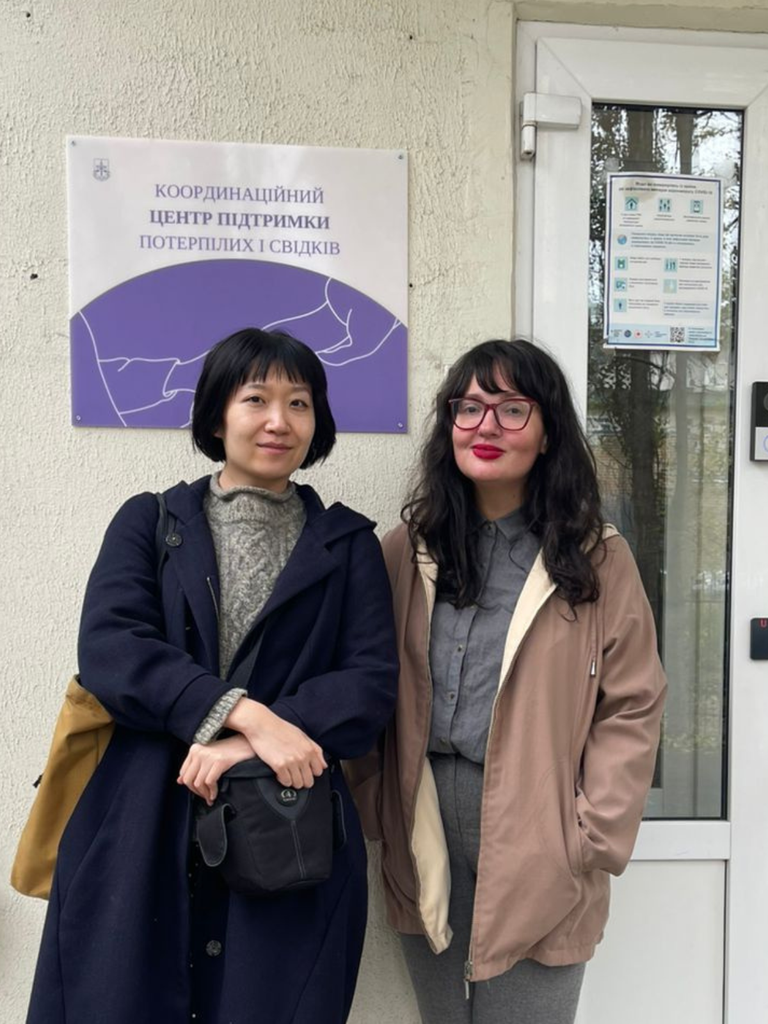
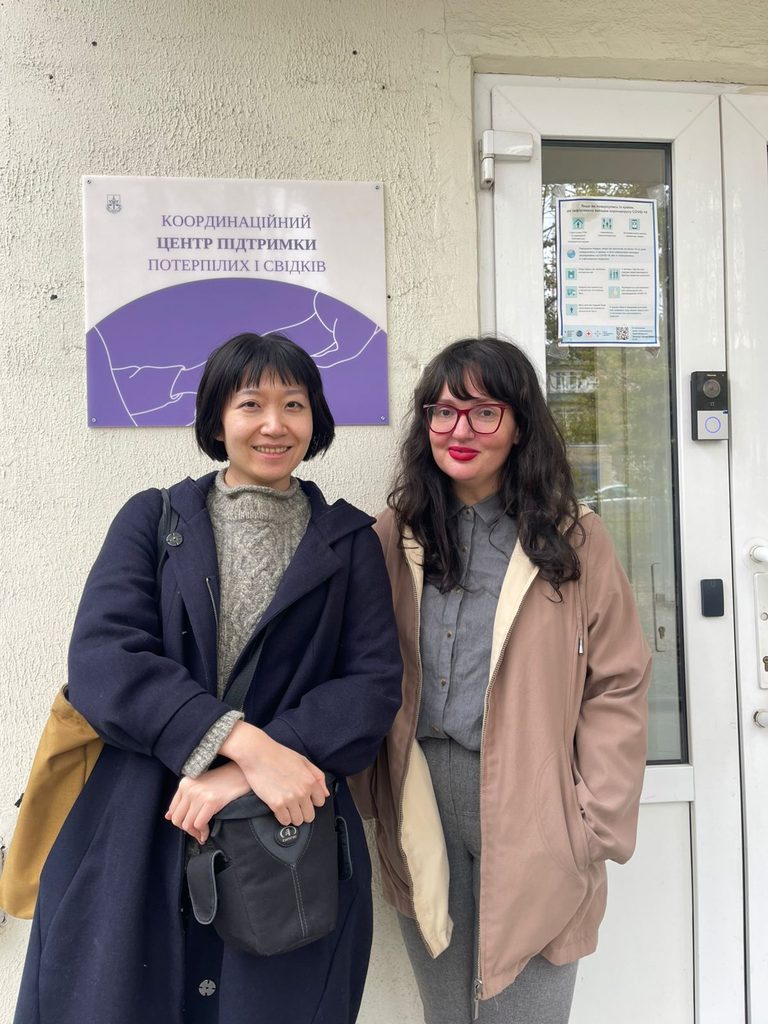
This reporting was supported by the International Women’s Media Foundation’s Women on the Ground: Reporting From Ukraine’s Unseen Frontlines initiative, in partnership with the Howard G. Buffett Foundation.
The name “MindSite News” is used with the express permission of Mindsight Institute, an educational organization offering online learning and in-person workshops in the field of mental health and wellbeing. MindSite News and Mindsight Institute are separate, unaffiliated entities that are aligned in making science accessible and promoting mental health globally.


Author

Related Articles
Trump Accused of Rape and Participating in Epstein’s Abuse Network in New Report by House Democrats
‘The actual evidence we have seen…indicates that Trump abused, assaulted, and even raped numerous women alongside, and in coordination with, the most infamous sex trafficker in history,’ says the report.
‘I’m Sticking to My Sobriety’: Minnesota’s Karen Teens Navigate Two Cultures and an Opioid Crisis
In St. Paul, community collaboration is the ‘secret sauce’ helping the fight against opioid addiction among Karen and Karenni youth.

‘This Is the First Time I’ve Touched Grass’: Inside the U.S. College Campuses Pioneering Social Prescriptions
As a mental health crisis overwhelms college students and counseling departments, universities are creating programs that prescribe nature, arts and belonging.
