
Parenting from Prison: Stories and Resources
One of the many difficult things about visiting parents in prison, children say, is that they can’t hug them, sit in their laps, or whisper ‘I love you’ in their ears. In today’s kids, youth and family-focused MindSite News Daily, we share a roundup and resource list focused on parenting from prison.

Greetings, MindSite News Readers.
In today’s Daily, a roundup of stories about parenting from prison, including several features from the MindSite News team.
Plus, a look at the rise of “grandfamilies” through one family’s difficult but hopeful journey.
But first, a story about young lives after locks and walls. After seeing her teenage son go without support while she’d been in prison, Tiffany Gibson went on to launch Surviving Freedom. The Atlanta-based nonprofit empowers justice-impacted youth with college and career counseling. “If we can show the teenagers that there are resources for them and provide those resources, a lot of them will stay in school, go on to college, or build a career,” Gibson told Capital B News. “There are so many kids that don’t have that structure or guidance that they need; Surviving Freedom is here to support you.”
A brief reprieve for some children with incarcerated parents
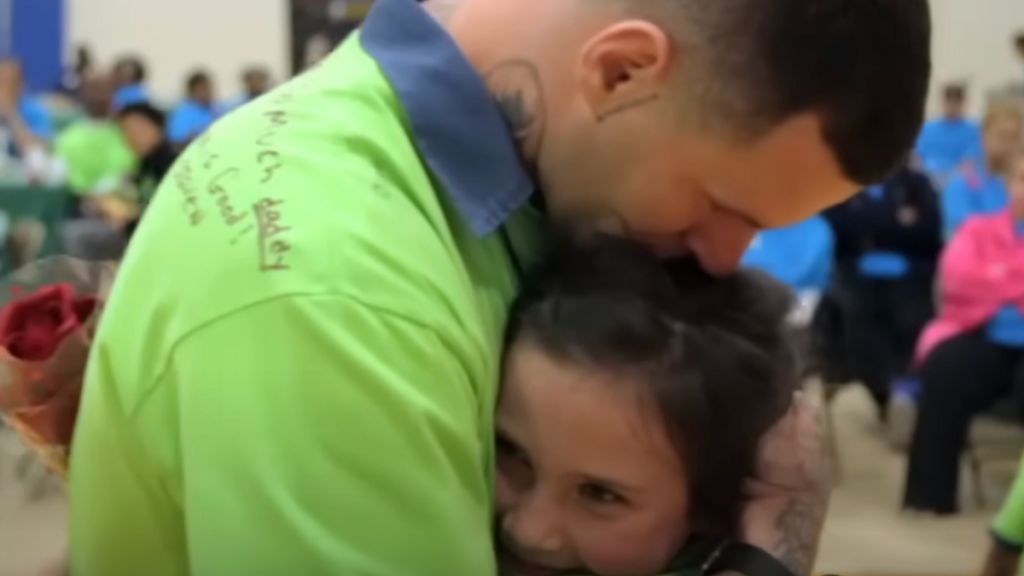
One of the many difficult things about visiting parents in prison, children say, is that they can’t hug them. They can’t sit in their laps, or have them whisper ‘I love you’ in their ears. Normally, a plexiglass or video screen separates them from the love they so desperately crave. An NBC special released during Trump’s first term reports on an exceptional, celebratory day in which children and their incarcerated fathers got to spend joyful, tearful hours together. One small joyous boy leapt into his father’s arms with such force that his dad fell to the floor. Watch the 10-minute special here.
Here’s a roundup of some related pieces – either carried in MindSite News or written by our team – that discuss parents in prison, a subject we’ll be revisiting soon.
‘We Take Care of Each Other’: Inside the Prison That Could Change Incarceration in America. Ben Seal story in Philadelphia Magazine republished by MindSite News
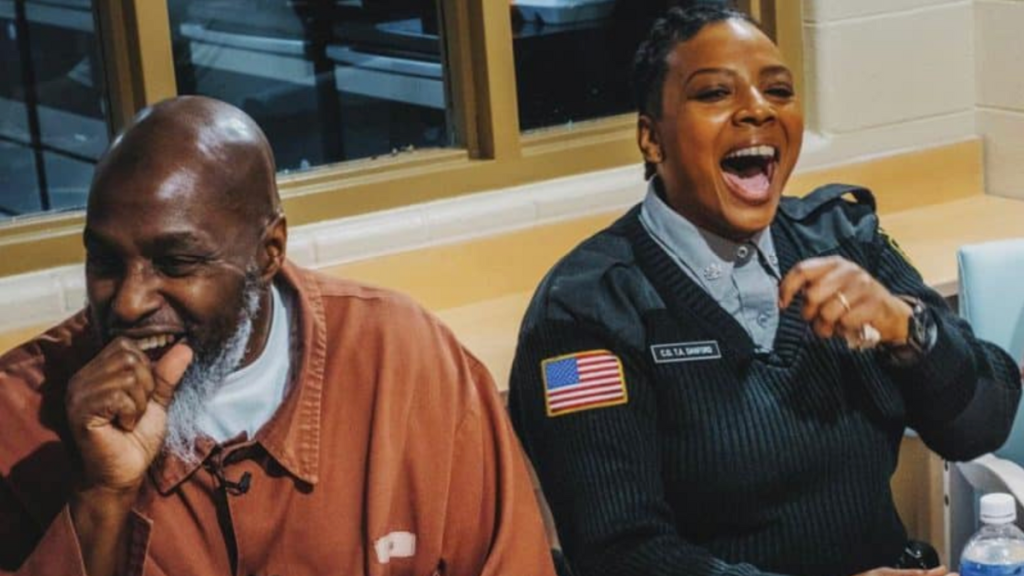
This prison outside Philadelphia is modeled on prisons in Norway and Sweden that are considered the most humane and effective in the world. “It’s a transformational approach to how we think about prisons,” said a Pennsylvania state legislator.
Roadblocks to Prison Visits Cause Despair. Laurie Udesky for MindSite News
An estimated 5 million children in the United States have had an incarcerated parent, and they often have no clear sense of when they’ll see their parents again.
Parenting from Prison: Ways to Maintain Your Family Ties While Incarcerated. Diana Hembree for Bay View San Francisco
Regular parenting may be overwhelming at times, but for prisoners doing time, it can be hellish. Here are some ways both incarcerated parents and their partners can help maintain a strong relationship with their kids.
How “Brocheting” Transformed These Prison Dads. Diana Hembree for MindSite News A group of men at California State Prison get creative, keep frustration at bay and delight their kids by ‘bro-cheting.’
Incarcerated Parents Are Not the Only Ones Who Are Punished: A Resource List for Families. Youthcast Media Group
Children and spouses of the incarcerated are punished as well, not only for being separated from their loved one but often because they experience a swift descent into poverty. Find out how incarceration undermines families and some resources that are available.
When Reconciliation Is Out of Reach. Poem by an anonymous contributor, Youthcast Media Group
Although many children understand their father or mother has broken the law, they love their parents without equivocation. For some crimes, however, it is not that simple. One young writer for Youthcast Media Group writes of the shock, pain, horror and torment she feels about her once-adored father after she learned he had molested her sister. Read her poem here.
A look inside the increasingly common phenomenon of “grandfamilies”
As we’ve touched on before, children are increasingly growing up under multigenerational care – by 2019, one in eight grew up with at least one grandparent at home, up 36% from 2000. . Sometimes, most often after a tragedy, those grandparents can become primary caregivers. My aunt’s sudden heart attack meant that our grandmother morphed into mom for my cousin Jonathan’s kids.
Jane and Michael Dodds have been parenting again for some time, having taken over from their daughter and her partner, who were descending further into drug addiction. They were conscious about overstepping, but – in part after realising how the insecurity was starting to hurt the eldest of those four grandchildren – they eventually decided to legally recognize what had, by then, been true for years. “I realized at a certain point, there is no halfway,” Michael Dodds told his daughter Frances in her New York Times essay on their family. “You have to be all in.”
It wasn’t an easy transition. Like most parents, the Dodds expected each of their five children to grow into healthy adults – they had “really high expectations and hopes,” according to Jane. But then their daughter L fell into opioid addiction, and had four children in less than two years. In the difficult times since, she’s brought fentanyl and needles home, used Jane’s Social Security card to steal money from them, and nearly died on multiple occasions. It became clear that they wouldn’t be having the retirement they’d expected. They’d have to exchange their frustration in loving an addict for both grief and hope.
“And for me, that’s been the biggest change,” Michael said. “Maybe four or five years ago, my anger was volcanic. I fixated on what had been done to me. But at some point, I just had to say: I can’t have it both ways. I can’t love them unconditionally and hold on to the anger, because then my love would be begrudging. We choose to raise them and to love them, period. The best way I can resolve the conflict between my roles as father and grandparent is to love and care for my daughter’s children when she can’t. In doing that, I am also loving her.”
In their 36 years so far of continuous child-rearing, they’ve also become better parents – more patient, gracious, and accepting. Jane’s “wrath,” once “hot and vicious,” (in Frances’ words) is no more. “With these kids, I’ve realized that for their emotions to be regulated, my own emotions have to be more regulated,” she said. “I’ve realized I cannot push their buttons, and when I do, I need to back off and let them calm down. So they’re sort of teaching us how to do it differently.”
While they’ve let go of expectations for L, hope is something that they refuse to give up. “Love is the big one,” Michael said, reflecting on the passage from 1 Corinthians that’s often recited at weddings, “but people don’t pay much attention to hope. Even though it’s there all the time, right behind love.” With L approaching two months of sobriety – the furthest she’s made it in some years –, and Frances expecting a child of her own, their hope for their first set of children, too, is stronger than ever.
In other news…
Harvard University sued for excluding students with mental health trouble: Though Harvard has held firm against the Trump administration’s freeze on billions of federal research dollars and block on international students, the University has, according to a lawsuit filed in Massachusetts, failed to uphold the rights of students with mental health disabilities.The claim was filed by Disability Rights Advocates and Nichols Kaster, PLLP on behalf of Students 4 Mental Health Justice (S4MHJ), a campus-based advocacy group, and alleges that Harvard effectively bans students with serious mental illness from campus, including their assigned residential housing, after mental health-related hospitalizations – thereby excluding them from its programs. The practice positions students as threats to community precisely when they need community the most, said Madeleine Reichman, Senior Staff Attorney at DRA.
“We never imagined we’d have to take legal action against the school we sacrificed so much to attend,” said one S4MHJ member. “But Harvard has created a culture of fear where asking for help can cost you your medical privacy, housing, health insurance, financial aid, and future. We’re taking legal action because students should be empowered to get the care they need – not cast aside as liabilities.”
In a last-minute victory for public school districts last Thursday, a District Court Judge issued an injunction barring Trump from dismantling the Department of Education. U.S. District Judge Myong Joun in Boston, also ordered the department to reinstate 1500 employees terminated in a mass layoff, which accounted for half of all the people in the department. “This court cannot be asked to cover its eyes while the department’s employees are continuously fired and units are transferred out until the department becomes a shell of itself,” the judge wrote. – Diana Hembree
Apologies absent in your childhood home? Break the habit in your own. Experts say that a home in which no one apologizes can indicate deeper emotional issues – potentially with long-term consequences, including anxiety, depression, negative thinking patterns, over-explaining, and difficulty coping with unresolved conflict. “When families don’t apologize, it often means that there’s an environment of emotional invalidation, and ingrained beliefs about perfection,” clinical psychologist Regine Galanti told USA Today. Discomfort around apologies is only natural: after all, they lay bare that someone did something wrong. But not acknowledging errors reinforces the idea that mistakes are never okay to admit, or, worse, can’t be corrected or overcome – and that’s dangerous.
“Often, relationships go through a cycle of rupture and repair,” said therapist and author Amy Morin. “As part of the repair, apologies are often necessary.” Without the opportunity to practice or witness repair after conflict, children are left harmfully ill-equipped for life’s realities. If any of that chimes with your experience, therapy might be able to help you heal.
Talking to teens about suicide: There are plenty of conversations us parents would rather avoid. But not having some of them can lead to lasting, irreparable harm. In her advice column for The Seattle Times, licensed therapist Jordan Alam offers guidance on approaching the thorny topic of suicide, particularly in the wake of a loss: some adults fear that any mention might push their child towards a dangerous attempt, but that just isn’t true. In fact, Alam says, “Someone who is already having those thoughts may benefit from someone witnessing their suffering without judgment. Teens are also likely already hearing about self-harm and suicidality from their peers or the internet, but often don’t have the language or tools to know how to support one another through it.”
The name “MindSite News” is used with the express permission of Mindsight Institute, an educational organization offering online learning and in-person workshops in the field of mental health and wellbeing. MindSite News and Mindsight Institute are separate, unaffiliated entities that are aligned in making science accessible and promoting mental health globally.

Author

Related Articles

College Sports Has an Emotional Abuse Problem
As the Galic twins’ experience with their coach shows, there are few protections for college athletes experiencing emotional abuse.

Autism and Alzheimer’s May Be Linked, Study Suggests
New discoveries are pushing researchers to consider that autism and Alzheimer’s may offer insight into the other.

He Almost Killed His Father. Now He Helps Others At Risk.
In today’s newsletter, we explore how one man healed after a dangerous psychotic break that nearly led him to murder.
