
“Social Prescriptions” Combat Obesity and Loneliness
What if providers wrote prescriptions not just for medicine, but for daily walks?

Greetings, MindSite News readers.
In today’s edition: Prescribing daily walks or social activities may be an effective treatment from doctors, new research suggests. Americans are coping with a sense of collective betrayal. And a stunning announcement by the U.S. government orders that “illegal aliens” – i.e., immigrants without documentation – be barred from 15 Department of Health and Human Services programs, including Head Start and community mental health clinics.
Also in this issue: Recent research showing that a history of coffee drinking is linked to “graceful aging” in women at age 70, a criteria that includes good mental health and no memory or cognitive issues.
But first, some surprising news about pets: They may not be a panacea for loneliness, according to a study from Budapest conducted during the COVID-19 pandemic and published in Nature. The researchers, who hypothesized that pet enthusiasts were over-represented in most studies, assembled an “unbiased sample” and found that while pet owners were markedly more cheerful in the first one to four months after adopting a pet during a global crisis, the pet did not affect their overall well-being in the long run. We suspect the “global crisis” part might have something to do with that.
The Lancet explores the benefits of “social prescribing” for patients
What if most providers, besides prescribing medicines, wrote prescriptions like “take a daily walk” or “play outside with your kids for an hour a day”?
Health isn’t just physical, after all – it includes mental and social well-being. But as the medical journal The Lancet notes in a column on social prescribing, “loneliness, debt, and stress have long been neglected in modern biomedical, disease-focused systems.” The push to fix this imbalance by referrals to patients to enjoy nature, connection and community-based support is gaining traction, the authors say, as seen in a 2024 report spotlighting its use in more than 30 countries.
With loneliness and obesity representing enormous unmet needs – as well as contributing to the global health burden – providers could prescribe, say, a “befriending service” to someone suffering from loneliness or an exercise group for obesity, The Lancet suggested.
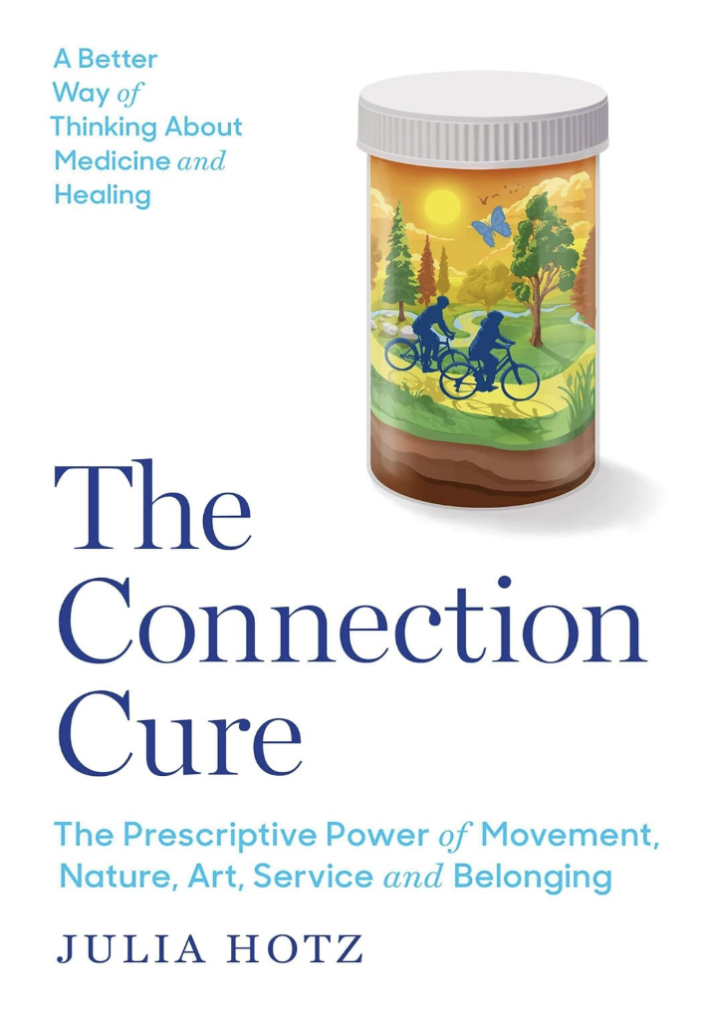
The journal found “some evidence that social prescribing can be effective – for example, a study in a low-income neighbourhood in Detroit reported that frequent attendees to the emergency department who were linked to community services by community health workers had reduced rates of subsequent visits,” but that more research needs to be done. While calling social prescribing an important development, the article noted that “it cannot be a substitute for addressing broader economic and social conditions that shape health and wellbeing.”
See MindSite News’ book review on The Connection Cure, which discusses social prescribing and the health benefits of nature, movement, art, volunteering, belonging and community ties.
“I owe them my family’s life”: Texas towns grateful for help from Mexican rescuers
With a botched rescue and alarm system during the horrifying Texas floods, which killed 132 adults and children, it was gratifying to see videos of Mexican firefighters and first responders rushing to save Texas residents.

As the torrential flooding swept through dwellings in central Texas, members of Mexico’s Civil Protection Water Rescue Team and others mobilized and joined U.S. volunteers to send out rescuers to search the riverbanks and floodwaters for victims and pull survivors to safety, the Austin American Statesman reported.
“When it comes to firefighters, there’s no borders,” Ismael Aldaba, founder of Mexico’s Fundación 911, told CNN. “There’s nothing that’ll avoid us from helping another firefighter, another family. It doesn’t matter where we’re at in the world. That’s the whole point of our discipline and what we do,” later adding that the Mexican team “received a lot of love from our U.S. colleagues.”

In addition, Kerr County Sheriff Larry Lyda, who had taken a hard-line stance on immigration, had a change of heart during the flood. His daughter and two grandchildren, along with some other people, were in danger of drowning in a small structure in the raging waters that local rescuers had been unable to get to. A Mexican rescue team risked their lives to get to the house and pull everyone to safety. Lyda encouraged the rescuers to get green cards so they could cross the border freely and expressed his deep gratitude. “I owe them my family’s life,” he concluded.
Minnesota first state to require mental health warnings on social media
By next summer, anyone who lives in Minnesota will see a warning pop up on their social media before they can see their posts. And that warning will tell them that the site could be a hazard to their mental health.
Although the pop-up’s annoyance factor might be rather high (assuming it appears every time you open up TikTok, Instagram, Facebook or similar sites), state lawmakers and Governor Tim Walz, who approved the bill, hope it will encourage kids to think about how much time they spend on social media. Social media companies are also being asked to include URLs to resources for depression and suicidal thinking, which are among the conditions linked to heavy social media use in children and teens.
“I think the evidence is very clear that social media use is linked with depression, anxiety, loneliness, self harm, suicidal ideation, eating disorders, all sorts of terrible mental health conditions,” Rep. Zack Stephenson said. “So I believe you’ll see a message telling you that prolonged use of social media can lead to those outcomes.”
Social media companies have vowed to seek changes or block the law’s enforcement.
(For more on social media and mental health, see this archive of MindSite News’ stories on social media.)
A year after the Supreme Court granted Trump “absolute immunity,” Americans cope with a sense of collective betrayal
Over our lifetime, most of us will experience deception and outright treachery of one sort or another. When someone insists that what’s white is actually black, or that something demonstrably false is true, we call it gaslighting. Psychology Today columnist Jamie Cannon, MS, LPC writes that gaslighting “has a direct, harmful effect on mental health, particularly when it takes place over an extended period. Continual attacks on one’s sense of reality causes victims to question their sense of reality.”
But what happens to a nation’s collective mental health when its institutions and its leaders betray that nation’s founding ideals?
Last July 1, the Supreme Court majority “overthrew the central premise of American democracy: that no one is above the law,” historian Heather Cox Richardson wrote recently, repeating what she had said at the time: This action gave the president “’absolute immunity’ from criminal prosecution for crimes committed as part of the official acts at the core of presidential powers.”
The decision essentially gave Trump the powers of a king, and his executive orders are being opposed by massive, ongoing protests across the country. But the visceral feeling of betrayal is hard to shake – something that constitutional scholar and former U.S. Court of Appeals Judge J. Michael Luttig recently discussed with two US historians on the Legal AF show.
A lifelong Republican, Luttig felt especially let down by his longtime friend, Chief Justice John Roberts. The Supreme Court and Roberts did not meet the moment, he said, and has “accommodated this president at every turn.” He says Roberts has been reticent to speak out against the president and has failed to sufficiently defend federal judges targeted by abuse and death threats – a failure Luttig called “unforgivable.”
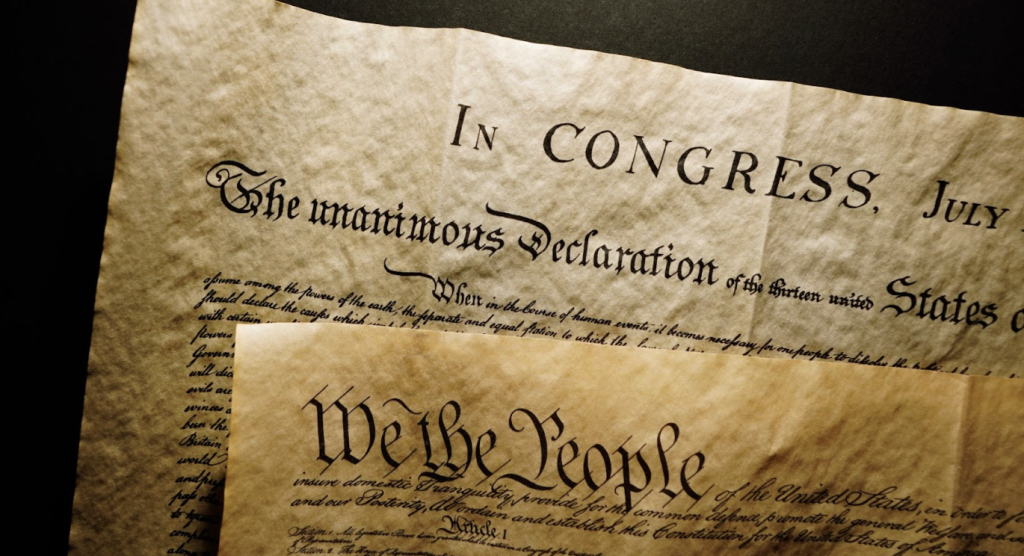
Luttig recently matched up the 27 grievances against the tyrant King George III laid out in the Declaration of Independence of 1776 – the basis for the American Revolution – with 27 “almost identical” grievances from today. These new grievances involve Trump’s assault on the rule of law and the right to liberty and freedom. The parallels, 250 years later, stunned him. “I was astonished, astonished, at how well they line up exactly with the conduct of this incumbent president of the United States,” he said.
Luttig was asked at a symposium recently whether the U.S. was in danger of losing the republic. His response: “We lost our republic in January of 2025, when this new president returned to the White House and began his first 100 days in office…The only question now for America is whether we can recapture that republic that we have already lost.” (You can watch the whole discussion here.)
Today, lies don’t just come from the White House and its communication team, but from agencies reconfigured by Trump, DOGE and layoffs. The Social Security Administration recently issued a press release and sent out an email to tens of millions of Americans announcing that 90% of seniors would no longer pay taxes on their benefits under the new budget bill – a claim Politifact rated “mostly false.”
All this deception adds up. As Peter Wehner wrote earlier this year in a story for The Atlantic, “Trump is gaslighting us. [He] is an agent of chaos, and chaos has a human cost.”
In other news….
ICYMI: A study that’s intriguing news for all of us female coffee drinkers out there: Coffee may help us age well, according to an unpublished study from Harvard researchers. (We don’t know what it does for male coffee aficionados since they were not part of the study). A HealthDay News story this summer reported that researchers found each extra cup of joe is tied to an extra 2% to 5% increased chance of “aging gracefully” – which they define, among other things, as having good mental health and physical function and not having any of the 11 most common chronic diseases or memory or thinking problems by age 70. One caveat: We’re talking caffeinated coffee, consumed in daily quantities of either 5 small cups or 2 ½ large ones. (Excuse me while I pour myself another cup.)
Texas school to lose $600 million in federal funding, with mental health programs predicted to be hit the hardest. School counselors, social workers, and mental wellness and crisis services created in response to the tragic Uvalde and Santa Fe school shootings are all in danger, according to the Texas Tribune. The federal cuts would hit especially hard because Texas spends very little state money for school mental health services. “I would like to have funding similar to what they said with police officers. You have to have a police officer on every campus, but that costs money yearly, and they provide. We should be doing the same with social workers and psychologists,” said Adrian Johnson, superintendent for the Hearne, Texas school district.
Trump’s “illegal alien” ban will bar children from Head Start and families from mental health clinics. Department of Health and Human Services Secretary Robert F Kennedy Jr. announced last week that his department would ban immigrants without papers from accessing Head Start, Certified Community Behavioral Health Clinics and a variety of services including family planning, substance use treatment and homeless services. “Today’s action…restores integrity to federal social programs, enforces the rule of law, and protects vital resources for the American people,” Kennedy said in a statement.
The National Head Start Association issued a statement decrying the new rules. “Head Start programs strive to make every child feel welcome, safe, and supported, and reject the characterization of any child as ‘illegal,’” said Yasmina Vinci, executive director of the association. “Attempts to impose such a requirement threaten to create fear and confusion among all families who are focused on raising healthy children, ready to succeed in school and life.” We’ll follow up on the ramifications of this order in subsequent coverage. (See our related story on the Trump administration and Head Start here.)
The name “MindSite News” is used with the express permission of Mindsight Institute, an educational organization offering online learning and in-person workshops in the field of mental health and wellbeing. MindSite News and Mindsight Institute are separate, unaffiliated entities that are aligned in making science accessible and promoting mental health globally.


Author

Related Articles
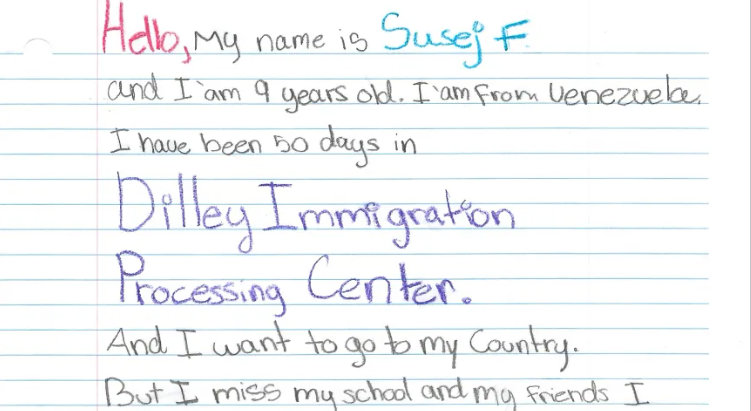
Health Organizations Condemn Traumatic ICE Raids, Family Separation
According to letters from children living in an ICE detention facility, living conditions are inhumane and their mental health is suffering.

In Teens, Social Anxiety Often Looks Like Anger
A study finds that some teens’ aggressive behavior may be due to social anxiety, not straightforward reactivity.
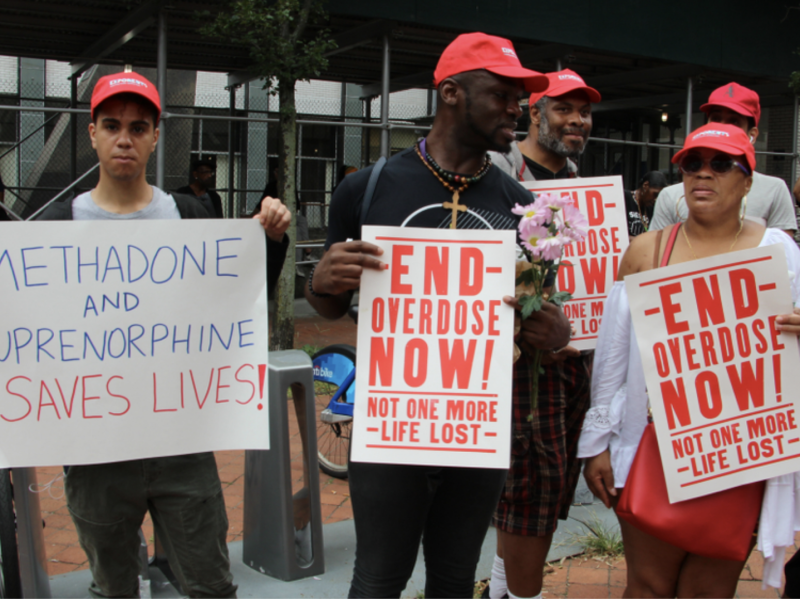
Expert Calls for Harm Reduction, Not Punishment, to Resolve Our Overdose Crisis
As the Trump administration pulls funding from harm reduction, an expert on the overdose crisis says it’s the best way to save lives.
