
Prison Harms Black Men’s Mental Health Long After Release
Many return with scars seen and unseen after years of violence, abuse and racism. Plus, Epstein’s long reach.

Good morning, MindSite News readers. In today’s newsletter, we look at how abuse and violence in prisons and jails continues to erode Black men’s mental health – even after they get out.
Plus, we report on whether Jeffrey Epstein’s victims will ever be able to find closure, a retired teacher hiking the entire Colorado Trail to support his town’s mental health, and — in our recent MindSite News Stories section — a new study that finds childhood smartphone use increases the likelihood of mental health problems in young adulthood.
But first, new research from the website good good good suggests dogs are even better at helping people regulate stress than we suspected. In a new experiment shared by the website good good good, scientists recruited 40 dog owners for a stress test involving public speaking and solving math problems aloud “in front of a panel of expressionless people posing as behavioral specialists.” Half were randomly selected to bring their dog with them.

The results? Before-and-after blood tests for the stress hormone cortisol and the enzyme alpha-amylase – a biomarker for acute stress – showed “a more balanced response to stress” for people with canine companions beside them.
“I just couldn’t stop crying”: The enduring impact of prison on Black men’s mental health
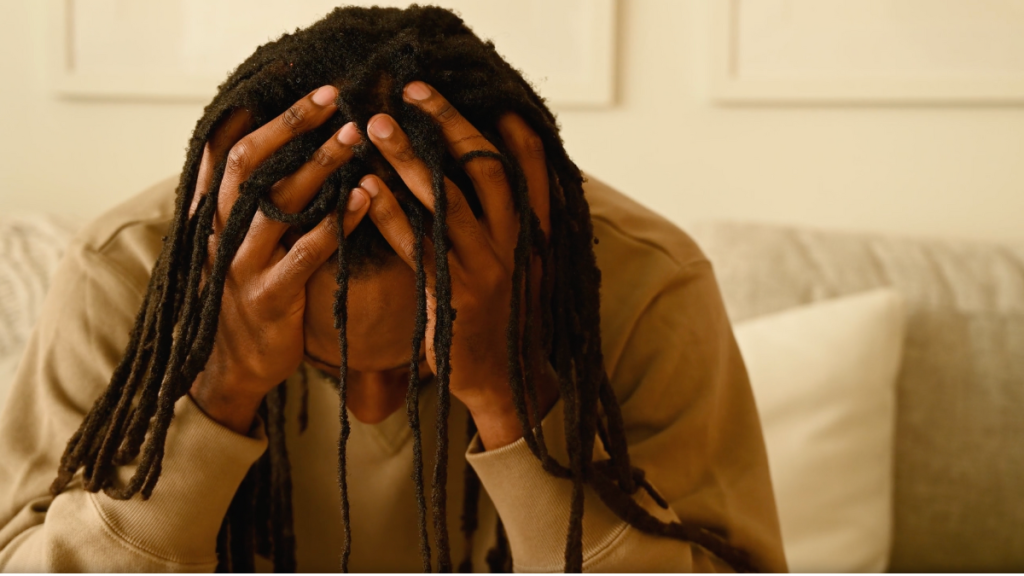
Twenty thousand people come home from incarceration to Philadelphia every year. Many of them return with scars both seen and unseen, from being beaten by guards, experiencing or witnessing violence, or seeing close friends get assaulted or killed. Others experienced racism on a daily basis, especially those held in rural areas of Pennsylvania.

“I ain’t gonna sugar coat it – Black people going up into them white people mountains, they call you [n-word] all day long and you basically there to accept it,” Antonio, one formerly incarcerated man, told Helena Addison, a registered nurse and and post-doctorial fellow at Yale School of Medicine. (All her sources have been given pseudonyms.)
Her peer-reviewed findings were published in the journal Social Science & Medicine, and she wrote about her talks with formerly incarcerated men in The Conversation.
Mike, who was also incarcerated, had an emotional breakdown upon his release from 15 years inside. He had had a childhood steeped in abuse, was first arrested at age 14 and has spent more than 20 years behind bars. “I just couldn’t stop crying … I don’t know. It was the anxiety. It was just a lot,” he said. “I was under a lot of pressure and it just came crashing down.”
Research shows that experiences like Mike’s aren’t uncommon – Black men who have spent time in jail or prison have higher rates of PTSD, psychological distress and depression compared with their peers who have never been incarcerated.
After release, parole and probation bring a whole new set of problems and restrictions. Take Ken, 56, who has been out of prison for over a decade. “I’m still locked up, even though I’m free, I ain’t free,” he said. “You just get a whole new set of rules and regulations.” Common “no-association” restrictions mean that even interacting with someone who has a criminal record can lead to reincarceration. Many stay home out of fear, leaving them cut off from support.
The saving grace, in many instances, is a joyous reconnection with their children. “I think the most positive thing that happened since I’ve been out of prison is I got custody of my sons,” said Ken, a father of two. “Them kids saved me.”
In her paper, Addison writes about the “persistent and multidimensional” mental health harm from incarceration – it disrupts relationships, social roles and long-term well-being. It’s critical that approaches to care acknowledge the context of their incarceration, she says, and that support is “trauma-informed, anti-racist and peer-led.”
Will the survivors of Epstein’s sex trafficking ever find closure?
Child and teen sexual abuse is linked to long-lasting trauma, including post-traumatic stress disorder (PTSD) – a condition in which victims suffer from flashbacks, nightmares, depression, severe mood swings, and emotional detachment from family and friends. Victims might also suffer with dissociation, feelings of unreality, compulsive behaviors and depersonalization, “in which the world and people seems foggy and dreamlike,” according to the Mayo Clinic. It is not controversial to condemn such abuse – every major political party does.
So MAGA fury over Trump’s refusal to release Epstein-related files – a central promise of Trump’s campaign – isn’t surprising. The files would likely expose many rich and powerful perpetrators, as well as the long timeline of abuse, something I touched on in an Epstein-related story I wrote for Medium in September 2019: “Epstein’s Friend in Paris: Why Did the Modeling Industry Not Protect Its Teen Models After ‘Bombshell’ Expose of Sexual Abuse?” The story centered on an investigation that journalist Craig Pyes, a former colleague of mine at the Center for Investigative Reporting, did for 60 Minutes in the late ’80s, about French model agency founder and director Jean Luc Brunel, a close associate of Jeffrey Epstein.
My story about Epstein’s French connection began: “‘Wanted: Looking for beautiful American teenagers seeking an exciting, well-paid career as a model in Paris. Must be willing to grant sexual favors in exchange for work.” This wasn’t a real ad for Brunel’s agency, Karin Models, but for many women who passed through its doors, it might as well have been.”
Brunel reportedly drugged and raped many teenage models at his agency more than 30 years before financier Epstein’s arrest on alleged sex trafficking of dozens of minors, but sparked no investigation at the time. Brunel had a close relationship with Epstein, allegedly procuring underage girls for his pipeline, according to the Washington Post.
Epstein victim Virginia Roberts Giuffre – who, while working as a teen at Mar-a-Lago, was recruited by Epstein’s accomplice, Ghislaine Maxwell – later charged in court documents that Epstein pressured her to have sex with Brunel when she was underage. Giuffre quoted Epstein as saying he had slept with “over 1,000 of Brunel’s girls” and that Brunel once flew three French 12-year-olds to him as a “birthday present.” French police sought Brunel for questioning after Epstein’s arrest for sex trafficking, and he “vanished” for a year before being found at an airport, bound for Senegal. He died in prison in 2022.
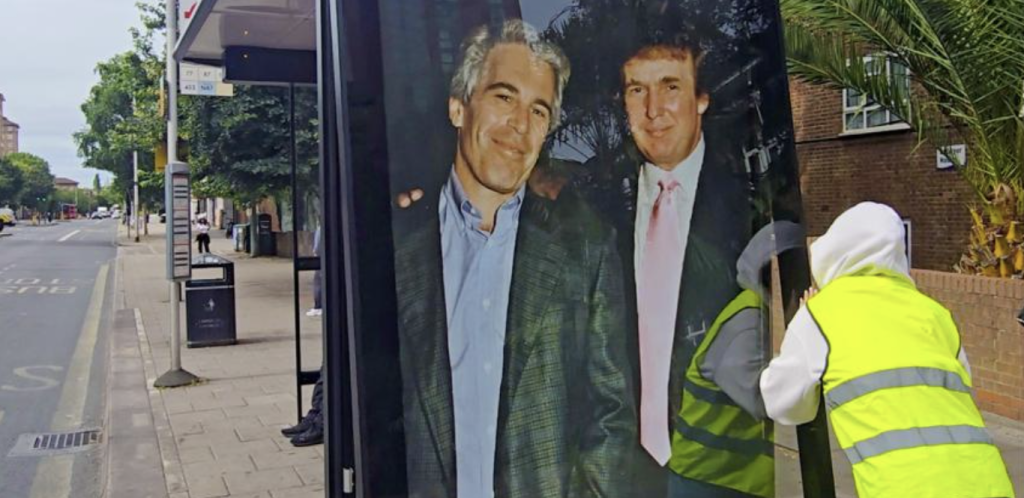
Donald Trump had a close social relationship with Jeffrey Epstein for many years and frequently partied with him. His DOJ now says that Epstein’s “client list” never existed, although Attorney General Pam Bondi said in a televised segment in February that she had the list on her desk, and news reports say she “pressured” 1,000 agents to work 24-hour shifts combing through Epstein-related records. flagging any mentions of Donald Trump.
Without the release of the files, it will be harder for survivors to find closure, especially since Epstein, Brunel, and Virginia Giuffre are now dead – all reported as suicides – although recent reporting found that the prison footage of Epstein on the night of his death has a nearly-three-minute gap. Ghislaine Maxwell, who is serving a 20-year sentence for her role in Epstein’s sex trafficking, was moved to a low-security prison in Tallahassee, Florida in 2022. Late last week, Trump filed a libel lawsuit over a Wall Street Journal report on a birthday note about “wonderful secret(s)” he allegedly sent to Epstein in 2003.
In other news…

To get mental health benefits from exercise, it helps to enjoy what you’re doing – exercising with friends, for example, is more gratifying for many people than going solo. A new study on the issue, discussed in Futurity, confirms what many of us who’ve loved or hated a sport would agree: Context matters.
A 567-mile trek to raise awareness – and money – for youth mental health. Retired math teacher Clint Hedges decided to hike the entire Colorado Trail, a walk that includes eight mountain ranges and six wilderness areas, because he feels that his Jefferson County community never quite recovered after the pandemic. “There are definitely limited resources in this county and in a lot of rural communities,” Hedges told a local TV station. Funds raised will go towards a new coffee shop and community hub – providing a space for connection as well as generating ongoing revenue for local outreach and mental health support.
The name “MindSite News” is used with the express permission of Mindsight Institute, an educational organization offering online learning and in-person workshops in the field of mental health and wellbeing. MindSite News and Mindsight Institute are separate, unaffiliated entities that are aligned in making science accessible and promoting mental health globally.

Author

Related Articles
The Lindsey Clancy Murder Trial
Women nationwide watch the Lindsay Clancy trial and see themselves in her story, plus an investigation into hospitals that fail patients with addiction.
Grief and Rehabilitation in a California Prison
This month: a DUI offender’s path to rehabilitation, Lindsay Clancy revisited, Illinois prison protests, a fatal cell fire, and Missouri’s competency crisis.
Meta Pays $17 Billion Settlement for Lawsuit Over Child Harm
Meta will pay up to $17.1 billion and reshape how its platforms operate after 47 states argued that they are harmful and also addictive to children by design.