Hidden ‘Tax Bombs,’ High Anxiety: Protecting Students’ Mental Health During the Student Loan Shake-Up
College financial expert Jennifer Finetti on how youth can best take care of themselves in the wake of Trump administration changes.
College financial expert Jennifer Finetti on how youth can best take care of themselves in the wake of Trump administration changes

The Trump administration has buried a shocking surprise for student loan borrowers in its so-called “Big Beautiful Budget Bill”: If part of your student loan was forgiven, you may find a “tax bomb” in a future tax bill that requires you to pay taxes on the amount that was forgiven – which, in some cases, could amount to a walloping $12,000 in extra taxes per an upcoming IRS payment. It’s one of many student loan changes underway, most of which appear to make the road to loan repayment longer, harder and more expensive. Trump is even considering wiping out a popular loan forgiveness program based on public service – something that Natalia Abrams of the Student Debt Crisis Center calls “both illegal and deeply troubling for all nonprofit workers.”
The stress and anxiety that accompanies student debt can be a huge burden on young adults just starting their careers — especially if they fall behind on payments.
Many young people may still decide to pursue a degree at Ivy League colleges or public universities, but students from low-income to middle-class and even affluent families may want to consider alternatives, such as spending two years at a community college and then transferring to a four-year college, among other options, says college financial expert Jennifer Finetti, director of student advocacy at Scholarship Owl, a service that connects students with scholarships.
In this issue of our parenting newsletter, MindSite News co-editor interviews Finetti about the student loan upheaval, the potential mental health fallout from problematic student loans, and ways to avoid or manage student debt. She has a master’s degree in counseling psychology and a bachelor’s in psychology and has worked in both marketing and in career planning, student advising and financial aid counseling. Finetti met with MindSite News to discuss what students need to know right now. She breaks down the key changes, what they mean for current and future borrowers, and the proactive steps students can take today to ease stress and protect their financial future. The interview has been edited for length and clarity.
How many Americans are affected by student debt, and how might they be affected by the Trump administration’s overhaul of student loans and its efforts to cut back or overturn the public student loan forgiveness program?
Just about everyone knows someone who is impacted by student debt. I mean, either we ourselves are affected, or a close friend or family member is. So there are about 45 million Americans or so who have student debt. That’s quite a lot when you think about it. And the Trump Administration has now reduced the number of repayment plan options to just two: The Standard Repayment Plan, and one income-driven repayment plan option called the Repayment Assistance Plan, or RAP.
Also, the Trump administration is trying to curtail and potentially get rid of the Public Student Loan Forgiveness Program, also known as the PSLF Program. Historically, the way the program worked is that if students were taking loans and planning on teaching or working in nonprofits or serving the public in public sector jobs, they knew that if they made 10 years of on-time payments on their federal student loans, any remaining debt would be forgiven.
Unfortunately, due to pending changes from the Trump Administration, some of these borrowers may have the carpet ripped out from under them. An Executive Order issued in March 2025, followed by a draft proposal from the U.S. Department of Education in July 2025 revises the PSLF definition of “public service” to exclude organizations engaged in what they have determined to be “illegal activities.”
The July 2025 draft proposal seeks to trim the list of approved employers, focusing on excluding organizations involved in diversity, equity, and inclusion (DEI) activities or advocacy, as well as organizations involved in protest activities and support for undocumented immigrants or pro-Palestinian organizations.
Could you talk about the mental health implications of the current student loan landscape?
It’s really a lot for anyone to manage, but especially for a young person who may not have had to even pay their own rent while they were in college – oftentimes parents are paying that bill. So all of a sudden they graduate, they’re excited, they have things to look forward to, plus they’re scrambling, looking for a job, trying to figure out if I have enough money to move out of my parents’ house. And then they’re confronted with this crazy situation with perhaps multiple loans with multiple service providers. and each one of them is one that you have to really make sure you pay on time, or you could get these negative credit dings and you could get your wages garnished. And that can lead to all kinds of stress and anxiety that can feed into mental health problems.
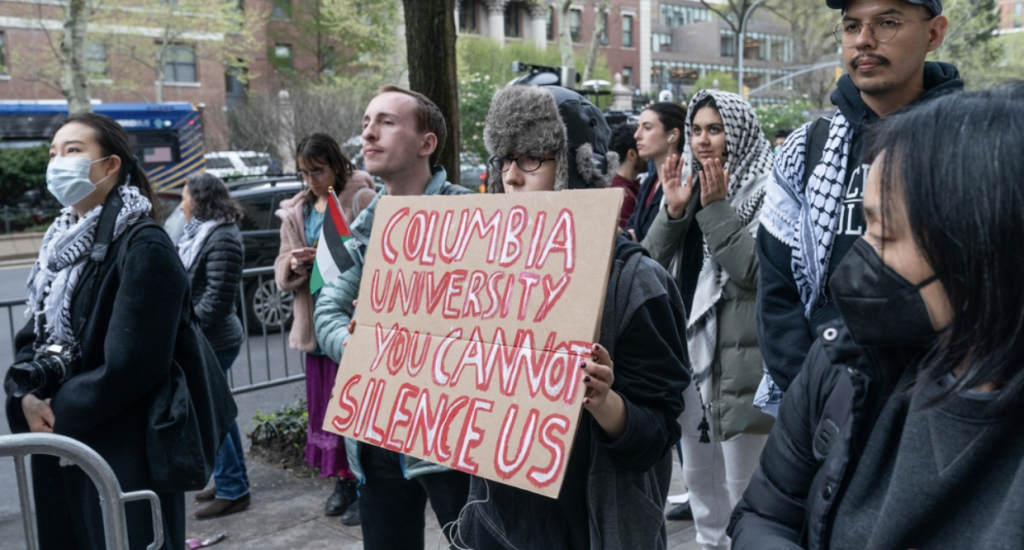
I also think it’s really important that students and parents not focus on the reputation of the university. They should really look at, again, what is going to be most affordable for that family? Because first of all, if you focus on reputation, we see what’s going on with some of the most prestigious schools.
Harvard and Columbia, for example, are both under attack (by the Trump administration). Trump has even attempted to threaten Columbia University’s accreditation based on the student protests that took place on their campus. As a result, the university’s accreditation status is currently a “non-compliance warning” from the Middle States Commission on Higher Education. And what’s going to happen to students who are currently attending Columbia if the accreditation is removed? They will not be eligible for federal financial aid to attend that university.
So for many people right now, for current high school students, current community college students, I think it’s really important to sort of hunker down and say, what is the best path for me in the circumstances that we are in right now as a country? How can I ensure that I have a career that I can start with that’s not going to cost me a ton of money to get there? And if needed, they can always go back to school or do something different. But right now it’s really scary out there for young people.
Some graduate students have been upended by the new, strict limits on how much they can borrow. You’ve mentioned that the “One Big Beautiful Bill Act” eliminates Grad PLUS Loans as of July 01, 2026, which will make it harder to pursue medical or law school degrees.
Grad PLUS Loans have been a critical means of funding for students pursuing graduate degrees, especially those pursuing medical school, law school, and other professional programs. Current graduate students are not affected. However, those who pursue a graduate degree after July 01, 2026 will no longer be able to take out a Grad PLUS Loan and will need to consider alternate funding sources.
The bill also places strict limits on how much money graduate students can borrow from the federal government. For a master’s degree, students cannot take out more than $100,000. For doctoral, medical, or other professional degrees, the cap is $200,000.
You’ve noted that the administration has also put strict borrowing limits on Parent PLUS Loans, increasingly used by low-income families to send their children to college.
There will be caps on Parent PLUS Loans. Currently, the amount a parent can borrow to help their child pay for college is unlimited. But as of July 01, 2026, there will be caps of up to $20,000 per year per child and a lifetime maximum of $65,000 per child.
What role can parents play during this unsettling time?
Be mindful of the fact that many times students will change their major: The average student changes their major three times. Now that sounds like a crazy amount. But when you think about it, how much does a 16-, 17-, 18-year-old know about what they want to do in four years, in six years, in 10 years, in 20 years?
There are a lot of people who – even if they don’t change their major or if they think they know what they want to do – start trying to get that first job out of college. And maybe they don’t land a job in their field. Maybe they land a job in a related field or a non-related field, and then they start working their way up in that career, and their degree isn’t even related to what they’re doing. So I think it’s really important that kids and parents really work together and talk about what future plans are.
How can parents help ease the children’s anxiety around loan repayments?
Parents can help by talking with their child about the repayment process, ensuring that they understand that they need to start making payments on their federal student loans 6 months after exiting school – whether they graduate or not. They can also help walk them through the process of initiating loan repayment.
So the first thing that I tell students is it’s really important to know who your loan servicer is. You can go to student aid.gov and find out if you’re not sure. Also, make sure once you know who that servicer is, log into their website or set up your profile with them if you don’t have a profile already, and make sure you input your address.
Because if they’re trying to send you bills, you want to make sure they know where to send them. And same thing for your email address. If you have historically used your college email address to do your daily communications, change that to a personal email address because once you’ve graduated from school, you won’t be able to access that email. A lot of students fail in that initial effort at just establishing communication with their loan servicer.
Once your student has set themselves up in the portal and set up their mailing address and their email address, then it’s important to look at what payment plans are available from that servicer. As mentioned, borrowers who take out student loans after July 01, 2026 will have just two repayment plans to choose from – the Standard Repayment Plan and the RAP Plan.
You’ve mentioned that borrowers who took out loans prior to that date have more options, but that it’s still key for them to select a plan and make all their payments on time.
Borrowers who took out loans PRIOR to July 01, 2026 will have more options available to them; however, they must transition those loans to one of the two new plans no later than July 01, 2028. If they have not yet transitioned their loans, then they will be automatically placed into the Standard Repayment Plan on July 01, 2028. Also: Borrowers who have taken out loans prior to July 01, 2026 who take on NEW LOANS after that date must immediately transition ALL of their federal student loans (old and new) to one of the two repayment plan options.
If borrowers are concerned that they won’t be able to afford the payments required by the Standard Repayment Plan, they should select the RAP Plan. And then once they do that, then of course they need to make their payments on time every time. If you do not make your payments on time, you’ll accrue 30 day, 60 day, 90 day lates, and it’ll be reported to the credit bureaus. The beginning of your credit history will be damaged. I mean, it’s a big deal.
One way for your child to check on things: look at their credit report. After COVID, when loan servicers were ramping up to start payments again, the Biden administration said that loan services were going to be forbidden to report negative payment history to the credit bureaus for a year. But in April, the Trump administration said that negative notifications are going to be sent to credit bureaus if you were not on track and on time with your payments. So any borrower out there who thought they were still safe should be checking their credit report and seeing what’s going on, communicating with their loan service or trying to get started on payments.
We’ve heard from a lot of students are feeling anxious and stressed out because they are not sure what is going on.
There’s nothing more stressful than being anxious and not knowing what something is about. And sometimes I know it can seem easier to just stick your head in the sand and not focus on it and do other things that are more appealing, but that anxiety will eat at you, especially when you’re trying to sleep. And the best way to deal with it is to simply confront it. Make that phone call, see what it’s about. If it’s a bill you cannot afford, try to find out if there’s a way to do a payment plan, something that can make it more palatable, make it more affordable.
What about private student loans?
I’ve always recommended that students take only federal loans (private loans often not discharged through bankruptcy and may persist even after death).
With the price of college going up, how can students avoid college loans?
But the other thing I would say to anyone who is considering taking on student debt, my advice is always try to avoid it.

What I talk to students about the most is focusing on the most affordable path to college that they can have. Especially in this current climate, it’s so important that students be able to really look ahead at their future and figure out how they can achieve their dreams and their goals with as little cost upfront as possible. Community college is a great way to go. In some states, it’s free, tuition-free like it is in my state in California, and there are some other states where it’s free. But even if it’s not, it can be very low cost. And that’s across the nation. That is a great way to start your career. You can get a two year degree and transfer if you want to complete your bachelor’s degree, or you can do just the two-year degree for careers that don’t require more. Or, you can do just a certificate.
Because there are many careers where you do not need a bachelor’s degree. Over the life of my career, I’ve always focused on bachelor’s degrees as really kind of the necessary stepping stone. It’s not that way anymore. Now, there are a lot of careers that you can have that don’t require a bachelor’s degree, and depending on the career you’re choosing, taking on thousands of dollars in debt may not pay off.
When you consider what you could do with a certificate or an associate degree and potentially enter your career and start your career earlier, meaning you start getting paid wages for your career sooner than maybe your peers that went on and got a bachelor’s degree, you can have less debt to start with. You can also go back to school. You can start with a certificate or a two year degree, start working in your field, make sure it’s something you enjoy, right? Because sometimes we discover we don’t love the careers we selected, and then you can continue your degree or change your major if you want to continue and try something else. It just gives you more flexibility.
What are some of the careers you are thinking of that you can begin with an associate degree?
If you’re interested in the health field, there are a lot of different health careers that you can start with a certificate or a two-year degree. A lot of the trades, of course, have always been a great place to go. You could even go straight to an apprenticeship. You don’t even have to start at a community college. A lot of the tech careers today, you might be surprised: Many of them, you can get started with a certificate or a two-year degree at a community college. You can get into a technician kind of position and then work your way up and or get a bachelor’s degree later if you want to do that. There are associate degrees in engineering technology and mechanical technology that make a ton of money, and you don’t have to get more than a two-year degree or a certificate in those fields.
That’s good advice. Do you have some counsel for students or ex-students and their parents who are hearing from loan servicers or suddenly faced with a bill they didn’t realize was going to come?
Yes, and I think that certainly can happen. Part of the reason is because students may not realize what they took out in student loans, even though they signed up for them and they agreed to them. So sometimes even though technically they should have expected the bill, it still comes as an unhappy surprise. The first thing I would say is if you do receive a bill, either through email or through the mail, don’t ignore it. Don’t assume that it’s not for you or that it’s incorrect. Assume it is for you and pursue it and contact that organization or that company that’s emailing you or mailing you something and say, ‘Hey, I’m not sure what this bill is. Can you explain to me what it is that it’s based on? And this relates to not just student loans, but anything, right? Doctor bills and whatever else you might receive.
You should always pursue it immediately rather than letting it sit and stewing about it. I think what’s really important too, when students are in their last year of college or trade school, is to think ahead, well before they graduate, and try to figure out what their monthly expenses will be after graduation. They should try to calculate what their student loan payment will be. And if they’re not sure, they can call their student loan servicer well in advance of graduation and say, ‘Hey, I’m just trying to figure out what I’m going to owe on this every month so I can plan my budget’. That’s really important. And then also figuring out, do you plan on living with roommates or friends or relatives or with your parents? What is your living situation going to be so that you can plan properly?
And I think one of the biggest mistakes that sometimes graduating college seniors will make is if they can’t find the job that they hope they’d be able to get, they decide to enroll in grad school to delay having to make all those payments. They figure, well, I can go to grad school and I can either live with my parents or I can move back to the dorms or the apartment that I was living in and continue that sort of student life.
With federal student loans and with grants or whatever they’re eligible for, they can continue to live that life a little longer before having to confront that debt. But instead, what they’re doing is they’re simply delaying adulthood. They’re delaying having to make those difficult decisions, having to make those payments, and they’re taking on more debt, right? More debt. And oftentimes if you haven’t worked in your field yet, you graduate with your bachelor’s degree. And if you have not yet gotten a job in your field and you go get your master’s, you may realize later on when you do start working, I don’t even like this field. I wish I was doing something else. And master’s degrees tend to be a little bit more focused than a bachelor’s degree. And so if you’ve taken a very focused master’s degree and it turns out you don’t like it, and now you got to pay your debt for it, and it’s not worth it.
Yes, it really makes sense for college grads to work for a while to see if their degree is their passion.
I always tell students that they should get a job for at least a year or two years in their field when they graduate with their bachelor’s degree before getting a master’s degree.
My last question is, could you give us the worst case scenario if you get student loan bills and don’t pay them? How long does it take to get into serious trouble?
So there are a few things that happen here. When you don’t pay your bills, then you get negative credit reports. If you start getting one 30 day late report, it isn’t terrible. But if you get multiple 30 days or you get some 60s or 90s or defaults, your credit can really be decimated. And while a lot of young people may not be looking to buy a house right away, just moving into an apartment, people do a credit check.
And landlords may reject you strictly based on that alone, because if you have a negative credit report, then not only might you not meet minimum eligibility for the place you want to move to, but also their thought is, ‘If you’re not paying your bills, how can you possibly pay this rent? You’re going to pay late here, too.’
It can really affect your life right away if you are not careful. And then as far as them coming after you, creditors can come after you – you can start getting letters or notices from law firms, companies or collection agencies, certainly. And then they can tack on penalties and fees and things like that that also add to your debt. And again, all of this increases your anxiety. It’s so stressful. Nobody wants to deal with it. And yet we all know that money is an issue for all of us. Money concerns and worries. But in today’s environment, with so much inflation and with the tariffs hanging over our heads and so much uncertainty, employers are scaling back their hiring. We’ve seen that as well. So it’s a difficult time to be a young person.
Any last thoughts on student loan changes?
I’ve read a lot of articles recently about Gen Z and their fears and their concerns. It takes a lot of forethought, planning and support from family and friends to plan for the future. And I don’t mean necessarily financial support, I just mean you need to talk it through with people who have been there before you and figure out with them a plan that’s going to work for you.
The other thing I want to throw in here that we haven’t even talked about is how important it’s to focus on scholarships instead of loans. Students should apply to scholarships year-round, starting from age 16 all the way until they complete their college education. At any given time, we have at least $500,000 in currently live and active scholarships on the ScholarshipOwl platform, so it’s always a great time to apply. And in addition to scholarships, students should prioritize getting a job while they are in high school and college, working part-time during the school year, and full time during summer breaks. The goal here is to use debt-free sources, including need-based grants through the FAFSA, scholarships, and income from a job to pay for college versus taking on loans that then you have to repay later.
We all know that it takes an average of 20 years to pay back your student debt. That is the average. Students tend to delay moving out of their parents’ homes. They delay buying a car, they delay getting married, they delay having children, they delay saving for their children’s education, and they delay saving for their own retirement. These are all reasons not to take out debt or not to add to debt if you’ve already done so.
Mental health can't wait.
America is in a mental health crisis — but too often, the media overlooks this urgent issue. MindSite News is different. We’re the only national newsroom dedicated exclusively to mental health journalism, exposing systemic failures and spotlighting lifesaving solutions. And as a nonprofit, we depend on reader support to stay independent and focused on the truth.

It takes less than one minute to make a difference. No amount is too small.
The name “MindSite News” is used with the express permission of Mindsight Institute, an educational organization offering online learning and in-person workshops in the field of mental health and wellbeing. MindSite News and Mindsight Institute are separate, unaffiliated entities that are aligned in making science accessible and promoting mental health globally.


Author

Related Articles

The ICE Effect: Immigrants, Already Traumatized, Face Neglect in New York Jail
MindSite News spoke to a civil rights attorney about the harsh conditions for immigrants held at a New York jail.

Coming Medicaid Cuts Spell Disaster for People Needing Addiction Services, Especially Coming Out of Jail
Medicaid cuts being advanced by the Trump administration and Congressional Republicans could gut addiction services.

‘A Public Health Emergency’: The Crusade to Assess Trump’s Mental Fitness for Office
Dr. Bandy X. Lee says Trump has deteriorated, and the level of danger has vastly increased — especially because his symptoms have spread.
