
‘On The Field You Forget Everything’: A French Sport Is Healing Loneliness, PTSD Among Ukrainian Seniors
As Ukraine continues to grapple with the aftermath of war, the French game of pétanque has become an unexpected source of mental health relief for seniors and veterans.
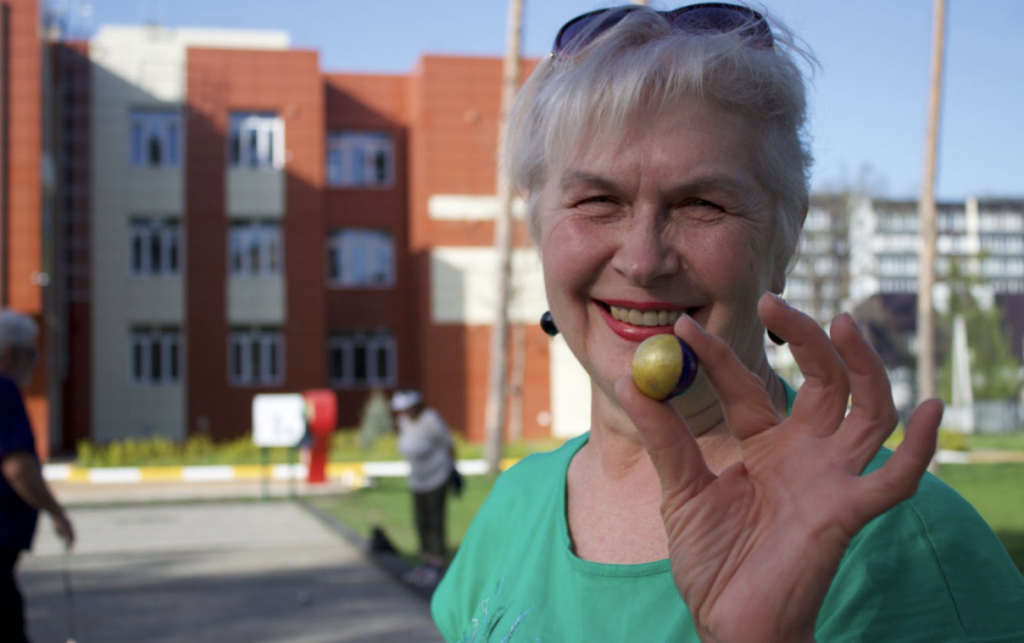
In the shade of the newly reconstructed Lyceum #3, a secondary school in the Ukrainian city of Irpin, 82-year-old Lyubov Pyatakova lines up to throw her first ball. She and her friends Svitlana Brukhovetskaya and Tetiana Liednova are lagging behind their competitors, but they don’t seem to care. They’ve come to the gravel fields to play pétanque – a French game of boules involving heavy metal balls and a jack – as school children race on the nearby track, more for community than competition. The same was true three years ago, after Ukrainian forces liberated the city from a month of Russian occupation.
Lyubov’s and her friends’ lives were upended in early March 2022, when Russian forces stormed their quiet commuter town, located less than twenty miles outside the Ukrainian capital city of Kyiv.
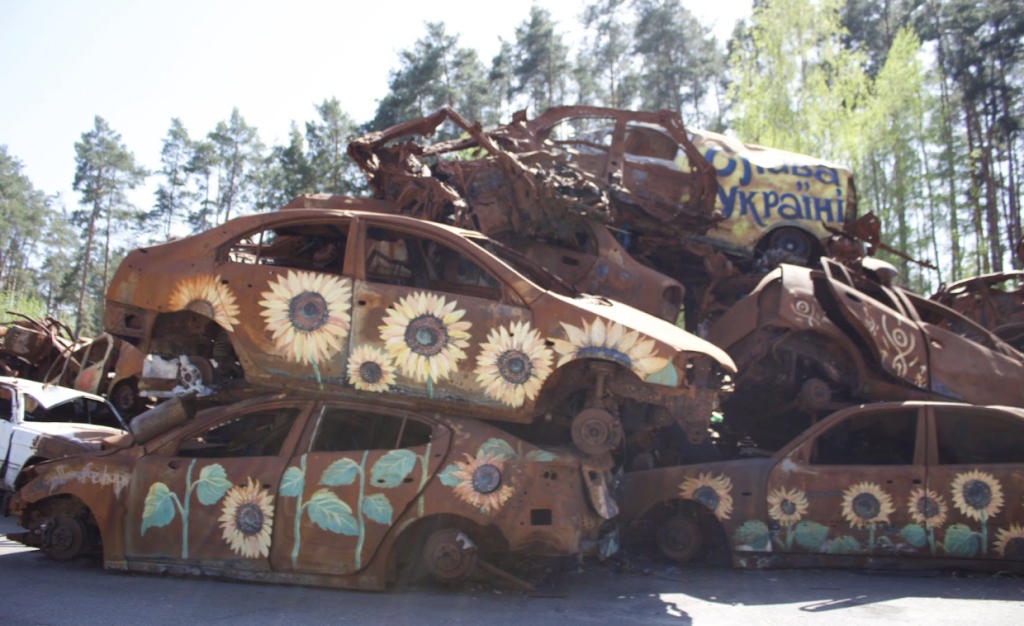
In the aftermath, even though more than two-thirds of their city’s infrastructure had been destroyed – including Lyubov and Tetiana’s homes – they felt lucky. Reports had reached them of the mass graves and rapes investigators were discovering in their neighboring village of Bucha, just three miles up the road.
“As soon as it was liberated I came back and we started to play again,” Lyubov recalled, speaking through a translator. She was one of few local seniors who returned to Irpin in April 2022 and was eager to pick up her pétanque balls. “I cannot live without this anymore. If there is no practice, I invite the girls over and we play by ourselves.”
“We don’t sleep at night and there is always such anxiety. But when you come here…you forget everything, and it is wonderful.”
– Tetiana Liednova
Pétanque in Ukraine provides unlikely source of relief
More than three years since Russia launched its full-scale invasion of Ukraine, the French game pétanque has become an unlikely, but important, source of relief for Ukrainian seniors. A sport akin to bocce ball, in which competitors toss a metal ball toward a target ball, attempting to score points by getting closer than their competitors, pétanque has become a means of connecting civilians and veterans across the country as they process post-traumatic and ongoing stress.
“This is a renewal of our mental health. We don’t sleep at night and there is always such anxiety. But when you come here, well, you see our faces,” said Tetiana. “You are on the field, you forget everything, you turn off, and such relaxation in nature, it is wonderful.”
In 2019, Tetiana traveled to Germany, where she learned of the game pétanque. The sport felt ideal for her community of active pensioners, retirees who were looking for activities to keep busy. “There’s no need to be strong, but you’re moving,” she said. “It’s physical activity, but very gentle, so all bodies can participate.”
“It’s good for older people, for kids as well, and for people with disabilities. And now, really, it’s [good] for veterans,” she added.
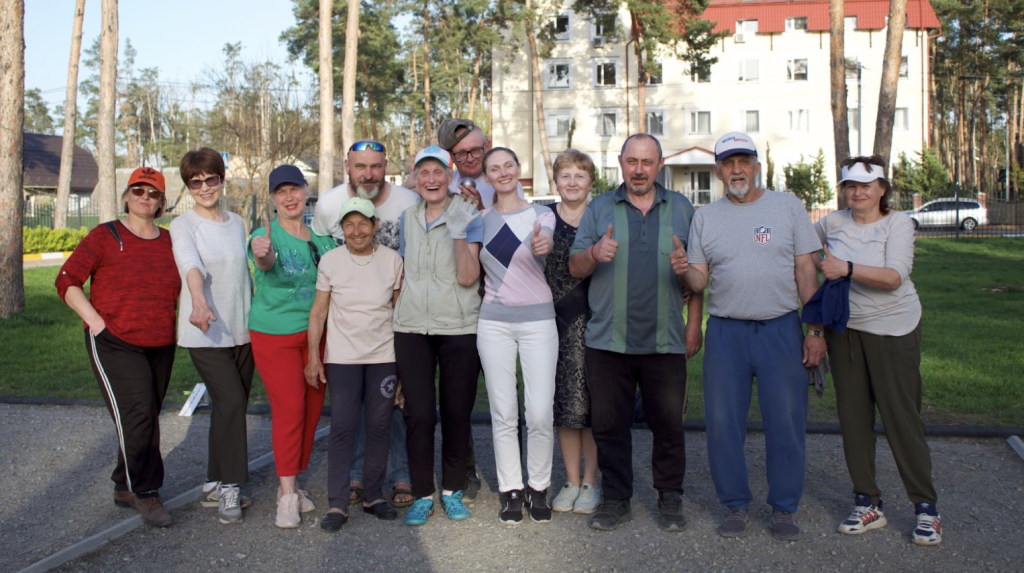
Although the local university originally administered the seniors’ pétanque league, in the wake of the Russian occupation and ensuing destruction, the university pivoted toward rebuilding, Tetiana said. So she, a few friends, and her daughter Nadiia took over the club.
For Nadiia, the experience was a window into the lack of programs and support for seniors. As she volunteered with humanitarian organizations working to rebuild Irpin, she noticed the challenges neighbors her mother’s age were facing. Disaster relief required standing in long lines, accessing aid forms on smartphones or through QR codes, and watching social media for news. As younger women and children emigrated to Western Europe, she saw the country’s population of seniors creeping upward, but few social services were directed toward them. To her, pétanque was “a great instrument for community.”
One year after the city was liberated, the Irpin pétanque club hosted the country’s annual championships for adults over the age of 55. They did so in collaboration with the Ukrainian Federation of Pétanque – which hosted the country’s first pétanque championships for veterans this year.
“Now, we have those people who are here in civil life and those ones who take part in the fighting,” said Dmytro Bugai, who co-founded the Ukrainian Federation of Pétanque in 2004. After the start of the full-scale invasion, Dmytro began teaching pétanque in parks near his home to bring people together around a social activity. “This game can unite people, unite different generations – kids, parents, elderly people, veterans.”
Veterans benefit from Pétanque in Ukraine
Serhiy Maksymenko, a 57-year-old veteran, was one of the first people he met in a local park. Maksymenko immediately understood that the sport could be useful for other veterans.
“You need to have very good concentration, very good control with your breath, with your stress,” he said. But also “you can take the ball and put your stress and your pressure into the balls, and that’s why it’s fun and good for the military, because they have a lot of stress and they can get it out.”
The Ukrainian Federation for Pétanque has been traveling between military hospitals, teaching the game to soldiers and veterans as a rehabilitative sport, says Dymtro. Today, the majority of the Irpin club’s members – players like Tetiana and her daughter Nadiia – are trained to teach pétanque at military hospitals.
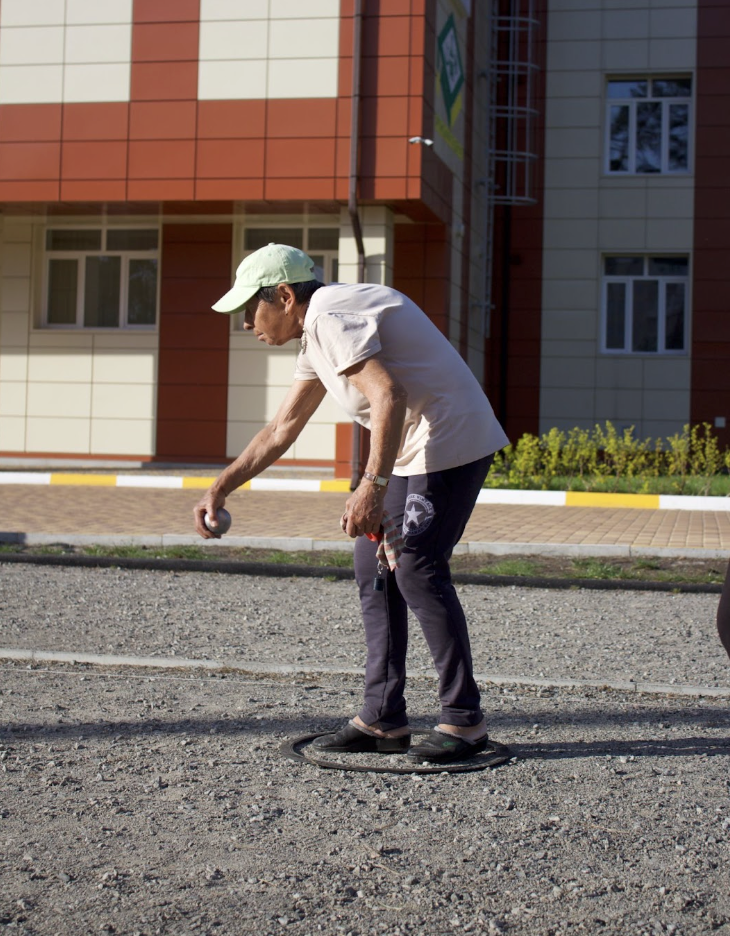
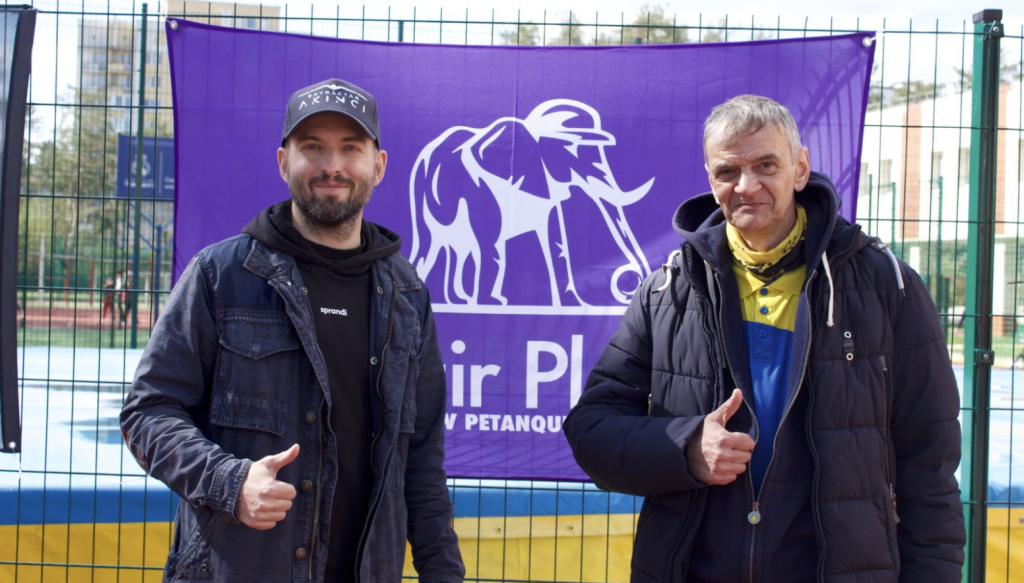
Their lives may not have entirely returned to normal – Tetiana and Nadiia’s longtime home is still uninhabitable after the Russian occupation and Lyubov is living in a container home while Irpin continues to rebuild and make space for an estimated 25,000 internally displaced people who’ve settled there – but their aim is as much to create community and connection as it is to have a bit of fun.
“It’s not good for the psyche to be in trauma all the time,” Nadiia said.
— The author, Cecilia Nowell, is a freelance reporter interested in global and local stories about healthcare, gender and policy. Her writing has been published by The Guardian, KFF Health News, The Nation, Mother Jones, New York Magazine, The Washington Post, Teen Vogue, and others. In 2022, she was recognized as a Livingston Award finalist in national reporting. She holds a bachelor’s in comparative literature and political science from Wellesley College and a master’s in journalism and international relations from New York University.
Tetiana Burianova and Evelina Riabenko contributed reporting and translation support.
This reporting was supported by the International Women’s Media Foundation’s Women on the Ground: Reporting from Ukraine’s Unseen Frontlines Initiative in partnership with the Howard G. Buffett Foundation.
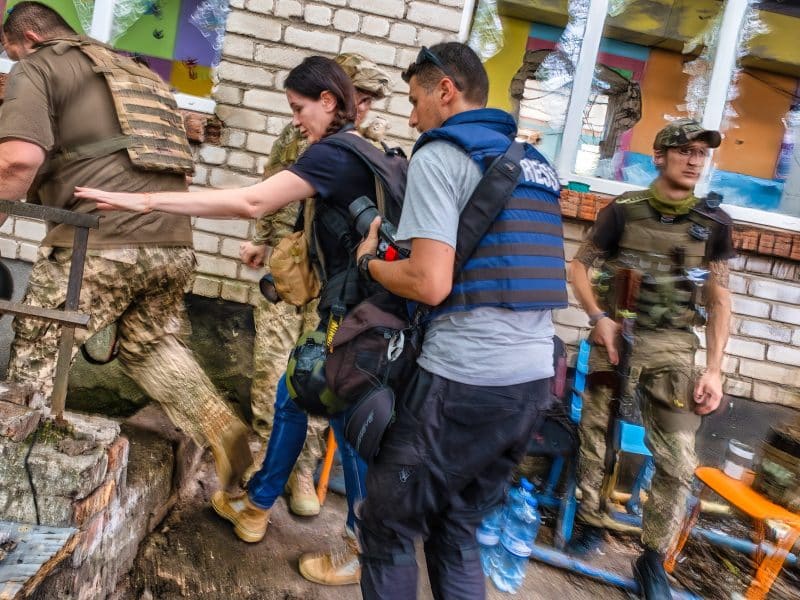
Related Reading
The World’s Therapists Are Talking to Ukraine
By MaryLou Costa • Solutions Lab • September 7, 2023
The name “MindSite News” is used with the express permission of Mindsight Institute, an educational organization offering online learning and in-person workshops in the field of mental health and wellbeing. MindSite News and Mindsight Institute are separate, unaffiliated entities that are aligned in making science accessible and promoting mental health globally.


Author

Related Articles
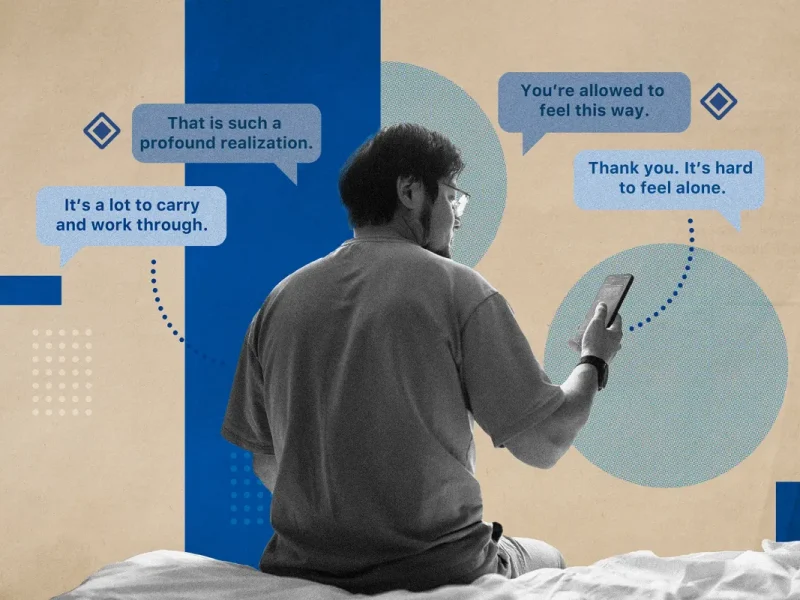
As AI ‘Therapists’ Dish Out Advice, California Lawmakers Try to Set Some Limits
The use of chatbots has exploded over the last two years, and people are increasingly turning to them for mental health advice.
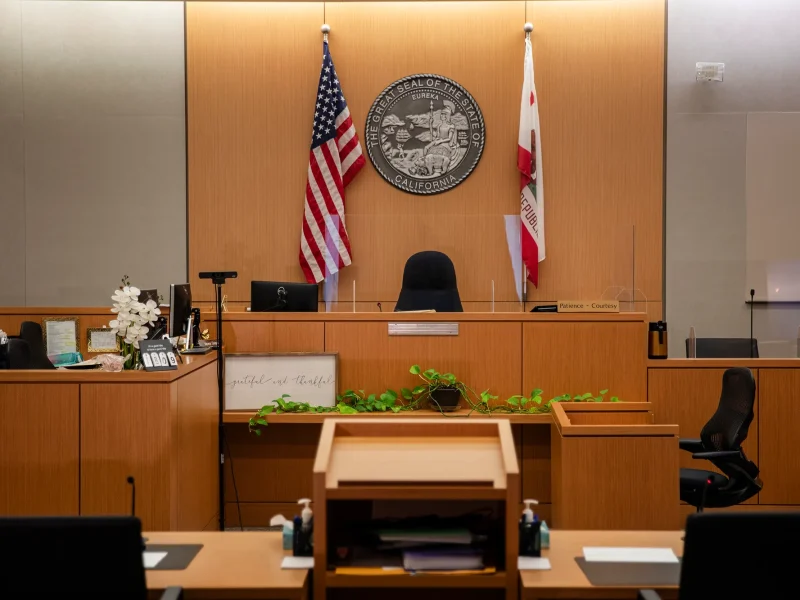
LA County Says a Program Meant to Help People with Serious Mental Illness is Gaining Traction
Gov. Gavin Newsom’s mental health court is gaining more participants in Los Angeles County. CARE Court treats people with serious mental health conditions.
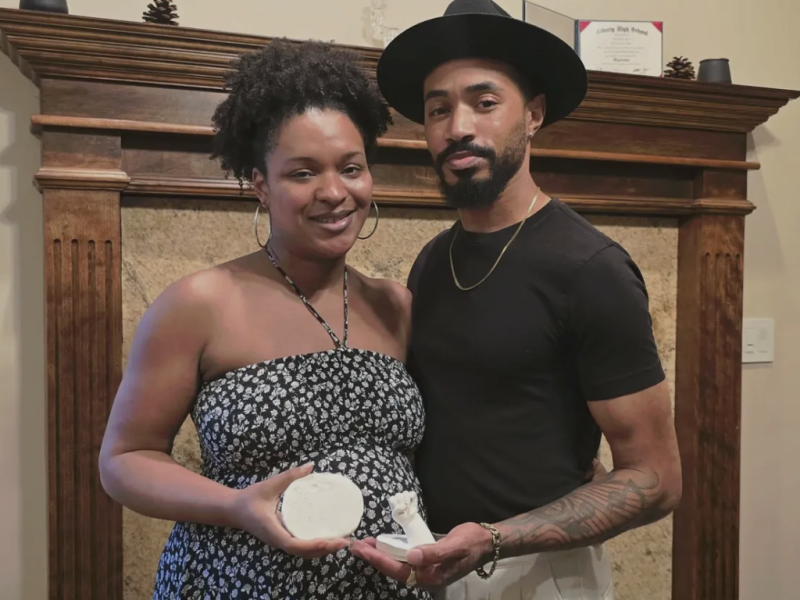
Silent Cry: The Unseen Toll of Infant Loss on Black Families in California
Across the United States, Black parents experience infant loss at rates twice as high as their white counterparts. In California, Black infants die at nearly three times the rate of white babies, a disparity that persists in Kern County, where socioeconomic challenges leave infants dying at triple the rate of white babies as well.