
The Hardship of Dating with a Fertility Deadline
In today’s Daily, single women in their 30s and early 40s describe the psychological pressure of dating on “a fertility deadline.”

Greetings, MindSite News Readers.
In today’s Daily, single women in their 30s and early 40s describe the psychological pressure of dating on “a fertility deadline,” a considerable number of adolescents say they or someone they know has had a romantic relationship with an AI bot, and one English father kicks off a soccer team to support dads like him who are grieving baby loss. Plus: a MindSite Original story on LGBTQ+ school clubs that offer a sanctuary and big fun for lonely and bullied students.
Navigating dating against the biological clock

The “biological clock” plus a dose of social pressure yield a feral beast, known to savage the minds of a fair number of women in their later 30s and 40s. Anxious to become mothers, they ignore red flags to enter futile relationships – and stay in them too long – for the sake of fertility, according to a recent story in the New York Times.
Kelly Shara, 31, told the Times she used to compute “fertility math” on first dates, adding up how long it might take to become a mom from that point on: to date, to marry, and maybe have kids within a year, and whether she could stay ahead of the biological clock. Rom-coms were something like propaganda, programming her (and others) to be married and having babies by 30.
These days, Shara looks back on that behavior as largely silly, and is no longer so willing to settle. Some of the decrease in pressure might be down to the possibility of extended fertility, thanks to her recent freezing of her eggs. “I would still love to have kids on the soon-ish side,” Shara said. “But there is an opportunity cost toward rushing dating and marriage and courtship and trying to find the right person.”
Multiple therapists told the Times they’ve seen the anxiety Shara described in countless clients over the years. While they want to help women release the pressure, Natalie Crawford, a fertility doctor and author of The Fertility Formula, suggests it’s not wholly unreasonable to feel. “With many celebrities becoming first-time parents later in life, it often gives the public the perception that fertility is something you can delay,” Crawford said.
But women’s prime fertility years are in their 20s, and fertility odds biologically decline significantly after age 35 (although a recent systematic analysis and meta-study found that 10% of women 35 and over had babies naturally and that women 35 and older with unexplained infertility had a nearly one in four chance of conceiving after trying for a year.) And though they’re often left out of the conversation, men experience age-related fertility declines too.
Psychologist Lori Husband even admits she succumbed to the pressure, entering a “panic partnership” in her early 40s. Rushing to marriage, she and her spouse tried in vitro fertilization, to no avail. She’s now offering an online course for women in their 30s and 40s dating under the weight of a fertility deadline, happily divorced from husband No. 1 and in a new marriage, enjoying life as a stepmother.
In the hopes that women can dodge the traps of dating with urgency, therapist and dating coach Kelsey Wonderlin said she reassures clients that “emotionally available men out there who want to build a life with someone and have kids” do exist. Their goal in dating ought to remain clear: Finding a partner they cherish and they’re physically attracted to, who doesn’t panic when they make their parenthood goals clear. “You will still get some guys who are like: ‘Whoa. So intense!’” Wonderlin said. “And those are not your people.”
Moreover, says Beth Gulotta, therapist and host of the Quiet the Clock podcast, rather than date compulsively “from a place of burnout,” while feeling hopeless, and seeking any marginally suitable partner, many women should embrace a dating pause. “Take a break. And then come back to dating with more clarity, more energy and more positivity.” The time should be used to recognize what’s great about life as it is, in order to suss out their truest needs, rather than adopting society’s timelines unquestioningly.
Egg freezing can relieve procreation pressure, as it has done for Shara. For one thing, it helps her start important child-related chats early – but it’s not an option for everyone. The procedure costs thousands of dollars per cycle, excluding annual storage fees, and offers no guarantees of success. Still, many couples who were unsuccessful at IVF have gone on to adopt children and report intense happiness.
Michigan’s LGBTQ+ student clubs create affirming spaces inside public schools
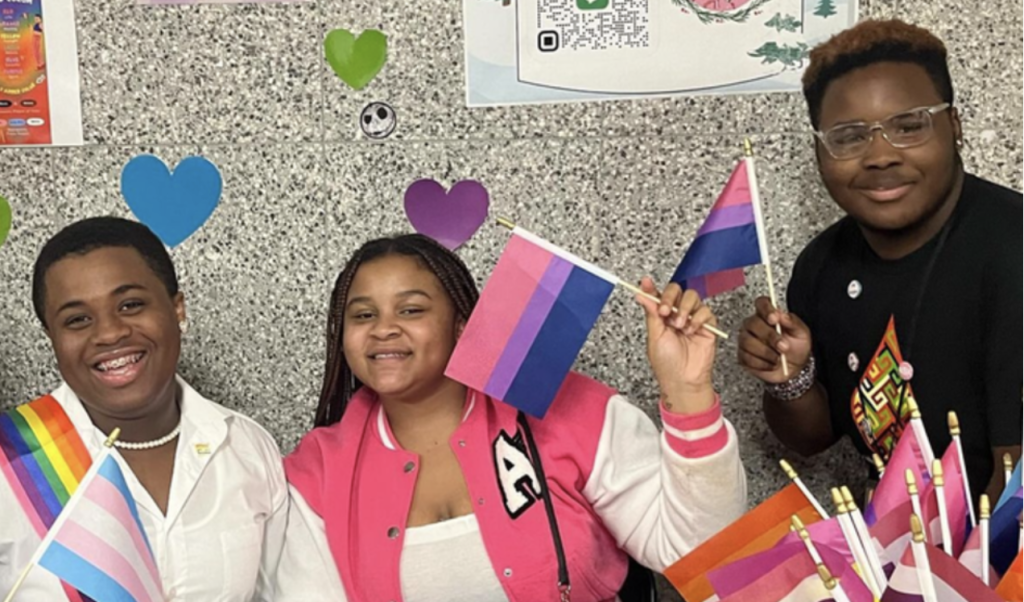
At Renaissance High School in Detroit, room 334 became a sanctuary for students like Miah Gill, who was bullied for being LGBTQ+. “There are days where I have just cried,” she said. But inside that classroom – home to the school’s Gender-Sexuality Alliance – Miah found acceptance and community. “We’re all in a place of comfort,” she said.
In a MindSite News Original, Michigan-based correspondent Eleanore Catalico explored clubs like these across Detroit and Flint. Also called gay-straight alliances, they offer LGBTQ+ teens something many desperately need: a safe space among peers and allies to breathe, talk, and be themselves.
Such alliances continue, and even become more crucial, as the current Trump Administration and MAGA lawmakers seek to force national politics into a tornado of hostility toward LGBTQ+ citizens, among other marginalized groups. With laws censoring discussion of gender and sexuality in schools and growing cultural pressure, these student-led clubs have become acts of quiet resistance.
As a leader of the GSA at Carman-Ainsworth High School in Flint, AJ Meinka helped organize a Pride event celebrating the lives of an array of LGBTQ+ adults who’ve gained national recognition for their professional achievements and contributions to LGBTQ+ rights. Among them were Barbara Jordan, Pete Buttigieg, and Alicia Garza.
“There’s always been people like them,” AJ said. “And there always will.” AJ, who uses they/them pronouns, said the club helped them grow. “It’s made me a lot more open about who I am, and it’s made me think more about what other people are going through,” they said. “It’s given me a lot of drive to be a good person and a good queer advocate.”
Read the entire MindSite News Original here.
In other news…

Where can you find banned books, besides your local bookstores, Amazon and most libraries? If you’re in Colorado, try Anythink, a library system serving residents in Adams County, Colorado, which has opened digital access to nearly 300 banned books and documents for every resident in the state – just in time for Banned Books Week, with no library card required. (The necessary Palace Project app does, however, require location access to confirm users, who must be 13 or over and are physically located in Colorado, CPR reports.) Their Freedom to Read Collection includes books that have been challenged for their exploration of identity, justice, and belonging available free of charge, in an effort to promote intellectual freedom, broad creative expression, and personal autonomy, all of which contribute to mental health.
The Forget-Me-Knot Football Club for grieving dads: After losing his baby in 2024 to stillbirth, Staffordshire resident James Routledge struggled to find the emotional support he needed as a grieving father. There really wasn’t any. “It’s a difficult topic and not many people are equipped to talk to you about baby loss or about grief,” he told the BBC. “[Men] feel like they have to be a rock for their partner or if they talk it will make them feel worse, so they bottle it up.”
Many men who’ve tried to share uncomfortable feelings remember seeing people “glaze over,” he said. So, drawing upon his personal experience of loss last year, and the skills he built over 10 years working in mental health, Routledge decided to launch a soccer club for grieving dads to connect and heal. Formed in partnership with Port Vale FC Foundation and University Hospitals of North Midlands NHS Trust, Forget-Me-Knot FC held its first gathering two months ago. So far, so good, said Routledge. “The difference between how [grieving dads] come in and how they come out is so powerful,” he says, emphasizing how much the club he wanted is truly the club he needed.
Teens aren’t just using artificial intelligence for homework: they’re turning to it for companionship – and even romance. Nearly 1 in 5 high schoolers said they or someone they know has had a romantic relationship with AI, and 42% said they’ve used AI for companionship, according to research from the Center for Democracy and Technology. Among survey respondents, 86% of students and 85% of teachers used AI for class, and teens whose schools use AI for more reasons report that they and their peers also use it for mental health support, as an escape, or for emotional connection at much higher rates than students in schools that use the tools for homework or other things.
Interestingly, while surveyed teachers who use AI frequently were more likely to espouse its benefits, teen respondents said that AI is inhibiting the connection they have with their teachers. “What we hear from students is that while there may be value in this, there’s also some negative consequences that are coming with it, too,” the report’s co-author Elizabeth Laird told NPR. “And if we’re going to realize the benefits of AI, you know, we really need to pay attention to what students are telling us.”
Critically, Laird stressed, “students should know they are not actually talking to a person. They are talking to a tool, and those tools have known limitations.” Unfortunately, neither students or teachers get enough training to help them navigate the mental and emotional challenges associated with the technology. Just 11% of surveyed teachers said they were trained on how to respond if a student’s use of AI appears detrimental to their wellbeing. (See our story “Lifelike AI Chatbot Played Role in Teen’s Suicide, Lawsuit Charges”).
The name “MindSite News” is used with the express permission of Mindsight Institute, an educational organization offering online learning and in-person workshops in the field of mental health and wellbeing. MindSite News and Mindsight Institute are separate, unaffiliated entities that are aligned in making science accessible and promoting mental health globally.

Author

Related Articles

The Lindsey Clancy Murder Trial
Women nationwide watch the Lindsay Clancy trial and see themselves in her story, plus an investigation into hospitals that fail patients with addiction.

Grief and Rehabilitation in a California Prison
This month: a DUI offender’s path to rehabilitation, Lindsay Clancy revisited, Illinois prison protests, a fatal cell fire, and Missouri’s competency crisis.

Meta Pays $17 Billion Settlement for Lawsuit Over Child Harm
Meta will pay up to $17.1 billion and reshape how its platforms operate after 47 states argued that they are harmful and also addictive to children by design.