
Talking about Death with a Young Child

In today’s Daily, experts offer guidance on discussing death with young children, and a quick overview of avoidant/restrictive food intake disorder, a mental health condition that’s not related to body image. Plus, in a recent survey from the American Psychological Association, two-thirds of young adults in the US say they’ve thought about relocating to another country.
But first: After initially rejecting their daughter’s trans identity and urging her to “love herself for the ‘man’ she was,” Keisha and Sean came around to embrace Milissa for who she was, and began trying to understand the best ways to support her needs. Struggling to find other Black parents navigating the same circumstances, they co-founded Rainbow in Black, to generate the support system and resources they’d needed.
“It would’ve been fantastic to connect with others in a culturally relevant way, to connect with people also experiencing the two edges of having a child who’s both Black and gender-diverse,” Keisha told Capital B News. “There are some unique blessings, but also some unique challenges.”
Navigating your child’s curiosity and grief around death

One of the most certain things about this life is that for each of us, it will one day end. Children are not insulated from that reality.
Two years ago, my cousin and best friend fell asleep one last time, never to wake again. That loss was followed by my stepfather six days later – he died sharing a final bout of laughter with my mom, struck by a heart attack as they ate lunch together. It was a difficult and hectic time for my entire family, and especially confusing for my then-five-year-old daughter. She’d heard about death before, having survived a pandemic, attended at least two funerals, and even recalling an episode of Daniel Tiger about losing a pet. But those deaths had been abstract for her. Dorian and Ken were active parts of her life; their absence was immediately felt.
Ever since their passing she’s been asking lots of questions about death, and has even started drawing pictures of close loved ones, like my mom, to preserve them in her memory.
It’s a normal part of any child’s developmental process, experts told the HuffPost. As children experience the world and begin to notice how commonly death occurs, a natural curiosity takes hold. It takes adult support to evolve that curiosity into understanding, so don’t run from it. “Children need information that’s clear, gentle, and age-appropriate” when talking about death, said therapist Anna Mathur. “Avoid euphemisms like ‘gone to sleep’ which can create confusion or fear around bedtime.” I told my daughter that our loved ones’ bodies had stopped working, so we would not be able to talk to and see them like we do each other, but we should continue to speak about and remember everything they added to our lives. In all honesty, I’m grateful that she has so many questions – it gives me regular opportunities to share memories and details about people who loved us so dearly.
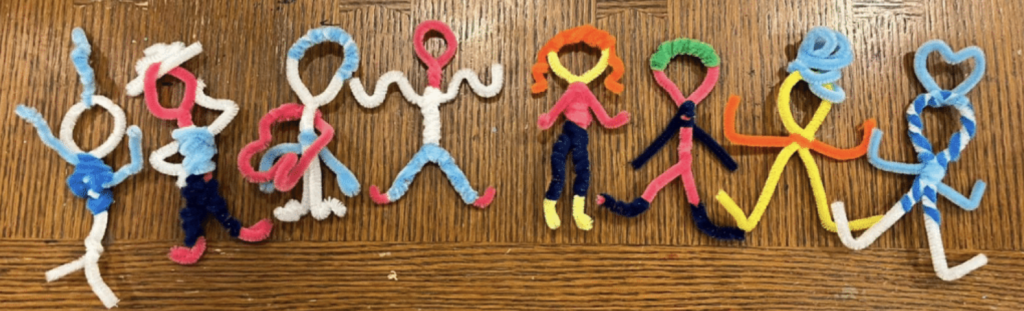
Around Halloween, I noticed that my daughter had begun to draw more macabre scenes – quite a departure from her typical focus on animals and fashion. It caused me slight alarm, but Mathur said that children picking up the idea of deadly violence isn’t necessarily a reason to panic. “It’s quite common for preschoolers to test out strong language like ‘I’ll kill you’, often without understanding its meaning,” she said. “They’ve heard it in play, on TV, or from peers, and are experimenting with the power of words and the impact on others,” she explained. And it was Halloween. (Had my daughter been consistently drawing murder scenes, talking about killing animals, or wishing for people to die, I’d need to tag in direct help from a qualified professional.)
If “killing” comes up during play, Mathur suggests redirecting children rather than punishing or shaming them. If a toy’s use as a sword or gun seems to be prompting violence, parents can simply put the toy away. If children are using particularly violent language, “gently guide” or talk to them about it without yelling. “You might say, ‘That’s a really strong word. We don’t say that because it can sound scary. Are you feeling angry or frustrated?’”, Mather said. Children might be resorting to talk of killing because they feel angry – “this approach validates their emotion but also sets a boundary around language,” she explained. “The goal here isn’t to suppress emotion, but to help them express it safely and build emotional vocabulary.”
ARFID, a growing eating disorder that most often presents in children
Avoidant/Restrictive Food Intake Disorder (ARFID) is far from just picky eating. And unlike anorexia or bulimia, which are rooted in body dysmorphia, ARFID’s sufferers don’t seem to be motivated by a desire to lose weight or alter their appearance. Rather, they’re averse to the actual food, often due to deep anxiety, sensory issues, or fear of eating-related distress, like choking or vomiting. One mom, Briana, told Scientific American that her daughter, Stella, suddenly stopped eating solid foods at eight years old. “She said she had a fear of choking.” Within weeks, Stella grew so malnourished she required hospitalization and a feeding tube.
Stella’s experience mirrors that of many ARFID patients, who are diagnosed, on average, at age 11. Left untreated, the condition can cause developmental delays, malnutrition,dangerous low weight, as well as muscle and hair loss in youth; adults might also notice low testosterone, irregular menstrual cycles, and other physical complications. Signs that a loved one may be struggling with ARFID include noticeable weight loss, gut issues, low body temperature, and the appearance of lanugo, the soft, fine body hair that typically disappears by infancy. Other symptoms include a lack of appetite, difficulty paying attention, food texture avoidance, extreme selective eating, and a fear of vomiting or choking.
Scientists don’t yet know what causes the disorder, but they suspect it’s down to a combination of genetic, environmental, and neurobiological factors. It’s only been recognized in the DSM since 2013, and data on the true number of ARFID cases remains sparse. Still, current studies suggest ARFID’s global prevalence may be as high as three percent across all age groups – a figure that is on the rise as more physicians and scientists become aware of the condition. In the US, ARFID represents up to 15% of all new eating disorder cases, with roughly 20 to 30% of cases occurring in boys.
More research will help us develop a better understanding of ARFID’s causes as well as effective treatments for it – for now, cognitive-behavioral therapy (CBT) shows the most promise. In one 2020 study, 70 percent of patients no longer met ARFID diagnostic criteria after extended CBT, which involved education around the condition and exposure or practice for patients. For children, treatments generally rely on parents: After Stella’s month-long hospitalization, her parents followed strict guidance: at home, she had to eat what the family ate, was made to take at least some small bites at restaurants, gradually retraining her mind and body to accept solid food. After months of hard work, her normal eating habits returned.
“The way LGBTQ+ youth are treated in this country harms their health and risks their lives, and it is only getting worse”: New Trevor Project report

The Trevor Project recently released interim findings from Project SPARK, the organization’s first-ever longitudinal study.
The study aims to understand how risk factors, including discrimination, physical threats, and unmet basic needs undermine youth mental health – as well as how protective factors, like family support and affirming environments, might mitigate those threats. To gather initial data, Project SPARK followed 1,689 LGBTQ+ youth, aged 13-24, from diverse racial, sexual, and gender identities across the US, from September 2023 to March 2025.
“For the first time in our organization’s history, our own research team has released a study that follows a sample of LGBTQ+ young people over an extended period of time,” said Trevor Project CEO Jaymes Black. “This allows us to clearly and unequivocally document what we know to be true: the manner in which LGBTQ+ youth are treated in this country harms their health and risks their lives, and it is only getting worse. I hope that lawmakers, community leaders, and youth-serving professionals take stock of these research findings, and join our efforts to support the health and safety of LGBTQ+ young people across the country.”
Jaymes described the swift rise in anti-LGBTQ+ legislation and rhetoric, and their effect is clear in the data. Mental health distress among LGBTQ+ youth grew over the first year of the study, remaining especially high for transgender, nonbinary, and younger participants. Anxiety among LGBTQ+ youth rose from 57% to 68%, depression from 48% to 54%, and suicidal ideation from 41% to 47%. The rate of past-year suicide attempts fell slightly, but remained above national averages for heterosexual cisgender youth.
The report also documents persistent minority stress and increasing hardship. Rates of discrimination and victimization held steady, with roughly one-third of participants physically harassed for their sexual orientation and two-fifths of transgender and nonbinary respondents experiencing gender-identity-based harassment or threat. Economic instability grew, too – 14% of participants reported unmet basic needs (food, housing, clothing) at the start of data collection, and the number rose to 21% by the end of the first year. Homelessness was also prevalent, with 21% of respondents reporting ever having been unhoused at baseline, and 10% being without housing at some point in the first survey year.
Increasing societal and political stressors for LGBTQ+ youth are evident in the sharp rise of threat or exposure to conversion therapy, widely condemned as dangerous and ineffective. Threats doubled from 11% to 22%, while actual exposure grew from 9% to 15%. Access to mental health care declined significantly over the data collection period, dropping from 80% to 60% among those who sought it. Searches were hindered by cost, stigma, and fear of involuntary hospitalization, though access to transgender health care improved for some.
Despite alarming risk indicators, the study highlights meaningful gains in resilience and support. LGBTQ+ youth reported greater affirmation at school, rising from 53% to 58%. Far more youth sought professional mental health support, with the rate leaping from 32% to 64%, and the number turning to friends rose from 45% to 73%. While fewer youth went to no one – the number declined from 27% to 20% – researchers remain concerned about those still suffering in silence.
Longitudinal analyses confirmed that discrimination, economic hardship, and exposure to conversion therapy heightened risks for anxiety, depression, and suicidality. But protective factors – such as affirming families, accessible mental health care, and supportive communities – reduced those risks. Project SPARK’s findings underscores the urgent need for policies and interventions that expand LGBTQ+ youth access to care and their social supports, ultimately protecting them from harm.
In other news…
The majority of young Americans have considered leaving the country amid a “crisis of connection.” According to the American Psychological Association’s (APA) Stress in America 2025 survey, subtitled “A Crisis of Connection,” nearly two-thirds of young adults aged 18 to 34 have considered relocating internationally because of “the state of the nation.” More than half of parents surveyed concurred. “People are overwhelmed by societal division, technology, and uncertainty about what’s next,” APA chief executive Arthur C. Evans Jr. told Vice. “It’s affecting how they relate to each other and themselves.” Sadly, more than three-quarters of the 3,199 adults surveyed said that concern about our nation’s future was a “significant source of stress.”
In a press release, Evans noted the toll a sense of disconnection – something Americans are increasingly feeling – can have: “Research tells us that a sense of isolation and social fragmentation can have real consequences for our ability to manage stress and stay healthy.” The good news is that all hope isn’t lost. Roughly 73% of respondents also believed in their ability to positively influence the country’s future, and 84% were confident they could still build a good life, despite our current plight.
Newly released Epstein email says Trump “knew about the girls.” Democrats in the House of Representatives have made public emails between author Michael Wolff and convicted child sex offenders Jeffery Epstein and Ghislaine Maxwell. One of Epstein’s letters says Trump “knew about the girls” and another that says he “spent hours” with one of the victims at Epstein’s house. (As early as 2016, a woman recorded video testimony saying that she was raped by Trump at Epstein’s mansion in 1994 when she was 13 – an account backed up by testimony from one of Epstein’s “handlers” that Cornell writer and philosopher author Kate Manne says we ignore to our collective peril.) Members of Congress are expected to vote on the release of the full Epstein files next week.
– Diana Hembree
The name “MindSite News” is used with the express permission of Mindsight Institute, an educational organization offering online learning and in-person workshops in the field of mental health and wellbeing. MindSite News and Mindsight Institute are separate, unaffiliated entities that are aligned in making science accessible and promoting mental health globally.

Author

Related Articles
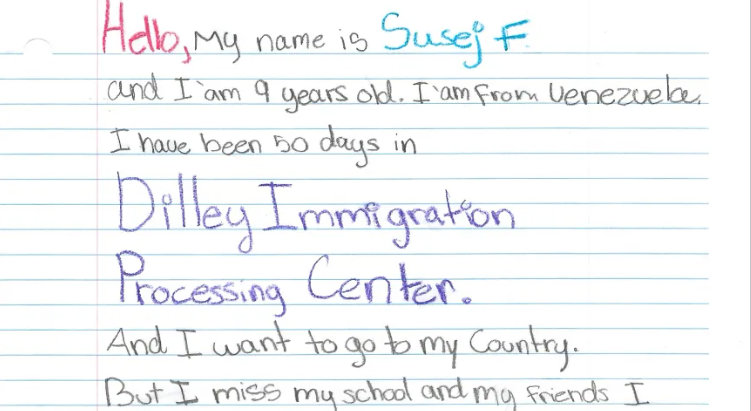
Health Organizations Condemn Traumatic ICE Raids, Family Separation
According to letters from children living in an ICE detention facility, living conditions are inhumane and their mental health is suffering.

In Teens, Social Anxiety Often Looks Like Anger
A study finds that some teens’ aggressive behavior may be due to social anxiety, not straightforward reactivity.
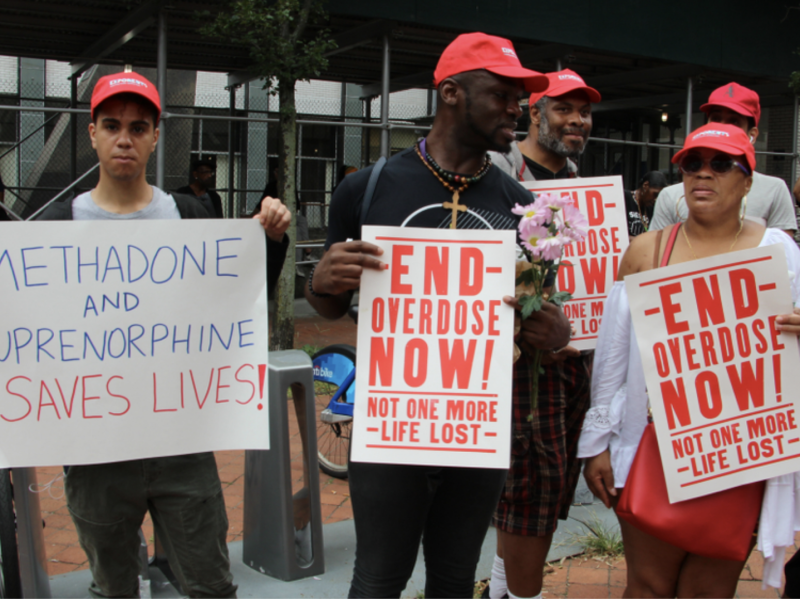
Expert Calls for Harm Reduction, Not Punishment, to Resolve Our Overdose Crisis
As the Trump administration pulls funding from harm reduction, an expert on the overdose crisis says it’s the best way to save lives.
