
Washington State’s Bold Plan to Boost Child Wellbeing

Two years ago, the state of mental health care for youth in Washington State was described as ‘a five-alarm blaze.’ Now a proposed new strategy aims not just to put out fires, but to create a model for just and equitable care from birth to age 25. In other news, two new novels revolve around panic attacks; a new mental health center, El Barrio Wellness, opens in Newark, N.J.; and ballet dancers speak out for mental health.
Washington State now ranks 48th out of 50 in terms of child welfare. A new strategic plan aims to change that.

About 2 million children and young adults – people 25 and under – live in Washington state, and for those needing mental health support and services, the state has, by most accounts, been doing a poor job.
Only 52% of Washington youth and young adults on Medicaid who need mental health treatment receive it, according to the state. More than 2,500 young people experience their first episode of psychosis annually, yet 80% are unable to get specialized care.
Two years ago, the Seattle Times described the state’s performance in addressing the mental health needs of youth as “a five-alarm blaze.” Last year, Mental Health America ranked the state 38 out of 50 states plus Washington D.C. based on its prevalence of mental illness and access to care. And the Children’s Alliance, a Washington children’s advocacy organization, ranked the state even lower – at 48.
“Even though Washington remains one of the wealthiest states in the country, when it comes to putting resources in place to bolster youth mental health, our state is woefully low performing,” the Alliance wrote in a 2024 report. “Almost every single state is now doing better than Washington on youth mental health.”
But now, a group of advocates – people with lived experience with the mental health system, philanthropists, industry and policy leaders – are working to turn around this grim reality. They’ve put together a 10-year road map called Washington Thriving for transforming the state’s services to ensure the well-being of every child, youth and young adult. It has the support of the governor and key legislators in both parties.
“In Washington, we have dedicated behavioral health providers, investment at the state level, and communities’ commitment to supporting our children, yet we rank 48th for youth wellbeing,” Governor Bob Ferguson said last week in a conversation supporting the plan. “That is unacceptable.”
Researchers have found that parents and caregivers looking for mental health care for their children face long waits and a web of disconnected agencies – a maze rather than a front door. Meanwhile, behavioral health workers are facing burnout due to sky-high caseloads and inadequate support, with turnover rates as high as 40% annually.
“Parents shouldn’t have to become experts in navigating multiple agencies just to get their child support,” Rep. Lisa Callan, co-chair of Washington Thriving, has said. ”Right now, families retell their most traumatic stories to agency after agency, wait months for appointments, and watch their children’s problems get worse while they’re stuck on waitlists. We have a moral obligation to do better.“
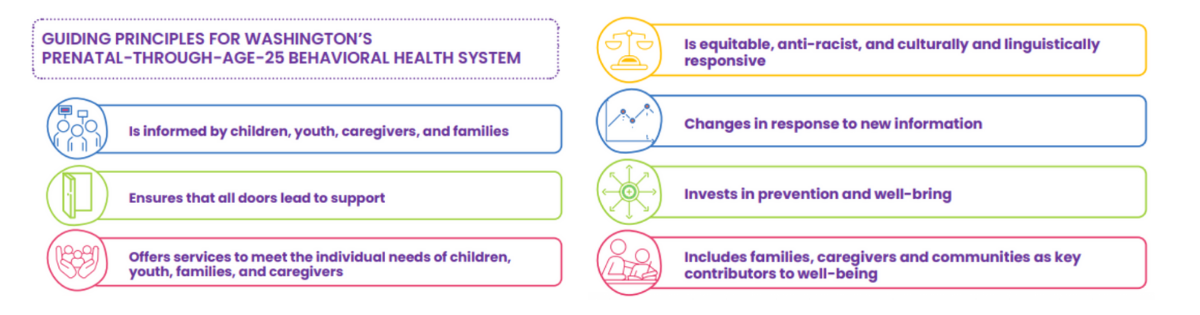
In an era of cutbacks and federal attacks on immigrants, the plan’s goal is to ensure well-being for everyone who is pregnant and for every child, youth and young person in the state, with care that is equitable, culturally responsive and designed to reach those who need it most.
The Washington Thriving project team responded to several questions from MindSite News via email. The interview has been edited for length and clarity.
You mentioned that implementation of the plan will begin “with the smallest, most rural and least-resourced communities.” Do these include immigrant and farmworker communities?
Yes, this is a plan for all Washingtonians. The plan’s implementation philosophy includes “designing for the margins.” Telehealth, mobile support teams, and language access are all integral parts of the plan. The plan calls for technology-supported workforce solutions that enable urban specialists to reach rural families, mobile teams that deploy directly wherever young people and families are, and workforce expansion that prioritizes recruiting multilingual providers who share language and culture with the communities they serve.
The roadmap mentions that you intend to build on success and to remove barriers to care. What are one or two of the most successful programs in WA State that you want to keep and replicate?
Washington has behavioral health bright spots everywhere—from family-run networks and state-funded programs to regional navigators and community-based organizations and more. The goal is ensuring that no matter where someone first reaches out – whether through a school counselor, pediatrician, community center, peer support group, or even a Google search – they find a clear pathway to help that feels like genuine care. To support this, the plan calls for developing integrated data systems that provide better visibility into what’s actually working.
What are a few of the barriers to care that you want to remove?
The plan identifies many barriers to care: fragmentation and silos in which behavioral health is scattered across different agencies; not enough service and supports where they’re needed, and (problems) in how care is delivered. To address this, the plan calls for unified governance, sustainable funding, and integrated data systems that enable better coordination and collaboration.
How can one change the culture of fear around seeking healthcare in the era of ICE?
The plan addresses this by creating multiple access points beyond formal systems, recognizing communities are natural support systems for people. The plan emphasizes “no wrong door” approaches and trusted messengers who can provide education and support in culturally affirming ways. Rather than forcing families into formal systems that may feel unsafe, the plan meets people where they are with community-oriented, people-centered care.
—Diana Hembree and Rob Waters
This year at least two new novels revolve around panic attacks
Anxiety is on the rise in 2025, according to a recent survey by the American Psychiatric Association, which found that 43% of U.S. adults reported they felt more anxious than the previous year, up from 32% in 2022. The jump in anxiety was linked to factors that included the 2024 election, gun violence and the economy, with more than 60% reporting they were worried about paying their bills and keeping themselves and their family safe. For some of us, such anxiety can escalate into full-blown panic attacks, which can usher in a sudden episode of intense, terrifying fear.
Perhaps it’s a sign of the zeitgeist, then, that the Atlantic reviewed not just one, but two new novels with one-word titles that revolve around panic attacks: Pan and Cannon. An Atlantic editor introduced the two selections like this:
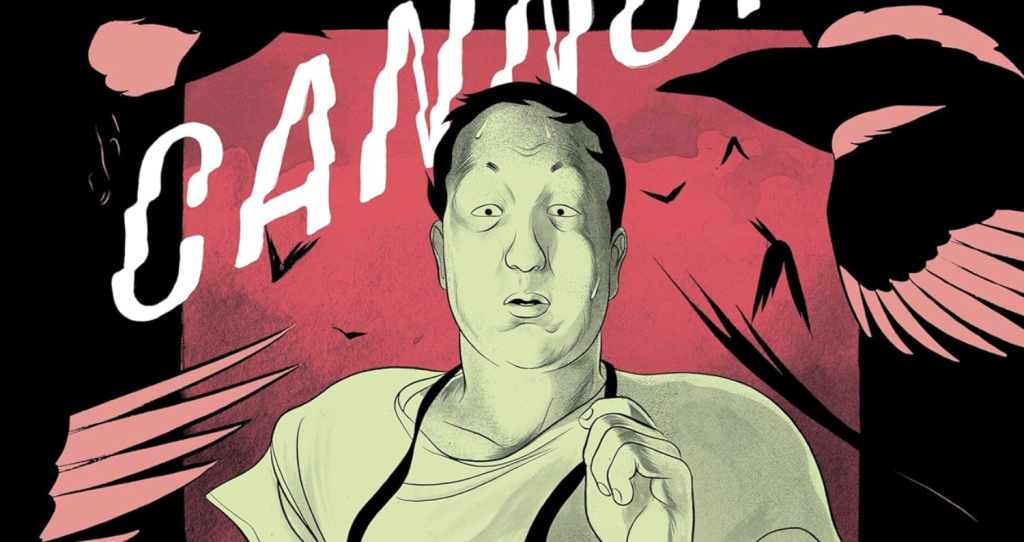
A panic attack can feel like the end of the world. In his new novel, Pan, Michael Clune writes that during such an episode, “your consciousness gets so strong it actually leaps out of your mind entirely. It starts vibrating your body. It shakes meat and bone.” My colleague Scott Stossel reviewed the book this week, writing that anxiety can make “rays of sunlight come through my eyes and get in my chest, and I feel like I’m gagging on them.” Your stomach might feel like it’s falling through the floor; your vision might blur; you might appear glassy, paralyzed by fear. Or, as in Lee Lai’s new graphic novel, Cannon, a panic attack might look like a menacing bunch of magpies piling up on furniture.
Since I’m partial to graphic novels, I may begin by reading Cannon’s book, which traces the unraveling of a young woman trying to balance waitressing and caring for her sick grandfather while trying to save her increasingly painful friendship with her ambitious bestie from high school.
I also look forward to Clune’s novel Pan, which follows a teenage boy as he makes friends with some other outcasts and tries to figure out the source of his panic attacks. Although a Kirkus review says his book shares some of the pitfalls of the literary Brat Pack novels, such as “an overly studied blankness,” the reviewer still found it “sly and artful…as a mood piece, it offers a vivid sense of a boy all but asphyxiating on his own thoughts.”
In other news…..

El Barrio Wellness, a brand new multi-service mental health center, opened last week to serve the residents of Newark, New Jersey. Located in the former home of El Club del Barrio, a three-story brick building that once served as a refuge for Puerto Rican families and a center for AIDS services, the new facility offers bilingual, trauma-informed counseling for children, adults and families. The $1.2 million program is operated by La Casa de Don Pedro, a community development organization started by Puerto Rican community activists in the 1970s, and is supported by a range of organizations, including RWJBarnabas Health and the New Jersey Department of Children and Families.
Services are delivered through a Liberation Health model that takes into account how cultural and systemic forces shape our mental health and include individual and family therapy, group sessions and community workshops, all designed to reflect people’s hope, dignity and lived experience. “This facility isn’t just about access to healthcare, it’s about empowerment, dignity and opportunity for our residents,” said Newark Mayor Ras Baraka, who took part in the Nov. 14 ribbon-cutting ceremony. “By bringing preventive services, education and wellness resources directly into the neighborhood, La Casa de Don Pedro is helping us build a stronger, healthier Newark from the ground up.”
Ballet dancers, famous for buckling down, speak out about their mental health. After decades of ignoring dancers’ mental health, ballet instructors are waking up. The change came in part from dancer Sara Mearns, a principal at the New York City Ballet, who couldn’t quit obsessing over missing a turn after a performance when she returned to dance after the pandemic.
Mearns found herself crying after every show, feeling that she just couldn’t go on. Outside, she found herself weeping on a park bench. Finally, she texted the ballet’s safety and health coordinator and told her she needed help. This started her on her mental health journey, one that is being undertaken by more and more ballet dancers as the industry changes. A fascinating glimpse from the New York Times inside a little-known world.
The name “MindSite News” is used with the express permission of Mindsight Institute, an educational organization offering online learning and in-person workshops in the field of mental health and wellbeing. MindSite News and Mindsight Institute are separate, unaffiliated entities that are aligned in making science accessible and promoting mental health globally.

Author

Related Articles

Will the Pursuit of Profit Suck the Benefits Out of Psychedelics?
Many new programs have removed the most transformative, curative and life-affirming parts of the psychedelic experience.

New Mexico to Probe Allegation that Epstein Ordered the Burial of Teen Girls Near His Ranch
New Mexico has announced it is probing into an allegation that Epstein ordered the bodies of two girls to be buried on Zorro Ranch.
A Better Way to Treat Addiction in Seniors
As overdose deaths rise among older adults, Baltimore’s REACH Health Services offers groundbreaking addiction care for seniors that combines medication with intensive peer support. Plus a look back at a historic fight against solitary confinement. And more.
