
Troubled Teen Industry Rocked by Lawsuits, Sexual Assault Charges
One of the nation’s largest behavioral health hospital chains continues to face legal scrutiny for alleged patient abuse and negligence.
Hundreds of former patients accuse UHS Hospital in Illinois of sexual abuse
Universal Health Services Inc., one of the largest operators of behavioral health facilities in the country, was pulled back into the news this month as Illinois prosecutors charged a former mental health counselor with repeatedly sexually assaulting children as young as 7 over an eight-year span ending in 2004.
On Dec. 1, Cook County prosecutors filed five counts of assault against Edmund Rivers, 68, a former counselor at Hartgrove Behavioral Health Hospital in Chicago. The facility is the target of several civil lawsuits, and prosecutors say five more alleged victims came forward after attorney Martin Gould announced the first lawsuit against the hospital late last year.
The mental health facility is not an outlier in Illinois: Gould says he represents more than a thousand patients who say they were abused physically, sexually and/or psychologically at youth residential treatment centers across the state, including but not limited to UHS facilities. “But the worst appears to be Hartgrove, with hundreds of sexual abuse plaintiffs,” he told MindSite News. “It was a playpen for pedophiles.
Gould described Rivers as a “serial perpetrator” and predicted more arrests and criminal charges would follow. “He’s the first domino to fall,” he said.
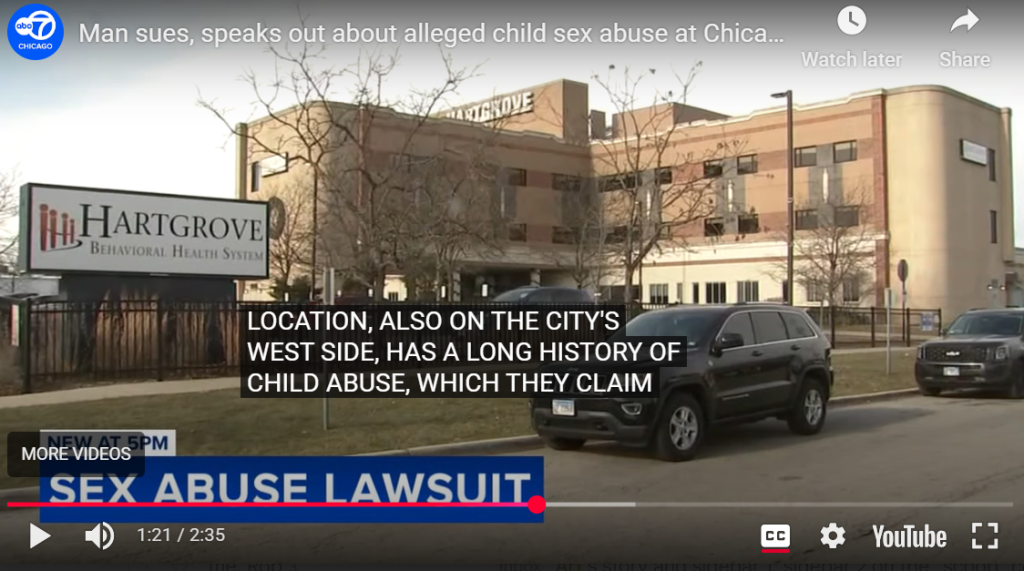
The arrest of Rivers and the lawsuits against Hartgrove come on top of a combined $895 million in damages awarded last year by civil juries against UHS for alleged child sexual abuse at two UHS facilities: Pavilion in Illinois and Cumberland in Virginia
UHS and its subsidiaries have consistently denied wrongdoing when facing allegations of abuse, neglect, and other issues stretching back more than a decade. In September, a Nevada jury ruled the company must pay more than $500 million in punitive damages to a rival health system for trying to poach doctors and patients.
Despite the numerous legal judgments – and a scathing 2024 report issued by the U.S. Senate Finance Committee – net income for UHS soared last year to $1.1 billion, with its behavioral health business generating the company’s highest profit margins.
Gould represents more than a dozen clients who say they were abused by Rivers. His firm, Gould, Grieco & Hensley, has already filed eight lawsuits against Hartgrove alleging physical and sexual abuse of young patients. In August, another firm also sued Hartgove and UHS on behalf of a teenage girl who claims she was repeatedly sexually assaulted by staff members during three separate stays at the facility.
Lawyers for Hartgrove have disputed allegations of abuse. “The safety of all patients is of paramount importance to Hartgrove Hospital and we take these allegations seriously,” it said in a statement published by Fox 32 in Chicago about the 2024 case. “Based upon preliminary review of the lawsuit, Hartgrove denies the allegations against them and intend(s) to defend this case vigorously.”
Attorneys for Hartgrove, Pavilion, UHS and Cumberland, along with the corporate office of UHS, did not answer questions emailed to them by MindSite News in early December.
The allegations against Hartgrove include sexually assaulting former patients while they were sedated with unprescribed drugs like Thorazine and benzodiazepines, and forcing minors to have sex.
At a news conference last year, Gould introduced a former patient who had claimed that Rivers and others sexually assaulted him at the hospital in 2001, often in bogus therapy sessions. He was 11 years old at the time. Abuse of child patients at Hartgrove continued through July of 2024, according to Gould and dozens of police reports cited in his firm’s complaints.
Abuse of children ‘beyond the pale’
The former patient, now in his mid-30s, spoke at the press conference from behind a screen in an altered voice and charged that Hartgrove staff members would force patients to perform sex acts on each other. “They (told) us that we have to listen or we’re not going to go home and we’re not going to be able to see our family,” he said.
“The nature of the abuse was beyond the pale,” Gould said at the press conference. “One staffer walked in and witnessed the sexual abuse of children, laughed, closed the door and never followed up,” he said.
In one of his lawsuits, Gould also cites a scathing 2011 investigation conducted by the psychiatry department of the University of Illinois in Chicago on behalf of the state’s child welfare agency. It found that Hartgrove subjected minor patients to “an unacceptable risk of harm,” citing more than 100 reports of physical and sexual assaults over approximately six months. He and his team have also collected numerous testimonies of sexual assaults at Hartgrove over the years from former patients whose reports had been ignored by the staff (see an excerpt from his John Doe 1 lawsuit below).
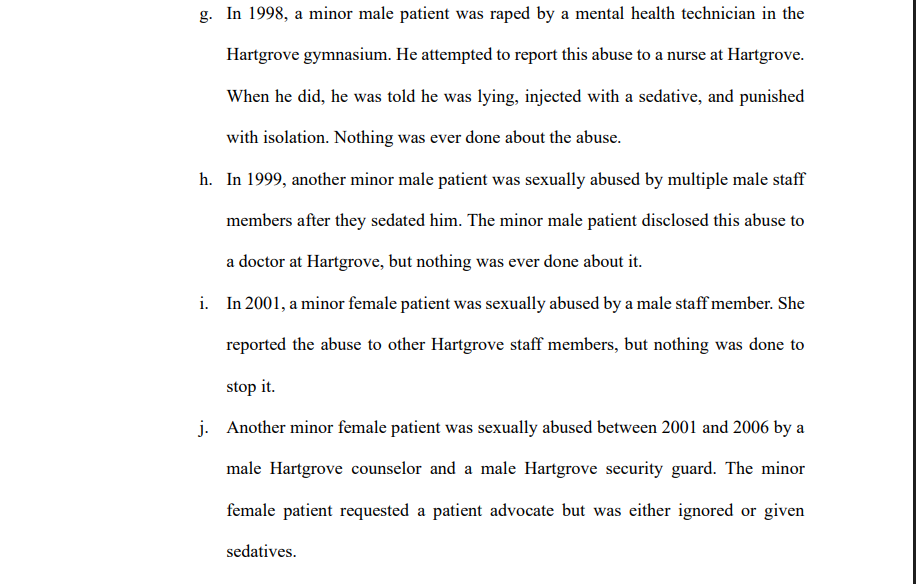
In addition, the probe found that staff fabricated paperwork and lied to university investigators – and that employees were threatened with firing by administrators if they spoke truthfully about conditions there. Even so, the Department of Children and Family Services continued “warehousing” children in Hartgrove and other locked psychiatric facilities long after children were cleared for release, according to lawsuits brought by former patients and reporting by ProPublica.
For UHS, damage awards piling up
River’s arrest and the Hartgrove lawsuits add to the mounting legal problems facing UHS.
In March 2024, an Illinois jury awarded $535 million to the mother of a 13-year-old girl raped by a 16-year-old male patient on an adolescent psych unit of the UHS-owned Pavilion hospital in Champaign. The jury verdict was one of the largest institutional abuse awards in the state’s history – until the trial judge lowered the jury award and the case was settled out of court for an undisclosed sum earlier this year.
Camera footage captured by the facility and shown to the jury demonstrated that the 16-year-old attacker and an accomplice, who were housed on a co-ed unit that included children aged 4 to 17, running amok in the hallways long after the nominal 9 p.m. curfew. Their actions were largely ignored by the skeleton staff on duty that night.
The verdict against Pavilion raised the financial stakes for UHS, and offered a rare inside look at how troubled teen facilities operate in practice.
“They essentially tossed an aggressive, sexually active, 16-year-old human hand-grenade into this unit and into a room next to my client and didn’t separate them,” plaintiff’s attorney Tim Cronin of the Simon Law firm told the jury.
Medical records and testimony show that hospital staff members were aware of the teen’s history of violence; he was even driven to the hospital in a police cruiser after punching staff and jumping out a second-story window at a previous facility.
In his opening statement, Cronin urged the jury to send a signal to the troubled teen industry by imposing a verdict large enough to deter other companies from turning a blind eye to behavior that harms the vulnerable patients they are charged with caring for. “The decisions you make in this courtroom can make a difference, not just for my client and upon this defendant, but upon our society,” Cronin said.
In another case last year, jurors imposed a s $360 million negligence award against Cumberland Hospital, a UHS child and adolescent facility in Virginia, for a doctor’s alleged sexual assaults on teen patients.
“The system is failing, except the providers running these facilities, who have figured out exactly how to turn a profit off taxpayer-funded child abuse.”
—SENATOR RON WYDEN (D-OREGON) FROM 2024 SENATE REPORT
These legal verdicts against UHS accompanied the release of “Warehouses of Neglect,” the Senate Finance Committee report on facilities for “troubled teens” that found UHS and three other poorly regulated major behavioral health chains were engaging in “taxpayer-funded child abuse.” (See MindSite News’ detailed look at the troubled teen industry here.)
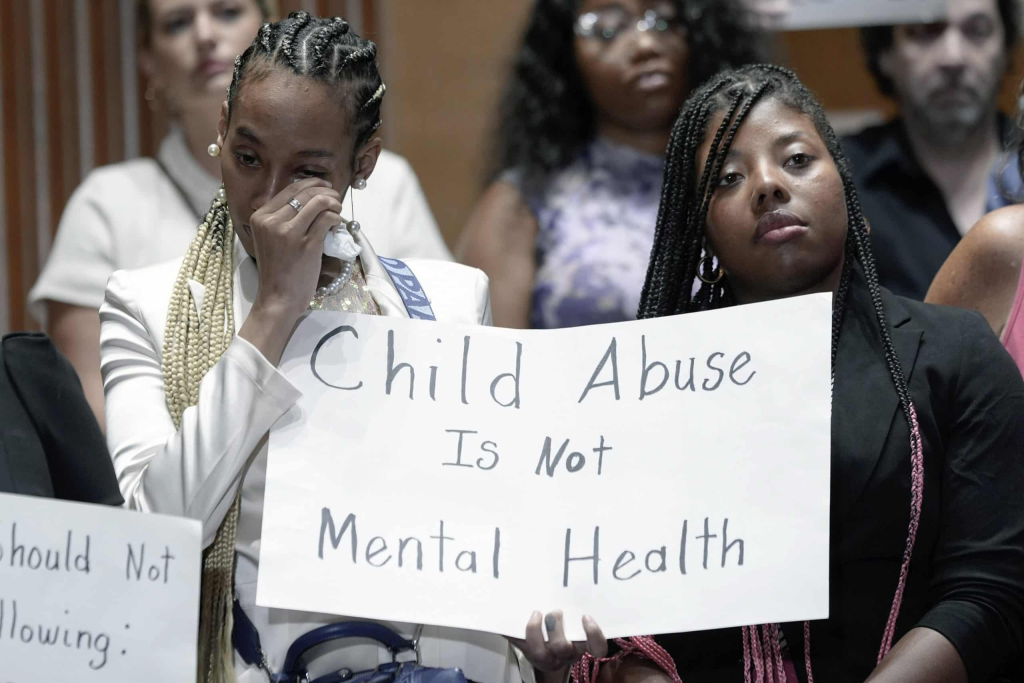
On top of that, the Stop Institutional Child Abuse Act passed Congress and was signed into law in December 2024 after years of lobbying led by survivors of the industry, including Paris Hilton, the celebrity entrepreneur and Hilton Hotels heiress. Hilton says she suffered physical and sexual abuse as a teen in the 1990s at the controversial Provo Canyon in Utah, which was purchased by UHS in 2000 and has a decades-long history of of abuse allegations from its inception as a private boy’s school in 1971 to a large-scale riot reported at the school in 2023.
The law Hilton helped pass was considered by most advocates a crucial first step in reform: It requires federal agencies to regularly report on deaths and abuse in the industry, and to review best practices and regulatory failings with an eye towards improving treatment and government oversight.
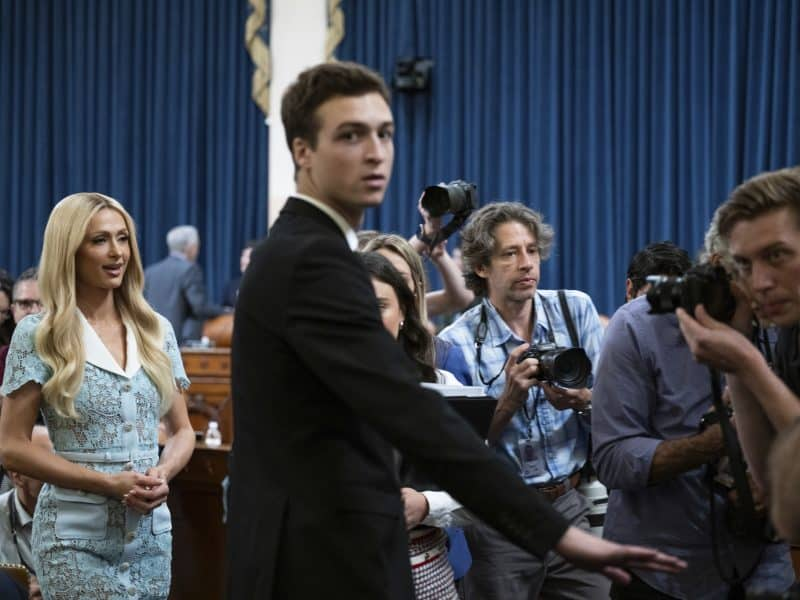
Alongside the successful legal strategy, a powerful, parallel movement has arisen among survivors and family members who’ve lost loved ones at these facilities. These include Theresa Payne, who spoke before the 2024 Senate hearings at a press conference about the death of her 14-year-old daughter Monique in 2006 at a UHS-owned facility in Westwood, Massachusetts, due to alleged assault and medical neglect.
Facility staff admits ‘losing control’
The Pavilion lawsuit demonstrated the impact of running a mental health program with too few, poorly trained staff members and of failing to maintain clear protocols for protecting vulnerable patients. It also highlighted the refusal of UHS and its affiliates to take responsibility for their failures.
Evidence presented in the case showed that on Dec. 5, 2020, a 16-year-old and his accomplice were able to squirt toothpaste on three cameras monitoring the hallway to obscure their views, steal the cell phone of one mental health tech and distract another by spilling water on the floor. It also showed that the older boy used the distractions to invite a 13-year-old girl, a virgin, to have “some fun” in his room and when she protested against having sex, he raped her.
When she left the boy’s room after about eight minutes, her pants were soaked in blood. One mental health tech – working in a position requiring no more than a high school diploma – spotted her bloody clothes and hands the night of the rape, but accepted the frightened girl’s explanation that she just had her period. The girl didn’t report the incident to the nursing staff for two more days and later testified that before the rape she had looked up to the attackers as “my big brothers.”
The staff members on duty on the floor that night took no action in response to the boys being in the hall after hours, and the cameras weren’t even cleaned until the next morning. One tech later admitted in a deposition that he was “losing control” of the situation but contended that he didn’t have the authority to force the boys back into their rooms.
Still experiencing nightmares four times a week
The Champaign-based News Gazette covered the lawsuit and described the victim’s emotional testimony as she broke down on the stand: “The girl testified that she feels ‘very small’ when she thinks of the incident and now has nightmares four times a week. She has struggled with image issues, she said, and shaved her head at one point so boys would think she is less attractive.”
Her lawyers also presented testimony that the family had been told by Hartgrove officials that girls and boys would be housed separately at the facility. Instead, when she was admitted, she learned that the boys and girls were housed on the same wing.
“They didn’t seem to put any thought into where patients were housed,” attorney Cronin told MindSite News. “On the night of the rape, there were two unoccupied rooms on the girl’s wing that were open and our client and her roommate at the time, both could have been placed over there.”
In an effort to minimize Pavilion’s culpability and the harm done to the girl, attorneys for Pavilion presented an expert witness, psychiatrist William Giakas, whose testimony appeared to anger the jury.
Giakas testified that he believed that “whatever emotional trauma occurred for (the girl) has subsided a long time ago,” according to a summary of this testimony later given by Circuit Court Judge Jason Bohm, who presided over the case. Bohm noted that while Giakas thought “memories of that (night) are always going to bother her,” he also said the distress lasted only a matter of months, and that “any stress…should have or has completely subsided.”
“The trial record is devoid of any evidence that the Pavilion recognizes the gravity of its wrongdoing. No meaningful changes were made after the rape.”
—JUDGE JASON BOHM
Bohm also dismissed as “disingenuous” an attempt by Dr. Giakas to do damage control when he tried to claim, during cross-examination, that his use of the word “minor“ during his original testimony referred to the girl’s age rather than the impact on her of being raped.
Bohm noted that that Giakas had testified that “I think the event itself was actually — in the scheme of traumatic rape, it was actually quite minor. But it still had some impact…I just think it was a minor impact.’”
Bohm skewered Pavilion’s case and the testimony of its key expert witness: “The trial record is devoid of any evidence that the Pavilion recognizes the gravity of its wrongdoing. No meaningful changes were made after the rape. If (these two people) were admitted today, the same horrible outcome seems likely. Yet, throughout this litigation, the Pavilion seems oblivious to its own failures.”
Lack of staff means no eyes on hallways, says attorney
In his October 2024 post-verdict ruling, Bohm reduced the damages imposed by the jury from $535 million to $180 million but rejected Pavilion’s request for a new trial. He also noted that the girl was diagnosed with post-traumatic stress disorder by a psychologist and continues to experience nightmares in which she relives the assault – even though her assailant has since died, killed in a shooting in 2022.
“They are ‘vivid nightmares of him killing her’ by stabbing her or lighting her on fire,” Bohm said. “She wakes from these nightmares short of breath and discovers she has wet the bed, causing her to wear a pull-up to bed every night. She suffers fear, agitation, paranoia, low self-esteem, mistrust – particularly of men – disassociation, and depression.”
Keeping costs low by saving money on staffing appears to be at the root of many of Pavilion’s deficiencies – a common feature of the troubled teen industry. The staff’s failure to respond to one of the earliest red flags – the toothpaste-covered cameras – was largely due to the hospital’s policy of not requiring regular watching of the TV monitors.
Hospital administrators had once considered a policy of real-time monitor-watching but that would have required adding extra staff. As Cronin noted in his closing argument, “They want you to ignore the fact that they simply do not keep eyes on the hallways at all times, like they admit they’re supposed to, and know they can’t because of having too few staff. (That’s) because they won’t (hire more) at $12 to $15 an hour.”
Cynthia Clark, a registered nurse working the day shift when the 13-year-old girl was first admitted, testified she had raised concerns about understaffing “many, many times” with upper management but was rebuffed. She was also told by staff members that the 16-year-old boy had a history of sexual violence and needed to be watched carefully – and kept away from female patients.
Two days after the rape, the victim told Clark, who also noticed the bruises on her body. She was then transported to a medical hospital. Clark testified she quit the facility three months after the rape because it was so unsafe that she thought she could lose her nursing license.
The attorney for Pavilion maintained in court that the only person at fault was the assailant and insisted – in the face of research and expert testimony to the contrary – that it’s “industry standard to house boys and girls on the same unit.”
According to Cronin, Pavilion admitted in discovery that it had at least 12 documented sexual assaults at the facility from 2015 to 2020, “and an average of 400 to 500 physical assaults per year during that same time period on the youth unit.” (See a partial listing in a 2017 police log here.)
Company placed profits over patient safety, critics say
Critics say the evidence presented in the lawsuits against UHS’ Pavilion facility and its Cumberland youth hospital show the company continues to place profits over patient safety and quality care – as lawyers, investigative reporters and government watchdogs have been saying for decades. Although it has consistently denied wrongdoing over the years, the company conceded in response to last year’s Senate report that there have been incidents at some facilities “where residents have suffered harm.”
Like many other lawsuits against teen treatment facilities, the Pavilion case was ultimately settled out of court for an undisclosed sum and the parties signed nondisclosure agreements keeping the details secret. Still, the large amount of the initial jury verdict, coupled with other large judgments, prompted a warning from IMA Financial Group, a leading insurance broker and investment advisor. An IMA report earlier this year cautioned investors about mounting risks in the behavioral treatment industry, noting that “operational failures can cascade into catastrophic losses.”
In September 2024, a jury awarded $360 million to three teenage girls, who said they’d been sexually assaulted by the former medical director of the UHS facility in Cumberland, Virginia. In the course of the lawsuit, UHS was removed as a named defendant by the judge, and the total jury award was lowered to $323 million. If the verdict is upheld on appeal, the company and its insurers will still be liable for paying the jury award.
Dr. Daniel Davidow, the former medical director, was accused of engaging in digital vaginal penetration in his exams of the girls. He denied the charges and was acquitted in a criminal trial in April 2024 involving two of the accusers.
Pavilion admitted in discovery that it had at least 12 documented sexual assaults over a five-year period and an average of 400 to 500 physical assaults a year.
The jury decisions and ongoing lawsuits continue to pose financial risks for UHS. Although the Cumberland verdict is being appealed, and the Pavilion case was settled out of court, UHS noted in regulatory filings last year with the SEC that the cases could “materially adversely” impact the company. A spokesperson for UHS and attorneys for Pavilion and Cumberland hospitals declined to answer questions from MindSite News. While the two trials garnered relatively little national news coverage, the verdicts sent a message about the company’s greed, said plaintiff’s attorney Cronin.
“The directive was to fill the beds, overfill the beds, cut the staff (and)…. maximize profits to the fullest extent possible,” he told MindSite News. “That was the message from management on down; that was the business plan.”
After the verdict, Cronin says he got calls from executives at other facilities asking about Pavilion’s practices so they can avoid doing the same. His key advice: “Have enough staff to actually watch these kids and house them safely.”
A Virginia case may become the costliest
The Cumberland case may prove to be the costliest to UHS. The original complaint, filed on behalf of 46 former patients, sought $930 million in damages. But a jury awarded $120 million each to the first three patients whose cases were heard in the first trial and who alleged that they’d been sexually assaulted by Davidow. Additional damage awards for the other 43 patients could lead to massive liability for UHS.

The Cumberland case is now under appeal and the Hartgrove cases haven’t yet gone to trial. But advocates say they are still a long way from bringing about fundamental reform in the troubled teen industry and that government oversight remains far too feeble – to the great detriment of young patients.
Elizabeth Jeglic, a psychology professor at the John Jay College on Criminal Justice and a co-developer of the data-driven Sexual Grooming Model used to prevent sexual abuse, says many companies have failed to keep up with evidence-based safety practices “so that kids going forward are not abused.” At this point, she says, “There’s really no excuse for institutions not to have those things in place because this (child sexual abuse) is a known risk.”
Kayla Onder, a survivor of childhood sexual abuse who is now a partner in a law firm, Onder Law, and is a founder of Kayla’s Survivors, sees litigation as the only effective weapon to date against the greed and cruelty baked into the system.
When you run a facility that treats children like revenue and cuts care to the bone, suffering isn’t a glitch. It’s an intentional outcome.”
—ATTORNEY KAYLA ONDER
“These are for-profit companies, right? The only way to get them to change is to affect their bottom line and get their attention with these big verdicts,” she told MindSite News. “When you run a facility that treats children, in my opinion, like revenue and cuts care to the bone, suffering isn’t a glitch. It’s an intentional outcome.”
She hopes for greater oversight and reforms, but in the meantime, she and lawyers around the country are headed back into court. Last month, she filed suit on behalf of nearly 30 alleged victims of sexual abuse at Pavilion.
Unfortunately, there’s little sign so far that UHS and the rest of the troubled teen industry are going to fundamentally change anytime soon. Indeed, reformers have long contended that most troubled children would be better served by community-based care – not residential treatment.
Senator Ron Wyden, who led the recent Senate investigation into the troubled teen industry and described it as “taxpayer-funded child abuse,” favors cutting off the supply of public funds to these institutions. To the children who have spent time in these facilities – and their families – it’s an idea that is long overdue.
The name “MindSite News” is used with the express permission of Mindsight Institute, an educational organization offering online learning and in-person workshops in the field of mental health and wellbeing. MindSite News and Mindsight Institute are separate, unaffiliated entities that are aligned in making science accessible and promoting mental health globally.


Author

Related Articles

‘I Can’t Focus on My Schoolwork’: A High School Student Agonizes That Her Parents Will Be Seized While She’s in Class
As Trump and the Supreme Court dismantle the system that protected millions of immigrant families who fled danger, children wonder: Will we be next?

A Three-Year-Old Tries to Cope Without his Beloved Papi
When a parent is taken away by ICE, a child’s world implodes. The long-term consequences include depression, anxiety and post-traumatic stress disorder.

‘Remembering Is a Form of Protest’: Japanese Prison Camp Survivor Satsuki Ina on the Trauma of Detention
Satsuki Ina on Japanese American imprisonment, the legacy of cultural trauma,
and speaking out against detention centers.