
Chatbots May Spark Delusions Even in People With No Mental Illness
Psychologists say AI chatbots have led people to experience delusions, warning that more of us are at risk than we might think.

In today’s Daily, psychologists say AI chatbots have led people to delusion – and warn that more of us are at risk than we might think. A new study empirically connects racial discrimination to the massive mortality gap between Black and White Americans.
Plus, Ye, formerly known as Kanye West, apologizes for his past “psychotic” behavior, and Melani Sanders, founder of the We Do Not Care Club, shares her joy about the community for perimenopausal women that has grown around her exhausted declaration.
But first, Kosmo the Cat chats with his guardian about the best use of the space between his ears. I hope it helps you take a deep breath and smile.
Psychologists and other experts urge caution when using chatbots
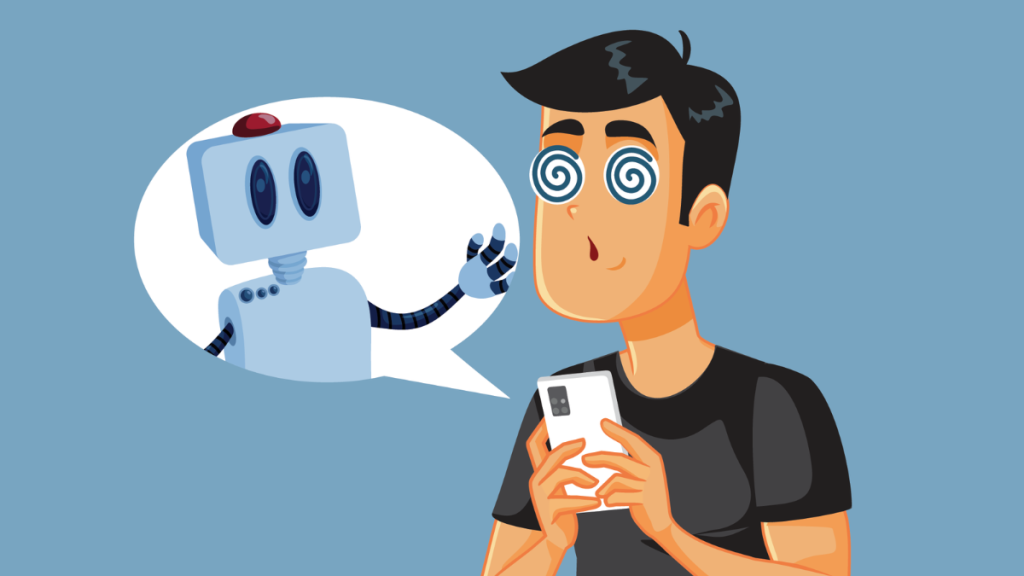
As a psychologist specializing in treating people with delusions, little shakes Julia Sheffield. But she was troubled last year after encountering seven patients who had stumbled into delusions through conversations with AI chatbots – including one person with no history of mental illness, who simply sought reassurance after a big purchase. It’s a reality quickly becoming familiar to mental health professionals across the country, according to interviews the New York Times conducted with more than 100 therapists and psychiatrists.
For their part, AI companies say such happenings are rare, with OpenAI, the maker of ChatGPT, estimating that 0.15% of its users discuss suicidal ideation each week, and that less than half of that amount showed signs of psychosis or mania. But given the huge user base, that is 1.2 million people considering suicide and half a million navigating potential psychosis or mania with the tool in a given week – a big deal. That makes the number of people vulnerable to harm, including psychosis, much higher than most people realize. “A.I. could really, on a mass scale, change how many people are impacted,” said Haley Wang, a UCLA graduate researcher who assesses people showing symptoms of psychosis.
Plus, there are established risks that come with that use: The tools are optimized to maximize engagement, so they echo folks’ harmful impulses and offer a consistent agreeableness that human relationships can’t compete with, pulling some users ever closer to their screens. Their ability to present knowledge interactively means that AI chatbots can help patients understand their diagnoses, and though this came up in the interviews as a positive, it was alongside concerns that the chatbots reinforce anxiety and isolation. More than two dozen professionals recalled mental emergencies linked to AI, including psychosis, suicidal ideation and even violent crimes that led to criminal prosecution.
As people continue to turn to AI bots to discuss matters like self-harm and suicide over days and weeks, safeguards get worn down.One doctor said a bot eventually told his patient his thoughts of suicide were reasonable. In other cases, chatbots might encourage someone’s grandiose ideals, indulge delusions, or urge people with autism to put themselves in unsafe social situations. Professionals said that some people’s conversations with AI amount to addiction.
Danish psychiatry professor Soren Dinesen Ostergaard, whose recent research found 11 cases of chatbot-related delusions in psychiatric records, was more blunt. “I’m quite convinced that this is a real thing and that we are only seeing the tip of the iceberg.”
Racial discrimination linked to shortened lives, new study finds
Almost half the mortality gap between Black and White Americans can be attributed to the cumulative toll of stress and inflammation, largely triggered by racial discrimination and social inequality, The Washington Post reports.
Researchers at Washington University in St. Louis analyzed inflammatory biomarkers from more than 1,500 Black and White adults who had been part of a 17-year aging study, and found that chronic psychological stress shortens lives, and that biological markers of sustained stress were associated with discrimination and inequality. Such a clear and morbid relationship is “important to be empirically demonstrated,” said Ryan Bogdan, the resulting study’s senior author. Their work was published earlier this week in JAMA Network Open.
Scientists measured two inflammation-related biomarkers, C-reactive protein and interleukin-6, which remain in the bloodstream after repeated activation of the body’s fight-or-flight response. Higher levels of both were associated with decades of stress exposure, such as childhood adversity, trauma, poverty, and critically, racial discrimination. That specific elevated inflammation was in turn associated with earlier death.
The study began when participants were in their late 50s, on average, and were followed for up to 17 years. In that period, 25% of Black participants died, compared to 12% of White subjects, and Black participants were more likely to die at younger ages. Roughly half of that mortality gap was attributable to stress and inflammation. The findings support the “weathering hypothesis,” said graduate student researcher Isaiah Spears – the idea that constantly working to overcome social inequities leads to stress that in turn causes biological decline.
The authors noted that the results of the study are difficult to generalize – regional variation might mean that disparities manifest differently across the country. Because of that, and because it looked at a broad range of stressors, it’s hard to infer specific policy recommendations. University of Pennsylvania Professor Derek M. Griffith, who was not involved in the study, said that while the combination of factors looked at in the study was notable, it did not look at measurable harm to the aging caused by wealth inequality, for example. But it adds to a bulk of evidence that racial discrimination is a public health hazard, one that harms mental health, wears down the body, and shortens lives.
“Stress management class is not going to solve this problem,” added Linda Sprague Martinez, who runs the Health Disparities Institute at UConn Health, and was not involved in the study.
The weathering hypothesis was first conceptualized by Arline T. Geronimus, now a University of Michigan professor. She was not involved in this study, but noted a crucial limitation, that “the most weathered have already died” before the ages the study looked at, because ages 35 to 60 are “the hardest, most stressful period of life for marginalized groups.”
Another limitation, one the study also acknowledged, is that by looking at flashpoints of stress, researchers focused on overt discrimination and major trauma but did not examine what Germonimus called “the daily stress of resilience,” or the everyday slights that could leave outsized psychological and physiological scars. These include microaggressions, code-switching, and the constant management of anger, frustration, or fear to avoid reinforcing stereotypes. “It’s not just about trauma or severe deprivation, but kind of everyday fists in the face,” Geronimus said.
Days ahead of album release, Ye, formerly Kanye West, apologizes for hate speech, blames bipolar 1
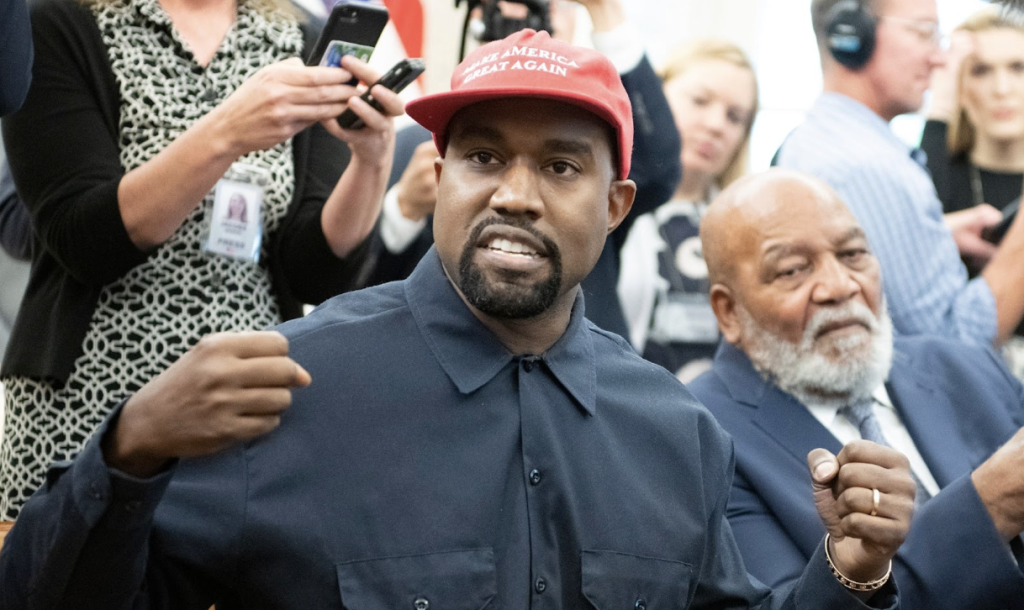
Earlier this week, Ye, formerly Kanye West, issued an apology as a full-page ad in the Wall Street Journal, and then discussed it in an exclusive email interview with Vanity Fair. Ye was apologizing for a series of anti-Black, antisemitic, and extremist actions that he says occurred during a four-month manic episode in early 2025. Those actions included selling swastika T-shirts, releasing a song titled “Heil Hitler,” and making alarming statements about “dominion” over his wife, Bianca Censori. They came after years of egregious statements, including pro-Nazi, antisemitic rhetoric, and an assertion that centuries of enslavement were “a choice” for African Americans. Regarding his behaviour early last year, West writes, “I regret and am deeply mortified by my actions in that state, and am committed to accountability, treatment, and meaningful change. It does not excuse what I did, though.”
Ye attributes his behavior to bipolar I disorder, which he says stems from an undiagnosed right-frontal-lobe injury sustained in a 2002 car crash, just before his ascent to superstardom. He wrote that amidst mania, he exhibited “psychotic, paranoid and impulsive behavior” and suggested that at times he felt suicidal.
Neuropathologist Bennet Omalu, who first uncovered the progressive, degenerative brain disease chronic traumatic encephalopathy, CTE in football players, says that the brain injuries Ye sustained in the crash were a “significant and substantial contributory factor to his progressive behavioral and cognitive impairment regarding his impulsivity and lack of restraint on the public domain,” and the “permanent and progressive” nature of the illness requires “long-term multi-disciplinary rehabilitative and therapeutic medical care and monitoring.” People navigating such an injury “need our empathy and sympathy and not our judgement and dismissal,” Omalu said.
Many remain skeptical of the apology, though, recalling Ye’s December 2023 redress ahead of his Vultures 1 album release. His latest record, Bully, is similarly set to debut this Friday. “I think what’s important to say is that the vast majority of people who have mental health issues, or specifically have bipolar disorder, don’t espouse antisemitic or racist ideas,” says Avinoam Patt, director of the Center for the Study of Antisemitism at NYU. After reading Ye’s statement, Patt added, “I guess this is a start… but it would be most important to follow up with meaningful actions (and perhaps even new music) that conveys his newfound dedication to creating ‘positive, meaningful art ‘– hopefully this will be art that spreads love and not hate, working to bring people together through his music.”
In other news…
Menopause linked to gray matter changes: New research using brain scans from 10,873 people in the UK suggests that menopause is associated with measurable changes in brain structure that may help explain common mental health symptoms such as anxiety and depression. The study found that postmenopausal participants had lower volumes of gray matter in brain regions involved in memory, including the entorhinal cortex, hippocampus, and anterior cingulate cortex, Scientific American reports.
Researchers also examined whether hormone replacement therapy (HRT) might protect against these changes, but results weren’t definitive. People who used HRT showed even lower gray matter in two of the three brain areas, as well as higher rates of anxiety and depression than those who did not. That’s not evidence that HRT causes brain changes or worsens symptoms though, psychiatrist and study author Barbara Sahakian said, because the group of people prescribed HRT were more likely to have reported anxiety or depression before treatment. The HRT group did, however, maintain similar reaction times compared to premenopausal participants, where the non-HRT group experienced some slowing in cognition.
The authors said that while the study was “the first to investigate the effects of menopause and HRT on mental health, cognition, and brain structure in a very large sample of women,” it was limited by a lack of access to details about participants’ HRT prescriptions or dosages. Nonetheless, it highlights the need for further research examining how menopause might affect brain aging and even Alzheimer’s risk – women are more likely to develop the condition than men, and the areas of gray matter change in this study are also often affected by Alzheimer’s disease.
The We Do Not Care Club: When Melani Sanders launched the We Do Not Care Club from her car last May, she didn’t expect to start a movement for peri- and postmenopausal women. “I just hit record on a day that I was barely holding it together,” she wrote on social media. Now with 2.2 million followers on Instagram alone, Sanders has become a refreshing voice for midlife women everywhere who are fed up navigating brain fog, mood shifts, anxiety, exhaustion – in addition to everyday emotional labor – quietly and alone. In the comments of her posts, women from all over the world candidly share what they have decided not to care about – anything from “We do not care if we still wear skinny jeans – they stretch and they’re comfortable,” to “We do not care if the towels don’t match in our house – you got a rag and you got a towel, use it accordingly.” Eight months after first speaking up, Sanders has released “The Official We Do Not Care Club Handbook,” intended to help and celebrate women in perimenopause, menopause and beyond. She discusses that viral post, the days since, and the new book in this interview with the Los Angeles Times.
The name “MindSite News” is used with the express permission of Mindsight Institute, an educational organization offering online learning and in-person workshops in the field of mental health and wellbeing. MindSite News and Mindsight Institute are separate, unaffiliated entities that are aligned in making science accessible and promoting mental health globally.

Author

Related Articles
Meta Pays $17 Billion Settlement for Lawsuit Over Child Harm
Meta will pay up to $17.1 billion and reshape how its platforms operate after 47 states argued that they are harmful and also addictive to children by design.


Dads’ Paid Parental Leave Is Good for Families
A look at how the whole family benefits when dads receive paid parental leave.