
Will the Pursuit of Profit Suck the Benefits Out of Psychedelics?
Many new programs have removed the most transformative, curative and life-affirming parts of the psychedelic experience.

Greetings, MindSite News readers.
In today’s Daily, psychedelic therapy can be life-changing, writes one researcher and user, but the profit-seeking pharmaceutical model poses a threat to meaningful, therapeutic use. In other news, making mother-daughter history at Rutgers’ psychology studies. The Justice Department is in hot water for not releasing FBI interviews of Trump’s alleged assault on a minor. And a look at Granta’s special issue on therapy.
Will the Profit Motive Drain the Benefits Out of Psychedelics?
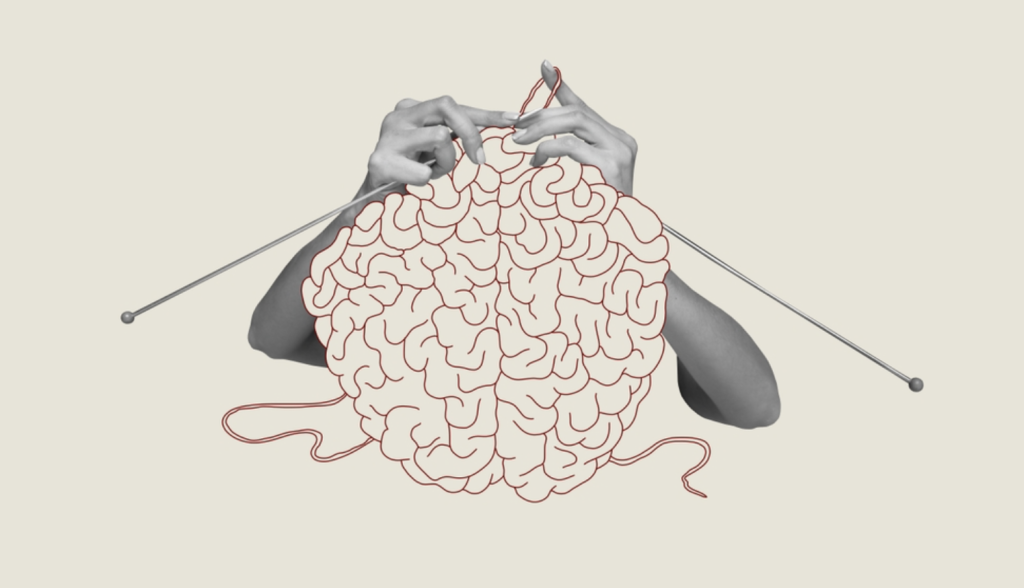
Psychedelics can be a powerful aid in healing from certain mental conditions, including depression, addiction, and pain and anxiety during palliative care. But as their use becomes more common and commercial companies pursue regulatory approvals, the relentless pursuit of profit threatens to snuff out the community, ritual, and collective care that is vital to their effectiveness, argues Erica Rex in this STAT News op-ed.
Rex’s argument draws upon what she’s learned as a science writer and mental health journalist as well her personal experience. She was a participant in an early psilocybin trial for cancer-related depression at Johns Hopkins. The treatment worked for her, she says, because of the drug and the structure of guided support afterwards.
Rex consumed psilocybin under the supervision of two trained guides, one man and one woman. There were multiple debriefings with the research team. A psychiatrist she spoke with (who was unaffiliated with the trial) encouraged her to find a support group in her community once she arrived back home in the UK. The psychedelic wouldn’t have had the same impact without the supportive structure of care, Rex says. But though “it’s been gratifying to see psychedelics becoming more widely accepted,” Rex finds the prospects for their widespread use “hurtling in an alarming direction.”
As mythmaking around psychedelics’ power grows, so too have attempts to commodify and profit from them. Many new programs remove “the most transformative, curative, and life-affirming parts of the psychedelic experience” – like ritual process and community involvement – because they can’t be monetized, Rex says. This mirrors broader failures in healthcare, where human needs are too often subordinated to market logic.
Skilled practitioners and supervised consumption, followed by group aftercare, are key, Rex says – helping to temper ego inflation, challenge distorted insights, and provide emotional grounding after intense experiences. Without such careful guidance, participants may leave sessions believing they possess special powers or universal truths, carrying unchecked grandiosity back into daily life.
Community also protects against abuse. Psychedelic facilitation is largely unregulated, leaving participants uniquely vulnerable. Even well-meaning guides can cross boundaries, while malicious actors can exploit suggestibility and trust. The risks are heightened with substances like MDMA, Rex adds, which increases oxytocin and emotional openness, potentially making participants susceptible to manipulation. Community can provide accountability for participants and facilitators, but is unlikely to be profitable.
Ultimately, the extractive demands of for-proft companies are incompatible with psychedelic healing, the author finds. If our societal intention is for psychedelics to reduce widespread suffering, we have to yield to the shared ritual and processing that have made the drugs part of historic tradition in a number of cultures. It might mean leaving money on the table, but it will take care and collectivity to realize the transformative potential of psychedelic treatment.
Granta magazine considers therapy from all angles
Therapy is a profoundly impactful part of more and more lives – it’s no surprise, then, that it proves an illuminating and expansive subject for prose, poetry, art and photography in a new, wide-ranging winter issue of Granta, the eminent British literary magazine. Highlights include two novelists recounting very different experiences of psychedelics, as well Nigel Shafran’s moving series of photographed therapy rooms. A number of pieces are currently free to read online, like artist Louise Bourgeois’ psychoananlytic writings and a deeply-felt interview with philosopher and trained psychoanalyst Jonathan Lear. It’s worth reading the full interview, which is full of passages like the ones below.
On mourning: “We have the capacity to form attachments to other people, to ideas, to works of art, to all sorts of things. This makes us vulnerable: when these people or things go away or die, we mourn them. Our imaginations become active thinking about loss, thinking about what we’ve lost, thinking about what that means for us now and what that might mean for us into the future.”
On changing one’s own mind through therapy: “If psychoanalytic therapy is working well, the mind can have immediate and direct efficacy upon its own workings… It’s like the mind somehow acquires a direct power to change itself. It’s not just changing your mind in a literal sense – you believed this, and now you believe that. It’s intervening in the functionings of the mind to change them in the living present via your own understanding. That can be a little hard to grasp, so you need to see it in action.”
On the power writing has to do the same: “Sometimes we open a book, and we just get the content out of it. ‘What does it tell me about swimming?’ But there are certain books that, and certain encounters with a book that, just to use the vernacular, pack a wallop. For me, with certain poets, certain poems, they become lifelong companions. They change the way you see things, the way you hear things.”
— Samir Chadha
In other news…
Making mother-daughter history: Inez Phillips Durham’s “mother-sister” bond with her daughter, Jennifer Durham, has made history – the pair have become the first parent-child duo to each earn doctorates in psychology from Rutgers’ Graduate School of Applied and Professional Psychology, People reports. Jennifer was still young when Inez was studying for her doctorate, and used to study by her side in the medical science library; now she describes the perseverance and love behind their shared work. “One of our main things is service. Always, always, always give back,” Jennifer said. “That was core to who (my mom) is and she passed that on to me. That’s a big part of our family and why Rutgers resonates with her so much.”
Allegations of Trump’s sexual abuse of a minor are missing from all Department of Justice releases of the Epstein files, according to NPR and MSNOW, among other outlets. “MS Now can report that there is at least one witness for whom three interviews with the FBI in rapid succession in 2019 are missing,” Lisa Rubin of NBC said on air. ‘You might say, ‘Well, what’s the big deal about that?’ Well, the big deal about that is that we can also confirm that that woman is the same person who in a 2025 FBI presentation is identified to have accused Donald Trump of a sexual assault when she was between 13 and 15 years old.” Oversight Democrats plan to open a parallel investigation into the omission, CNBC reports.
The name “MindSite News” is used with the express permission of Mindsight Institute, an educational organization offering online learning and in-person workshops in the field of mental health and wellbeing. MindSite News and Mindsight Institute are separate, unaffiliated entities that are aligned in making science accessible and promoting mental health globally.

Author

Related Articles
New Mexico to Probe Allegation that Epstein Ordered the Burial of Teen Girls Near His Ranch
New Mexico has announced it is probing into an allegation that Epstein ordered the bodies of two girls to be buried on Zorro Ranch.
A Better Way to Treat Addiction in Seniors
As overdose deaths rise among older adults, Baltimore’s REACH Health Services offers groundbreaking addiction care for seniors that combines medication with intensive peer support. Plus a look back at a historic fight against solitary confinement. And more.

Kids Lonely, Isolated Without Friends To Play With in Person
As families connect virtually, it’s becoming easier for kids to play online. That makes it harder to organize real-life playdates.
