
New Report Finds Online Gambling is Undermining Mental and Financial Health for Millions, Especially Young People
The explosion in digital gambling is undermining both finances and mental health, especially among young people.

Online gambling has exploded – and that explosion is undermining the finances and mental health of millions of people, especially young people, according to a new report from the Kindbridge Research Institute in partnership with UCLA.
The numbers cited in the report are stark: Since the Supreme Court overturned a federal ban on most sports betting in 2018, participation in online gambling has soared from 15% in 2018 to 22% in 2024. Almost 20 million U.S. adults reported problematic gambling behavior multiple times in the past year in a recent survey. And 2.5 million US adults meet criteria for a severe gambling problem in a given year, with 5 to 8 million more likely to meet some portion of the diagnosis.
Approximately 15% of people ages 18 to 34 showed “concerning gambling behavior,” compared to just 2% of adults 55 and older. The report attributes that vulnerability to poorer financial literacy, limited safeguards, the spread of highly visible “gambling-adjacent content” online and heightened exposure to digital payments.
The report also highlights gambling’s harms. It cites research noting that states that legalized sports betting after 2018 recorded 28% more personal bankruptcy filings than states that didn’t. And financial stress short of bankruptcy also takes a toll – some studies estimate significantly higher risks of suicide in people with gambling disorder, as well as detectable differences in the brain in areas connected to stress and emotional problems. And some groups are especially susceptible.
“Active-duty service members and veterans face distinct financial and psychosocial stressors that increase vulnerability to gambling-related harm and warrant tailored, culturally informed prevention approaches,” the report noted.
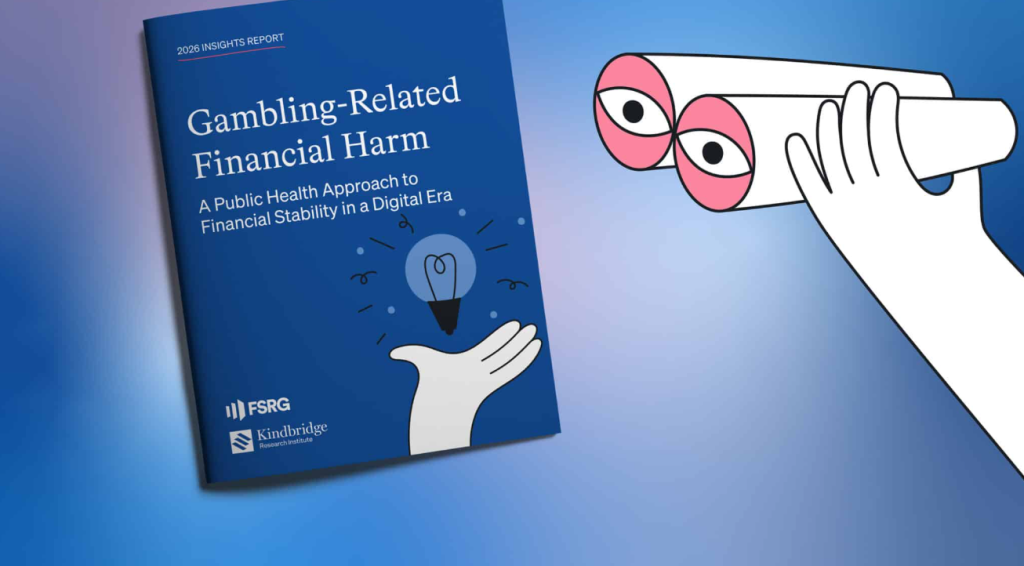
The report – Gambling-Related Financial Harm: A Public Health Approach to Financial Stability in a Digital Era – comes from the Kindbridge Research Institute’s Financial Stability and Responsible Gambling Initiative, launched in partnership with UCLA.
The authors attribute the rise in gambling to digital access, both to money and to betting. People used to bet with cash in casinos, but they can now bet online on almost anything, including sports and politics, from their phones, following the 2018 Supreme Court Decision overturning a federal ban on most sports betting. “This shift has outpaced existing public health, financial, and regulatory frameworks, leaving early indicators of gambling-related financial harm largely undetected,” according to the report.
The report also highlights a troubling pattern of normalization, using online prediction market Kalshi as an example. Markets like Kalshi use financial “trading” framing rather than gambling, and Kalshi has entered into a visible partnership with CNN, positioning it alongside news. It’s things like this, the authors note, that “blur distinctions between gambling, investing, and financial participation.”
This always-on,digital access to gambling, frictionless funding, and scant early intervention is allowing harm to skyrocket before it is identified, researchers say. Below is MindSite News’ interview with Dan Umfleet, director of the Financial Stability & Responsible Gambling Initiative and CEO of Kindbridge Behavioral Health, about how this unfolds in practice:
Why is it so hard for institutions to connect the dots showing financial stress linked to gambling before people are in crisis?
“Gambling-related financial distress rarely shows up in one place all at once. It might appear as anxiety in a clinical setting, debt in a financial system, or relationship stress at home, and those signals are usually seen by completely different institutions. Right now, gambling harm often enters the system sideways. It appears as anxiety, financial panic, or family stress while the underlying behavior remains invisible. Because those systems aren’t connected, the underlying problem can go unidentified until the financial and emotional strain has already escalated.”
Why are more younger people showing concerning gambling behavior than people over 50, and what kind of mental health problems can result?
“Younger adults are growing up in a digital environment where gambling is highly visible, instantly accessible, and often blended with entertainment, gaming, and even investing. For many young people, gambling is not confined to casinos or sportsbooks. It shows up in social media feeds, gaming environments, and influencer culture, which can normalize financial risk before people fully understand the consequences. When losses begin to accumulate, we often see the mental health impact quickly. Anxiety, depression, sleep disruption, and a cycle of shame or secrecy can make people reluctant to seek help.”

bank account.
Why are people in the military especially drawn into online gambling?
“Service members often face intense stress, long periods of downtime, and geographic isolation. Online gambling offers constant access, anonymity, and a form of distraction that can be appealing under those conditions. The concern is not simply gambling itself. Financial losses can quietly accumulate, and the resulting financial strain can compound existing mental health challenges.”
What needs to happen to prevent or treat mental health problems linked to online gambling in young people and help those in financial crisis?
“We need to start treating gambling-related financial harm as a prevention issue, not just an addiction issue that appears after a crisis. In many cases the earliest warning signs are financial. Missed bills, rising debt, or sudden changes in spending patterns can appear in financial systems long before someone seeks mental health care. If financial counselors, healthcare providers, and educators are equipped to recognize those early signals, there is a real opportunity to intervene earlier. That might include financial counseling, mental health support, or education that helps young people understand the risks of digital gambling before losses escalate. For people already in crisis, access to integrated support matters. That often means addressing the financial stress, the mental health impact, and the underlying gambling behavior at the same time rather than treating them as separate problems.”
What should happen among financial institutions and legislation to protect young people in particular from problem gambling online?
“Financial institutions often see the earliest signals of gambling-related financial stress, which puts them in a unique position to help reduce harm. In several countries, banks have introduced tools like voluntary gambling transaction blocks, spending alerts, or merchant controls that allow customers to limit gambling-related transactions. Some steps can happen quickly through awareness, financial literacy, and better education about digital gambling risks. The larger challenge is improving coordination across financial systems, healthcare providers, and public health efforts so those early warning signs do not get missed.”
Please tell us more about the impact of advertising and partnerships with sports leagues and media on the normalization of gambling and the resulting effects on young men.
“One of the biggest shifts over the past decade is how visible gambling has become in everyday sports culture and media coverage. Betting odds, promotions, and celebrity endorsements now appear alongside the games themselves and sometimes even within sports news coverage, which can make gambling feel like a routine part of following sports rather than a separate activity. When gambling is presented as entertainment or strategy, it can be easy for people to underestimate how quickly losses can accumulate.
“In Kindbridge’s treatment data, roughly three-quarters of people seeking care for gambling disorder were men. Within that broader pattern, clinicians frequently see younger men among those seeking care, particularly in connection with sports betting and digital platforms.
“Several factors can overlap there, including high engagement with sports culture, heavy exposure to online betting environments, and social settings where gambling is framed as competition or status. What clinicians often hear from patients is that the behavior started as entertainment or social participation and only became visible as a problem later, once the financial or mental health consequences began to surface.”
The name “MindSite News” is used with the express permission of Mindsight Institute, an educational organization offering online learning and in-person workshops in the field of mental health and wellbeing. MindSite News and Mindsight Institute are separate, unaffiliated entities that are aligned in making science accessible and promoting mental health globally.


Author

Related Articles


How Denmark Is Using Storytelling to Erase Stereotypes About Mental Illness
A Danish program, “One of Us,” invites “ambassadors” to share their stories and combat stereotypes about mental illness.

No Good Choices: The Plight of Afghan Girls Forced to Present as Boys Under Taliban Rule
Forced to live under the Taliban’s strict patriarchal rules, Afghan families with no fathers or sons turn to girls to meet basic needs.
