
New Poll Shows Strong Support for Non-Police Crisis Response
Over the past two years, mobile crisis response units have transformed from theoretical idea to functioning program in many cities. A new national Safer Cities survey shows widespread public support for these programs.


This story was researched and written by Safer Cities Research and is republished with permission.
Over the past two years, mobile crisis response units have transformed from theoretical idea to functioning program in cities across the country. Here are two key findings from a new national Safer Cities survey (methodology) that capture the widespread public support these programs continue to enjoy:
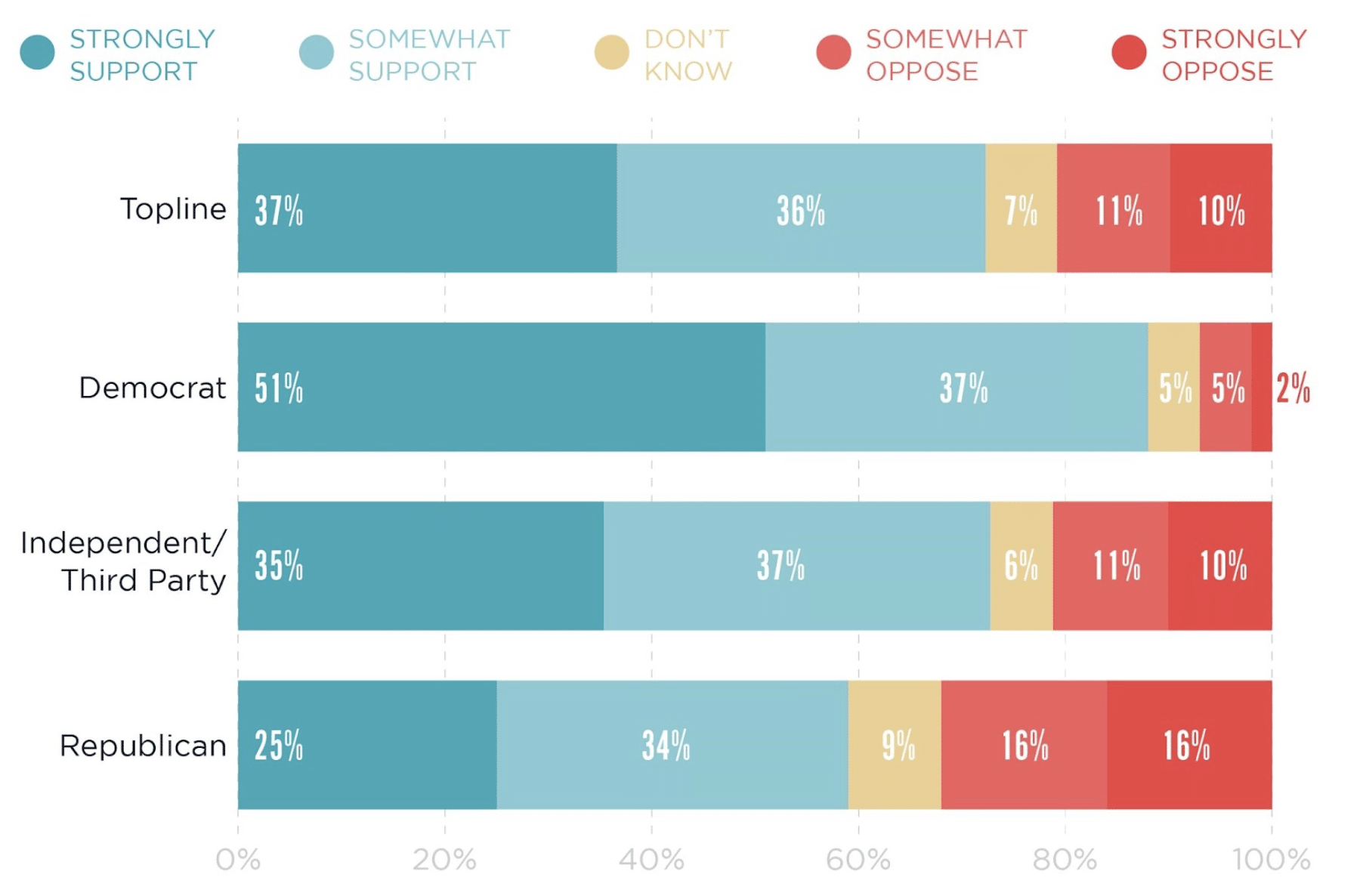
(1) Voters strongly support sending healthcare experts instead of armed officers for most issues related to mental health crises, substance abuse, or homelessness. Nearly three-quarters of voters (73%), including most Republicans, support sending healthcare experts over armed officers.
 |
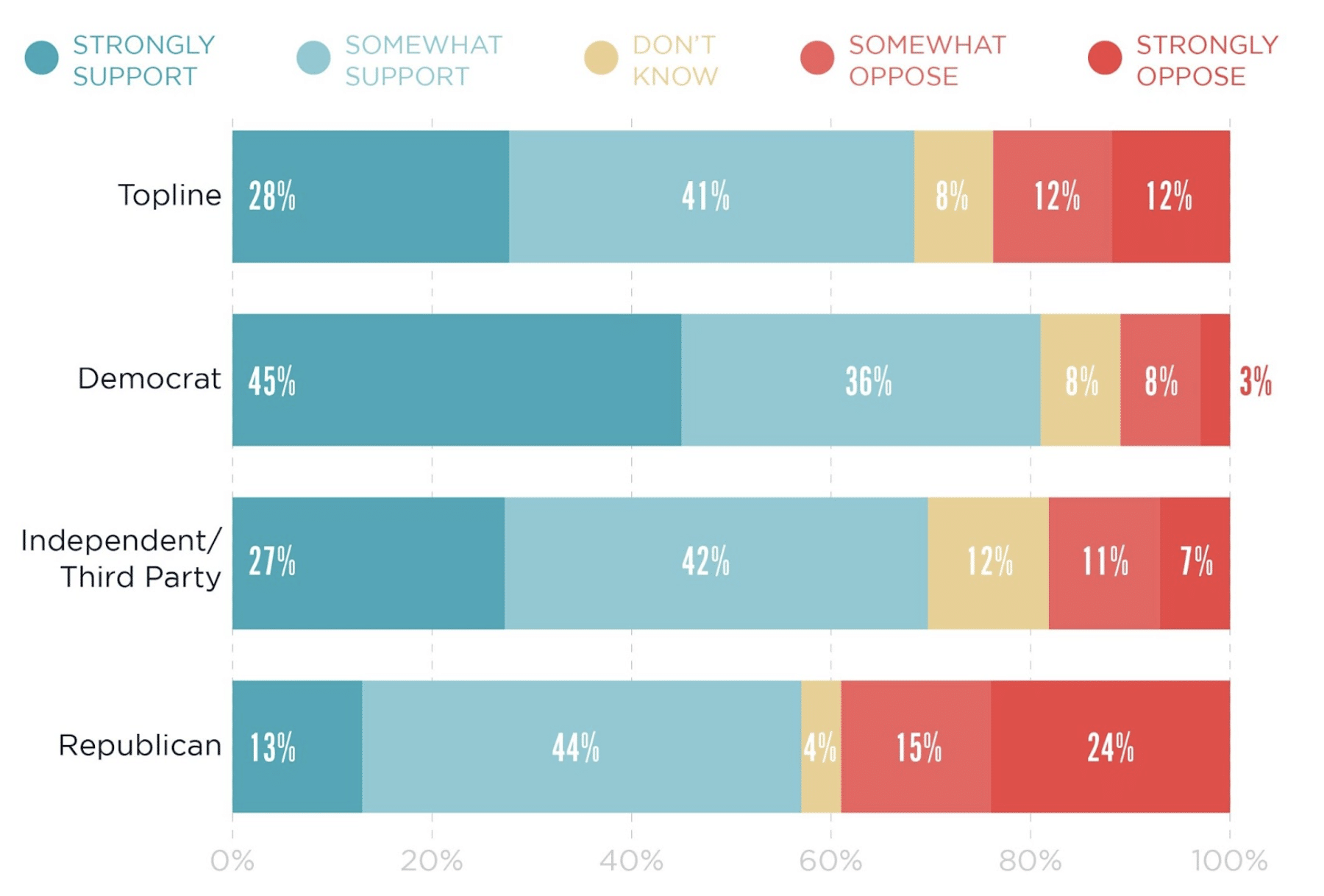
Support holds strong even after hearing an opposition message that these programs are “just another way to defund the police, and any money spent on these programs is money not spent on supporting police departments.” 81% of Ds & 57% of Rs still support sending healthcare experts over armed officers.
 |
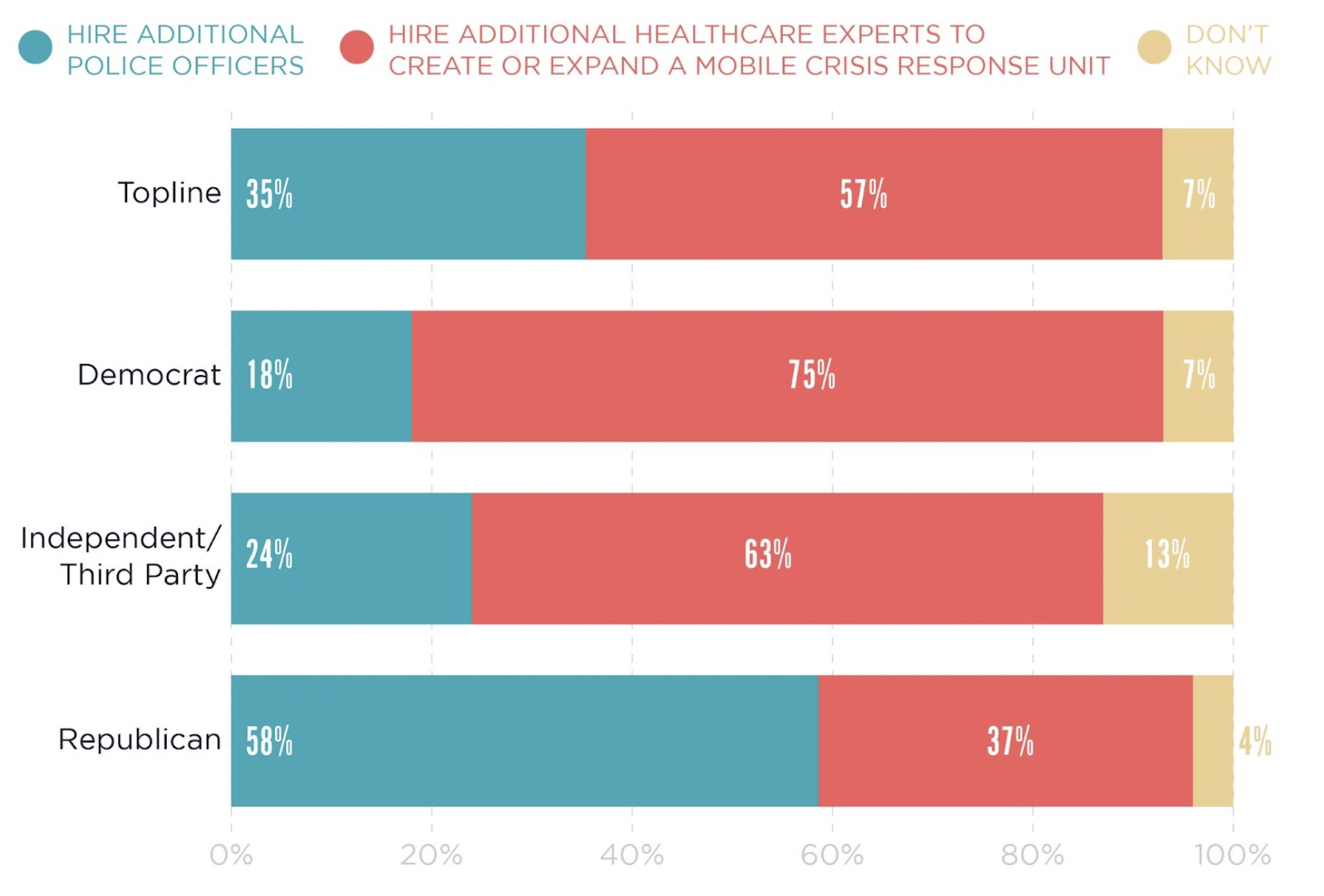
(2) Voters prefer that their city hire more healthcare experts over hiring more police officers, if “severe budget constraints” force the choice. In the face of “severe budget constraints,” most voters (52% to 40%) prefer that their governments “hire additional healthcare experts to create or expand a mobile crisis response unit” than “hire additional police officers.” Note the partisan gap: 72% of Ds say hire more healthcare experts while 63% of Rs say hire more officers.
 |
Hearing that “hiring an additional healthcare expert, who is deployed as part of a mobile crisis response unit, costs taxpayers significantly less than hiring an additional police officer” boosts relative support for hiring the healthcare expert by five percentage points—from 52% to 57%. This shift is driven by increased support from Independents (7% gain) and Republicans (8% gain).
 |
The name “MindSite News” is used with the express permission of Mindsight Institute, an educational organization offering online learning and in-person workshops in the field of mental health and wellbeing. MindSite News and Mindsight Institute are separate, unaffiliated entities that are aligned in making science accessible and promoting mental health globally.


Author

Related Articles

Trapped and Alone: Fear of ICE Is Deepening Postpartum Isolation for Immigrant Mothers
Doctors say newly postpartum people need medical care, sleep and the ability to rely on friends and family for help. Immigration crackdowns have made that support impossible.

1 in 8 Youth Turn to AI for Mental Health. ‘It Just Tells Me What I Want to Hear’
Youth with the deepest emotional needs are using chatbots for therapy the most – but many are unhappy with the outcome.

California Tribal Advocate Who Fought to Prevent Suicides Dies in Apparent Murder-Suicide
Celinda Gonzales of the Yurok Tribe worked to prevent suicides among Native Americans after losing a son and a brother. She “was a friend to many,” the tribe said.
