
A Former Hotline Counselor ‘Hands the Mic’ to Call-takers to Amplify Their Voices
The author of a survey of crisis hotline counselors talks about his experiences and why he wanted to tap into the wisdom of the people who answer calls to 988.

Last June, a software engineer and former volunteer crisis counselor named Dan Fichter founded CrisisCrowd, an independent project whose stated mission is “empowering and enabling connections among crisis hotline staff.”

He also wanted to learn directly from his former colleagues – people who do this work as their full-time job – about the conditions they work under and how those conditions may affect the people they serve.
He developed an online survey of crisis counselors and worked with Greta Opzt, a data analyst who spent 19 months in that role at the Trevor Project during the peak of the pandemic, to publicize it via social media. Eventually, 47 counselors responded. They work across the country at about 10% of the call centers that form the backbone of the national 988 Suicide & Crisis Lifeline.
Now he’s out with a report on the survey’s findings. focuses on disparities in training, support, and standards of care provided to callers and texters in crisis. (Read a story about the report here.) It makes a dozen specific recommendations for improvement. Fichter plans to disseminate the report widely in an effort to better a system that was formed not as a system but as 200 or so local crisis centers with no good way to share information. (988 stitched them together into a network.)
Fichter trained in 2019 as a volunteer crisis counselor for the Trevor Project, where he later also worked full time as head of AI & engineering. He then briefly worked for SAMHSA, the Substance Abuse and Mental Health Services Administration on the 988 & Behavioral Health Crisis Team providing technical oversight around the July 2022 national rollout of the 988 lifeline. Fichter also started the 4am Fund to support journalism on mental health and crisis response issues. (Disclosure: Fichter has been a donor to MindSite News.)
The following interview has been edited for length and clarity.
You graduated from Yale with a B.A. degree in 2006 and for more than a decade held engineering jobs, which are about as far afield from crisis counseling as you can get. How did you get so interested in crisis counseling that you sent a survey out to crisis counselors on your own time?
My mom is a retired psychotherapist who worked with college students for much of her career. It’s what she taught me about the power of insight in therapeutic conversations to change someone’s perspective, and bring them a lot of relief, that made me interested in how therapeutic conversations can sometimes happen outside of therapy including on crisis hotlines.
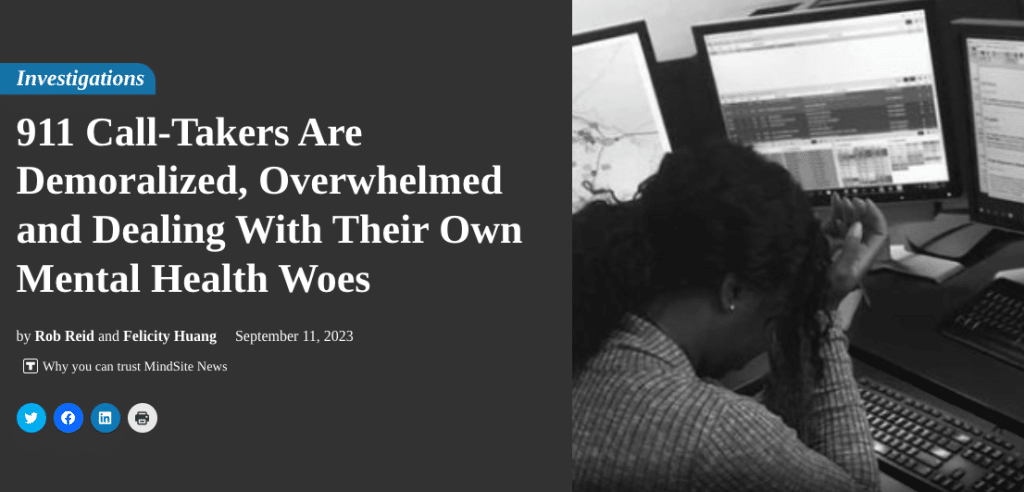
So I got trained as a volunteer crisis counselor, and that training opened my eyes to a way of connecting with people non-judgmentally, helping them feel unembarrassed and cared about, and helping them connect with feelings of attachment or desire or anticipation that can often get someone through a suicidal crisis. I answered about 100 calls and chat conversations in my three years as a volunteer counselor.
My experience made me interested in policies, in better understanding which crisis counseling techniques work best, and in the accumulated wisdom of the counselors I was working alongside – many of whom had been doing it for years or even decades.
We ask hotline workers to be the one person in the room making judgment calls about the care of someone who is potentially feeling acutely suicidal. Yet we aren’t treating them as professionals. For the most part, they don’t get to go to suicide prevention conferences or write publications, serve on advisory committees, or shape the development of their field. They often feel treated as entry-level workers.
So one part of my motivation was “OK, let’s hand the mic to crisis counselors and hear about their experiences” so that other counselors across the country, and everyone supporting their work, can benefit from what they know. Let’s break down some silos. Like EMTs, like nurses, and like other health professionals, crisis counselors should be able to collaborate across workplaces and drive the development of their field.
The second part of my motivation was I imagined that crisis counselors might have some incredibly bright ideas about how to make crisis hotlines work betterfor the public they serve.
What was it like to do that work yourself – to help people in crisis who called and texted the Trevor Project hotline, which now also handles calls routed from 988?
It was an amazing feeling, the privilege of connecting with people in some of their scariest moments.
Every time I picked up the phone, in the first few moments, I was scared. I was afraid. What if this time it’s someone I won’t know how to help?
But as soon as I got to know them, a path generally became clear — and this always came from them, not from me — to finding some relief, thinking about something they like about themself, or even just chatting until their mood shifted. It’s an incredible front-row seat to someone’s resilience. And a safety plan that someone feels good about generally comes from good ideas they had already considered but needed someone else to appreciate and endorse.
How did you publicize the survey and get people to take it?
I searched for job titles like ‘Crisis Counselor’ and ‘988 Counselor’ on LinkedIn and then messaged about the survey with anyone who agreed to connect that way. Greta and I also announced that the survey was open on social media, and a number of people very graciously helped amplify those postings.
The counselors who responded worked at 20 centers. Most were full-time paid employees, although the vast majority of counselors nationwide are volunteers. Was there a common theme to their responses?
The overarching theme was there was not much consistency in training or standards of care, like the amount of time they are told to spend on calls and how to handle police involvement.
Some of the specifics were surprising. Like some counselors are expected to wrap up certain calls within 15 minutes, while others could spend an hour if necessary. If someone calls 988 more than once, they might be connected to different crisis centers, so the differences can be jarring. If someone has an incredibly helpful hour-long conversation but in a later call is limited to speaking for just 15 minutes, you certainly wouldn’t want them to feel like they’d just done something wrong, or like the system no longer wanted to help them in the same way.
I also wasn’t expecting to hear from quite so many people who described feeling underprepared by their initial training. Some who’d been serving a year or longer still wanted more training in areas like active listening and cultural competence.
For example, at some of the centers, training can be as short as a couple weeks, and it might not include letting trainees hear any real calls. Since the pandemic, many don’t even get to learn from co-workers next to them in the crisis center – many now work from home, alone.It really ranges.
At one center, trainees get to listen to 20 real calls together, and then in the next stage of training they shadow someone, and they don’t move on to the following stage until they’ve heard a certain number of additional real calls involving domestic violence and a certain number involving high suicidal acuity, etc.
The positive theme in the responses is there’s a lot of room for improvement across the system, especially if crisis centers start connecting more around practices that work best and sharing some of their best training materials.
Were there any other surprises?
Some counselors were trained to be transparent with callers when they had to request first responders because they felt the person in crisis was in imminent danger. But others were forbidden to tell the caller that crisis workers, and often law enforcement, were on their way. I talked with two center directors about this after seeing what counselors said about it through the survey. One said, “Of course we don’t tell people we’re intervening without their consent because they’d hang up on us.” Another said they had answered suicide hotline calls for 17 years and told the person 99% of the time if they had to send first responders “and no one ever hung up on me.”
I would love for those two center directors to talk to each other, and for counselors at their centers to connect, too. There is so much expertise about techniques for making very hard disclosures they could exchange. Maybe they could also team up on research so we can move toward evidence-based policies around intervention and disclosure.
I was surprised at the low level of pay for full-time crisis counselors surveyed. One of your respondents said a number of largely former co-workers experienced PTSD or severe burnout, adding: “Most of the coworkers I started with left well before I did, and a number of crisis counselors I worked with experienced PTSD or severe burnout. Organizations often seem to view their paid counselors as a disposable resource — they expect people to burn out and quit after a year. But people who stay in this role long-term develop skills and experience that can be a major asset to an organization.”
Most said they made $15 to $25 per hour. 36% of the total said $20 or less. Some pointed out that some callers were in financial distress “and I am living below poverty line and in financial distress.” It’s hard to stay in this work if you’re living in poverty.
The name “MindSite News” is used with the express permission of Mindsight Institute, an educational organization offering online learning and in-person workshops in the field of mental health and wellbeing. MindSite News and Mindsight Institute are separate, unaffiliated entities that are aligned in making science accessible and promoting mental health globally.


Author

Related Articles
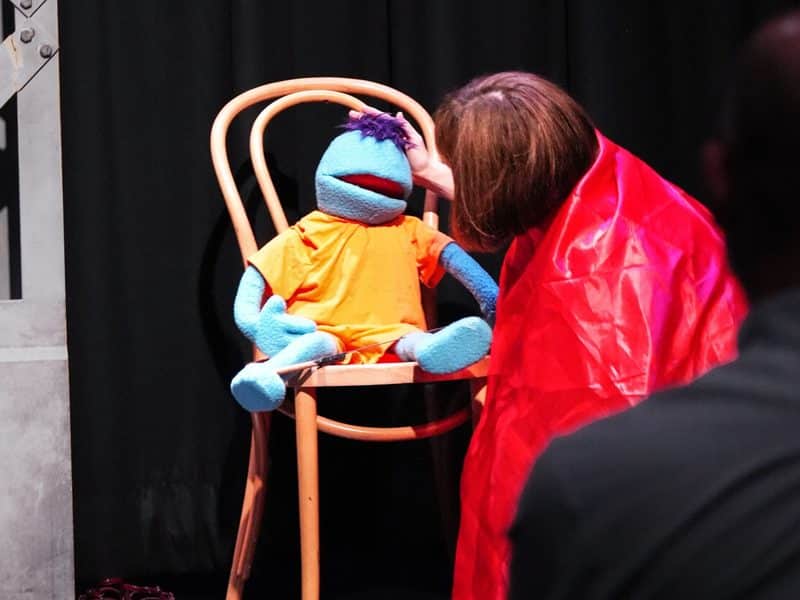
Journalist and Playwright Tackles Her Brother’s Life Sentence with a One-Woman Play
‘Puppets have a way of allowing people to talk about heavy topics without overwhelming them’
Surviving Suicide Watch in a Missouri Prison
My only saving grace was my friend and mentor, Big Mama.

NAMI Director Explains New Laws to Keep People with Mental Illness out of Jail
The National Alliance on Mental Illness (NAMI) is advocating for state laws to divert people with mental illness from jail and into treatment, highlighting Florida’s Tristin Murphy Act as a national model.