
A New Sense of Urgency for Mental Health in the Workplace
The divisive times we live in can impact our ability to work as cohesive teams. Finding ways to work well together, with respect and inclusivity is an important step forward.

As some politicians bully transgender people, including a member of Congress, we cannot retreat

For the majority of my career, I have served as the senior leader of nonprofit organizations, whose missions have focused on improving the health and well-being of communities, especially marginalized communities. I have relished this work.
I am also a transgender person at a time when people like me feel our lives are the bullseye of a culture war. It is sometimes difficult to resist being swept away in anxiety and fear for my community. I am not alone in my feelings of vulnerability, anxiety and in moments anger at the depth and volume of cruelty toward us.
Last year, a sitting member of Congress announced her intention to move forward with legislation mandating that transgender people use bathrooms of their gender assigned at birth. This strategy is explicitly aimed at the lawmaker’s new work colleague, the nation’s first transgender person elected to Congress, Sarah McBride.
And last week, President Donald Trump stripped all federal transgender rights and protections established under prior administrations. He also declared the U.S. government will recognize “only two genders, male and female” on government-issued identification.
Attempting to take away the identity of 1.5 million people
These direct moves to bully, intimidate and weaponize stigma against McBride – and then to take away the identity of an estimated 1.5 million transgender people in the U.S. – leave me in moments of feeling sick, deflated and anxious about the road ahead.
But as a matter of leadership for my own community and the workplace mental health nonprofit I run, I have to lead in a way that aligns with my values of transparency and compassion, and a desire to forge new pathways to achieve mental health and wellbeing. I cannot do this by retreating from who I am or becoming more insular in the workplace to protect myself. Nor do I want any of you reading this to retreat from bringing your full selves to work.
Marginalized workers – Black, Latino, LGBTQ, immigrants, and people with disabilities– understand being the “other” in the workplace. I bring an understanding of being “other” that gives me great empathy, curiosity and appreciation for each unique person. And like every single employee, we want to know our employers have our backs. Business and nonprofit employers understand this, which is why it’s heartening to know that on the whole, workplace equity is top of mind – and it should be. Based on our research, we know the principles and work of equity and inclusion help create more mentally healthy workplaces and improve wellbeing in the workplace.
“While DEI has faced significant backlash in the last year, companies across industries are still looking for ways to build healthy, inclusive workplace cultures where everyone can do their best work,” wrote Joelle Emerson recently in Harvard Business Review. “New data shows that even during this year of backlash, companies continued to make progress on many of their DEI initiatives.”
Bridging toxic divides
In fact, Costco, Apple, and JP Morgan doubled down earlier this month on their commitment to inclusivity and belonging.
While there remain trouble spots and much work still to do, the overall trend has been moving in a positive direction when it comes to workplaces prioritizing equity as a business imperative.
What’s needed now is a commitment by employers to be vigilant in not losing this priority, working actively to bridge toxic divides at work that have sprung out of the wider world of politics and culture.
Do not ignore or paper over the divisions; they will only become more entrenched. The divisive times we live in can impact our ability to work as cohesive teams. Finding ways to work well together, with respect and inclusivity is an important step forward. Putting in the effort to find common ground and manage conflict improves the mental wellbeing of every worker.
In these times in particular, it will be important to genuinely listen to employee voices– from the frontline to the C-Suite – and use feedback as a means of ensuring that all employees are able to thrive. Gen Z is set to reach 25% of the workforce this year, and it is the most diverse generation in history. This cohort of younger workers, alongside Millennials, women, people of color, LGTBQ+ people, caregivers, and those with disabilities represent the new “workforce majority.” These are the voices that forward-thinking employers can partner with to monitor and improve upon workplace culture and uplift the wellbeing of all workers.
My biggest commitment as a workplace leader is to help to support a work culture that people do not need to heal from, but one where workers feel connected and safe in both good and hard times. My values of inclusivity, respect, and curiosity will be my compass in the workplace. What values will guide you? What will your workplace compass look like this year?
Morey Riordan is CEO of Mind Share Partners, a nonprofit that is changing the culture of workplace mental health so that both employees and organizations can thrive. With more than 25 years of experience, Riordan is a nationally recognized leader in advising on workplace cultures, building inclusive teams, and growing nonprofit organizations addressing challenging social issues.
The name “MindSite News” is used with the express permission of Mindsight Institute, an educational organization offering online learning and in-person workshops in the field of mental health and wellbeing. MindSite News and Mindsight Institute are separate, unaffiliated entities that are aligned in making science accessible and promoting mental health globally.


Author

Related Articles

Can ChatGPT Be Your Therapist? This Therapist Found Out for Herself
Can ChatGPT offer a viable alternative to traditional therapy? In this first-person essay, a licensed therapist explores that question.

Brown University Shooting Again Reveals Why Trauma Care Must Begin Before People Seek It
A former Brown student and longtime mental health journalist says that how institutions respond after traumatic events can shape mental health outcomes for years to come.
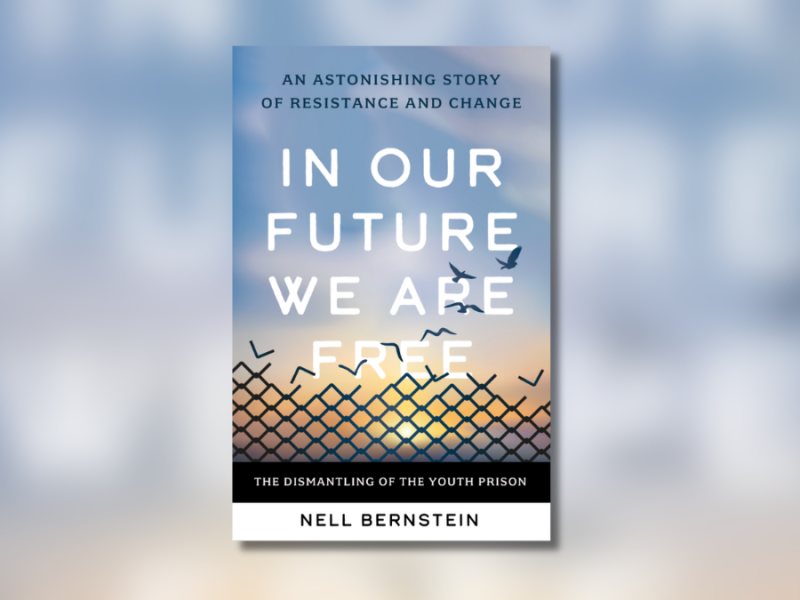
In Our Future, We Are Free: The Movement to Dismantle Youth Prisons in America
Over the past 20 years, one state after another has shuttered its youth prisons and stopped prosecuting kids as adults, slashing the number of children locked in cages by a stunning 75%. This new book tells the story of how a coalition of parents, activists, and prison officials brought a destructive institution to its knees.
