
Alexei Navalny Died a Year Ago. His Writings Hold Lessons on Resisting Authoritarian Rule
“We must do what they fear – tell the truth, spread the truth. This is the most powerful weapon against this regime of liars, thieves, and hypocrites. Everyone has this weapon. So make use of it.”
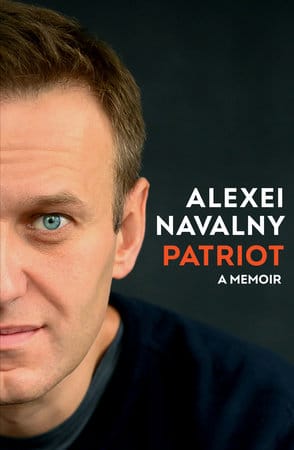
Is the antidote to the fear that the bad guys are winning to remember a good guy? It has been one year since Alexei Navalny died in prison above the arctic circle on February 16, 2024, likely murdered as a threat to Putin’s authoritarian regime.
Navalny remained defiant during his long and cruel imprisonment, maintaining his mental health even when placed in solitary confinement. Reading was at the center of his prison life. He reread Solzhenitsyn; he read books in French (he liked Maupassant, but not Flaubert) and English (he liked Dickens, but not Joseph Campbell).
Navalny wrote in letters to friends that he had come to have a change of heart about memoirs: “For some reason I always despised them. But they’re actually amazing.” I was intrigued by this revelation – both why he hated memoirs and why he came to admire them. This comment is even more intriguing because Navalny managed to write a memoir, Patriot: A Memoir, before his death.
It provides a fascinating record of his youth in the shadow of the Soviet Union’s demise, reflecting on the debacle in Afghanistan (which he suggests was crucial in fostering Islamic extremism), the nuclear disaster in Chernobyl (which ignited his political sensibility), his early use of the internet (which hugely bolstered his success), his visit to Yale (where he found Americans to be intensely friendly), and incidents where he was physically attacked and jailed (convicted on trumped up charges).
Navalny’s comment about memoir captured my attention because I am a psychologist completing a book about memoirs that refer to psychotherapy. Memoirs are an excellent and untapped source of information about therapy, as we can hear the voice of patients, distinct from professional opinion. While memoirs and therapy are indulgent (stemming the Latin root of “to seek free expression”), they are not necessarily self-indulgent. Memoirs often exemplify the power of free expression, rather than mere navel-gazing; they are often as much about relationships as about the self.
Perhaps Navalny initially hated memoirs because he associated them with self-indulgence – reveling in private life and being apathetic about politics. Indeed, he worried that retreating into private life was a tempting way to endure a corrupt system, where resources have been appropriated, public discourse cannot be trusted, and power belongs to oligarchs.
So, what changed Navalny’s mind? How did he come to change his opinion about memoirs and decide to write one himself? Perhaps, he realized that memoirs inevitably document a particular society at a particular time. Having time on his hands in prison, Navalny was able to see that memoirs transcend the almighty self and aspire to be truthful records.
Of course, no one knows for certain what Navalny had in mind in noting his change of heart regarding memoirs. He frequently changed his mind about politics. His memoir candidly reflects on having overestimated Yeltsin and having failed to appreciate Gorbachev for promoting nuclear disarmament and being incorruptible. Over the course of his career, Navalny evolved from ethnonationalism, which included a flirtation with right-wing politics and flashing a gun on videos, to insisting on tolerance for migrants as part of his platform when he ran for mayor of Moscow.
He identified as a Christian and believed in a “healthy conservatism,” which defended “the preservation of the family” (Opposing Forces: Plotting the New Russia by Adam Alexei Navalny and Adam Michnik, 2015, quote from Navalny, p. 77). Masha Gessen, a friend of Navalny and a trustworthy guide about Russian affairs, argues in the New Yorker that Navalny grew to be a more sophisticated thinker over time: from being an ethnonationalist to a civic nationalist, and from being a libertarian to a social democrat.
Throughout his life, Navalny exemplified courage, condemning Putin’s party of “crooks and thieves.” After being poisoned and treated in Germany, he courageously chose to return to Russia, knowing that he would be facing arrest. Navalny’s willingness to change his mind and his courage are melded in his choice, under difficult circumstances, to write his own story. He does not waver even as he came to recognize that Putin was determined to kill him.
When the political realm is so vicious, the capacity to turn inward can be sustaining. As Navalny himself observed in the 2015 book he wrote with Adam Michnik, Opposing Forces: Plotting the New Russia, “the only way to defeat a dictatorship is to preserve one’s inner freedom. Even when no other freedoms remain.” Writing the memoir serves as self-protection, but it also contains the larger and abiding aim of truth-telling.
Truth-telling mattered to Navalny, too: As he unsparingly states in his memoir, “We must do what they fear – tell the truth, spread the truth. This is the most powerful weapon against this regime of liars, thieves, and hypocrites. Everyone has this weapon. So make use of it.” These words are particularly appropriate at this moment – in Trump’s U.S. as well as Putin’s Russia.
It is rewarding to have a record of Navalny’s final thoughts as well as his hopes for encouraging a new generation of activists. The memoir provides consolation as a powerful statement that being imprisoned cannot be equated with being silenced, that dying does not mean being forgotten, and that being remembered might inspire us during difficult times. The example of someone who was willing to die, rather than sacrifice his beliefs, deserves our deepest admiration.
Elliot jurist’s monthly newsletter, Mental(izing) Health, is on Substack.
The name “MindSite News” is used with the express permission of Mindsight Institute, an educational organization offering online learning and in-person workshops in the field of mental health and wellbeing. MindSite News and Mindsight Institute are separate, unaffiliated entities that are aligned in making science accessible and promoting mental health globally.


Author

Related Articles
Journalist and Playwright Tackles Her Brother’s Life Sentence with a One-Woman Play
‘Puppets have a way of allowing people to talk about heavy topics without overwhelming them’
Surviving Suicide Watch in a Missouri Prison
My only saving grace was my friend and mentor, Big Mama.

NAMI Director Explains New Laws to Keep People with Mental Illness out of Jail
The National Alliance on Mental Illness (NAMI) is advocating for state laws to divert people with mental illness from jail and into treatment, highlighting Florida’s Tristin Murphy Act as a national model.