
When Freedom Still Feels Like Prison: Life After Solitary Confinement
Solitary confinement can cause severe psychological impacts and the U.N. considers it torture. Yet prolonged isolation remains widespread in U.S. prisons and jails, where more than 122,000 people are held in solitary.
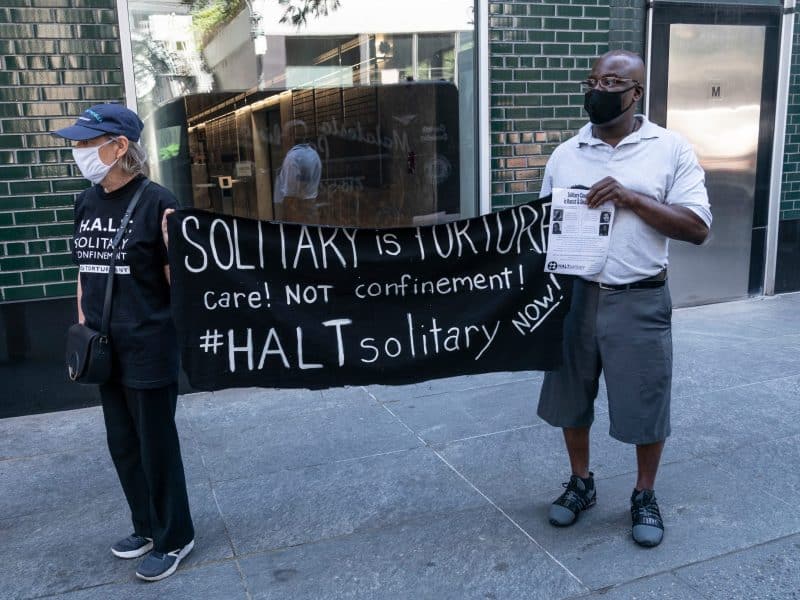
Survey of people held in solitary confinement reveals its devastating psychological impact
Part 1 of a series
This two-part guest essay comes from Solitary Watch, a nonprofit watchdog organization that investigates solitary confinement and other harsh prison conditions in the U.S. Today, Part 1 looks at the results of a survey of 21 people who were held for long periods in isolation.
“When you first get out you’re happy to be free, you enjoy inhaling air that’s not in a concrete bunker,” said a man who had spent 18 years in solitary confinement in the infamous Security Housing Unit (SHU) at Pelican Bay State Prison before being released into the general prison population. “But soon,” he continued, “all the difficult feelings hit you, the ones you’d been stuffing down while in the SHU.”
This man, identified as Prisoner 19, was a plaintiff in a class-action lawsuit against the state of California, which had held thousands of incarcerated people in prolonged solitary confinement – some for more than three decades. In the years following a 2015 settlement agreement, more than 1600 individuals were released from solitary and, like Prisoner 19, left to contend with the feelings that they had been “stuffing down.” One anonymous member of the class told researchers that “the more freedom I got, the more trapped I felt.”
For more than four decades, mental health experts have reported on the severe psychological consequences of solitary confinement, which include anxiety, depression, anger, hypersensitivity to stimuli, hallucinations, suicidality, cognitive impairment and diminished social functioning. Since 2015, the U.N. has regarded solitary confinement for more than 15 days as a form of torture. Yet such prolonged isolation remains widespread in the U.S., where more than 122,000 people are held in solitary conditions in American prisons and jails, according to a 2023 report by Solitary Watch drawn from federal, state and local data.
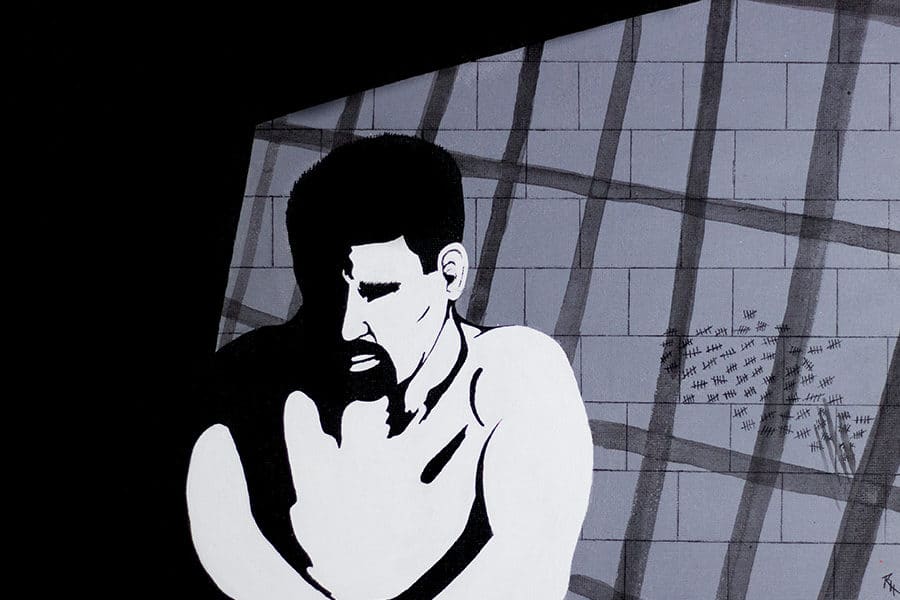
The Hole Ruined Me: Why Solitary Confinement Should Be Banned
In 2019, more than 55,000 incarcerated Americans had spent the past 15 days in solitary confinement. Jeffrey McKee was one, and he writes about the impact it had on his psyche. Read the story here.
Some states have passed hard-won laws and policies to limit the use of solitary. Still, thousands of solitary confinement survivors struggle with the lasting mental health effects, usually with little to no support. Existing mental health and re-entry services often fail to meet survivors’ needs, but some treatment models, especially peer support, provide hope for a full life after torture.
In the first survey of its kind, 21 formerly incarcerated people who are members of the National Network of Solitary Survivors described their needs and shared their personal struggles for help. Six of them, along with ten survivors not included in the survey, were also interviewed for this series. The 31 survivors who shared their experiences have served between two and 40 years in jails and prisons across 15 states and the District of Columbia; two were still incarcerated at the time of their interviews. Additional interviews with nine experts on trauma, torture and correctional mental health provided a fuller picture of what treatment exists and why it isn’t more widely available.
Survivors and experts paint a picture of traumatic stress and isolation that lasts long after cell doors have been opened – but that can be healed through relationship-building and empowerment.
Life after release from solitary confinement
When Deuce walked out of prison in 2021 after 22 years in the Virginia Department of Corrections, his brothers, sisters and parents were all there to meet him. “Everybody went crazy,” said Deuce, who asked to be identified by this pseudonym.
Unlike many families, Deuce’s had managed to stay close with him throughout his incarceration, including his three years in solitary confinement. Waiting at home were a used car and a small studio his father had built and furnished for him. But Deuce couldn’t stay for long.
“It kind of chokes me up. I couldn’t be around my family. I just wasn’t really ready for that kind of interaction,” he said. “Let’s be honest. Part of it is normal anxiety from being released from prison (after) that long.”
Like other survivors, however, he cannot separate his years in prison from his experience of “long term, repetitive solitary confinement.”
It was even harder being around strangers. “The anxiety that I would feel – and that I still feel sometimes – and just trying to be around people” – especially in public spaces – was “incredibly difficult to deal with. I isolated a lot.” Three years later, he still feels some of that same anxiety, and “every time I feel something, I isolate.”
Anxiety leads to self-isolation
Since his release, Deuce has found support from a community of advocates, including Natasha White. White shares many of Deuce’s symptoms but tells a far more common release story. When she was released after serving 15 years in New York State prisons, she had no family and no home and was recovering from a drug addiction.
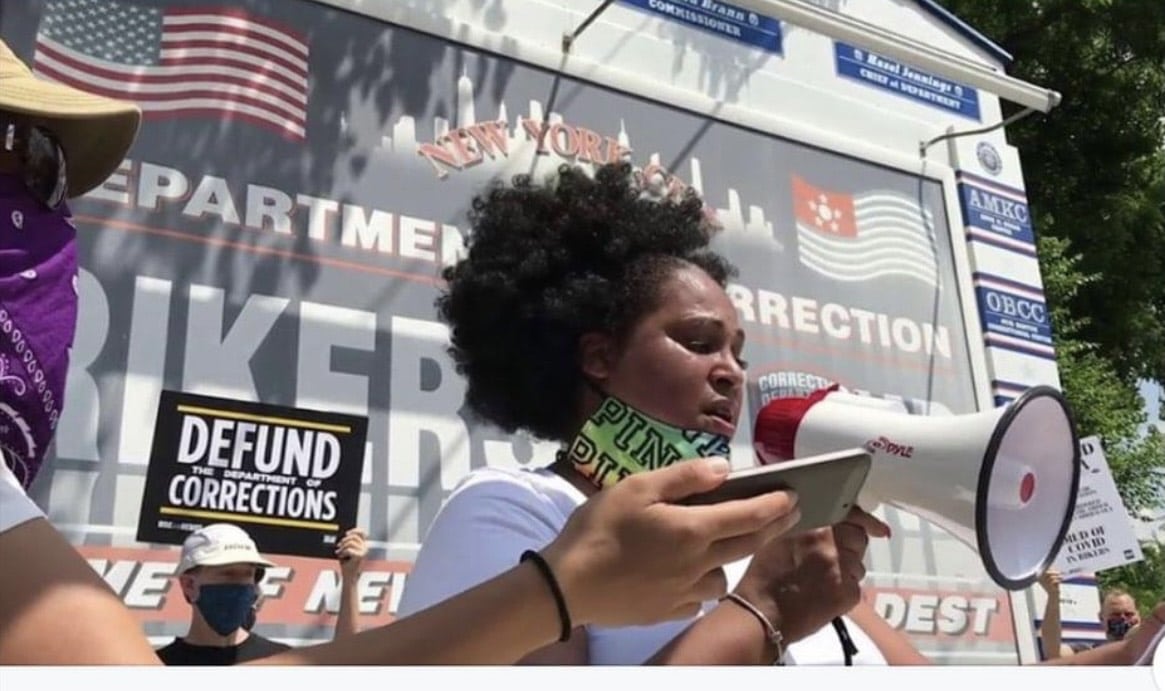
“I was extremely excited because I was getting out of prison,” she recalled. “But I was also very scared. I was alone. I was confused.”
The inundation of people and stimuli was overwhelming for White, who had spent four years in solitary confinement. She would leave the shelter where she lived early in the morning to get away from her four roommates, and she would walk around the city until it was time for work. Although her job started at 8 am, she regularly arrived two hours early in an attempt to beat rush hour crowds.
“The train and the bus frazzled the hell out of me,” she said. “It’s just too much going on.”
In addition to this hypersensitivity, White has struggled with numerous other mental health concerns, including depression, anger, flashbacks and interpersonal difficulties – and she is not unique in her suffering. On average, solitary survivors who took part in the survey reported a staggering six to seven mental health concerns each. The most common were depression (85%), anxiety (75%) and difficulty sleeping (75%). At least 60% of participants reported flashbacks, anger and difficulty interacting with others.
I don’t express anything to anybody.”
deuce, a survivor of solitary
Many survivors find effective ways to self-isolate, but the withdrawal takes a toll. Nearly half of the survey respondents, including Deuce and White, reported experiencing loneliness. Self-isolating, Deuce explained, is “a very negative behavior because I don’t express anything to anybody and you need to be able to talk to people.”
While the individuals surveyed had diverse stories, their accounts reflect the experience of surviving solitary confinement at its best. Survivors are not always connected to groups like the National Network for Solitary Survivors, which provides support and community. According to Dr. Terry Kupers, a psychiatrist and expert in correctional mental health, there is “an invisible population” of survivors who can’t or don’t access any services. Survivors die by overdose and suicide more often than formerly incarcerated individuals who have not experienced solitary confinement.
In Texas, Michelle Ramos copes with her suicidal thoughts through work. When she isn’t at her full time job as an electrician, she works as a server at a restaurant, which helps to distract her. After 27 years in prison – seven of them in solitary confinement – Ramos struggles with both social anxiety and isolation and thinks about taking her own life. “I’ve been trying to work on it,” she said, “and do other things to keep my mind from going back to that state of loneliness.”
Kupers has a name for the constellation of symptoms that survivors often experience after leaving solitary confinement: SHU post-release syndrome. These symptoms include social withdrawal, hypervigilance, distrust, problems with concentration and memory, anxiety in unfamiliar settings and discomfort with once normal daily life events.
Months after Deuce’s release, the insidious effects of solitary confinement continued showing up in more parts of his life. He couldn’t bear being stuck in one location for hours at a time, feeling “locked in,” so for several years he could only manage to work odd jobs like appliance delivery. “I used to wonder, ‘would I ever be able to work a job?’”
On one delivery round, Deuce was bitten by a tick carrying Rocky Mountain Spotted Fever, but when he contracted the potentially deadly disease, he couldn’t endure hospitalization. After weeks of unexplained symptoms and a near-stroke, he woke up in an enclosed hospital room, saw hospital security walking by, and, panicking, he left. “I didn’t even get treated,” he said.
As Deuce continued to get sick, his family entreated him to go back. “Finally, it got to the point where everybody had to kind of sit in a room with me and just talk to me while I was in these rooms, waiting to hear from these doctors.”
Barriers to recovery
The fallout from Deuce’s time in solitary nearly cost him his life. It might not have, had he received effective mental health treatment. But efforts to address the effects of solitary are limited and, where they do exist, sometimes misguided.
According to Kupers, SHU post-release syndrome often appears while people are still incarcerated, yet none of the individuals surveyed received any institutional support in transitioning from solitary confinement to the general prison population. After four consecutive years in solitary, White repeatedly (and successfully) endeavored to be sent back to the SHU. “I didn’t realize that that was happening because I was self-isolating.”
People who return to the SHU experience more trauma, sometimes leading to more psychological and behavioral problems which, in turn, can lead to more time in solitary confinement. It’s a vicious cycle.
In a 2021 survey of state and federal prison systems, fewer than half of the jurisdictions that responded had any step-down programs for people transitioning out of solitary, despite standards set by the American Correctional Association (ACA), an accrediting body for jails and prisons. Furthermore, the programs that do exist fail to focus on helping survivors understand the effects of solitary confinement, establish a sense of safety, or build relationships. (Some survivors doubt whether a contemporary prison, with its dehumanizing environment and coercive practices, could offer any meaningful mental health care at all.)
The dearth of real support is no surprise to Deuce. “How would they treat something that they don’t identify as a problem?” he asked.
A discouraged practice that remains common
Community re-entry presents another neglected opportunity to provide meaningful support. Ten percent of survey respondents were released directly from solitary confinement to the community, a practice that can have devastating effects. Although the ACA has discouraged this practice since 2016, nearly 40% of jurisdictions that responded to the 2021 prison survey reported that they were still doing it.
Even individuals who transitioned to the general population before release received little to no release planning, despite recommendations from the Substance Abuse and Mental Health Services Administration (SAMHSA) for individuals struggling with mental health issues. With no education about the impacts of solitary confinement, no release planning, and, as several survivors lamented, no immediate access to treatment after release, survivors often don’t seek or receive help until they are in crisis.
Of survey respondents who sought mental health treatment, more than 50% reported that cost was the biggest obstacle. From 2020 through 2024, the Bureau of Justice Assistance distributed over $64 million in grants to re-entry programs across the country. State governments, however, recognize that these re-entry services have long been “fragmented, inequitable and insufficient,” in the words of a report from the Justice Center of the nonpartisan Council of State Governments.
Most reentry programs focus more on reducing recidivism than on improving mental health, overlooking the needs of individuals like Deuce, Ramos and White. After accessibility, one of the most common desires among survivors was for individualized treatment and a recognition that, as Deuce put it, “we’re not all monolithic.” Ultimately re-entry providers need to ask the same question Kupers raises about providing mental health care in prisons: “‘Who is the prisoner?’ Is he or she a human being with feelings and rights?”
Tomorrow: People who endured prolonged periods of solitary confinement are leading a push for meaningful care.
The name “MindSite News” is used with the express permission of Mindsight Institute, an educational organization offering online learning and in-person workshops in the field of mental health and wellbeing. MindSite News and Mindsight Institute are separate, unaffiliated entities that are aligned in making science accessible and promoting mental health globally.


Author

Related Articles
Surviving Suicide Watch in a Missouri Prison
My only saving grace was my friend and mentor, Big Mama.

NAMI Director Explains New Laws to Keep People with Mental Illness out of Jail
The National Alliance on Mental Illness (NAMI) is advocating for state laws to divert people with mental illness from jail and into treatment, highlighting Florida’s Tristin Murphy Act as a national model.

Can ChatGPT Be Your Therapist? This Therapist Found Out for Herself
Can ChatGPT offer a viable alternative to traditional therapy? In this first-person essay, a licensed therapist explores that question.