
The Volunteers Who Cope with Trauma
For the Israeli volunteers who recover bodies of the dead, the memories of Oct. 7 may never fade. Few people with mental illness make it through a California pre-trial diversion program that aims to keep them out of prison.

Wednesday, January 17, 2024
By Courtney Wise

Greetings, MindSite News Readers. In today’s Daily: For the Israeli volunteers who recover bodies of the dead, the killings of Oct. 7 may never fade from memory. Few people with mental illness make it through a California pre-trial diversion program that aims to keep them out of prison. How to excise “energy vampires” from your life. Plus, a librarian uses his social media power to promote empathy and kindness.
For the volunteers who gather the dead for burial, the memories of Oct. 7 may never fade
Note from MindSite News about the allegations of sexual assault in the NYT article above: More questions are being asked about the veracity of the reporting on sexual assault on women by Hamas during the October 7 attacks, with relatives of one of the alleged victims denying the story and a lack of forensic evidence and corroboration, according to a recent investigation by The Intercept. One of the Times writers, Anat Schwartz, had also ‘liked’ social media comments calling for genocide in Gaza, and according to Vanity Fair, the Times has launched an internal investigation of the ‘leaks’ about internal disagreement about the story coming from inside the Times.
David Weissenstern, 76, has spent his adult life recovering the dead from nightmares so their loved ones don’t have to. As a volunteer with ZAKA, the Israeli nonprofit whose name is the Hebrew acronym for Disaster Victim Identification, he rushes in to rescue the remains of those who die sudden, violent deaths, each fragment of blood and bone carefully preserved for a proper Jewish burial. His son Duby Weissenstern, and his son-in-law Israel Ganot work alongside him, their black and yellow vests identifiable among the paramedics who scan the same scene for signs of life. Their work is to bear witness to carnage. Yet, they told the New York Times, nothing they’ve seen before prepared them for last year’s October 7, the day Hamas fighters killed some 1,200 people along Israel’s border with Gaza.
David’s stomach now turns at the aroma of grilled meat; it’s too much like scorched human flesh, he said. Duby marks time according to the date of the attacks. Ganot retches in the vicinity of spoiled food. Having arrived with the second wave of ZAKA recovery workers, his senses remember the human decay held captive for weeks by rubble. But like the 3,000 other Haredi (ultra-Orthodox) ZAKA volunteers they serve with, they silently hold their trauma, prioritizing the duty and virtue of honoring the dead. It’s a burden they will carry the rest of their lives.
“They see so many bodies, and work so directly with human bodies that have been torn apart, that they are all psychologically impacted,” said Rony Berger, a researcher at Tel Aviv University, who has studied and worked with ZAKA volunteers. “They are very adept at handling stress, but it takes a toll. From confusion to disassociation, it is hard to get rid of pictures in your head once they are there.”
They must also contend with critics. Some say in ZAKA’s haste to recover bodies, volunteers destroyed evidence of war crimes. Others say ZAKA volunteers have provided inaccurate claims of what they witnessed to news media. Yossi Landau, head of ZAKA’s division in the south, said reading denials of their accounts about the Hamas attack make him angry. Like other ZAKA members, he often relives the terror at the request of journalists. As it relates to ZAKA improperly documenting the bodies of women for evidence of sexual assault, Landau says women were found with their lower halves uncovered and mutilated genitals. But ZAKA’s job is to collect human remains not rape kits, he said.
“We make sure we recover the body, as much of the body as we possibly can, for burial. That is our role,” Landau said. “We were also being shot at while we were trying to reach bodies. We were working as quickly as we could and we did not stop to take photographs.” Since then, they’ve been coping with their memories as best they could. David Weissenstern cries out in prayer. His son, Duby, plans to talk to a therapist. Another son, Menachem, speaks about what he saw only with his wife. But mainly, the men of ZAKA cope by leaning on one another.
Few people complete one California program that aims to keep mentally ill people out of prison
In August 2021, Bunker Greff was arrested by police in Templeton, Calif. Reports say he yelled racial slurs and threatened to stab a group of people. Greff, diagnosed with bipolar disorder as a teenager, was experiencing a mental health crisis after not taking his medication.
Despite spending six months in jail for the fracas, Greff has no criminal charges from the incident – a success story from San Luis Obispo County’s mental health diversion program. “The judge gave me a chance, and they were really supportive,” he told The Tribune, the local newspaper. “They really wanted to see me change my life around.”
The program, run by the courts, probation department and county mental health services, provides eligible defendants two years of intensive outpatient care instead of moving through the criminal courts. Greff completed the program last year and says it was “the hugest blessing.” Facilitators honored his humanity, taught him strategies for medication management, and helped him learn genuine self-care, he told reporters. He’s even reconnected with his family.
But Greff is a rarity, part of “an exceptionally small group” of participants – 18% – who completed the diversion program from 2019 to March 31, 2023 and had their charges dismissed, the Tribune reported after two years examining the program.
The program’s broad eligibility makes success tough, Robert Reyes, the county’s chief probation officer, told the Tribune, because it enrolls participants not really meant for the program. It excludes only those charged with murder, manslaughter or sexual violence or diagnosed with antisocial personality disorder, borderline personality disorder or pedophilia. A 2023 analysis found that many participants struggle with substance use disorder and homelessness. They are the people least able to meet the requirements, said program manager Teresa Pemberton. People who failed or dropped out had high rates of substance use and those that completed it had low rates, the analysis found.
Joseph Perez, a county resident who suffers from schizophrenia, was removed from the diversion program after eight months because he was experiencing multiple mental health problems and started using drugs. “We haven’t had any of the support that was promised to Joseph,” said his mother Lisa Kania. “I was expecting a lot more support. I was expecting a lot more reaching out.”
Pemberton says the county does its best for participants with the limited resources and mental health providers available. “We’re a small community. We don’t have a hospital. We don’t have a locked facility. We don’t have a step-down mental health hospital,” she said. “So it has to be based on the resources that are available in the community.”
How to spot the “energy vampires” in your life
Some folks feed our souls and others feed off of them. So it’s important to pay attention to our relationships and learn to spot the difference. Friends who pour into us – the ones we look forward to seeing – help lower our blood pressure, guard against depression and extend our lives. But the people we go along with, who we secretly hope will cancel our plans, can raise our blood pressure and trigger anxiety.
Psychologist Nedra Tawaab suggests conducting a friendship audit to determine the value you’re getting from your close relationships. She shared a list of prompts with the New York Times to help you get started. And Alexandra Solomon, a psychologist and the author of Love Every Day, says you should be prepared to drop some friendships if they don’t serve you.
If you still value relationships with people who drain you, think of ways to shift the energy dynamic. Do an activity like painting or visiting a museum, where you’re both empowered to listen and speak. Better yet, set boundaries. If the person is someone you can’t avoid, like a coworker, limit contact with them at work, Tawaab said. And if they’re someone who calls you to dump, give them a time limit for the conversation when you answer the phone. Folks who drain your energy, said Tawaab, “do not need an all-access pass to your life.”
In other news…
Has Mychael the Librarian rolled across your social media timeline yet?
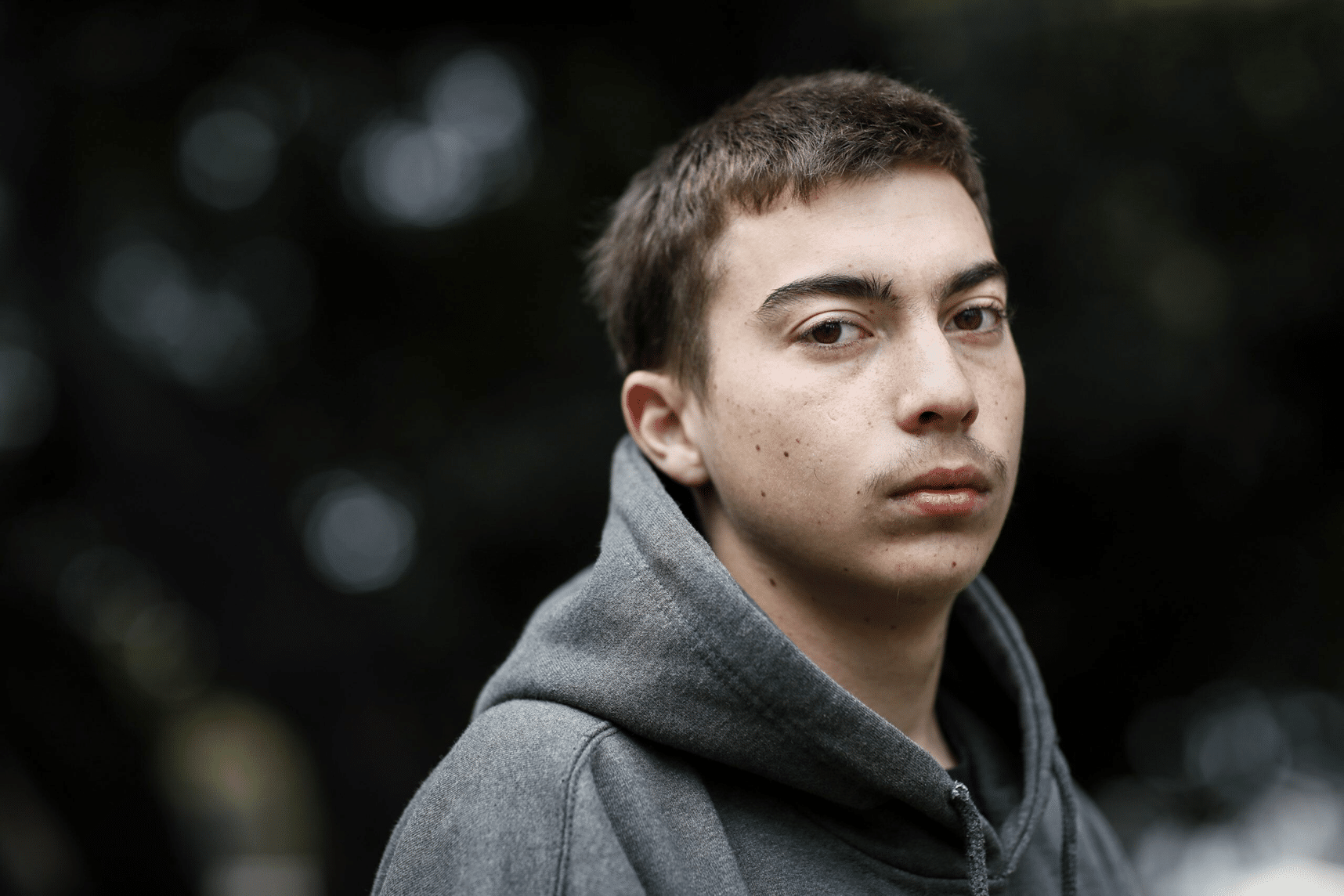
As a superfan of libraries and books, Mychael Threets, the supervising librarian at the Solano County Library in Fairfield, Calif., is one of my favorite TikTok stars. His posts typically offer tips to make your experience at the library better or spotlight the ways library patrons positively impact his day. But recently, some social media grumps tried to steal his joy. They made fun of his voice and mannerisms, filling his comment section with cruelty. Rather than respond in kind, Threets sent back empathy and grace, reports Good Good Good.
“Some of the comments in this Twitter thread are some of the cruelest things I’ve read in a long time,” Threets begins in this video on Tik Tok. “I am talking about this because I want people to remember that sometimes people have their worst day, and they are really struggling in life. Sometimes, what that results in is they say very mean, very cruel things about other people — which is not okay,” he continued. “I hope you remember, as I am trying to remember, that when people are really suffering, sometimes they resort to meanness, cruelty because that’s what they feel about themselves. And I hope those people have a much better day tomorrow. I hope they experience kindness. I hope they experience joy. I hope they remember that they still belong at the library.”
Looking for a way to calm yourself? Try deep belly breathing. Laura Wool, chief of psychology at Loyola University, demonstrated the technique for CBS News Chicago’s Mental Health Minute.
If you or someone you know is in crisis or experiencing suicidal thoughts, call or text 988 to reach the 988 Suicide & Crisis Lifeline and connect in English or Spanish. If you’re a veteran press 1. If you’re deaf or hard of hearing dial 711, then 988. Services are free and available 24/7.
Recent MindSite News Stories
What Martin Luther King, Jr. Knew But Never Said

The Rev. Dr. Martin Luther King Jr. was known for the soaring oratory he deployed as he led a movement for racial equity and social justice using the power of nonviolent protest. One thing he did not talk about was […]
As ‘Succession’ Heads Toward the Emmys, Our Writer Looks Back at a Master Class in Dysfunctional Family Dynamics

The popular HBO series, which ended in 2023, examined intergenerational trauma along with the worst kind of horrible bosses and conniving colleagues.
Building Hope in Philadelphia Neighborhoods Under Siege

Teachers and staff at YouthBuild Philly Charter School provide love, support and a safe haven for students in an area with high gun violence.
If you’re not subscribed to MindSite News Daily, click here to sign up.
Support our mission to report on the workings and failings of the
mental health system in America and create a sense of national urgency to transform it.
For more frequent updates, follow us on Facebook, Twitter and Instagram:

The name “MindSite News” is used with the express permission of Mindsight Institute, an educational organization offering online learning and in-person workshops in the field of mental health and wellbeing. MindSite News and Mindsight Institute are separate, unaffiliated entities that are aligned in making science accessible and promoting mental health globally.
Copyright © 2021 MindSite News, All rights reserved.
You are receiving this email because you signed up at our website. Thank you for reading MindSite News.
mindsitenews.org

The name “MindSite News” is used with the express permission of Mindsight Institute, an educational organization offering online learning and in-person workshops in the field of mental health and wellbeing. MindSite News and Mindsight Institute are separate, unaffiliated entities that are aligned in making science accessible and promoting mental health globally.


Author

Related Articles

College Sports Has an Emotional Abuse Problem
Two sisters were recruited from Croatia to play college basketball in the US. They say their coach derided and insulted them – and that there were few safeguards to protect them.

Autism and Alzheimer’s May Be Linked, Study Suggests
New discoveries are pushing researchers to consider that autism and Alzheimer’s may offer insight into the other.
He Almost Killed His Father. Now He Helps Others At Risk.
In today’s newsletter, we explore how one man healed after a dangerous psychotic break that nearly led him to murder.
