Student-Led Mental Health Clubs Fight Stigma
Teen peer support groups to talk about mental health problems have sprouted in schools around the country. A migrant youth mental health crisis. And more.

February 8, 2024
By Courtney Wise

Greetings, MindSite News Readers. In today’s parenting newsletter, a national survey says adolescents are in dire need of mental health support. To gain access to mental health resources, teens are taking charge and forming mental health clubs at their local schools. And one pair of Minnesota teens has created some striking visual art inspired by a desire to spread important messages about mental health crises.
In “Ask Barbara,” Dr. Barbara Greenberg fields a question from a father tormented because he doesn’t like his adult daughter anymore. A teacher at an NYC school says her school is failing the recent influx of migrant children “from the minute they walk in the school doors,” with some of them so traumatized that they cry from 8 am until noon.
One more thing: Yesterday’s newsletter included an item about the obstacles adult immigrants face in accessing mental health care in Chicago. Today, we want to draw your attention to a story about efforts to license qualified immigrants as therapists – even while they lack full immigration status. Many thanks to the online magazine palabra and the California Health Care Foundation for sharing our original reporting from Celeste Hamilton Dennis, which was first published by MindSite News.
There’s a mental health crisis among American teens. That’s why many are becoming their own mental health advocates.
By 15, high school sophomore Julia Hansen had struggled with depression for years. The trouble is, she didn’t know what to do about it. No one around her ever talked about their mental health, so she resigned herself to suffering in silence. It took the suicide of her two closest friends to inspire her to speak out. As the New York Times reports, she used her voice to co-found the Yellow Tulip Project, a nonprofit focused on destigmatizing mental illness by empowering youth to teach one another about mental illness, suicide and what to do when in need of help.
Eight years since its launch, the Yellow Tulip Project has sprouted 150 school-based, student-led chapters, including the one led by 17-year-old Camryn Baron at Sacopee Valley High School in Hiram, Maine. “It’s an outlet for some kids to be able to outwardly express and vocalize something that’s bothering them,” she told the New York Times. It’s helped her feel supported through depression, anxiety, an eating disorder and feeling rejected for her bisexuality. “The things that a lot of us dismiss or struggle with here — to be able to share them with other people is validating,” she said.
Student-led mental health clubs are growing in popularity, the Times notes, largely because of declines in youth mental health and the shortage of resources to help them. Though the White House has committed $1 billion to expand school-based mental health programs and staff, researchers say teens are key to inspiring one another. “When we think about mental health, it’s not just about crisis intervention,” said social scientist Lisa Padilla. “The peer-based organizations are creating an environment in the school that says, ‘We value your well-being, and we know that’s part of who you are as a whole person.’ That message goes a long way to make students feel safe and empowered to speak up about their own needs.”
Further, Padilla added, research shows that the presence of youth mental health clubs improves school culture. The subject of mental health is less stigmatized in schools with a club. What’s more, students who engage the club know where to find needed resources – and are more likely to share the information with others.
‘Help! I don’t like my adult child’: A worried father writes Ask Barbara for advice

Teen and parent psychologist Dr. Barbara Greenberg got a letter from an anxious father who said he felt ashamed of his negative feelings toward his adult daughter. He had always gotten along well with his son and enjoyed his daughter’s company when she was a child. But after he and their mother divorced, he says, his daughter has been “disagreeable” and argumentative. He feels estranged from her and doesn’t know what to do. Find out Dr. Greenberg’s advice.
National survey sounds alarm on mental health and substance use among U.S. teens
It’s something researchers, social workers, psychologists, and even the U.S. Surgeon General have known for some time: American teens are in the midst of a mental health crisis. Increasing numbers of teens report mental health woes amidst a shortage of mental health professionals able to give them the help they need. In fact, back in 2021, leading pediatric health associations issued a joint declaration that child and adolescent mental health was in a state of emergency.
Data about adolescent mental health doesn’t often come from teens themselves, KFF Health News reports: Parents or guardians tend to complete surveys on behalf of their children. But in a recently released national survey, the Centers for Disease Control administered the Teen National Health Interview Survey (NHIS-Teen) – one in which teens had the power to respond directly.
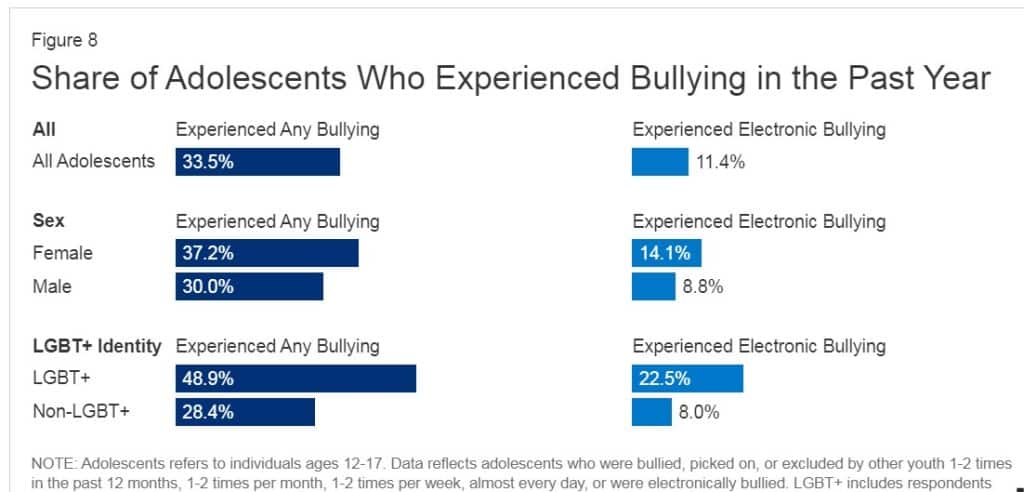
The survey was distributed to families with teens aged 12 to 17 over 18 months in 2021 and 2022. KFF Health News did an analysis of the data, accompanied by a series of excellent charts. Key findings include:
- Roughly one in five teens felt symptoms of anxiety or depression. LGBTQ+ adolescents are more likely than their non-LGBTQ+ peers to report anxiety and depression.
- 20 percent of adolescents did not receive the therapy they needed because of cost stigma associated with mental health treatment, and/or they didn’t know how to get help,
- Adolescent deaths due to drug overdose more than doubled from 2018 to 2022, However, teen access to medications like buprenorphine, which can cut the craving for opioids, is very limited.
- Suicide rates among adolescents of color are rising compared to their white counterparts. American Indian and Alaska Native youth experience the highest rates of suicide.
- More than a third of students experienced bullying, and nearly half of all LGBTQ+ students said they had been bullied.
Federal recommendations to reverse these trends include mental health screenings in schools and pediatrician offices, raising awareness about the hazards of too much social media, and federal laws to expand school-based mental health services.
Minnesota teens create blazing art to spark dialogue on youth mental health
For the past 15 years, Walgreens has hosted the Expressions Challenge, a national creative art competition in which youth share their feelings about some of society’s most pressing issues. But last year’s entries took Walgreens director Lauren Stone by surprise. “More than half of the entries address[ed] teenagers coping with mental health,” she said in an interview with the MinnPost. Emily Smerud and Seoyoon Jang, both high school sophomores and visual artists, submitted work inspired by their own experiences with mental health.
Jang’s painting is a commentary on the addiction youth have to social media. The artwork, inspired by one of the adventures in Gulliver’s Travels, depicts a woman drowning in a sea of social media. Her face is split in two — one half perfectly pampered and submerged, the other, scarred and spellbound. “This symbolizes the extent of internet addiction where daily life seems impossible without the internet,” said Jang. “As one becomes increasingly addicted… the constant comparison with others and feelings of frustration lead to sinking into depression.”
Smerud’s piece, a bleeding heart wrapped in duct tape, speaks to the self-isolation that followed her failed attempt to get help with her mental concerns. She’d felt dismissed by her mother’s response the first time she asked for help and didn’t speak up again until she was in a mental health crisis. “Duct tape falls off. It doesn’t stay on forever. When you try to fix yourself like that, you think it will last but it doesn’t. It gets wet and fails,” she said. “I hope people look at my painting and think about the message that I’m trying to get across: that people try to fix things themselves but they actually can’t do it all alone.”
In other news…
In this essay published by the Los Angeles Times, Molly Wadzeck Kraus writes of anticipating that her children will inherit her family history of anxiety and insomnia, and the hope that she’s teaching them the proper coping skills decades before she acquired them.
Earlier this week, Chalkbeat, which covers education news across the nation, published a powerful column by guest columnist Ashley Busone Rodriguez, a public school teacher in New York City. Her Washington Heights school has seen a recent influx of immigrant students who, she says, “are being failed from the minute they walk through the school doors.” Some students are so distressed they cry from 8am until lunch. With no social workers to provide support in such instances, the student is left without urgently needed help, and the rest of the class is too distracted to learn.
Hiring adequate mental health providers needs to be a school’s main priority – over tutoring, laptops for every student, and other academic resources, Rodriguez said. “How can we possibly be expecting these students to attend Saturday School for tutoring when they can barely get through school on a weekday,” she wrote. “In the wake of a nationwide migrant mental health crisis, we must prioritize our students’ mental health before their ability to answer multiple-choice questions or log in to a Chromebook.”
If you have an appreciation for psychedelics and a safe history of using them, you may be interested to consider this volunteer opportunity with the Fireside Project. Fireside Project operates a non-clinical emotional support line for people undergoing psychedelic experiences. The line runs 12 hours per day, from 11 am to 11 pm. Volunteers provide emotional support only. Applications for volunteers are open now through February 29.
Becca Havian is popular on TikTok for sharing a friend’s idea about the 90-day dinner. “It’s the antidote to funk,” she says. The idea is to reach out to a friend if you’ve had a rough life event ( i.e., the loss of a job, a hard breakup, or a bad bout of anxiety), and schedule a dinner check-in for 90 days later. The intent is to gain appreciation for how you’ve grown or healed in that time frame, the Independent reports. “But there will always be some kind of shift,” says Havian in the video. “Either you’ll be able to see it from a new angle…or maybe another part of your life has begun to go really well, so you feel a little removed from the intensity of the feelings you had when you called the 90-Day.”
Superwoman syndrome is harming Black women: Glenda Boone almost lost relationships with both of her daughters due to superwoman schema. Shortened to SWS, the syndrome is characterized by a tendency to avoid vulnerability, suppress emotions, prioritize others’ needs before one’s own, and lean toward excessive independence. In other words, “’Everything that comes my way, I should be able to handle it,’” licensed psychologist Zoeann Finzi-Adams told ABC News. “And that’s exhausting because no one is able to do everything. No one is able to, and that is such a big barrier for getting any kind of support.”
If you or someone you know is in crisis or experiencing suicidal thoughts, call or text 988 to reach the 988 Suicide & Crisis Lifeline and connect in English or Spanish. If you’re a veteran press 1. If you’re deaf or hard of hearing dial 711, then 988. Services are free and available 24/7.
Recent MindSite News Stories
Help! I Don’t Like My Child
A divorced father can’t figure out why he no longer enjoys his teen daughter’s company. Find out what Dr. Greenberg advises. Continue reading…
The Night Parade: A genre-bending memoir that helps reshape the cultural narrative on bipolar illness and grief
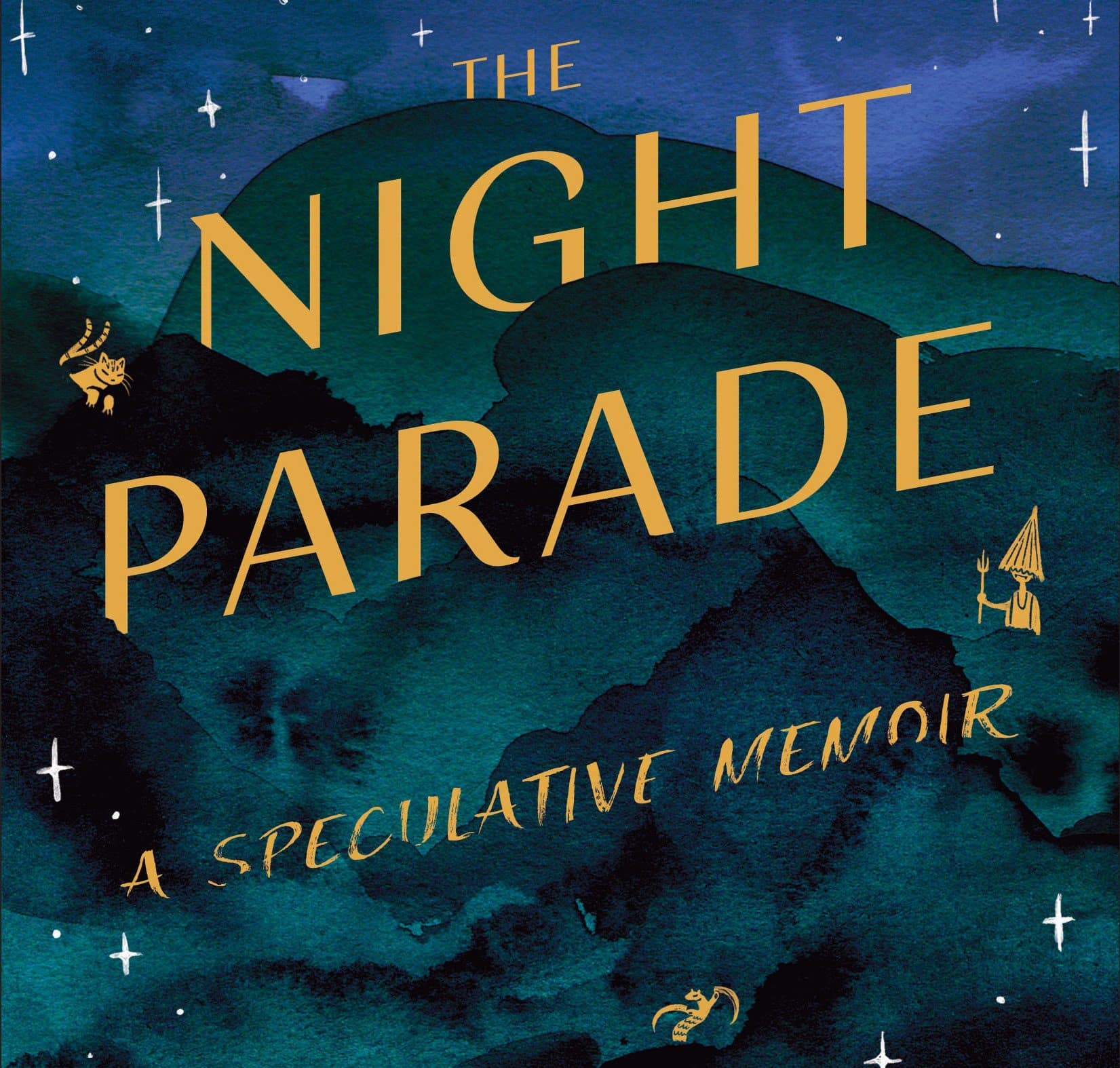
Jami Nakamura Lin has written a rich, exquisitely illustrated memoir that expands the cultural narrative on mental illness and grief. Continue reading…
A Former Hotline Counselor ‘Hands the Mic’ to Call-takers to Amplify Their Voices
The author of a survey of crisis hotline counselors talks about his experiences and why he wanted to tap into the wisdom of the people who answer calls to 988. Continue reading…
If you’re not subscribed to MindSite News Daily, click here to sign up.
Support our mission to report on the workings and failings of the
mental health system in America and create a sense of national urgency to transform it.
For more frequent updates, follow us on Facebook, Twitter and Instagram:

The name “MindSite News” is used with the express permission of Mindsight Institute, an educational organization offering online learning and in-person workshops in the field of mental health and wellbeing. MindSite News and Mindsight Institute are separate, unaffiliated entities that are aligned in making science accessible and promoting mental health globally.
Copyright © 2021 MindSite News, All rights reserved.
You are receiving this email because you signed up at our website. Thank you for reading MindSite News.
mindsitenews.org

The name “MindSite News” is used with the express permission of Mindsight Institute, an educational organization offering online learning and in-person workshops in the field of mental health and wellbeing. MindSite News and Mindsight Institute are separate, unaffiliated entities that are aligned in making science accessible and promoting mental health globally.


Author

Related Articles
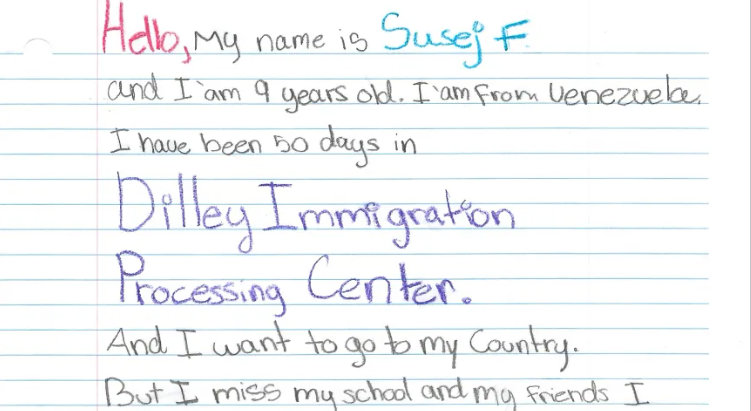
Health Organizations Condemn Traumatic ICE Raids, Family Separation
According to letters from children living in an ICE detention facility, living conditions are inhumane and their mental health is suffering.
In Teens, Social Anxiety Often Looks Like Anger
A study finds that some teens’ aggressive behavior may be due to social anxiety, not straightforward reactivity.
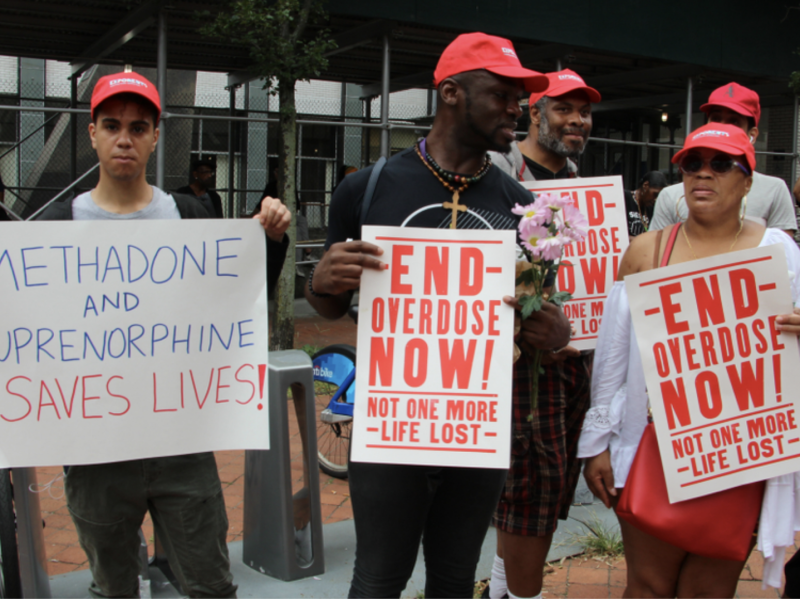
Expert Calls for Harm Reduction, Not Punishment, to Resolve Our Overdose Crisis
As the Trump administration pulls funding from harm reduction, an expert on the overdose crisis says it’s the best way to save lives.
