
The Push to End Solitary Confinement
A look at the global push to end solitary confinement – a practice that is distressingly common in U.S. jails and prisons and can severely damage the mental health of incarcerated people.
Friday, February 23 2024
By Josh McGhee
Happy Friday MindSiters,
Long time, no talk. We’re back after a short hiatus. This week, we’re continuing our coverage of the use of solitary confinement – a practice that is distressingly common in U.S. jails and prisons and can severely damage the mental health of incarcerated people.
We start with a look at the push to end solitary confinement in prisons and jails across the country. Then, we take a depressing dive into a new book that tells us what we don’t know about deaths in custody. Finally, we preview a study comparing the use of solitary confinement in more than 40 countries, including the United States.
The Push to End Solitary Confinement

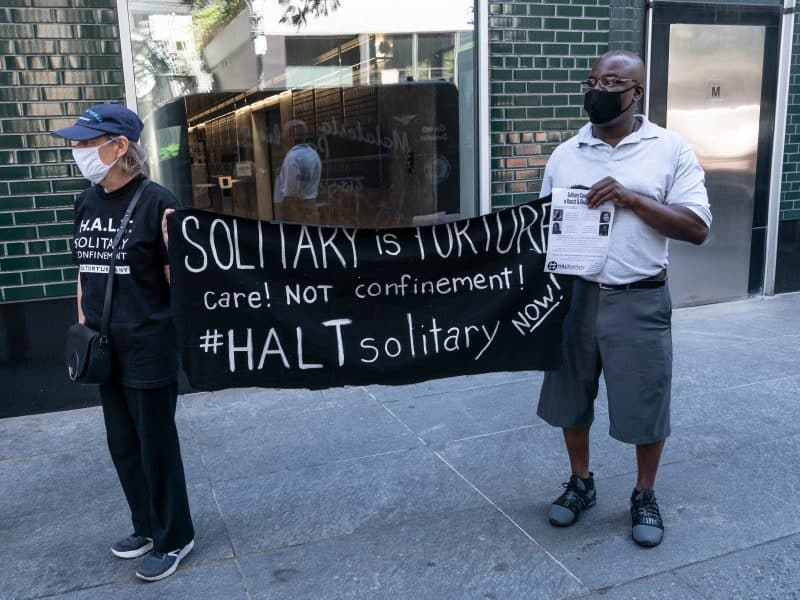
Over the last five years, politicians across the country have stepped up efforts to end solitary confinement in prisons and jails in response to a push by advocates across the country. They have framed the issue as a matter of individual and community mental health, noting, according to a statement from the ACLU, that solitary confinement “causes extreme and sometimes permanent damage to the individuals who endure it, and to the families and communities to which they will return.”
Between 2018 and 2020, legislators in at least 25 states introduced bills to limit the use of solitary confinement, and bills were enacted in at least 15. Since 2020, seven states have passed laws to limit the use of solitary and some courts have held that specific forms of isolation are unlawful, according to a report from Yale Law School,
This battle has also been fought at a city and county level, with mixed results. As the fight continues, one of the battlegrounds is the language used to describe solitary, which is often euphemistically called “punitive segregation” or “restrictive housing.”
In late January, New York City Council cut through the semantics and voted 42-9 to override a veto from New York Mayor Eric Adams to pass a city law banning solitary confinement.
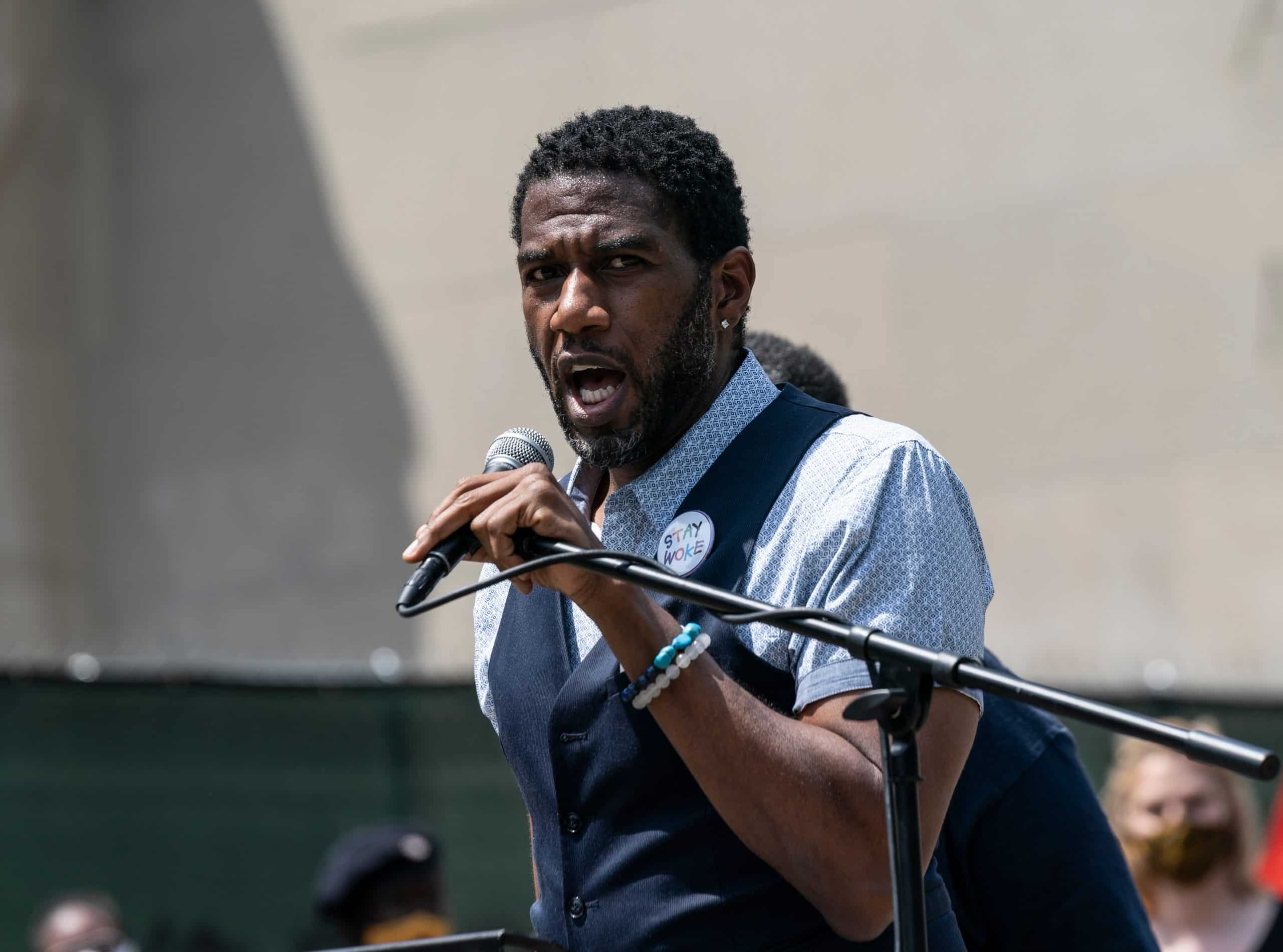
The council had previously passed the measure, introduced by New York City Public Advocate Jumaane Williams, who argued that confining people alone for hours or days in small cells amounts to torture.
The use of solitary confinement has remained in the spotlight there since a teenage Kalief Browder was kept in solitary confinement for more than 700 of the 1100 days he was held at Riker’s Island, charged with a robbery he said he did not commit. He died by suicide in 2015, two years after he was released.
The new law will change city rules on punitive segregation that allow detainees to be locked in their cells for up to 23 hours in a day in a restrictive housing area to punish them for a violent offense.
“By banning the lasting vestiges of solitary confinement – and the use of isolation in an attempt to change behavior – we will prevent the harm of isolation and help to make both our jails and our city safer,” said Williams, who is now making a second run for governor.
Since the bill’s introduction, Adams, a former New York City police officer, has maintained that solitary confinement was already eliminated in New York City jails.
But advocates have said for years that “restrictive housing” is just solitary by another name. Other cities considering bans of solitary confinement have also debated these distinctions.
Another test is brewing in Washington D.C., where a proposed ban on solitary lock-ups in the city’s jails is making its way through the city council.
On Oct. 18, Washington Councilmember Brianne Nadeau introduced the ERASE (Eliminating Restrictive and Segregated Enclosure) Solitary Confinement Act. The bill was sent to the committee on the Judiciary and Public Safety and is currently awaiting a hearing.
Previous attempts to limit or end solitary confinement in D.C. jails have been unsuccessful. Bolts Magazine explored the efforts of former Council Member Mary Cheh, who introduced the Inmate Segregation Reduction Act of 2015 after taking a tour of the D.C. Jail.
“It really took the activism of groups to point out to me the ills — the absolute horror, even — of solitary confinement,” she told Bolts.
The bill never made it to a vote or even out of committee. Cheh tried and failed to pass similar legislation two more times before leaving the council at the beginning of 2023, according to Bolts.
Nadeau worked with Unlock the Box, a national advocacy campaign working to end solitary confinement, to draft the language of the bill. If the bill passes, D.C. jails will join a growing chorus of states enacting such legislation.
Advocates have also taken the battle to Congress. Last year, Rep. Cori Bush, a Democrat and the first Black woman to represent Missouri in Congress, introduced the End Solitary Confinement Act, a federal bill which generally prohibits solitary confinement with limited exceptions in prisons.
Nobody knows how many people die in jails and prisons
At least 45 people died in custody in Los Angeles County jails last year, according to the Los Angeles Times. That made the jails deadlier in 2023 than they were just before the pandemic, when the incarcerated population was much higher.
Something else stands out about the Los Angeles data: The county actually has the numbers.
While some states and counties keep very good data on deaths, no one knows exactly how many people across the country die in jails and prisons each year. A new book from Jay D. Aronson and Dr. Roger A. Mitchell, “Death in Custody: How America Ignores the Truth and What We Can Do About It,” explores why the lack of data is a problem and how the problem came to exist.
Keri Blakinger, a Los Angeles Times reporter who spent two years in prison and now covers the L.A. County Sheriff’s Department, interviewed the authors this month.
The interview explores how the federal government has failed to collect accurate data on the number of deaths occurring inside jails and prisons.
“What we always come back to is that we as a society don’t care about the people who are in jails and prison,” Aronson said in the interview. “We associate them with people who are morally deficient. We boil people down to their worst moment. And we as a society are trained to believe that the people in jail or prison are there for public safety and that we’re somehow safer because these people are not in the streets. We have built this system because we have othered a particular group of people.”
“I do think that there’s a major change underway,” he added. ”Younger generations are much better educated about these things”
You can read the full interview here.
Mapping Solitary: A Global Look

The U.S. and New Zealand lead the world in a dubious distinction: They use solitary confinement at higher rates than any other countries in the world. That’s according to a report from Sharon Shalev, a researcher at the Centre for Criminology at the University of Oxford.
She combined data collected from reports from 42 countries (that notably did not include China, Russia, Thailand, Indonesia, Iran, and the Phillipines — all countries with more than 150,000 people in prison as of October 2021).
The report was based on surveys of prison officials, academics and oversight bodies. Here’s what else the report found:
- Between 41,000 and 48,000 people were in solitary confinement in U.S. prisons, defined as isolation of 22 or more hours per day for 15 or more consecutive days. That means that 14.8% of people incarcerated in U.S. prisons in July 2021 were being held in isolation.
- Of the reporting jurisdictions in the US, 19.1% were in restrictive housing for 15 to 29 days; 18.7% for 30 to 60 days; 27.5% for 61 to 180 days; and 10.5% for between six months and a year. Another 25% were held between one year and a decade.
- In New Zealand prisons, women were segregated significantly more than men.
- In Japan, prisoners in punitive solitary confinement could not access books, write or receive letters, work, participate in religious services or buy canteen goods.
- In Ireland, regulations specify that prisoners in solitary are provided an opportunity for “meaningful human contact” during their two hours out of cell.
Read the full report here. We’ll dive deeper into the report next month.
Until next time,
Josh McGhee
If you or someone you know is in crisis or experiencing suicidal thoughts, call or text 988 to reach the 988 Suicide & Crisis Lifeline and connect in English or Spanish. If you’re a veteran press 1. If you’re deaf or hard of hearing dial 711, then 988. Services are free and available 24/7.
Recent MindSite News Stories

A Former Hotline Counselor ‘Hands the Mic’ to Call-takers to Amplify Their Voices
The author of a survey of crisis hotline counselors talks about his experiences and why […]

988-Hotline Counselors Air Concerns About Lack of Training, Rushed Calls
A newly released report, based on responses from 47 crisis counselors, explored variations in their […]

After the Crisis: Unique Program Helps Older Adults Grappling with Both Addiction and Mental Illness
More than 19 million Americans live with both a serious mental illness and substance use […]
If you’re not subscribed to MindSite News Daily, click here to sign up.
Support our mission to report on the workings and failings of the
mental health system in America and create a sense of national urgency to transform it.
For more frequent updates, follow us on Facebook, Twitter and Instagram:

The name “MindSite News” is used with the express permission of Mindsight Institute, an educational organization offering online learning and in-person workshops in the field of mental health and wellbeing. MindSite News and Mindsight Institute are separate, unaffiliated entities that are aligned in making science accessible and promoting mental health globally.
Copyright © 2021 MindSite News, All rights reserved.
You are receiving this email because you signed up at our website. Thank you for reading MindSite News.
mindsitenews.org

The name “MindSite News” is used with the express permission of Mindsight Institute, an educational organization offering online learning and in-person workshops in the field of mental health and wellbeing. MindSite News and Mindsight Institute are separate, unaffiliated entities that are aligned in making science accessible and promoting mental health globally.


Author

Related Articles
Health Organizations Condemn Traumatic ICE Raids, Family Separation
According to letters from children living in an ICE detention facility, living conditions are inhumane and their mental health is suffering.

In Teens, Social Anxiety Often Looks Like Anger
A study finds that some teens’ aggressive behavior may be due to social anxiety, not straightforward reactivity.
Expert Calls for Harm Reduction, Not Punishment, to Resolve Our Overdose Crisis
As the Trump administration pulls funding from harm reduction, an expert on the overdose crisis says it’s the best way to save lives.
