
Measuring Mental Health on Earth and Mars
A survey of global mental health finds that people everywhere are still stuck at pandemic-level lows – and young people are faring worst. And a look at the “psychological torment” that would accompany any mission to Mars.

Monday, March 4, 2024
By Don Sapatkin

Good Monday morning! “How Are You, Really?” is a self-guided check-in to “help you take stock of your emotional well-being – and learn how to make changes” from the New York Times, based on expert interviews. Check in yourself.
In today’s Daily: A comprehensive survey of mental wellbeing around the globe finds that people everywhere are still stuck at pandemic-level lows – and young people and residents of wealthier countries are faring worst. A look at the “psychological torment” that would accompany any mission to Mars. Plus: Prescriptions for psychiatric med’s rose in areas hit by wildfires. And death rates related to alcohol consumption skyrocketed during the pandemic, with the largest rise among women.
Is ‘diminished mental wellbeing’ the ‘new normal’?

Just about everyone’s mental health plummeted during the pandemic, but many lay people and experts alike assumed our spirits would lift again when the world returned to semi-normalcy. Hasn’t happened yet, apparently. A new report, the Mental State of the World in 2023, finds that while the precipitous declines leveled off in 2021, they’ve barely budged since. Indeed, the authors write, “the effects of diminished global mental wellbeing have become a new normal.”
The report shows, not surprisingly, that mental health declined the most among younger people, with hardly any change among those over 65. And unlike the pattern for most health issues, wealthier countries experienced the greatest pandemic-related declines in mental wellbeing and poorer countries the least. Two especially worrisome trends – ubiquitous in rich countries and rising everywhere: smartphone use starting at an early age and consumption of ultra-processed foods was strongly linked to poor mental health.
The fourth annual report from the nonprofit Sapien Labs’ Global Mind Project is based on an online survey of 500,000 people in 71 countries (not including Russia, China or other places that lack free internet access) and relies on a measure known as the Mental Health Quotient.
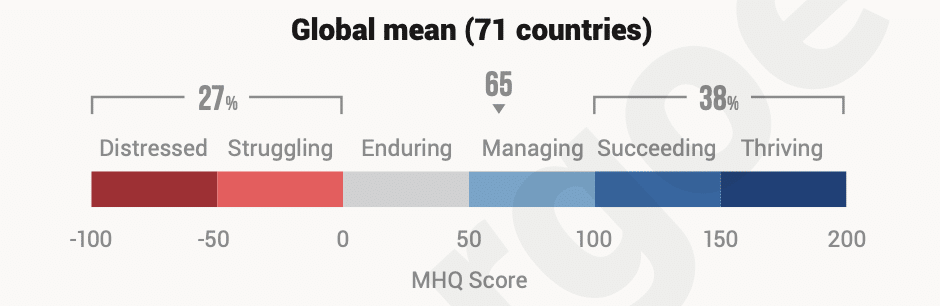
The MHQ scale (which goes from -100 to +200) does not estimate happiness but instead offers an assessment of people’s emotional, social and cognitive capabilities as it rates their ability to handle the stresses and adversities of life. At the upper level of the scale, people are succeeding (100 to 150) or thriving (150 to 200); at the bottom they are struggling (0 to -50) or distressed (-50 to -100).
In pre-COVID 2019 – the survey’s first year – the average MHQ score was 90 in the eight English-speaking countries measured. By 2021, the average score had dropped to 64 in 32 countries tracked that year. Now, in the most recent 2023 survey, the number is almost unchanged at 65, with 71 countries participating. Across all countries, 38% of people are in the succeeding or thriving categories, 35% are enduring or managing, and 27% are struggling or distressed.
Mental wellbeing and age are closely correlated, with each age group scoring lower than the older group just above it. The degree of the decline follows the same pattern, with the most precipitous drop among the youngest group, ages 18 to 24, and a barely perceptible decline among ages 65 to 74 and none for ages 75 and above.
The report included two interesting sub-analyses. One found that for today’s 18-to-24-year-olds – the first generation to be born into a world of smartphones and social media – the younger they were when they got their first smartphone, the worse their mental health outcomes in adulthood. Those who got their first phone at 6 had the lowest wellbeing scores and those who got one at 15 had the best (but still low) scores. Fraying family relationships were an independent but perhaps related factor.
More frequent consumption of ultra-processed food also was strongly linked to poor l wellbeing scores, especially symptoms of depression and emotional and cognitive control. More than half of those who eat ultra-processed food daily were classified as “distressed” or “struggling” with their mental wellbeing, compared to just 18% of those who rarely or never consume those foods. The researchers noted that eating a lot of processed food and getting a phone at a young age are more common in wealthier countries.
‘Psychological torment’ will be unavoidable for travelers to Mars. Can humans endure it?
Many problems must be solved before the first human mission to Mars launches in 20 years or so. A NASA punch lists 800 of them. Most involve the logistics of transporting humans 34 million miles and keeping them alive on toxic soil in unbreathable air, bombarded by solar radiation and cosmic rays.
Those in charge think all these will be solved, but “what NASA does not yet know — what nobody can know — is whether humanity can overcome the psychological torment of Martian life,” science journalist and author Nathaniel Rich writes in the New York Times Magazine.
The provocative story does not, of course, answer the question. It illustrates the issues through prior research and interviews with four Mars fanatics (and their families) who were sealed last June into “Fake Mars” – a 1,700-square-foot habitat in a warehouse at the Johnson Space Center in Houston. There, they will spend 378 days living the Martian life – with its attendant “resource limitations, equipment failure, communication delays and other environmental stressors.”
Isolation will be the biggest challenge. Previous studies show the experience follows a common trajectory: Initial high spirits give way to increased irritability that can burst into hostility. People hallucinate. In one Air Force experiment, a pilot saw “little people” perched on the instrument panel. Another abandoned the exercise after three hours and demanded psychiatric care. One of NASA’s biggest worries is the lag time for communications to go back and forth from Earth. Even the simplest exchange between loved ones – “How’s it going?” “OK.” – would take at least 44 minutes.
Three years ago, Dennis Bushnell, a scientist who had worked at NASA for almost 60 years, wrote a paper that dwelled on the future colonization of Mars. He predicted that to overcome the planet’s physical hostility and radiation, colonists will “morph into an altered species” and “evolve into Martians.” How that will affect their mental health is an open question.
In other news…
Prescriptions for psychiatric medications increased locally after major wildfires, a study in JAMA Network Open found. Researchers analyzed claims data for more than 7 million people living in areas affected by 25 large California wildfires between 2011 and 2018. Prescriptions for antidepressants, anti-anxiety and mood-stabilizing medications increased by 4 to 6% in the six weeks following the fires compared with the six weeks before. There was no increase in antipsychotics, hypnotics, or the control outcome, statins.
Death rates from excessive alcohol use increased about 25% from 2016-17 to 2020-21, with most of the rise coming during the pandemic, according to an analysis in CDC’s Morbidity and Mortality Weekly Report. The researchers say it was the first analysis that looked beyond direct alcohol-poisoning deaths to include car crashes and other kinds of injuries, as well as certain cancer. While alcohol-related deaths are more than twice as common among males as females, the death rate among females rose 30% compared with 22% among females.
If you or someone you know is in crisis or experiencing suicidal thoughts, call or text 988 to reach the 988 Suicide & Crisis Lifeline and connect in English or Spanish. If you’re a veteran press 1. If you’re deaf or hard of hearing dial 711, then 988. Services are free and available 24/7.
Recent MindSite News Stories
Can Prop. 1 Address California’s Trifecta of Mental Health Crises? Voters Are About to Decide

As voters prepare to pass judgment on Proposition 1, MindSite News asked six key players in the state’s constellation of mental health services to weigh in on its likely impact.
How psychedelic drug therapy became a rare bipartisan issue in California
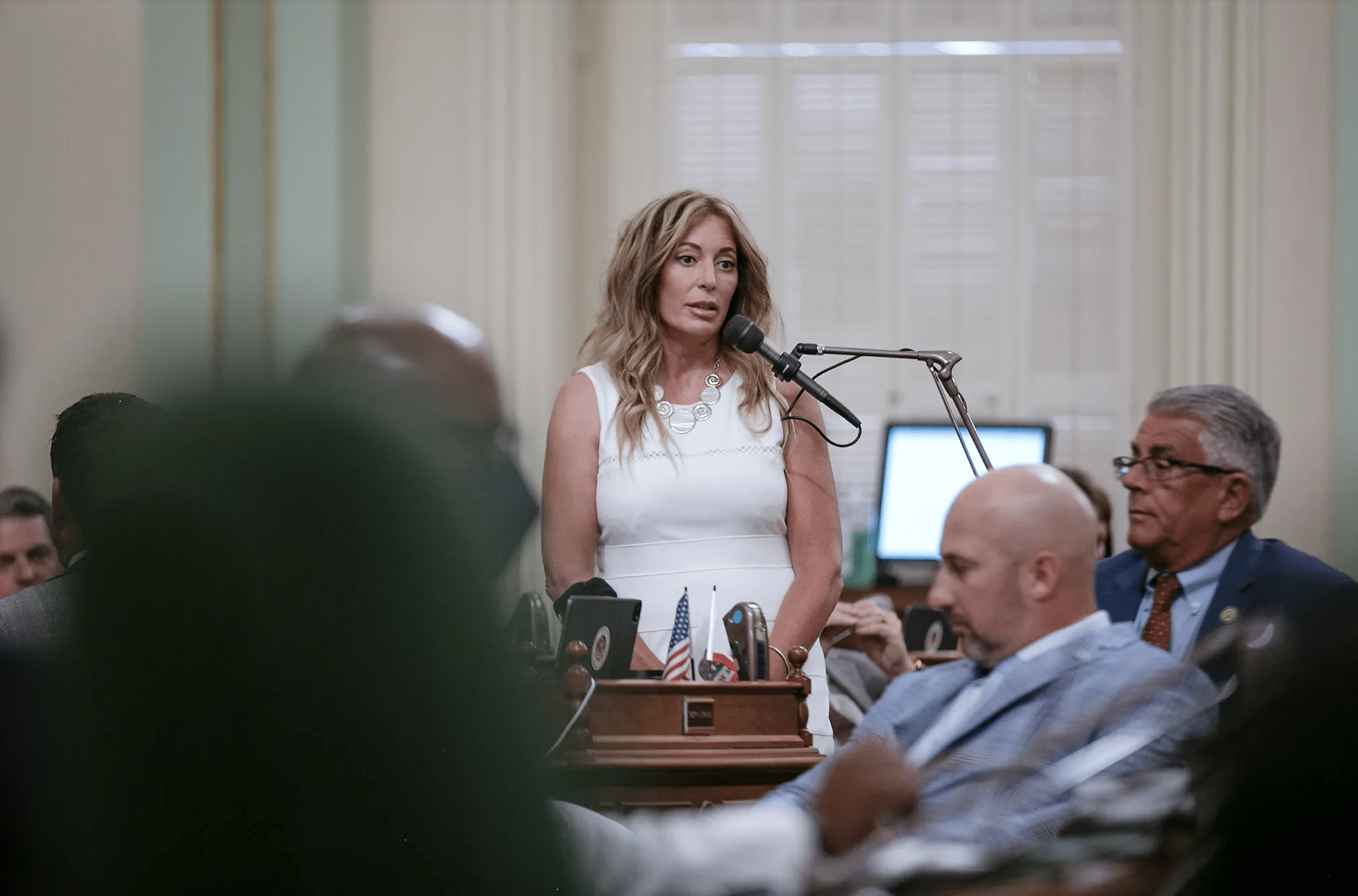
Republican Marie Waldron and Democrat Scott Wiener may seem to have little in common. But they have formed an unlikely partnership on an unusual issue: legalizing psychedelic drugs to treat mental illness.
California Voters Will Decide on Newsom’s Mental Health Overhaul. How Did We Get Here?
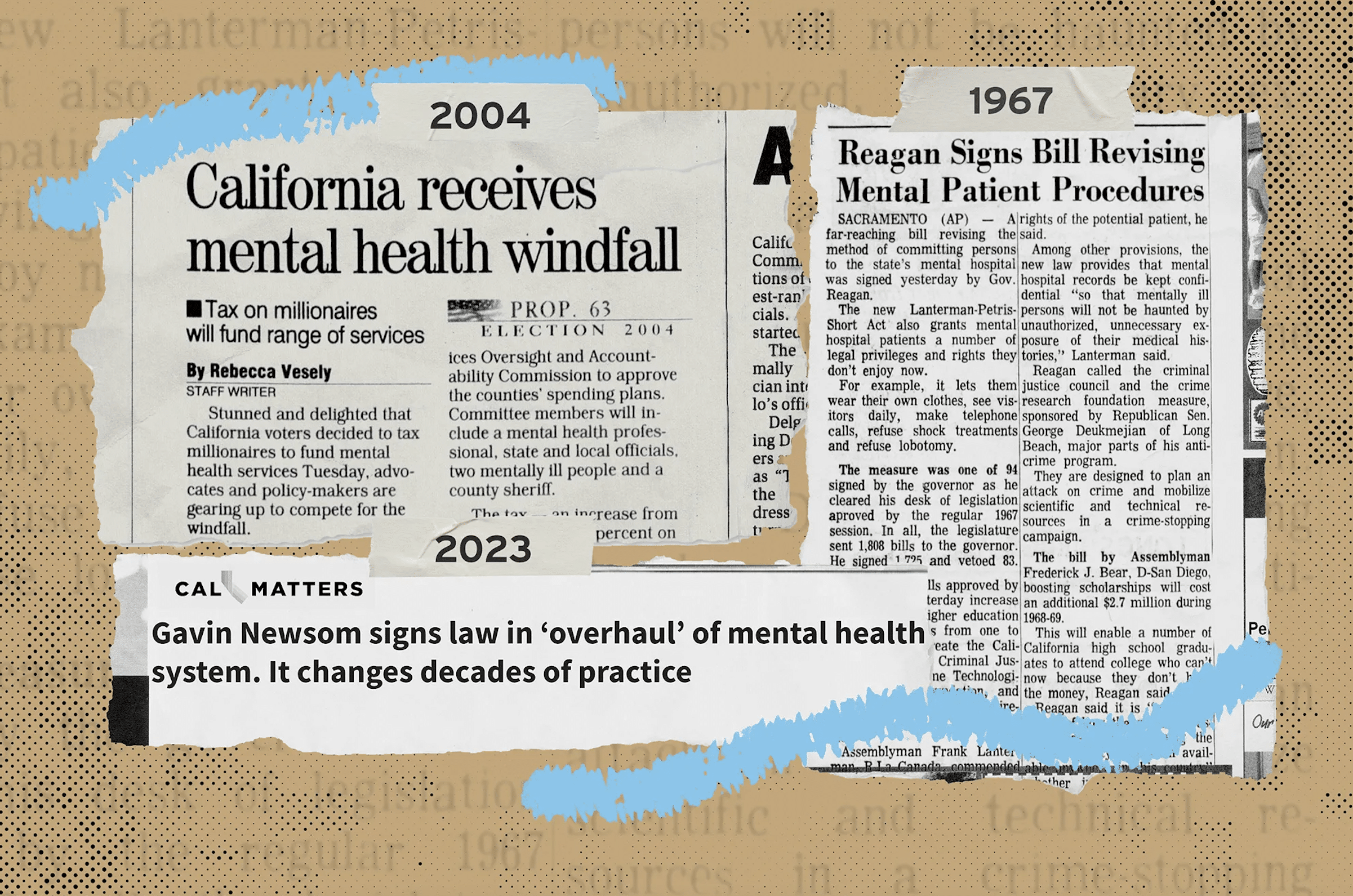
Proposition 1, a March ballot measure in California, is the latest state proposal that aims to make major changes in mental health policy. Here’s a look at some of the others over the past 75 years.
If you’re not subscribed to MindSite News Daily, click here to sign up.
Support our mission to report on the workings and failings of the
mental health system in America and create a sense of national urgency to transform it.
For more frequent updates, follow us on Facebook, Twitter and Instagram:

The name “MindSite News” is used with the express permission of Mindsight Institute, an educational organization offering online learning and in-person workshops in the field of mental health and wellbeing. MindSite News and Mindsight Institute are separate, unaffiliated entities that are aligned in making science accessible and promoting mental health globally.
Copyright © 2021 MindSite News, All rights reserved.
You are receiving this email because you signed up at our website. Thank you for reading MindSite News.
mindsitenews.org

The name “MindSite News” is used with the express permission of Mindsight Institute, an educational organization offering online learning and in-person workshops in the field of mental health and wellbeing. MindSite News and Mindsight Institute are separate, unaffiliated entities that are aligned in making science accessible and promoting mental health globally.


Author

Related Articles
He Almost Killed His Father. Now He Helps Others At Risk.
In today’s newsletter, we explore how one man healed after a dangerous psychotic break that nearly led him to murder.
Fallout Over Supreme Court Ruling on Conversion Therapy
Despite the Supreme Court ruling, conversion therapists can still be sued for a practice the United Nations calls “torture.”

On No Kings Day, Millions Rallied to Denounce Trump and “Epstein War”
Anti-Trump protests took place in all 50 states, Puerto Rico and other US territories and in countries around the world.
