Tackling Mental Health Stigma among Asian Americans
Attacks on Asian Americans during the pandemic have left many older Asians depressed and isolated. and an SF nonprofit is finding creative ways to reach out. And more.

May 14, 2024
By Courtney Wise

Greetings, MindSite News Readers. I hope you had a great Mother’s Day with the women in your life. Mine was fairly quiet; after lying around for a bit, I was fortunate to visit with my Mama and Auntie and watch some of their favorite movies. Then Monday night, I was privileged to attend an in-person conversation hosted by Outlier Media between Tonya Mosely and Antonio Wiley, an aunt and nephew duo from Detroit.
In the She Has A Name podcast, the pair tell the story of Antonio’s mother Anita Wiley. She went missing at just 29 years old in November 1987 and likely wouldn’t have ever been found in February 2020, were it not for her son Antonio’s relentless effort. It’s a show about trauma and generational wounds, but also about healing and love.
Also in today’s Daily, one artist expands the arts and psychedelic community in Grass Valley, California; a conversation with Asian Americans fighting against mental health stigma; and lawmakers in Mississippi finally move to end the practice of jailing people with mental illness who don’t have any criminal charges.
Rolling out creative solutions to get mental health care to Asian American in the SF Bay Area

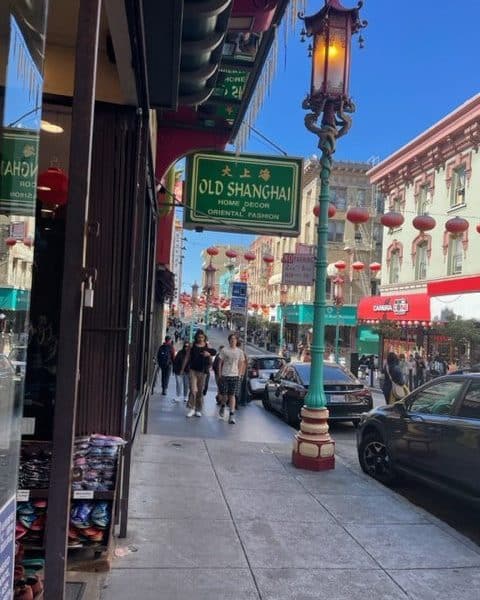
In 2020, the worst of the United States came to light in the form of anti-Asian hate, lashing out in an attempt to find someone to blame for the COVID-19 pandemic. But the end of our global emergency last year did little to resolve the fear many Asians developed as a result of unwarranted harassment and violence. Directors at San Francisco’s Self-Help for the Elderly, a non-profit primarily serving Asian Americans, told USA Today that many of their members remain in a self-imposed isolation because of lingering fear after 2020. Continuing reports of anti-Asian violence don’t help.
“They don’t dare to go out because of a really deep fear of being attacked,” said Anni Chung, Self-Help for the Elderly’s president and CEO. “That leads to a lack of physical activity and, eventually, signs of depression.” Cultural stigmas surrounding mental health make it difficult for Asian Americans to seek help on their own, and the lack of culturally-aware therapists and counselors further exacerbate the issue. “The fear is still there,” Chung said. “COVID and the anti-Asian attacks did something that impacted their behavior. They have no one to talk to or socialize with, and without that connection they’re going to get frail both physically and mentally.”
For many, it’s also hard to secure relevant help. Waitlists for new patients in therapy aren’t anything new—and that’s the problem. Finding an available counselor is made exponentially harder when seeking one who can cross language barriers and already understands your culture because they’re also a part of it.
Hoping to help, the Smithsonian’s National Museum of Asian Art has made mental health and wellbeing the focus of its second annual Asian American, Native Hawaiian, and Pacific Islander Heritage Month festival. “Focusing on this highlights the importance of dialogue across AANHPI communities and generations,” said Nicole Dowd, director of public programs for the museum. “Our goal is to create a gathering space for dialogue, learning and mindfulness.” That May is also Mental Health Awareness Month makes it all feel like serendipity, Dowd said. In addition to enjoying live music and DJs, attendees of the festival are also welcome to enjoy sound bath meditation and speak with mental health providers.
Alternatively, programs that support mental health, like tai chi and other social activities are growing in popularity. “They’re more captivating ways of bringing people out of their house and connecting them with people who can support them,” Chung said. “Those are the programs that will probably be models for us going forward.”
Mississippi lawmakers end the practice of detaining the mentally ill in jail without criminal charges
Following reporting from ProPublica and Mississippi Today, the State of Mississippi has reformed its civil commitment laws to end the practice of jailing hundreds of people without criminal charges while they await court-ordered mental health treatment. Sheriffs say that since 2006, 17 people have died in jail, including nine who killed themselves, while awaiting commitment to a mental facility.
Before House Bill 1640, which takes effect July 1, people facing involuntary commitment for mental illness could be jailed if no alternative was available. Now signed, the law restricts this practice to those deemed “actively violent,” and now limiting their jail time to 48 hours. In the event this doesn’t happen, the law also requires documentation from mental health professionals explaining why less-restrictive treatment isn’t an option and mandates an assessment by local community mental health centers before starting the commitment process.
The law, effective July 1, has received wide support from government and state officials, with Adam Moore, a spokesperson for the Department of Mental Health saying, “This new process puts the person first. It connects someone in need of mental health services with a mental health professional as the first step in the process, before the chancery court or law enforcement becomes involved.” The department also provides training, along with some funding and services related to the commitment process.
However, some officials argue that without more treatment beds, the law will be unable to have its intended impact. “Just because you’ve got a diversion program doesn’t mean you have anywhere to divert them to,” said Jamie Aultman, who handles commitments as chancery clerk in Lamar County. Aultman’s concerns aren’t without reason; a Mississippi Today and ProPublica’s analysis found that nearly every county in Mississippi jailed someone in the midst of involuntary commitment at least once in the past 12 months, with over 2,000 such cases from 2019 to 2022 in 19 counties. As such, said Lee County chancery clerk Bill Benson, “I think everyone will attempt to comply, but there are going to be some instances where somebody’s going to have to be housed in the jail.”
In addition, some experts believe the law doesn’t go far enough. Disability Rights Mississippi plans to sue the state as a result. “The basic flaw remains,” explained Paul Appelbaum, professor of psychiatry at Columbia University and former president of the American Psychiatric Association. “There is no justification for putting someone who needs hospital-level care in jail, not even for 24 hours.”
In other news…
In this 53 minute deep dive into homelessness and mental health, reporters from MPR News, including Kimberly Adams, go directly to the streets of New York City to speak with unhoused people about what they need and experts who say ‘no strings attached housing’ is what they need the most. Highlights of the program include listening to a “street psychiatrist” go about her work day. The licensed physician does her work by walking the streets to find unhoused people who need her support. Her services are critical in that she can prescribe medicine and provide therapy right on the street.
Straight out of (my) nightmares, STAT News reports that brain worms are more common than we, the general public, realize. In particular, the pork tapeworm Taenia solium (T. solium) is hard at work, fooling even the doctors who supported Robert F. Kennedy, Jr. He was erroneously diagnosed with a brain tumor, but once surgery was conducted, doctors discovered a dead worm in his brain. T. solium eggs are known to cause a condition called cysticercosis which can lead to brain cysts and other neurological symptoms. The condition, which is often brought on by eating contaminated food, is most common in Latin America. Treatment consists of a two-drug anti-parasitic regimen, and steroids to reduce the inflammation that usually occurs when the parasites die. But fortunately, doctors say, even without treatment, the brain worm usually dies on its own, causing the cyst it creates to calcify. Best of all, the condition rarely causes long-term damage.
If you or someone you know is in crisis or experiencing suicidal thoughts, call or text 988 to reach the 988 Suicide & Crisis Lifeline and connect in English or Spanish. If you’re a veteran press 1. If you’re deaf or hard of hearing dial 711, then 988. Services are free and available 24/7.
Recent MindSite News Stories
Report an Unhoused Person in Mental Health Crisis in San Francisco and Here’s What Happens Next
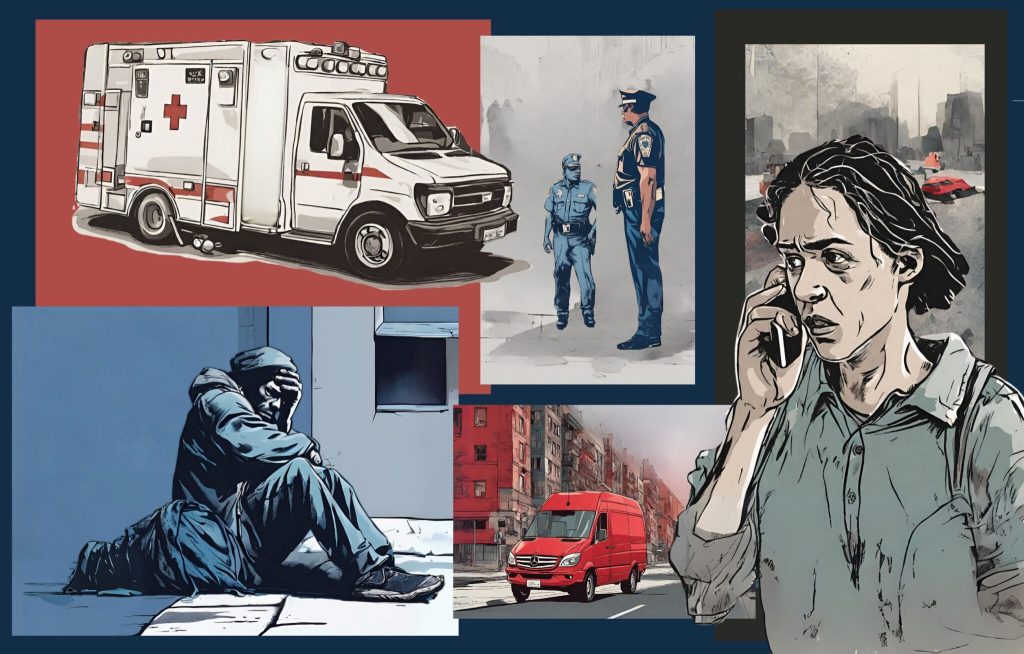
In San Francisco, as in many cities, it’s not uncommon to cross paths with a person experiencing homelessness in the throes of a mental health crisis. The scene can be tragic, confusing and can feel dangerous. Here’s what to do. Continue reading…
The Often Vicious Cycle Through San Francisco’s Strained Mental Health Care and Detention System

Last year, thousands of people fell into San Francisco’s badly strained system for treating severe mental health and drug-related crises. Many who enter that system receive temporary care and multiple involuntary psychiatric holds that fail to address long-term needs . Continue reading…
A Student Journalist on How Her Team Coped with the Stress of Covering a Campus Under Siege

Isabella Ramírez, editor of the Columbia Daily Spectator, describes the stress experienced by her team of student journalists as they covered occupations and police actions – and coped with accusations of being anti-Semitic and anti-Muslim over the past eight months. Continue reading…
If you’re not subscribed to MindSite News Daily, click here to sign up.
Support our mission to report on the workings and failings of the
mental health system in America and create a sense of national urgency to transform it.
For more frequent updates, follow us on Facebook, Twitter and Instagram:

The name “MindSite News” is used with the express permission of Mindsight Institute, an educational organization offering online learning and in-person workshops in the field of mental health and wellbeing. MindSite News and Mindsight Institute are separate, unaffiliated entities that are aligned in making science accessible and promoting mental health globally.
Copyright © 2021 MindSite News, All rights reserved.
You are receiving this email because you signed up at our website. Thank you for reading MindSite News.
mindsitenews.org

Mental health can't wait.
America is in a mental health crisis — but too often, the media overlooks this urgent issue. MindSite News is different. We’re the only national newsroom dedicated exclusively to mental health journalism, exposing systemic failures and spotlighting lifesaving solutions. And as a nonprofit, we depend on reader support to stay independent and focused on the truth.

It takes less than one minute to make a difference. No amount is too small.
The name “MindSite News” is used with the express permission of Mindsight Institute, an educational organization offering online learning and in-person workshops in the field of mental health and wellbeing. MindSite News and Mindsight Institute are separate, unaffiliated entities that are aligned in making science accessible and promoting mental health globally.


Author

Related Articles
A Cat Love Story, and The Battle Over Opioid Settlement Dollars
A major policy shift in Pennsylvania now allows opioid settlement funds for public defenders, a move that could transform how counties address addiction and the legal system.

Generative AI More Harmful Than Helpful in K-12 Classrooms
A new study from the Brookings Institution finds that generative AI does more bad than good in today’s classrooms.