CleanTok Queen Helps People with Hoarding Disorder for Free
A TikTok cleaning expert went through a period of hoarding before going clean. Plus, building mourning altars from nature helps those of us who are grieving. And more.

May 21, 2024
By Courtney Wise

Greetings, MindSite News Readers! In today’s Daily, meet one queen of #CleanTok who renews homes for hoarders–for free. Also in today’s edition, an end-of-life doula finds solace for her own grief in the creation of morning altars, inspired by artist Day Schildkret. Plus, the State of Iowa launched Back to Black, a mental health initiative designed to reach Black residents. And researchers say birdwatching can ease college students’ mental distress.
One woman’s road to the top of #CleanTok came after managing her own ADHD-fueled mess
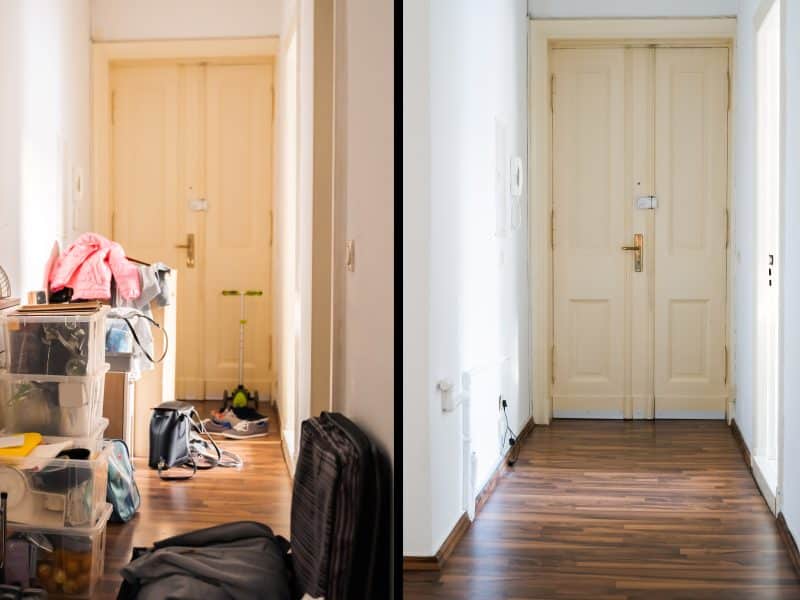
Brogan Ingram has amassed 7 million followers across TikTok and Instagram posting videos of herself cleaning. Well, that’s putting it mildly. Millions of people tune in to Ingram’s social media pages to watch her, or her and a friend or two, clean the cluttered houses of people with a propensity for hoarding at no cost to them. Keenly aware that hoarding is a mental health disorder, Ingram got into the work of cleaning extreme environments for others because she was in a similar position not long ago. “My apartment looked like one of the houses that I clean in my videos,” she told the Washington Post. “I had neglected it so bad, and it was to the point where it was affecting me so greatly. If you don’t keep things clean, it affects your mental health. But at the same time, if you’re experiencing poor mental health, it’s very hard to keep your environment clean. It’s just a vicious, nonstop cycle. I needed to learn ways that I could change my relationship with cleaning, and I learned things that worked for me.”
She’s been applying the strategies she learned in her personal life for several years, using what she calls her ADHD cleaning schedule. It’s literally a series of laminated lists pinned to her refrigerator that remind her which areas of her home should be cleaned on which days. Ever since the first big clean of her own place, it’s the schedule that keeps her on track. She encourages others struggling with big messes to start small and not try to clean everything alone. To push through the shame of keeping the hoard hidden to confront the overwhelming nature of the problem with physical support. ‘Body doubling’ is noted as one technique that can be helpful to people with ADHD who hoard (or have other issues). It’s when you just have a friend in the room for company while you clean or do something else you don’t want to do. Their presence can help reduce distraction and keep you on track, the Post reports.
Ultimately, the standard Ingram holds for her home and what she encourages as a goal for others is clean and safe spaces, not perfectly spotless ones. Don’t let her “after” videos online fool you, either. “We’ve just become so accustomed to thinking everything has to be perfect and being ashamed and feeling judged if it’s not,” Ingram said. “It’s just not realistic. But you can get to a place where you feel good about your surroundings, and that can help you feel good about everything else.”
By building mourning altars, a Minnesota artist teaches people how to process grief and loss
Ann Viveros knows her way around grief. She’s experienced her own significant losses, and as an end-of-life doula since 2020, she works closely with individuals and families as they prepare for death. Still, she told the MinnPost, it wasn’t until attending a mandala workshop in 2019 led by nature artist Day Schildkret that she found a grieving ritual that spoke to her heart. In the workshop, Schildkret taught attendees his process for collecting pieces of nature to create “impermanent morning altars” to honor deceased loved ones.
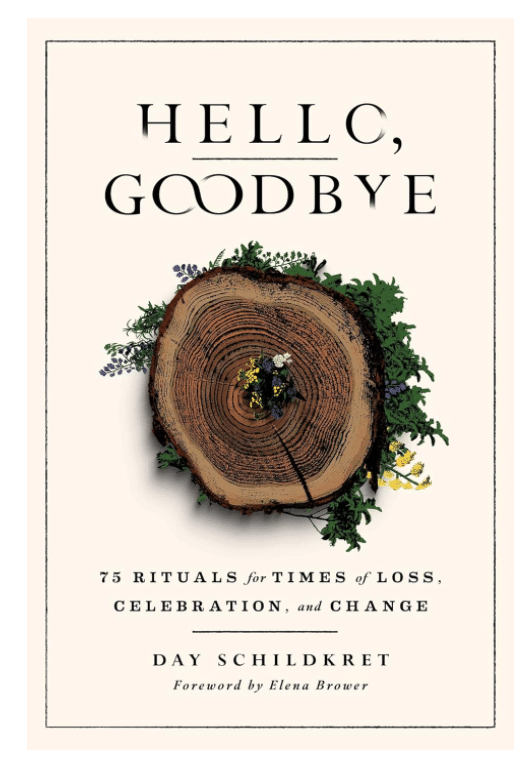
Day Schildkret is the author of Hello Goodbye: 75 Rituals for Times of Loss, Celebration and Change. “Day talked about this idea of working side-by-side with nature,” Viveros said. “He explained that we should ask the land if it is OK to take this pine cone and use it to be part of our altar, or if we pick a flower to ask permission or maybe even sing a song to express our gratitude. It is a way of creating art in harmony with the natural world. The practice really speaks to me because it is out in nature,” she added. “It is about impermanence. It is about beauty and art and mandalas and flowers.” In 2021, Viveros used the practice to cope with the sudden loss of her brother. The act of creating the altar not only gave her a way to tangibly honor her brother, but it also provided therapeutic, meditative movement. Keeping in mind that the altar was impermanent also helped her to symbolically let her brother go.
Viveros’ experience is reminiscent of Schildkret’s, when he developed the concept of morning altars. After the death of his father in 2011, he began to collect objects he’d notice on daily walks with his dog and later arrange them into beautiful patterns. “I had made something very orderly,” Schildkret said. “That was somehow therapeutic for me, putting things together in symmetry after the disruption of his death. It helped me remember that life could be orderly again.” The release of grief was so powerful after creating the first altar, it led him to commit to making more. “I made a commitment to myself that for 30 days I would go on a dog walk, bring a basket, collect things I found on the way and use them to make something beautiful.”
The 30 days were so transformative, Schildkret now teaches his practice through workshops, like the one Viveros attended. In each one, participants work through seven steps of altar creation: wondering and wandering, place meditation, clearing space, creating, gifting, walking away, and sharing the art. Throughout the process, people connect with nature and one another and co-create a community of support. Over time, Schildkret has even partnered with Lakewood Cemetery in Minneapolis to add his workshops to their impressive slate of grief programming. As a cemetery, Lakewood is unique for today’s time in that it creates programs that center mental health and processing grief, including Schildkret’s workshops, book clubs, and even tea ceremonies. The goal, said a cemetery director, is to support community mental health by acknowledging death and grief as a natural part of life.
“We learned during Covid how hard it is to grieve alone,” Schildkret said. “For everyone I teach these workshops to, what comes out is that it is so essential to their mental health to witness each other’s losses and grief. When we gather people together, we hear their stories and learn about each others’ grief and beauty and memories. This practice improves people’s mental health and makes the world a better place.”
In other news…
How do you feel about the term “journey?” Everything’s a journey these days, writes Lisa Miller in this essay for the New York Times. The term really exploded in popularity in the early 2000s, she writes, to describe “abstract outcomes.” Relative to mental health, it’s used as a way to talk about a tough, lengthy experience that may include suffering, while also leaving room for optimism.
College students’ mental health improves by spending time in nature and birding, new study finds. A research study led by environmental biologist Nils Peterson from North Carolina State University found that students who took walks in nature and participated in birdwatching reported increased well-being and experienced less psychological distress than those who didn’t, according to a recent article on Forbes.com.
This Mental Health Awareness Month, the State of Iowa launched Back to Black – an extension of their Make it OK initiative – designed to reduce stigma and increase understanding of mental illness. As part of the effort, a landing page was designed containing links to helpful mental health resources. Some are general to all genders and age groups, while others are more specific to Black people within certain affinity groups, including caregivers, parents and LGBTQ+.
Three years ago, psychologist Candice Hargons co-founded the Neighborhood Healers Project in Lexington, Kentucky. Besides operating a mental health clinic, the organization provides workshops and special training to community members who then conduct mental health outreach in their respective neighborhoods. Hargons was inspired to begin after learning that Black people represent 14 percent of the Bluegrass region’s population, but only half of those seeking mental health care. “A lot of the stigma around what it means to have a mental health concern prevents people from seeking help,” Hargons told Spectrum News 1. “And so we know in past generations people would say, you know, this person’s having a nervous breakdown or they’re crazy, but they wouldn’t give the appropriate attention to the mental health symptoms.”
If you or someone you know is in crisis or experiencing suicidal thoughts, call or text 988 to reach the 988 Suicide & Crisis Lifeline and connect in English or Spanish. If you’re a veteran press 1. If you’re deaf or hard of hearing dial 711, then 988. Services are free and available 24/7.
Recent MindSite News Stories
MindSite News Reporters Win Two Awards

MindSite News, the nation’s only national news outlet reporting exclusively on mental health, is pleased to announce that two MindSite News reporters have won awards for excellence in journalism.

Report an Unhoused Person in Mental Health Crisis in San Francisco and This Happens Next
In San Francisco, as in many cities, it’s not uncommon to cross paths with a person experiencing homelessness in the throes of a mental health crisis. The scene can be tragic, confusing and can feel dangerous. Bystanders might wonder how to help and what happens if they do.

The Tortured Cycle Through San Francisco’s Strained Mental Health and Detention Systems
Last year, thousands of people fell into San Francisco’s badly strained system for treating severe mental health and drug-related crises. Many who enter that system receive temporary care and multiple involuntary psychiatric holds that fail to address long-term needs.
If you’re not subscribed to MindSite News Daily, click here to sign up.
Support our mission to report on the workings and failings of the
mental health system in America and create a sense of national urgency to transform it.
For more frequent updates, follow us on Facebook, Twitter and Instagram:

The name “MindSite News” is used with the express permission of Mindsight Institute, an educational organization offering online learning and in-person workshops in the field of mental health and wellbeing. MindSite News and Mindsight Institute are separate, unaffiliated entities that are aligned in making science accessible and promoting mental health globally.
Copyright © 2021 MindSite News, All rights reserved.
You are receiving this email because you signed up at our website. Thank you for reading MindSite News.
mindsitenews.org

The name “MindSite News” is used with the express permission of Mindsight Institute, an educational organization offering online learning and in-person workshops in the field of mental health and wellbeing. MindSite News and Mindsight Institute are separate, unaffiliated entities that are aligned in making science accessible and promoting mental health globally.


Author

Related Articles

Better Screening for Postpartum Psychosis Is Critical
An expert in perinatal psychiatry makes the case for changing the health system’s process of screening for postpartum psychosis.