
Inside Baltimore’s Worst-in-the-Nation Overdose Crisis
Investigative reporters walk readers through what they found after a year of digging. Troubled 988 centers can look to Missouri for guidance. And more.


June 10, 2024
By Don Sapatkin

Good Monday morning! A review of 160 national climate change adaptation policies worldwide found none – zero – that directly addressed child mental health, Ilan Kelman writes in Psychology Today’s Disaster By Choice blog. Kellman, a professor of disasters and health at University College London, co-authored the study in The Lancet Child & Adolescent Health.
In today’s Daily, Investigative reporters walk us through the causes and impacts of Baltimore’s worst-in-the-nation overdose crisis. Troubled 988 call centers can look to Missouri’s smooth operations for guidance. Plus: Philadelphia’s mayor proposes a huge new drug treatment center and shelter. A new push for parity. The perils of too much mental health awareness. And states’ plans for more addiction treatment are stuck in federal backlogs.
In Baltimore, people die of drug overdoses at twice the rate of the next highest city – and nearly a third of them are older Black men
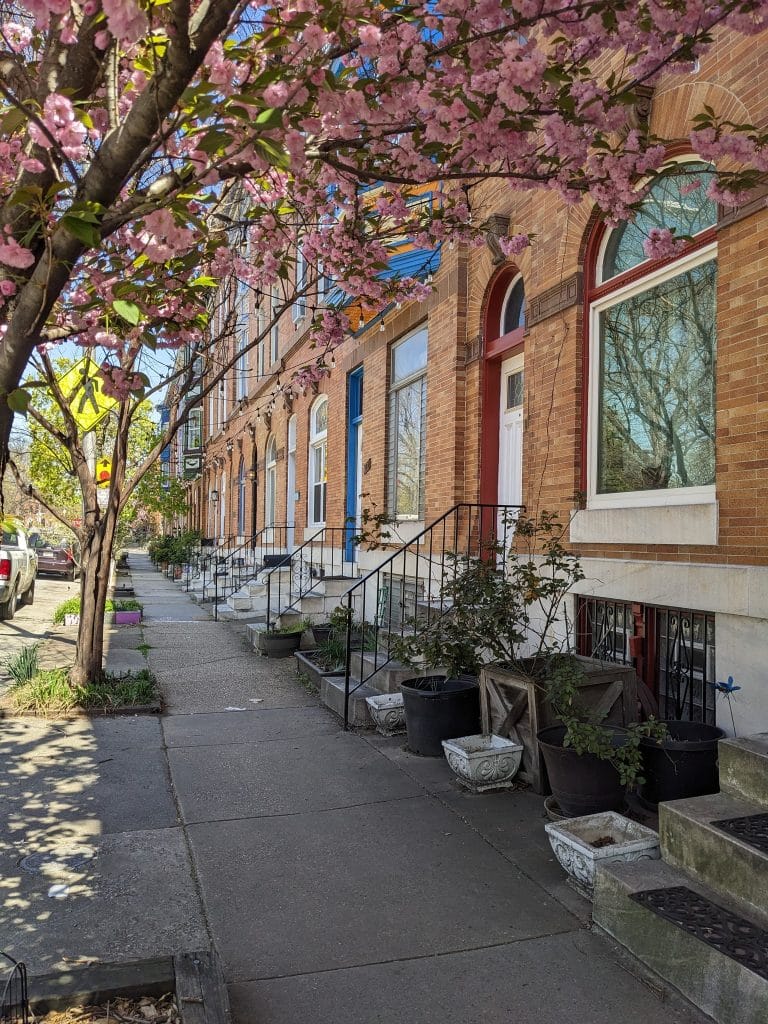
Philadelphia – where I covered the ever-growing waves of addiction (prescription painkillers>heroin>fentanyl) for the Philadelphia Inquirer − has long had by far the highest overdose death rates of America’s 10 largest cities. So I was shocked to learn how much worse things are in Baltimore (No. 30 by population). And quite chagrined, especially since I’d ignored then-Health Commissioner Leana Wen’s entreaties a decade ago to cover her innovative policies tackling addiction. But Baltimore’s overdose crisis has gotten much, much worse since then. And it turns out that I wasn’t alone in my ignorance of the devastation 100 miles south of my home. Many of Baltimore’s leaders had no idea how their city compared, either − until three reporters from the Baltimore Banner, a nonprofit digital news site, confronted them with what they’d found after a year of digging (and suing for information).
The resulting series, part of the New York Times’s Local Investigations Fellowship and published in the Times, is perhaps the best examination of a local overdose crisis I’ve read. Alissa Zhu’s video provides a good overview of how a large but not outrageously huge epidemic of drug deaths grew out of control when fentanyl arrived here earlier and with far greater force than in the rest of the country, how many people lost their lives (recently, nearly 1,000 a year in a city of 570,000), who they were (older Black men, in particular), and where they died (on a third of the city’s blocks).
In Part 1, “How Baltimore Became the Overdose Capital,” we learn that the city has had among the highest overdose death rates in the country for most of the past three decades. But even as its reputation as the nation’s heroin use capital was reinforced by HBO’s series “The Wire,” its fatality rates were much closer to the national average then they are now. The impact of fentanyl’s arrival is illustrated in a startling chart showing deaths rising at a gradual upward angle nationwide vs. a sudden, steep line in Baltimore. The city’s response was hailed as a model: it distributed the overdose reversal medicine Narcan widely, experimented with ways to steer people into treatment and ratcheted up campaigns to alert the public. Wen described the initiatives to Congress before leaving in 2018, a year before the mayor resigned in a corruption scandal, beginning a period of wider tumult in the city government.
Leaders became preoccupied with other crises, including horrific gun violence and the pandemic. The overdose crisis seemed to recede into the background. The Health Department last presented data on overdose deaths to the City Council in 2020 – for 2017 and 2018. After a reporter showed Councilman Mark Conway the most recent numbers, the alarmed leader of the city’s public safety committee said he would have called for hearings if he had known how much Baltimore was.an outlier.
“‘I Love You in the Sky, Daddy’: Stories From Baltimore’s Overdose Crisis” quotes 6-year-old Cassidy Fredrick as she climbed on her father’s gravestone and pointed to the clouds. Devon Wellington, according to the sidebar, grappled with addiction, like his mother, father and grandmother before him. He died in his truck of an overdose on July 24, 2021, at age 32 – a year after he found out he was Cassidy’s father. “He took her to the park, braided her hair and was trying to figure out what it meant to be a parent,” said his mother, Donna Bruce. She and Cassidy sometimes look for signs of him in the sky: a heart-shaped cloud, a rainbow, a butterfly flitting past.
Part 2 held what for me was the biggest surprise: “In Baltimore’s Senior Homes, Overdoses Plague a Forgotten Generation.” Black men currently in their mid-50s to early 70s make up 7 percent of the city’s population, but they’ve accounted for nearly 30 percent of drug fatalities in recent years, with a death rate 20 times that of the rest of the country. A half-century ago, manufacturing jobs began to disappear in this industrial city where Black families had few other opportunities to build wealth. Nearly half the Black men under age 30 were out of work by 1980, a level similar to Black unemployment during the Great Depression. Around the same time, an influx of highly addictive illegal drugs created a lucrative but corrosive shadow economy. Some young people turned to dealing drugs and then using them. A striking graphic follows overdose death rates among Baltimore’s Black men born between 1951 and 1970 compared to those of all ages, the bulge moving rightward and growing upward from 1993 (ages 23 to 42) to 2022 (ages 52 to 71). The generation is now a vivid outlier.
Many older Black men, lonely grandparents and retirees who have been fighting their addiction for decades, can now afford only subsidized apartments in complexes for senior citizens that residents say are often awash in drugs. Yet health officials have made little targeted outreach to older people, as the city has concentrated its drug education efforts on the young. At least 31 of the 50 addresses where people have fatally overdosed most often since 2018 are advertised as senior housing complexes, the news organizations’ investigation found. and more than 340 people over 50 have died in those buildings. During an interview last September at his desk, sitting between a bookshelf full of Bibles and a table stacked with Narcan in a cluttered office in the subsidized West Baltimore high-rise where he was tenant council president, Larnell Robinson pulled out a list of residents and began crossing off the names of the dead, one by one. “I feel like I work at the morgue sometimes,” he said.
How to run a successful 988 call center
Around the country, many of the local call centers that handle crises 24/7 for the national 988 suicide hotline are facing daunting challenges, often related to a huge expansion two years ago that came with the new three-digit number (for calls and texts, or start a chat here). Funding in many states is uncertain. Staffing is short. Crisis-counselor training is sometimes inadequate, which leaders are starting to address. Counselors are poorly paid and frequently burned out. In Oklahoma and Colorado, over a third of employees reportedly left within months of taking their first call.
Perhaps everyone should be looking at Missouri, according to three researchers at Washington University in St. Louis and two executives at Provident Behavioral Health writing in Health Affairs Forefront, a feature in the journal that focuses on health policy news, commentary and analysis. Provident — a St. Louis-based nonprofit that has played a major role in the state’s hotline operations — is the sole Missouri backup for all statewide crisis lines that feed into 988 and was once a national backup as well. The authors write that its staff generally report being satisfied with their work, well supported by management, and have a sense of commitment and capacity to use best practices. The average length of employment for front-line workers is about two years.
Provident planned ahead: It planted the seeds for a smooth launch of 988 four years earlier by partnering with the Missouri Suicide Prevention Network in 2018. Together they started educating the state Legislature about the importance of suicide prevention. That led to legislation, passed and implemented that year, requiring every behavioral health professional in the state (except psychologists) to have at least two hours of suicide prevention training in order to be licensed. Lawmakers were primed to support 988 by the time discussions about the state’s part in a federally coordinated network began in 2020, two years before the launch. Missouri funded crisis lines in the state in advance so that they could hire staff to meet the expected increase in demand.
The suicide prevention network, which coordinates statewide efforts and is funded by the state, cultivated relationships with behavioral health providers planning to participate in 988, the authors write, leading to collegial relationships when they might otherwise have seen each other as competitors for funding and resources. Collaboration opened opportunities to share information, learn from one another, and clarify goals. One of the first decisions that came out of the Provident Health-suicide prevention network collaboration was determining the proper level of training, salary, adequate pay and educational requirements for crisis-line workers. Provident was able to fill open positions in a year when it was hard to hire new staff. Many other centers were less successful.
In other news…
Philadelphia Mayor Cherelle Parker plans to build a $100 million drug treatment center and shelter for 600 people next to a major jail complex in the city’s Northeast, according to the Axios Philadelphia newsletter. Parker took office in January and has pledged to end open-air drug markets while expanding drug treatment capacity. But she was criticized early on for eliminating funding for the city’s syringe exchange program. Then she infuriated both the addiction treatment and law enforcement communities over a plan that called for police to conduct a sweep of the Kensington neighborhood – notorious for its public drug use and homelessness – and arrest people for crimes the city had formerly decriminalized.
Parker’s latest proposal – she calls it a “wellness village” – was first reported by the Philadelphia Inquirer, which obtained a recording of a closed-door briefing for members of City Council. The story generated some support from a curious public, but also a lot of surprised anger, consternation over the location, and worries about neighborhood safety. “We are going to have to deal with the narrative that this is criminalizing addiction because the location is contiguous to the prison campus,” the mayor told City Council members. “In no way, shape or form, will I run from the fact that this will be a secure facility.”
A group of Senate Democrats is pressing the Biden administration to finalize rules requiring insurers to cover mental health on par with what they provide for physical health, hoping to outflank a powerful group of employer organizations that oppose them, the Politico Pulse newsletter reported. Parity has been a dream for 60 years and the law of the land since 2008, but insurance companies, many of which administer self-insured employer health plans, still manage to avoid hard-to-define and harder-to-enforce parts of the federal law. The Biden administration’s proposed rules, released last summer, are intended to close many of those gaps and chip away at pre-authorizations.
“Have We Become Too Aware of Mental Health?” psychologist Mark Travers asks in his Social Instincts blog for Psychology Today. “In essence, mental health awareness has ironically become a double-edged sword,” Travers writes. “While it has undoubtedly led to positive outcomes, such as increased recognition and support, it has also led some to become skeptical of their own natural range of emotions. This prompts individuals to become overly alert, cynical, and on the lookout for anything that rings a psychological bell − creating a self-fulfilling prophecy that is now referred to as the ‘prevalence inflation hypothesis.’”
The Biden administration is struggling to keep up with an array of requests from states wanting to roll out innovative Medicaid expansions through Section 1115 waivers, the Politico Pulse newsletter reports. Section 1115 waivers allow states to make experimental or pilot demonstration changes to their Medicaid program, including projects to better serve Medicaid enrollees and save lives. Federal reviews used to average 71 days. Partly due to staffing challenges at the Centers for Medicare & Medicaid Services (CMS), which oversee Medicaid, the average wait for approval has mushroomed to more than 450 days, according to the National Association of Medicaid Directors. Kentucky, Utah and West Virginia have been waiting two years for permission to use Medicaid to pay for addiction treatment.
If you or someone you know is in crisis or experiencing suicidal thoughts, call or text 988 to reach the 988 Suicide & Crisis Lifeline and connect in English or Spanish. If you’re a veteran press 1. If you’re deaf or hard of hearing dial 711, then 988. Services are free and available 24/7.
Recent MindSite News Stories
Over 3 Years, 43 People Died in Riverside County Jail. Christopher Zumwalt, Violently Pulled from a Cell While Having a Psychotic Crisis, Was One

Ten correctional officers used pepper spray, stun shields, multiple Taser shocks and a Stinger 15 grenade to remove a single naked man in a mental health crisis from his cell. Continue reading…
A Beloved Chicago Educator Was Shot to Death in the Midst of a Mental Health Crisis. Why Has No One Been Charged?

Something was going on with Abnerd Joseph, a young, Black assistant principal in Chicago. He was pacing the hallways of his downtown apartment building in his bathrobe and calling for help. Some of his neighbors called 911. Another took matters into his own hands.
How Can We Combat the Rise in Suicides Among Black Youth? An Interview with Dr. Yolanda Lawson

Dr. Yolanda Lawson, president of the National Medical Association, talks with MindSite News about suicide prevention among Black youth.
If you’re not subscribed to MindSite News Daily, click here to sign up.
Support our mission to report on the workings and failings of the
mental health system in America and create a sense of national urgency to transform it.
For more frequent updates, follow us on Facebook, Twitter and Instagram:

The name “MindSite News” is used with the express permission of Mindsight Institute, an educational organization offering online learning and in-person workshops in the field of mental health and wellbeing. MindSite News and Mindsight Institute are separate, unaffiliated entities that are aligned in making science accessible and promoting mental health globally.
Copyright © 2021 MindSite News, All rights reserved.
You are receiving this email because you signed up at our website. Thank you for reading MindSite News.
mindsitenews.org

The name “MindSite News” is used with the express permission of Mindsight Institute, an educational organization offering online learning and in-person workshops in the field of mental health and wellbeing. MindSite News and Mindsight Institute are separate, unaffiliated entities that are aligned in making science accessible and promoting mental health globally.


Author

Related Articles
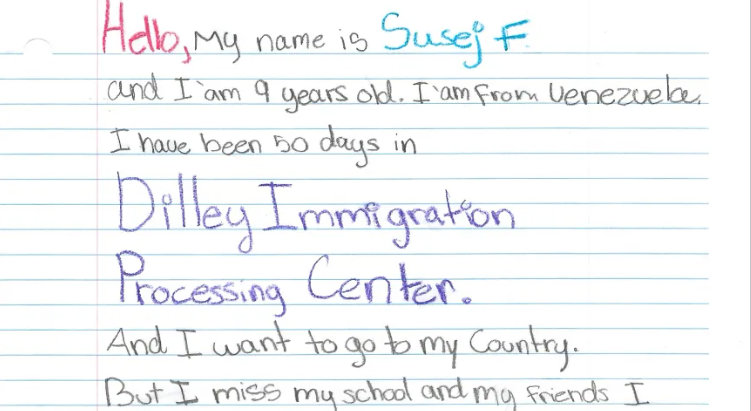
Health Organizations Condemn Traumatic ICE Raids, Family Separation
According to letters from children living in an ICE detention facility, living conditions are inhumane and their mental health is suffering.

In Teens, Social Anxiety Often Looks Like Anger
A study finds that some teens’ aggressive behavior may be due to social anxiety, not straightforward reactivity.
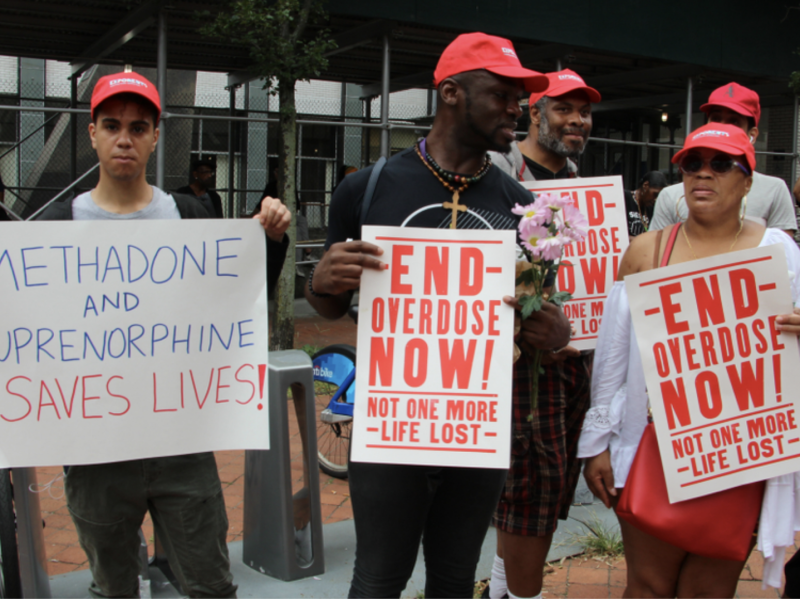
Expert Calls for Harm Reduction, Not Punishment, to Resolve Our Overdose Crisis
As the Trump administration pulls funding from harm reduction, an expert on the overdose crisis says it’s the best way to save lives.
