
The Danger of Hope
Detroit artist Morgan Breon uses her art and theatre to help schools and counselors support youth survivors of trauma.

December 5, 2024
By Courtney Wise

Greetings, MindSite News Readers. In today’s Daily, we connect with Morgan Breon, a Detroit-based artist whose play The Danger of Hope and her heal.be.live project uses art to train educators, mental health professionals, and soon, parents, on how to effectively support youth survivors of trauma. Plus, voters in Louisiana will soon decide whether or not to expand the crimes for which juveniles can be prosecuted as adults.

Healing students’ hearts and minds through art:
A MindSite News special on Morgan Breon

This story has been updated.
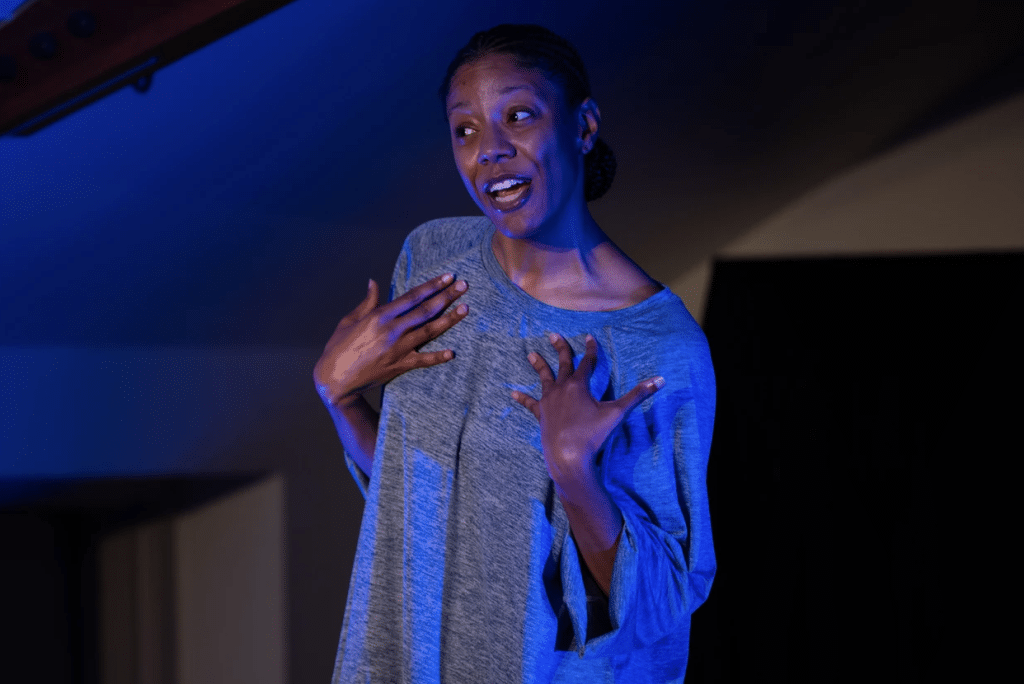
Morgan Breon is a creative force on a mission to connect heads to hearts through art. “Art really gets to things on a very soul level,” she told me. “It helps to unearth things at a very subconscious level, which allows you to do more root work, which allows you to have more fruitful work.” Reflecting on dark moments in her youth, she discovered that even when she didn’t believe her life mattered, she could write things that did. “Because of that, I’m more interested in what art can do, than just doing art,” she said.
That may be why her work in the arts juts across so many spaces. Breon holds four degrees from the University of Michigan-Ann Arbor: Dual Masters in Clinical Social Work and Education Policy, and Dual Bachelor’s in Psychology and English. In addition to being a playwright, actress, and poet, she is also the founder and director of heal.be.live, which stages a play, The Danger of Hope, and produces books, a social emotional card deck to aid communication, and an accompanying collection of workshops designed to equip educators, mental health clinicians, and soon enough, parents, with the tools to support and engage youth survivors of trauma.

Breon plays every character in the production, including a teacher whose students nickname her The Witch. They figure the only way she’s able to keep them calm and regulated is by casting a spell.
That project has its roots in her stint as behavior specialist at Detroit’s Denby High School, where students really called her The Witch because of her skill in helping them. “I wanted people to sit down and experience what my kids went through day in and day out,” Breon said. Criticisms of their behavior and school performance were constant, but few considered the obstacles students had to overcome just to make it to school each day.
In her time working with students, Breon has heard about teen pregnancies, worrisome attention from parents’ boyfriends, fears about safety and more. “Kids are looking for love. They’re looking for protection. They’re looking to feel safe — all the human things,” she said. “And to get what they’re looking for, they’re using the resources that they have available to them within their 14-year-old brains. I want people to have empathy; that’s all.”
Mental health and educational resources exist, she said, but people don’t often know how to tap into the support. Or, they don’t recognize the resources they encounter that can benefit them. “So I use the arts to…invite you into this fantastical world. And if something about this world moves you, then we can tell you where to go from there. That’s what we’ve seen our work do,” Breon said.
Her plays are staged with mental health professionals in the audience. Mindful of the emotional triggers that might spark in people as they self reflect on the story taking place, she believes it necessary to present people with an option for help and next steps. “No one has to talk about deep traumas; you don’t have to be put on the spot,” said Breon. “But because of how we set it up, you can walk over to one of our professionals and ask, ‘How do I follow up with you?’”
It really is that simple, too. After each staging of The Danger of Hope, Breon hosts a talkback with the audience, answering questions about the show and sharing how she uses it to connect people to other forms of training and support. At the show I attended this past October, multiple mental health professionals were in the audience, including some of her colleagues from jobs past. It offered an entry-point to Awareness, the first of five phases of training extended from The Danger of Hope play, in which participants discover their adverse childhood experiences score (ACES) and learn to identify trauma in others.
The remaining four phases are Affirmation, where participants learn about secondary trauma and self-care; Performance in Teaching, where theater techniques are used to help teachers apply their natural gifts in the classroom; Creative Methods, where participants practice using tools like the social-emotional card deck Breon created to promote student expression; and finally, Case Studies, in which participants focus on the importance of noticing a student as a whole person with diverse gifts and needs.
“Sometimes, when we only know students as “students,” as someone who gets grades in our class, raises their hand, or turns in homework assignments, it prevents us from building a relationship that can actually cultivate a healthier classroom,” Breon said. “In the play, you saw my student throw an apple at me. That’s a real life situation; I got an apple thrown at me. But I hint in the play that it’s because they had experienced a trauma, and they didn’t have anybody really around to help them process that. So, Case Studies is a deep dive to help you connect to and understand the ins-and-outs of your students, so that in the face of trauma, you can respond with a more accurate action plan.”
In the three years since The Danger of Hope debuted, she has facilitated trainings in Michigan, Massachusetts, New York, and Bermuda. She has also done trainings online, thanks to a partnership with the online learning site, CE You! Response has also been overwhelmingly positive. According to the results of trainee surveys distributed at the conclusion of each workshop, 92% of participants strongly agree the training is relevant to their practice. They would also recommend it to others. “This was the best training I have ever attended,” one participant wrote. “Breon taught for every learning style which made it easier for me to follow.”
Better yet, they’re actually growing in skill. According to participant pre-assessments distributed at the start of training, 13% of participants said they knew how to identify trauma symptoms. By the end of the two-day training, 95% said they could identify trauma symptoms. By another metric, 30% of participants said they had empathy for student misbehaviors, even one that is triggering for me. At the conclusion of training, 75% said the same. Other written feedback includes teachers committing to more actively thinking about trauma.
Educators or mental health professionals interested in experiencing the training can reach out to Breon on her website. She plans to design training for parents next, to help them apply easy-to-use tools that promote healthy communication. She still leads all training herself, working with each group to customize a training package according to their needs. Because of the subject matter and her teaching techniques, Breon caps most workshop sessions at 32-40 participants. Virtual sessions host up to 100 people.
It’s a lot of work, but Breon’s not tired yet. “I’m not just interested in performing and entertaining you,” she said. “When a child who has been labeled cognitively impaired, and literally cannot read or write, can pick up one of these cards and communicate about themselves, I feel like we’re doing the work that we’re supposed to do.” It’s a new revelation, she said, informing her purpose and calling. “I get excited about people feeling free and open enough to express themselves. A lot of people don’t know that they’re holding back. They don’t know what they need to unearth. But this work is letting people know, ‘you have something to say, and this is a way that can help you say it.’”

In other news…
Voters in Louisiana will soon decide on a constitutional amendment that, if passed, could send more juveniles to adult prisons. The amendment will allow state lawmakers to expand the number of felony crimes for which juveniles can be prosecuted as adults, meaning that children as young as 8 could be sent to an adult prison — something that the Equal Justice Initiative and other human rights group condemn.
“Incarcerating children with adults needlessly puts kids at great risk of sexual and physical violence, increased trauma, and suicide,” EJI has pointed out. In fact, children are 36 times more likely to die by sucide in an adult prison than a juvenile facility.
As it stands, juveniles can be prosecuted as adults for 16 crimes, including murder, aggravated rape and armed robbery. The potential amendment would remove those specifications, giving the legislature authority to imprison juveniles in adult prison for any felony conviction it sees fit. Republican lawmakers who support the bill argue it’s necessary for public safety. But children’s rights and criminal justice reform advocates say such measures are overly punitive and do not prevent crime. Moreover, data from the Sentencing Project suggests that Black youth would be disproportionately harmed.
“For children’s sake, we oppose the amendment,” Checo Yancy, an activist for criminal justice reform and the policy director of Voters Organized to Educate, said to Reveille. He is also a former inmate of Louisiana’s infamous Angola prison. “Locking kids up and sending them away for the rest of their lives is not the solution. We have some of the toughest laws since the ‘70s and still have crime. We’d rather lock up the problem than invest in mental health, childhood education and nutrition.”
If you or someone you know is in crisis or experiencing suicidal thoughts, call or text 988 to reach the 988 Suicide & Crisis Lifeline and connect in English or Spanish. If you’re a veteran press 1. If you’re deaf or hard of hearing dial 711, then 988. Services are free and available 24/7.
Recent MindSite News Stories
The Return of Trump: What Does it Mean for Mental Health Policy and Advocacy? A Live Discussion

Thursday, Dec. 19, 12 pm PT / 2 pm CT / 3 pm ET.
Join MindSite News and a team of mental health policy advocates and experts as we explore where a second Trump presidency may go.
Chicago Advocates and Clinicians Come Together to Support Mental Health of Immigrants in Peril
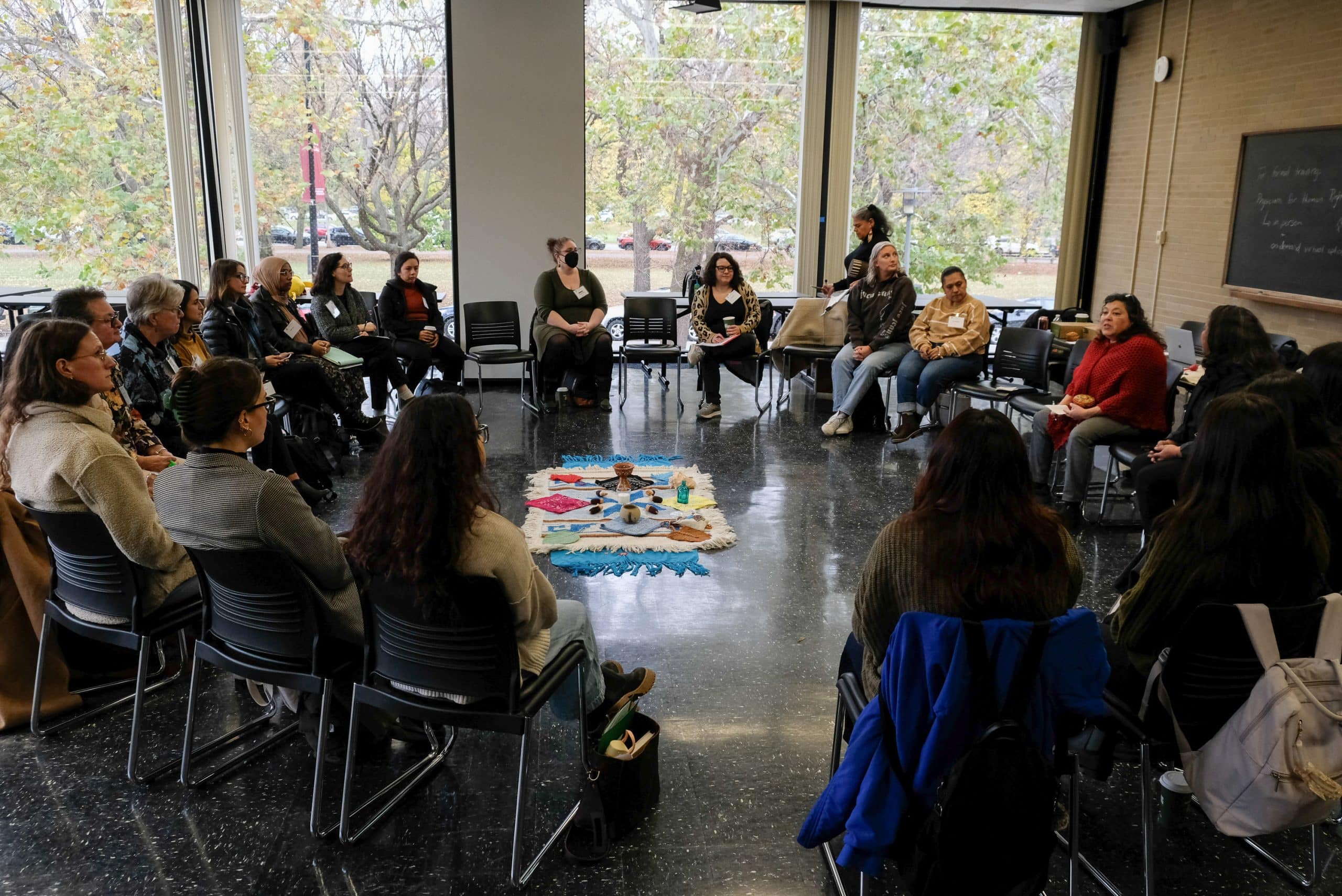
In the aftermath of the presidential election, almost 200 people gathered in Chicago to strategize about how to protect the mental health of immigrant communities. They also sought a space of healing to help them get ready them for what lies ahead.

Did the Stanford Prison Experiment, One of Psychology’s Most Famous Studies, Really Turn People Into Monsters?
A riveting new docuseries talks with the former youths from a famous Stanford experiment that quickly devolved into violence and chaos. Continue reading…
If you’re not subscribed to MindSite News Daily, click here to sign up.
Support our mission to report on the workings and failings of the
mental health system in America and create a sense of national urgency to transform it.
For more frequent updates, follow us on Facebook, Twitter and Instagram:

The name “MindSite News” is used with the express permission of Mindsight Institute, an educational organization offering online learning and in-person workshops in the field of mental health and wellbeing. MindSite News and Mindsight Institute are separate, unaffiliated entities that are aligned in making science accessible and promoting mental health globally.
Copyright © 2021 MindSite News, All rights reserved.
You are receiving this email because you signed up at our website. Thank you for reading MindSite News.
mindsitenews.org

The name “MindSite News” is used with the express permission of Mindsight Institute, an educational organization offering online learning and in-person workshops in the field of mental health and wellbeing. MindSite News and Mindsight Institute are separate, unaffiliated entities that are aligned in making science accessible and promoting mental health globally.


Author

Related Articles
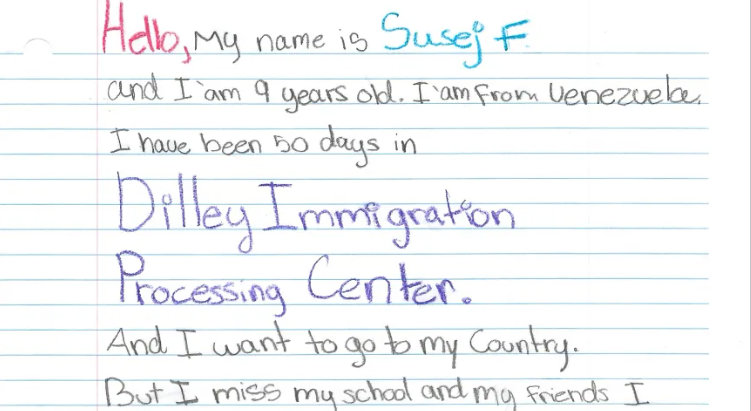
Health Organizations Condemn Traumatic ICE Raids, Family Separation
According to letters from children living in an ICE detention facility, living conditions are inhumane and their mental health is suffering.

In Teens, Social Anxiety Often Looks Like Anger
A study finds that some teens’ aggressive behavior may be due to social anxiety, not straightforward reactivity.
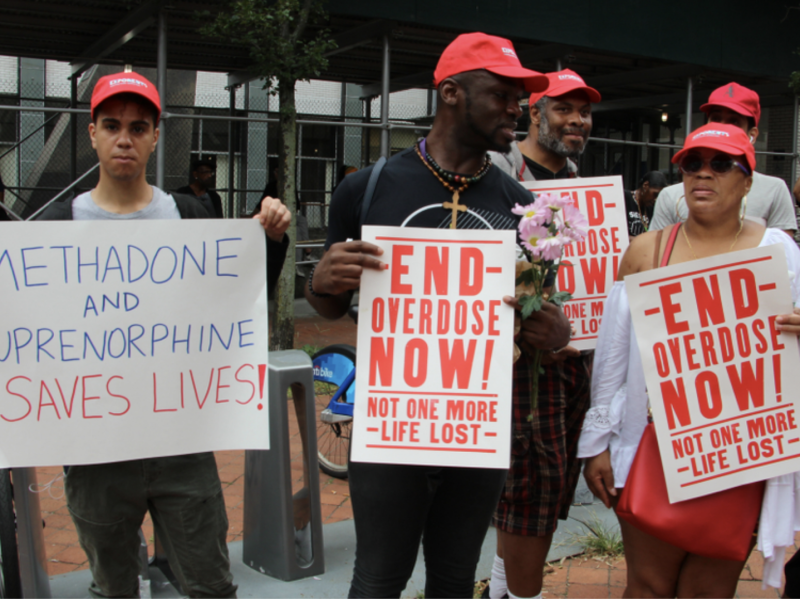
Expert Calls for Harm Reduction, Not Punishment, to Resolve Our Overdose Crisis
As the Trump administration pulls funding from harm reduction, an expert on the overdose crisis says it’s the best way to save lives.
