
PBS Kids Debuts Its First Autistic Lead
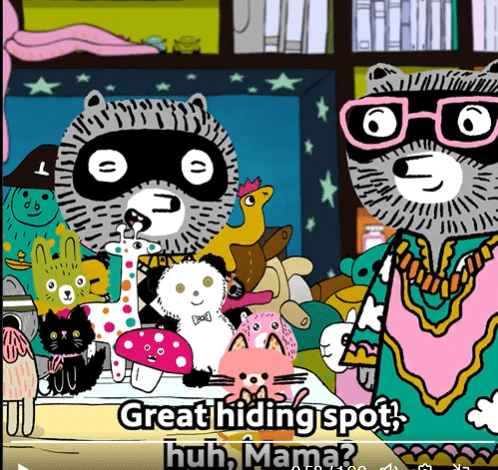
A cartoon racoon child known as Carl the Collector gives us hope for a more inclusive future.


Thursday, Dec. 12, 2024
By Courtney Wise

Greetings MindSite News Readers. In today’s Daily, PBS Kids introduces their first autistic lead in their original programming; a father turns his grief at the loss of his babies into a program aimed at reducing Black maternal and infant mortality; and the Ad Council launches a campaign designed to help parents be the best emotional support for their children that they can be.
And finally, farewell to one of my favorite Earthlings, poet Nikki Giovanni. She’s one of my possibility models. She’s written so much of my anger, spoken so much of my truth, lived so much of my love. I hope to one day be so brave. She dared to design her life and didn’t hide herself. Like a lot of Black millennials, who grew up wanting to attend Hillman College, I wasn’t at a talent show in the 90s that didn’t feature a Black girl reciting Ego Tripping like Kimberly Reese. Nikki saw Black women like me, and in her, I see my future self.
PBS Kids introduces its first autistic lead
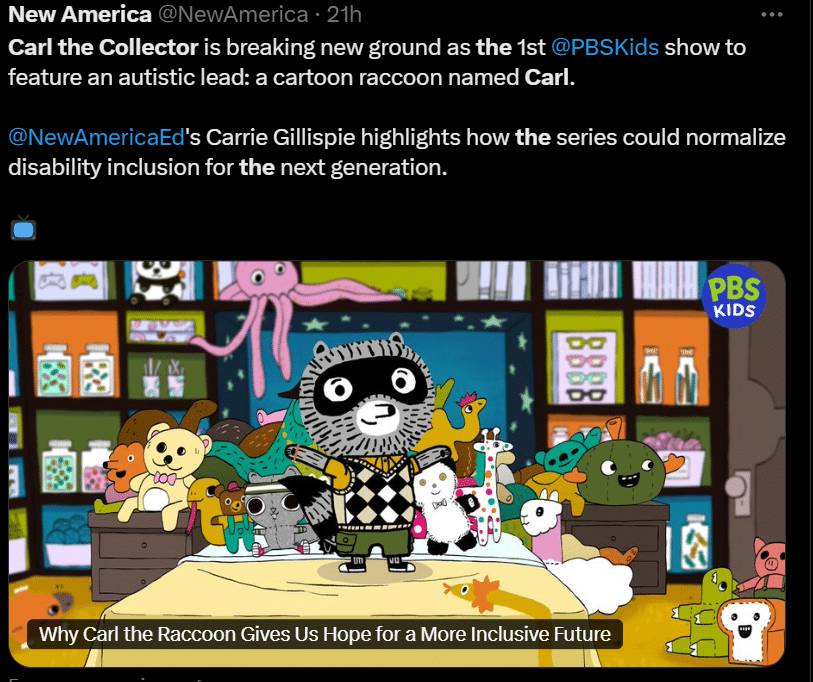
If you’re a regular watcher of PBS Kids programming, you know there are autistic characters in several of its most popular shows. Muppet Julia has autism on Sesame Street, Teacher Harriet’s nephew Max has autism on Daniel Tiger’s Neighborhood, and AJ Gadgets is an autistic superhero-in-training on Hero Elementary. But Carl the Racoon is the first autistic lead in the cartoon show Carl the Collector, which aired its first episodes in November. His role as the central protagonist in the show’s stories offers young viewers a closer look at the common disorder, illustrating how people on the spectrum navigate typical childhood challenges.
“The stories overall are just human experience, stories for everybody,” said best-selling children’s author and illustrator Zachariah OHora, who created “Carl the Collector.” “We just get to see it through all these different lenses,” he told the New York Times.
Carl’s perspective is important to see, too. One in 36 US children is diagnosed with autism and nearly 9% of American children have a developmental disability, according to the most recent data from the CDC. Still, just 0.9% of characters in children’s TV last year had any disability. “It felt like a PBS Kids show that needed to be made,” said Sara DeWitt, the network’s senior vice president and general manager. “Because we know there are a lot of kids on the spectrum in our audience, in the US today, we just felt like this is something that would fill a gap.”
Better yet, the show’s autistic characters are voiced by autistic children. Kai Barham, 10, and Maddy McIlwain, 11, voice Carl and Lotta, respectively. “It makes me happy that I am finally being represented in a show,” Barham said. “I hope that people who are not on the spectrum will learn that autism is not like the stereotypes.” The show confronts two major myths about autism in its first season, demonstrating the varied behaviors among people with autism and showing that many people with autism enjoy social interaction.
PBS expects the show to raise awareness about autism spectrum disorder among viewers, helping people to better understand the community around them. DeWitt noted that in an informal survey, children who weren’t even familiar with the term autism realized they knew someone like Carl after watching the show.
“I hope they learn more about each other,” said Stephen Shore, an autistic professor at Adelphi University and an adviser to the show. “…That people from all parts of humanity — neurodivergent, neurotypical, neuro-some-other-category-that-we-haven’t-thought-of-yet — understand that we’re more similar than we’re different.”
Motherhood in stillbirth

NPR’s latest photo essay, “The Loss Mother’s Stone,” features images and words by Nancy Borowick, who captures the grief and passion of mothers who lost babies to preventable stillbirth. Though stillbirth rates in the US fell by almost 10 percent between 2000 and 2019, they remain high when compared to our European peers in Finland, Norway, and the United Kingdom. There, stillbirth rates dropped 20 to 30 percent over the same time period. Borowick wants the project to draw awareness to this prevalent, yet under-discussed, issue in the United States, and help promote resources for education that might help other families avoid the same tragedy.
Laura Forer birthed her daughter, Naomi, stillborn at 38 weeks. A knot in the umbilical cord deprived Naomi of oxygen and nutrients, resulting in her death. As standard prenatal care does not require scans of the full cord at check-ups, the knot wasn’t caught soon enough to make a decision about inducing before term, which might have saved Naomi’s life.
“She was as perfect as a newborn can be, except for the tight knot in her umbilical cord,” Forer said, recalling the moment she first looked at her daughter. “And that was the day I was introduced to two new concepts: stillbirth and grief. Grief has been called a journey, but a journey implies an endpoint. Grief is being thrashed around by the waves, trying to come up for air, trying to find land, trying to last one more day in a world where you are not a fish. It is a world that you never wanted to visit, where you shouldn’t be, but where you must learn how to swim.”

Join MindSite News and a team of mental health policy advocates and experts as we explore where a second Trump presidency may go.
In other news…
Dads to Doulas: Amidst the grief of losing his twin boys to stillbirth, Brad Edwards upended his pain into purpose and created Dads to Doulas, a program dedicated to reducing the maternal and infant mortality rates in the Black community. Through a six-week training, Dads to Doulas, the program’s goal is to equip Black men and expectant fathers “with the knowledge and skills to advocate for their families from pregnancy through infancy.” By doing so, Edwards hopes to lower the Black maternal and infant mortality rates, which are 4 times and nearly 3 times higher than whites.
Dads to Doulas aims to equip black men and expectant fathers with the knowledge and skills to advocate for their families from pregnancy through infancy. “I would love for us to be a real game-changer as it relates to health care and making sure that these families don’t ever have to suffer any of the same loss I did, if it can be avoided,” Edwards told Because of Them We Can. “I want people to understand that our shared experience should be shared. Every time I share my story with some brothers, that’s therapeutic for me. I don’t want us to be so tight-knit with our experiences that we’re not able to use that to empower not only ourselves but also someone else who needs to hear them.”
Listening is a form of love: Created by the Ad Council in partnership with Pivotal, the Sound It Out campaign exists to remind parents and caregivers how crucial they are to the development of their child’s emotional health. “It’s important for parents and caregivers to create a supportive and non-judgmental environment where young people feel safe to express their feelings and know that even if parents don’t always understand, they care enough to try,” Regina Miranda, a psychology expert who advised the campaign, said in a press release. “By providing accessible, culturally relevant resources, the Sound It Out campaign helps parents and caregivers create a space for young people to talk about their feelings without fear of judgment.” Find free, expert-approved strategies to nurture authentic connection between caregiver and child at SoundItOutTogether.org.
Consider a mental health check-in with your kids before winter break: It’s holiday season in many parts of the globe, signaling lots of family time and general celebration this time of year. But some may have the holiday blues. Rather than assume your kids are feeling joyous for the holidays or a brief break from school, experts encourage asking how they’re doing. Some mental health professionals say kids’ emotional well-being can suffer during the holidays from pressure to act “happy” during the season,as well as less time with friends, potential family stress, school anxieties, and seasonal affective disorder. “One of the best things we can teach kids is that we can integrate all aspects of ourselves. There is room for you no matter how tough a time you’re having,” Sandra Newton, a clinical and school psychologist near Toronto told the Canadian Press. “Doesn’t have to look perfect. It’s [the kids’] presence that we’re valuing. It’s their participating in activities with the family that we are valuing, even if that needs to look a little bit different, even if there are breaks needed.”
For some, a novel way to reduce holiday blues and stress: Last Christmas, Brian Brister gave himself the gift of spending the day solo. The Nashville-based entrepreneur said he loves his family, but he never enjoys the stress of traveling to Mississippi this time of year.“It ends up being a lot of work,” Brister told the Washington Post. “I love the holiday season, but I always feel a bit let down on Christmas Day that it’s not all I hoped it would be.” It really is the peace in solitude some people are seeking too, experts say, not hidden social anxiety or loneliness. “When we talk about loneliness, we’re talking about a negative experience, both at a cognitive and emotional level,” said Thuy-vy Nguyen, a social psychologist and co-author of Solitude: The Science and Power of Being Alone. “As researchers, we tend to treat solitude more as a state of being alone.” Choice, she said, is the distinguishing factor.
And in case you missed them, two thoughtful opinion pieces for families (and everyone else): “I’m 16. On November 6, The Girls Cried and the Boys Played Minecraft” from the New York Times and another Times op-ed “I Never Panic. I’m Panicking Now” by journalist Lydia Polgreen on her immigrant mom and Trump’s deportation rhetoric.
If you or someone you know is in crisis or experiencing suicidal thoughts, call or text 988 to reach the 988 Suicide & Crisis Lifeline and connect in English or Spanish. If you’re a veteran press 1. If you’re deaf or hard of hearing dial 711, then 988. Services are free and available 24/7.
Recent MindSite News Stories
Chicago Advocates and Clinicians Come Together to Support Mental Health of Immigrants in Peril
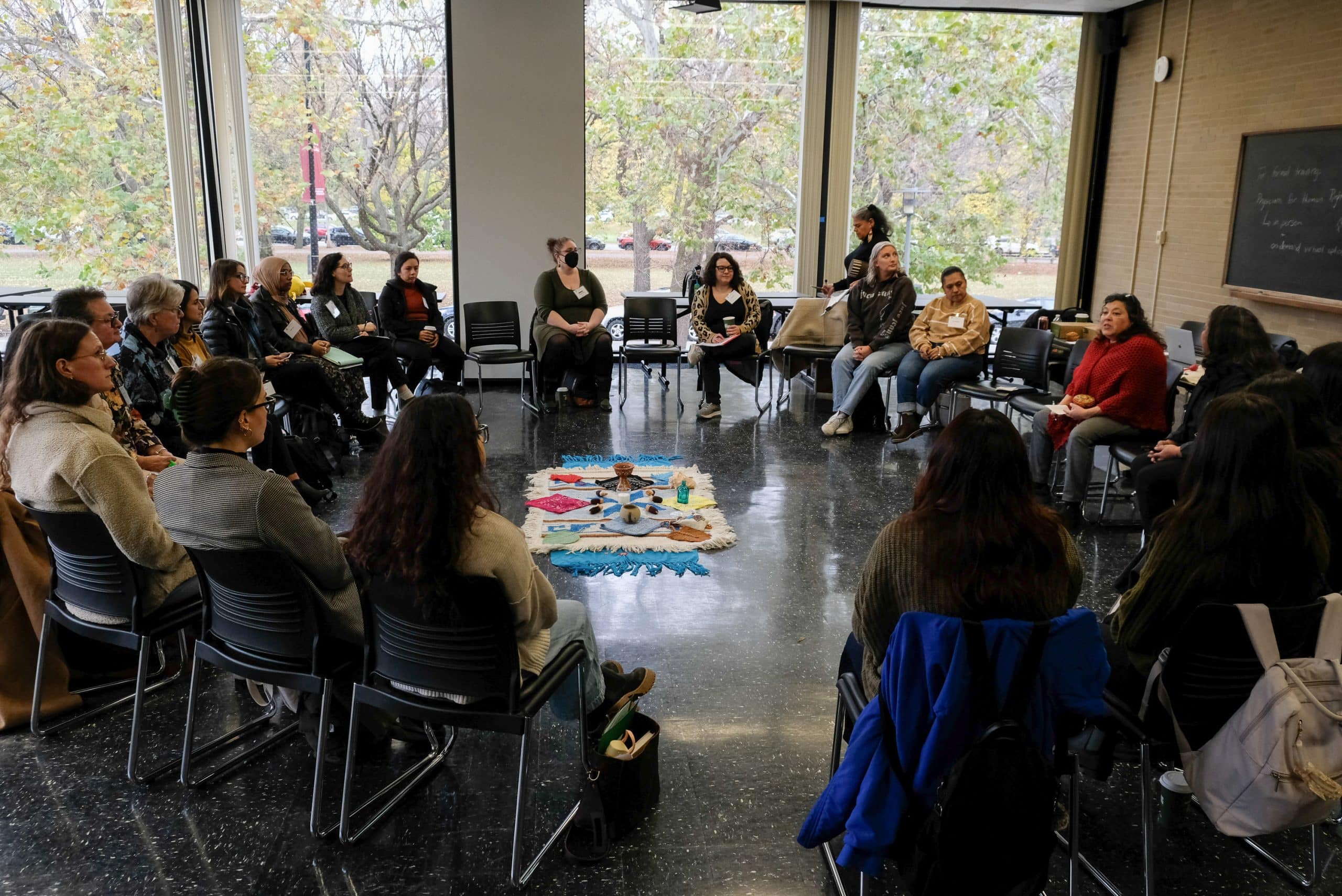
In the aftermath of the presidential election, almost 200 people gathered in Chicago to strategize about how to protect the mental health of immigrant communities.
Did the Stanford Prison Experiment Really Turn People Into Monsters?

A riveting new docuseries talks with the former youths from a famous Stanford experiment that quickly devolved into violence and chaos.
If you’re not subscribed to MindSite News Daily, click here to sign up.
Support our mission to report on the workings and failings of the
mental health system in America and create a sense of national urgency to transform it.
For more frequent updates, follow us on Facebook, Twitter and Instagram:

The name “MindSite News” is used with the express permission of Mindsight Institute, an educational organization offering online learning and in-person workshops in the field of mental health and wellbeing. MindSite News and Mindsight Institute are separate, unaffiliated entities that are aligned in making science accessible and promoting mental health globally.
Copyright © 2021 MindSite News, All rights reserved.
You are receiving this email because you signed up at our website. Thank you for reading MindSite News.
mindsitenews.org

The name “MindSite News” is used with the express permission of Mindsight Institute, an educational organization offering online learning and in-person workshops in the field of mental health and wellbeing. MindSite News and Mindsight Institute are separate, unaffiliated entities that are aligned in making science accessible and promoting mental health globally.


Author

Related Articles
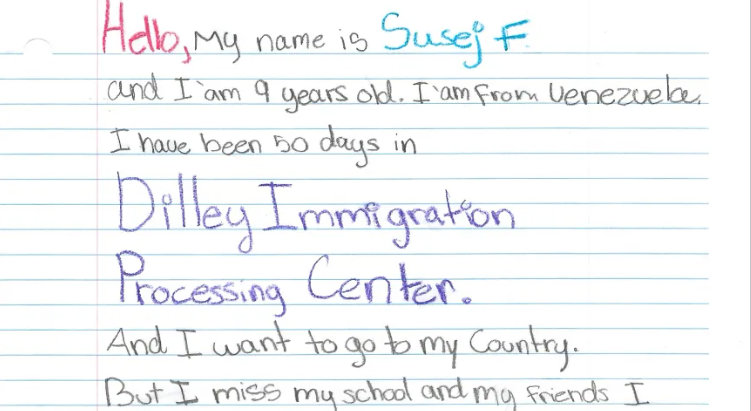
Health Organizations Condemn Traumatic ICE Raids, Family Separation
According to letters from children living in an ICE detention facility, living conditions are inhumane and their mental health is suffering.
In Teens, Social Anxiety Often Looks Like Anger
A study finds that some teens’ aggressive behavior may be due to social anxiety, not straightforward reactivity.
Expert Calls for Harm Reduction, Not Punishment, to Resolve Our Overdose Crisis
As the Trump administration pulls funding from harm reduction, an expert on the overdose crisis says it’s the best way to save lives.
