
The Grieving Children Left Behind By Gun Violence
New Orleans is aiming to become a model in helping children who have lost parents to gun violence by building an “ecosystem” of mental health support.
December 23, 2024
By Josh McGhee
Happy Monday MindSiters,
I’m ready to retire for the holidays, but before we go, we’ve got a few stories to close the year. First, we have a MindSite News Original from contributing writer Michele Cohen Marill into the grieving children left behind by gun violence in New Orleans, the trauma they face and the family members and mental health workers helping them put their lives back together.
Then, we’ll talk to the authors of a new evaluation of the alternative crisis response team in Chicago — a major focus for our bureau here in the new year. Finally, we’ll look at an exclusive interview by Youthcast Media about a young Chicago woman traumatized by the police shooting of her beloved husband during a mental health crisis – and how she overcame her wish to die in order to take care of her five kids.
Let’s get into it…
The children left behind

On August 20, 2017, 31-year-old Kenyetta Taylor was holding her 6-month-old baby and surrounded by her other children when her abusive ex-partner burst into her house and fired a shot behind her ear.
It was the oldest child – a 10-year-old – who followed the dispatcher’s instructions to put pressure on the wound that just might have saved her life. His mother spent eight months in the hospital, continues to have seizures and is now largely paralyzed.
The trauma was clear the first night. Terrified and disconsolate, the children cried, had nightmares and thrashed in their beds. One of the boys seemed to reenact the shooting while sleepwalking. “Mama! Mama!” he screamed as he knelt on the ground.
Their grandmother, Erica Taylor, immediately began looking for a therapist. “I take it day by day with them,” said Taylor, “because if you think everything be going well, then boom, a situation will arise.”
Taylor spoke to contributing writer Michele Cohen Marill for the first story in our series, Forgotten Children, which explores the wave of childhood bereavement and grief that has been rising in the U.S. due to COVID-19, the overdose epidemic and gun violence. A fellowship from USC Annenberg Center for Health Journalism helped support the series.
While no one knows exactly how many grieving children are left behind due to gun violence, there are estimates that help reveal the toll, Marill reports.
In Louisiana, one in ten children will lose a parent by the time they turn 18, the fourth-highest rate in the U.S. The death of a parent is one of the most traumatic and stressful events that can happen to a child, and it carries lifelong consequences. For at least seven years after a parent’s sudden death, children have higher rates of depression, post-traumatic stress disorder, and suicidal ideation, according to a University of Pittsburgh study of the “burden of bereavement.”
Read Forgotten Children: The Unseen Victims of Gun Violence Are the Children Left Behind to learn about how New Orleans is aiming to become a model for helping bereaved kids by building an “ecosystem” of mental health support. We are pleased to co-publish the story with Verite News of New Orleans.
Evaluating the Chicago CARE team’s alternative response to mental crises
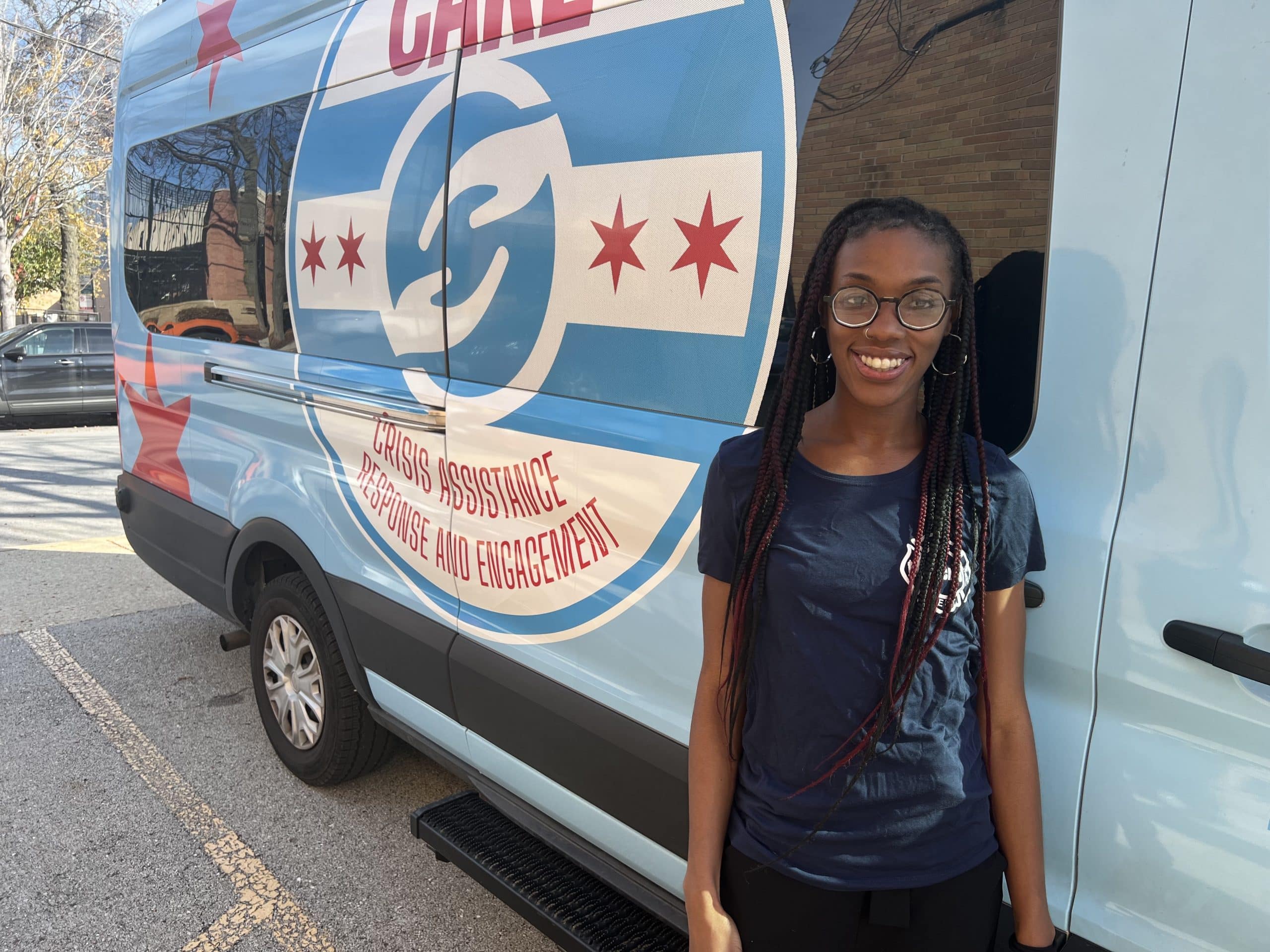
For the last three years, Chicago has been piloting three alternative crisis response teams designed to respond to mental health crises and substance abuse issues in the city, instead of police officers.
Since its launch, the Crisis Assistance Report and Engagement or CARE Team, which we profiled years ago, has responded to more than 1,300 incidents, 40% of which were for Chicago residents who showed signs of symptoms of schizophrenia, depression, anxiety, misuse of alcohol or drugs.
While the previous mayoral administration included Crisis Intervention Team-trained officers, Mayor Brandon Johnson made removing the police and fire department from the crisis response program a key component of his progressive agenda Treatment Not Trauma, along with reopening community mental health centers. Earlier this year, Johnson made good on his promise removing the departments from crisis responses and announcing the opening of mental health centers on the South and West Side of the city.
This month, researchers from the University of Chicago Health Lab released an evaluation of the program, which found the pilot was successful in helping clients feel less distress after interacting with the team and responded to a third more calls by the end of the pilot.
“Our research revealed some important fundamental outcomes, demonstrating that this model – even in early iterations – shows promise in delivering effective care,” Jason Lerner, director of programs at the University of Chicago Health Lab, said in a press release. “But for future versions to reach their full potential, they must overcome many practical barriers that confront first-response agencies.”
I interviewed Lerner and S. Rebecca Neusteter, executive director of the Health Lab about the findings and if the CARE program is ready for its next iteration. Click here to read the full interview.
Staying strong after a police shooting

Four years after her husband was killed by police during a mental health crisis in Philadelphia, Dominque Wallace is still working at overcoming the trauma for herself and her family.
In 2020, Walter Wallace Jr. was fatally shot by two Philadelphia police officers after his family called them for help. The incident made national headlines and set off protests across the city, but also left his wife alone, widowed, and a single mother of five children.
“We (had) just got married three weeks before, like to say till death do us part,” Wallace told Youthcast Media Group in an exclusive interview. “So, I just signed a marriage certificate, a death certificate and a birth certificate in a month.”
Since then, she’s battled through the initial grief of a high-profile police shooting, where media outlets replayed her husband’s final moments from every angle. The pain was so unbearable she wanted to die, leading to a four-month-long struggle with alcohol once the cameras left.
“That was my breakfast, lunch and dinner,” she said.
Now, she spends her time as an advocate for justice and greater access to mental health treatment – an issue she says is plaguing Philadelphia.
Read more about her battle here.
Until next year,
Josh McGhee
If you or someone you know is in crisis or experiencing suicidal thoughts, call or text 988 to reach the 988 Suicide & Crisis Lifeline and connect in English or Spanish. If you’re a veteran press 1. If you’re deaf or hard of hearing dial 711, then 988. Services are free and available 24/7.
Recent MindSite News Stories
Confronting Immoral Actions, We Can Aim to Stand Up, Not Look On

My dilemma: Imagine is that I am walking down the street heading to the mailbox and I see an ICE officer approaching a young woman emerging from a house she has just spent the morning cleaning. In this scenario… Continue reading…
Will Your Mental Health Treatment Be Covered? Critics Fear Trump Administration Will Make It Harder

The hopeful news is that both Republicans and Democrats have pledged to address mental health coverage. Continue reading…
Fury mounts over insurance claim denials – including mental health – after killing of UnitedHealthcare CEO

Public response to the murder of health insurance CEO Brian Thompson reveals depth of rage toward insurance industry. Continue reading…
If you’re not subscribed to MindSite News Daily, click here to sign up.
Support our mission to report on the workings and failings of the
mental health system in America and create a sense of national urgency to transform it.
For more frequent updates, follow us on Facebook, Twitter and Instagram:

The name “MindSite News” is used with the express permission of Mindsight Institute, an educational organization offering online learning and in-person workshops in the field of mental health and wellbeing. MindSite News and Mindsight Institute are separate, unaffiliated entities that are aligned in making science accessible and promoting mental health globally.
Copyright © 2021 MindSite News, All rights reserved.
You are receiving this email because you signed up at our website. Thank you for reading MindSite News.
mindsitenews.org

The name “MindSite News” is used with the express permission of Mindsight Institute, an educational organization offering online learning and in-person workshops in the field of mental health and wellbeing. MindSite News and Mindsight Institute are separate, unaffiliated entities that are aligned in making science accessible and promoting mental health globally.


Author

Related Articles
A Bustling Hollywood Clubhouse Helps LA Residents with Mental Illnesses Thrive
Fountain House Hollywood is one piece of a project to remake mental health care in the neighborhood, which officials termed “Hollywood 2.0.”

Illinois Mental Health Courts Offer Treatment Over Prison. Is it Working?
A joint investigation into Illinois mental health courts reveals a system of “mixed results,” where life-changing success stories meet high barriers to entry and unequal access.
The Children Left Behind After Family Violence
And how you can help your child with social media habits that “mirror symptoms of addiction to substances.”
