
Immigrant Parents Seek to Protect Their Children During ICE Raids
Chicago has started a “Know Your Rights” campaign to advise immigrants not to open the door to immigration officers..


January 24, 2025
By Courtney Wise

Greetings, MindSite News Readers. Trump’s first two days back have been punctuated with a flurry of executive orders, many designed to concentrate federal powers in his office. They include an assault on immigrants – acting on his promises to halt immigration, begin mass deportations, and end birthright citizenship — all actions that are spreading fear among migrant families on the border and throughout the United States.
In today’s Daily, we look at the impact of such actions in Chicago, a city with a “Welcoming City Ordinance” that exists, in part, to make immigrants feel secure and ensure undocumented residents are not prosecuted solely due to their immigration status.
In other news, the move to restore TikTok for at least 75 days. Plus, a study finds hair discrimination disproportionately affects the health of young Black girls, a Kentucky school plans to train every student in mental health first aid, and Utah children grieving the loss of a parent find consolation and the promise of healing in grief support groups.
Migrants in Chicago brace for the consequences of Trump’s promised immigration crackdown

Hours after taking office on Monday, Trump declared a national emergency over the US-Mexico border, which Time magazine condemned as “an abuse of power.” He also signed an executive order barring birthright citizenship from children born in the US to parents who were not US citizens or permanent legal residents at the time of the child’s birth – an order that has already been struck down by a federal judge who called it “blatantly unconstitutional.” At least 22 states and 6 cities have already filed suit to block Trump’s attempt to overturn birthright citizenship, a right that is enshrined in the Constitution. The new administration has also shut down the CBP One app, ending a program expanded by the Biden Administration that allowed migrants to schedule appointments for legal entry into the US, and canceled thousands of existing appointments.
The actions have left immigrants reeling, particularly in sanctuary cities like Chicago. “There’s a lot of fear and concern about what it means for families who could be separated,” Chicago City Councilmember Byron Sigcho-Lopez told the New York Times. “Families are terrified. In the coming weeks, we will see what the federal government is actually capable of doing.”
The looming threat of deportation can wreak havoc on one’s mental health. A 2024 study led by researchers from Cornell University measured the psychological distress experienced by Latino citizens and non-citizens alike from 2011-2018. “Even among those with citizenship status,” said study co-author Neil Lewis, Jr., “seeing people who share your demographic characteristics being targeted can invoke a sense of uncertainty. The thought that they might find a way to come after you can make you worry, too.” Other studies confirm the same, finding that simply knowing a migrant who has been detained or deported is associated with deteriorated mental health, including anxiety and depression, even among US citizens, regardless of race or ethnicity.
As Trump targets Chicago and other cities for massive Immigration and Customs Enforcement (ICE) raids and deportations, he has already lifted a longstanding prohibitions against raids and arrests in sensitive areas such as schools and churches. Chicago Mayor Brandon Johnson, who vehemently opposes the raids, has started a “Know Your Rights” campaign for immigrants. To help families prepare, community leaders and activists have been organizig to inform people about their legal rights and help them draft binding documents, such as powers of attorney, to make arrangements for children and property should the worst happen.
That’s similar to guidance from the nonprofit Illinois Coalition for Immigrant and Refugee Rights, which encourages families to provide their children’s school with an emergency contact in case parents are detained. In addition, the ICIRR website advises residents concerned about deportation not to open the door to immigration officers, not to discuss their immigration status with law enforcement of any kind, and not to sign anything that they do not understand.
Chicago is home to people like Honduran-born Doris Aguirre, who has lived in the city for the past 25 years. She earns a living cleaning homes and has built a life here with her husband and their two children. She remains undocumented, and years ago, she was ordered to be deported. Her family, however, all hold legal status, and Aguirre fears being separated from them. “I’m afraid, I’ll be honest,” she said. “No one is going to come to my rescue.” (See our earlier MindSite News stories on immigrant struggles in Chicago in the current climate, including “Fear Cut Through My Family” and “In Chicago, Immigrants Who Fled Violence and War Struggle With Their Mental Health.”)
The Supreme Court ruling banning TikTok left youth in mourning. But it’s not gone yet.
MindSite News has covered a number of mental-health-related stories about TikTok, including its obsession with narcissism and dissociative personality disorder and its work with youth and Harvard researchers. Many researchers we talked with, even if they had criticisms of the platform, saw its potential for widespread education about health and mental health.
Instead of “vilifying TikTok,” a Journal for Affective Disorders Reports researchers told us, “we emphasize its potential as a platform to combat misinformation… particularly among younger generations.”
But that may all be endangered – along with free speech – if the TikTok ban roars back. As we began this article, TikTok had been turned off, leaving millions of Americans without their favorite social platform. Youth in particular expressed mourning, frustration, anger and even panic over its loss. As one popular singer-songwriter wrote on X, “If tiktok goes away I wonder if my body just evaporates similar to that avengers movie.”
The move to curtail TikTok not only removed a major platform for youth and upended untold online businesses, it removed a key source for news for youth and others on the international community and feedback on the U.S. at a critical time in our history, without a way to easily to get crucial information about everything from Panama to Gaza. Some angry former TikTok users, anticipating the ban, migrated to another Chinese-owned platform called RedNote.
The Electronic Frontier Foundation is one of the many free speech organizations based in the U.S. that protested the TikTok ban.
“We are deeply disappointed that the Court failed to require the strict First Amendment scrutiny required in a case like this, which would’ve led to the inescapable conclusion that the government’s desire to prevent potential future harm had to be rejected as infringing millions of Americans’ constitutionally protected free speech,” the EFF wrote in an editorial on January 17.
“Shutting down communications platforms or forcing their reorganization based on concerns of foreign propaganda and anti-national manipulation is an eminently anti-democratic tactic, one that the US has previously condemned globally.”
But lo and behold, before we even finished this article, TikTok was back up and running, since Trump had offered a 75-day extension to work things out that he boasts will end up “with the U.S. owning half of the platform.”
In other news…
‘Bereavement deserts’: Amid a steep rise in parental deaths linked to Covid, opioid overdoses and gun violence, grieving children are often overlooked. The second story in our Forgotten Children series, Michele Merrill Cohen writes about Utah’s grief support groups for bereaved children. Said Lucas Edward Campbell , who was 13 years old when his mother died after waging a years-long battle with cervical cancer, “I realized a lot of these people are hiding the same things I’m hiding. I realized I’m not alone in this, what I’m feeling is OK.”
On July 25, of last year, Utah Gov. Spencer Cox issued an executive order making Utah the first state to add a question on its death certificate form asking if the deceased person had surviving children. One year later, the state had identified 1,062 families with children under 18 who’d lost a parent or caregiver. Through a partnership with United Way, a team of outreach coordinators has begun reaching out to the families to connect them with counseling, grief groups and other resources. Read more about this important work in our MindSite News story.
Hair discrimination has an impact on the mental health of Black girls: A cross-sectional study led by Adenique Lisse, a PhD student at the University of Connecticut, found that Black adolescent girls are significantly more likely than their white or Latina peers to experience hair discrimination, leading to hair dissatisfaction and increased feelings of depression. The research, published in Body Image, included 193 Black, white, and Latina girls, all in grades 9 through 11 who lived in a low-income city. They were asked to report their satisfaction with their looks in five areas ,including weight. Hair was the only area in which satisfaction differences were prominent along racial lines, Lisse said in an interview with UConn.
Acknowledging that the small sample of participants prevents results from being generalized across populations, Lisse believes they can be useful in clinical and policy settings to build cultural awareness and support. “There has been more work within the last decade or so to kind of combat racial discrimination at work and school pertaining to hair,” she said. “I think that this opens up a conversation about what more can be done, whether that’s things parents can do, or teachers can do within school, because a lot of the [negative] messaging that we see happens amongst peers as well.”
A partnership between RiverValley Behavioral Health and McLean County High School aims to make the school the first in the state of Kentucky where the entire student body is trained in mental health first aid. In the program, youth will be taught how to recognize the signs of a mental health crisis, and those who need help will be connected to relevant support. Training is set to begin this month, reports WFIE-14 News.
If you or someone you know is in crisis or experiencing suicidal thoughts, call or text 988 to reach the 988 Suicide & Crisis Lifeline and connect in English or Spanish. If you’re a veteran press 1. If you’re deaf or hard of hearing dial 711, then 988. Services are free and available 24/7.
Recent MindSite News Stories
‘Bereavement Deserts’: Amid a Rise in Parental Deaths, Grief in Children Is Often Overlooked
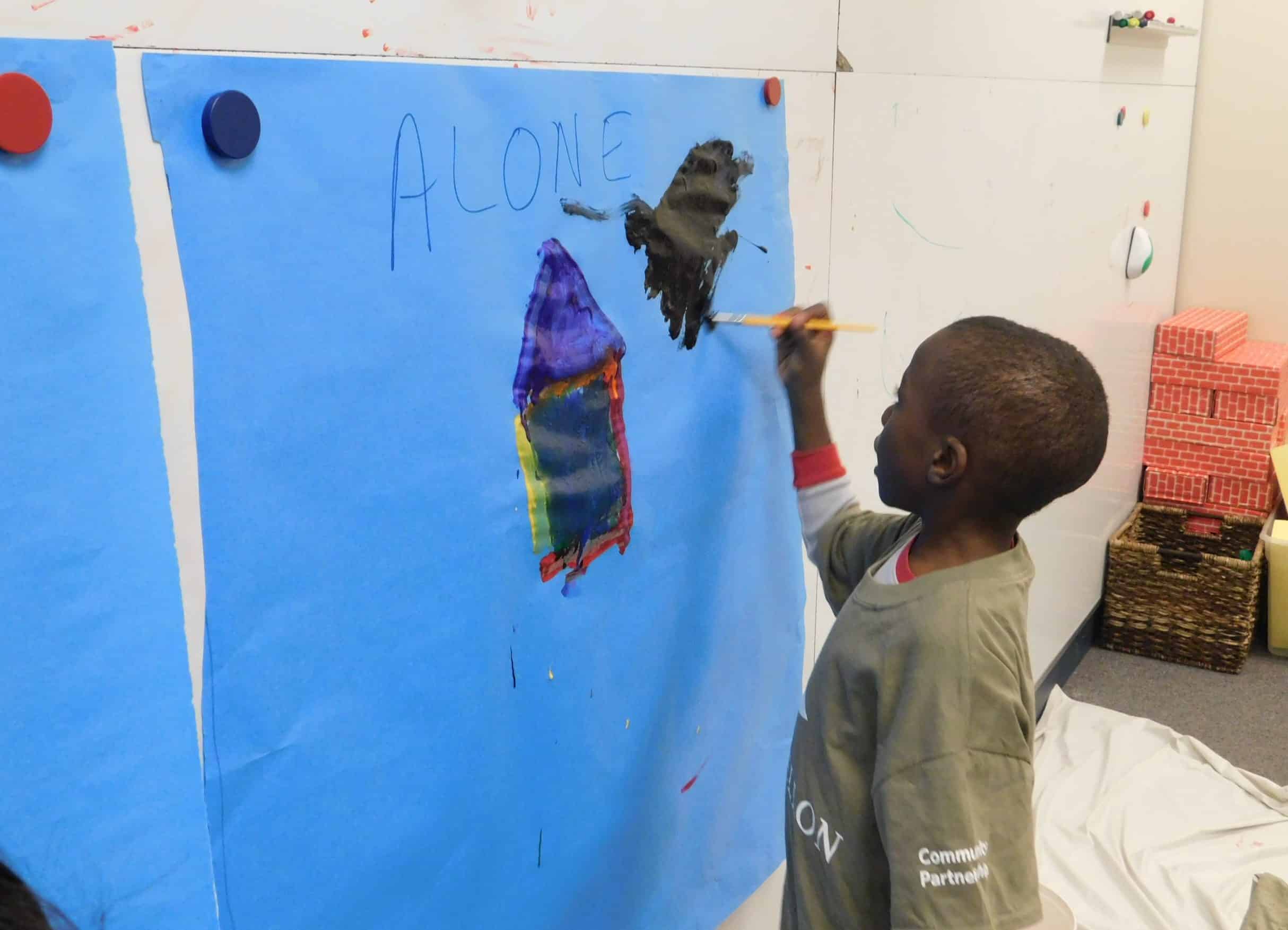
‘My son needed something I couldn’t give.’ Surviving parents seek grief support for kids Amanda Joyce Jensen will always remember the night she told her 4-year-old son, Kezman, that his father, Marshall, had died of cancer. Continue reading…
Thousands of Callers Are Giving Up On Calls to Texas’ 988 Suicide Hotline As It Grapples with a $7 Million Deficit
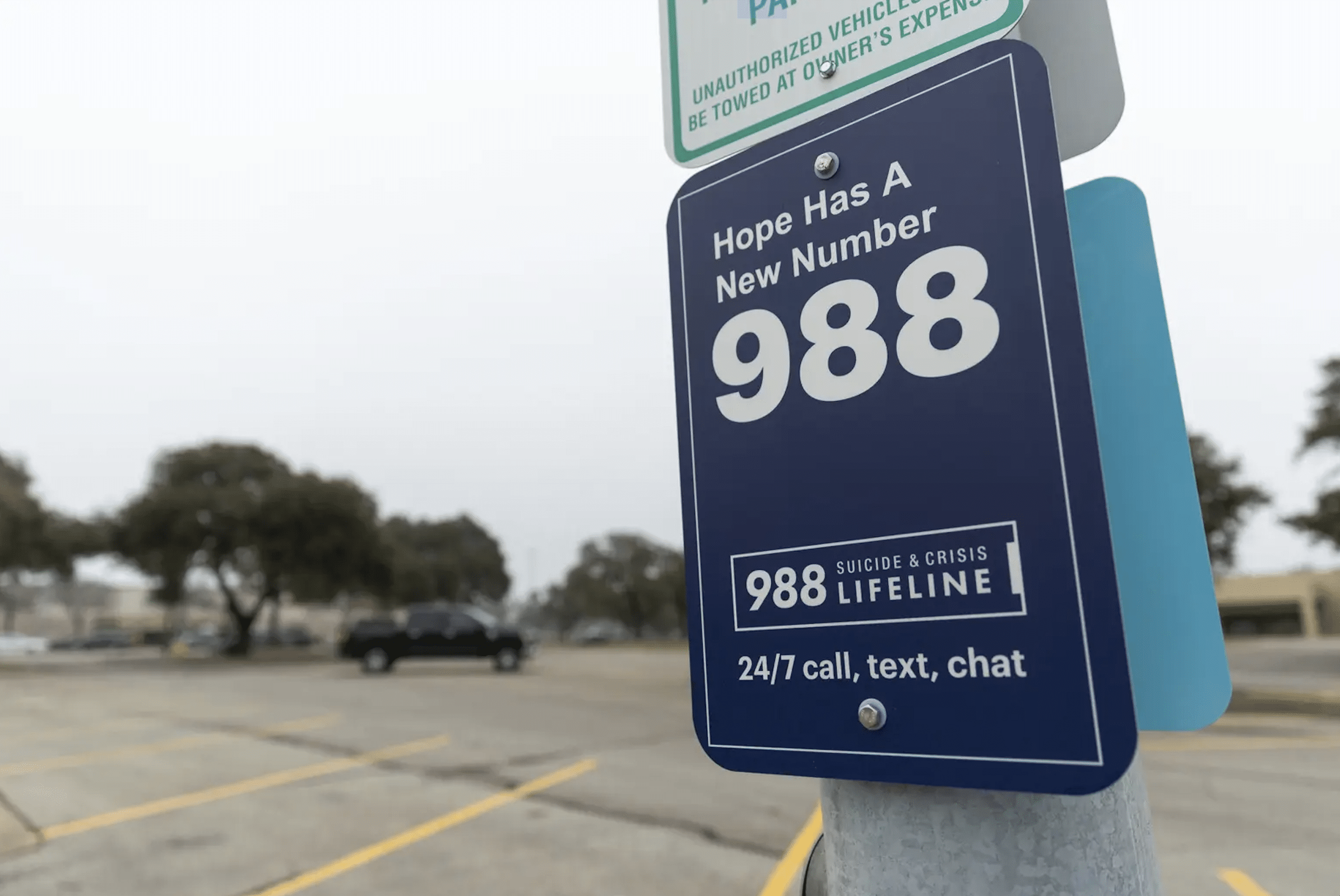
Thousands of Texans are abandoning the state’s suicide hotline mid-call as call centers struggle under a $7 million funding deficit and a growing suicide rate. Continue reading…
Long-Acting Injection Helps Heal ‘Beautiful Mind’ of Husband with Schizophrenia

A long-acting monthly injection and counseling have helped heal problems linked to a beloved husband’s schizophrenia.. Continue reading…
If you’re not subscribed to MindSite News Daily, click here to sign up.
Support our mission to report on the workings and failings of the
mental health system in America and create a sense of national urgency to transform it.
For more frequent updates, follow us on Facebook, Twitter and Instagram:

The name “MindSite News” is used with the express permission of Mindsight Institute, an educational organization offering online learning and in-person workshops in the field of mental health and wellbeing. MindSite News and Mindsight Institute are separate, unaffiliated entities that are aligned in making science accessible and promoting mental health globally.
Copyright © 2021 MindSite News, All rights reserved.
You are receiving this email because you signed up at our website. Thank you for reading MindSite News.
mindsitenews.org

The name “MindSite News” is used with the express permission of Mindsight Institute, an educational organization offering online learning and in-person workshops in the field of mental health and wellbeing. MindSite News and Mindsight Institute are separate, unaffiliated entities that are aligned in making science accessible and promoting mental health globally.


Author

Related Articles
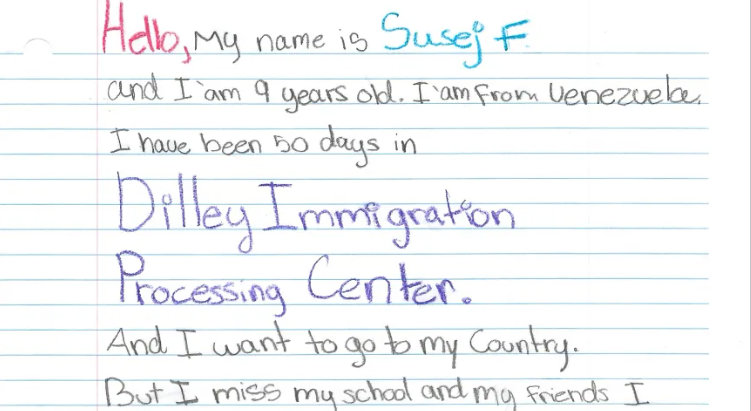
Health Organizations Condemn Traumatic ICE Raids, Family Separation
According to letters from children living in an ICE detention facility, living conditions are inhumane and their mental health is suffering.

In Teens, Social Anxiety Often Looks Like Anger
A study finds that some teens’ aggressive behavior may be due to social anxiety, not straightforward reactivity.
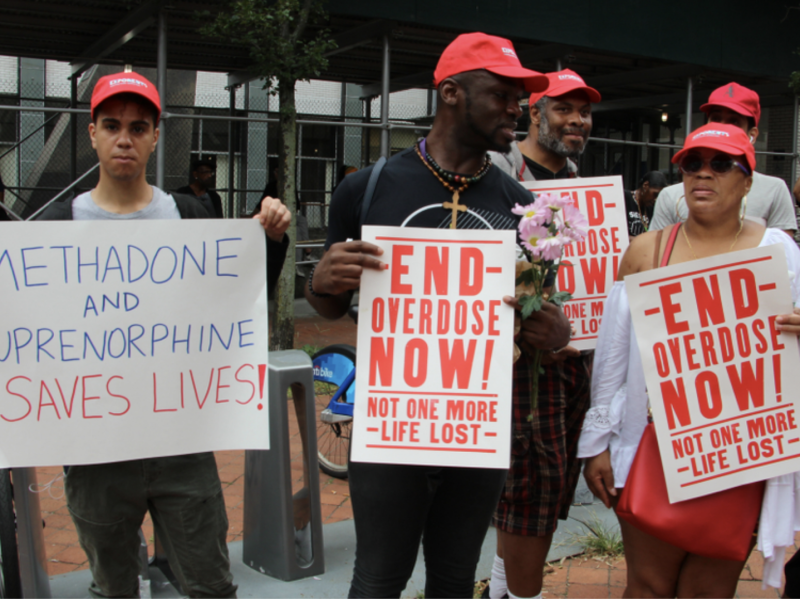
Expert Calls for Harm Reduction, Not Punishment, to Resolve Our Overdose Crisis
As the Trump administration pulls funding from harm reduction, an expert on the overdose crisis says it’s the best way to save lives.
