Crisis Inside For-Profit Psychiatric Facilities
For-profit psychiatric hospitals in California are rife with abuse and neglect, an SF Chronicle investigation finds.

March 5, 2025
By Courtney Wise

Greetings, MindSite News Readers.
This Friday is Stand Up for Science Day. Scientists are calling on all of us to rally on March 7 “to defend science as a public good and pillar of social, political, and economic progress.” In particular, they’re calling on all leaders – regardless of political affiliation – to demand an end to this administration’s censorship and interference in science.
Stand Up for Science Day is also calling for the restoration of scientific information to on federal websites to pre-January 31st, 2025 status, and the reinstatement of all unlawfully fired federal employees with full back pay and benefits — and for all of us to defend diversity, equity, inclusion and accessibility in science. Let’s do it! We’ll bring you more on this tomorrow.
Also in today’s Daily, we follow one teen’s tragic death last spring as concerns arise about the safety of the for-profit psychiatric hospitals essential to California Gov. Gavin Newsom’s mental health reforms. The American Psychological Association sounds the alarm on the dangers of unregulated generative AI chatbots incapable of providing safe or healthy advice to vulnerable users. And it’s normal to want validation from other humans, but beware of turning to others for constant approval. Plus, a music company seeks FDA approval so that mental health professionals can prescribe its compositions for relief from anxiety.
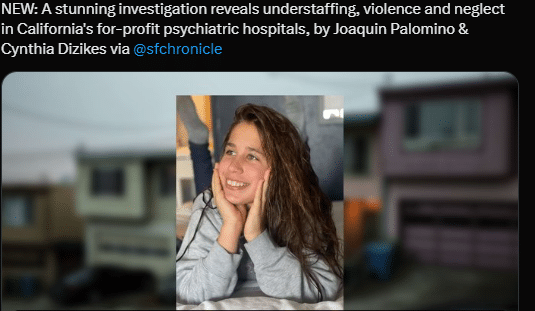
For-profit psychiatric hospitals are key to Gov. Gavin Newsom’s mental health reforms, but one girl’s story suggests help isn’t what they offer
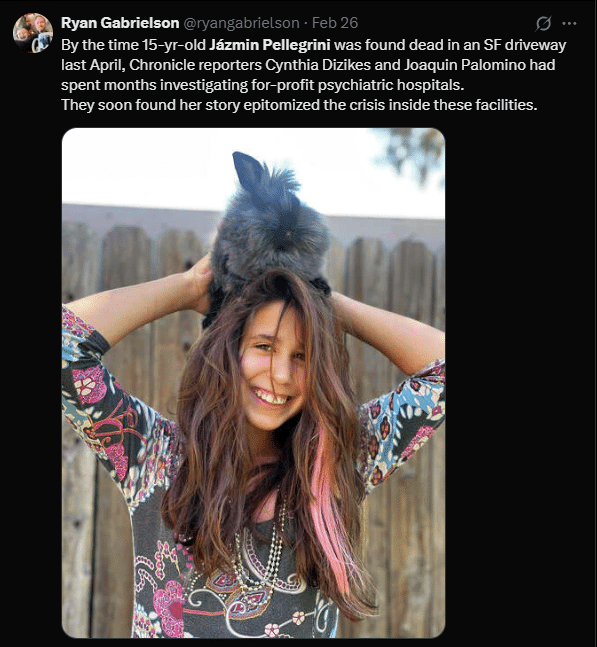
Jázmin Pellegrini’s family will forever remember her light. “She would always try to make me feel good about myself,” said her older sister Dorina. “That was the kind of person she was.” But though in and out of psychiatric hospitals for depression, she died last year of a fentanyl overdose at just 15 years of age. Now in the shadow of California’s broken mental health care system, her family wonders what will prevent others from experiencing the same tragedy. “These inpatient units failed this girl,” said Christopher Bellonci, one psychiatrist who reviewed Jázmin’s hospital records for the San Francisco Chronicle. “It is tragic that she died, because this was treatable.”
Jázmin had been battling severe depression, spawned from years of sexual abuse at the hands of her grandfather. Miles away in Hungary, he never faced punishment for his crimes, leaving Jázmin struggling through self-harm, substance abuse and suicidal ideation. Despite the best efforts of her mother, Márta Bárány, Jázmin never received effective mental treatment — she simply cycled in and out of psychiatric hospitals and emergency departments without ever receiving real help. “My child is slipping further and further away into her despair with each hospital stay,” Bárány wrote in a December 2023 letter to officials in Contra Costa County. “In these hospital settings, she is not receiving adequate treatment to address her mental illness.”
Across the facilities where Jázmin was placed, in fact, she was often poorly monitored, enabling circumstances that worsened her trauma. Just days after being admitted to one for-profit facility, Jázmin and another patient twice engaged in sex, incidents the teen said made her mental health worse. Though official records report the experiences as consensual, her mother questions how that could be when many patients were only hospitalized after being deemed unable to take care of themselves or make safe decisions. An investigation by the California Department of Public Health found serious staffing and monitoring issues with the facility. One worker was later fired for falsifying patient records.
For-profit psychiatric hospitals like these are at the center of the tragedy, the Chronicle reports. Essential to California Gov. Gavin Newsom’s mental health reforms, they rely on swift turnover for revenue, sacrificing patient care to keep beds full. And despite multiple citations each over concerns of patient safety, Universal Health Services, Signature Healthcare Services, and Acadia Healthcare continue to operate nearly every for-profit psych facility in the state. Since Jázmin’s death, her family has been focused on policy reform and justice.
Not long before she died, Jázmin spent time in the San Jose Behavioural Health, run by Acadia. Suicidal, she nearly overdosed on her medications — and those of others — more than once. In response, staff injected her with sedatives, despite warnings from her family and notes from other hospitals of her growing dependency on them. A therapist in the hospital said that Jázmin “must go to residential” treatment, but the hospital consistently pushed to discharge her without securing it. She was in no shape to leave the hospital — and her treatment providers knew it, Bárány said.
“The Chronicle’s investigation raises serious concern about the quality of care received by these individuals,” said Elana Ross, a spokesperson for Newsom’s office. “We take each incident seriously and will be reviewing the care standards for psychiatric hospitals.” Ross went on to highlight a $6.4 billion bond measure that includes plans to expand residential treatment programs for adolescents, which, experts say, could have helped Jázmin.
Generative AI chatbots posing as therapists could cause irreparable harm and even death, APA warns
Earlier this year, the American Psychological Association implored officials at the Federal Trade Commission to tighten regulations around artificial intelligence chatbots presenting as therapists.
Those developed by Character.ai and Replika, in particular, where usership is growing among children and teens, are poised to cause widespread harm without better transparency around their complete inability to offer safe advice, according to the APA. Speaking to the dangers of leaving chatbot technology unchecked, APA CEO Arthur C. Evans Jr., cited two lawsuits against Character.ai, including one in which a 14-year-old boy died by suicide after talking with a chatbot posing as a licensed therapist, and another in which a 17-year-old boy with autism reacted violently toward his parents after talks with a chatbot “psychologist.”
“They are actually using algorithms that are antithetical to what a trained clinician would do,” Evans told the New York Times. “Our concern is that more and more people are going to be harmed. People are going to be misled, and will misunderstand what good psychological care is.” Rather than challenge a user’s harmful thinking, the chatbots actually reinforce their negative beliefs, he said. The same behavior in a human would be considered malpractice, prompt the loss of their license, and even trigger civil or criminal action.
The chatbots of Replika, Character.ai, and the likes ofChatGPT aren’t like their predecessors at Woebot and Wysa, the therapy bots of yesteryear. Those ran on specific scripts, developed by mental health professionals, all created to guide users through CBT, or cognitive behavioral therapy. “Maybe, 10 years ago, it would have been obvious that you were interacting with something that was not a person,” Evans said. “But today, it’s not so obvious…the stakes are much higher now.”
Generative AI, the technology powering this new generation, is markedly different. Its responses are varied and unpredictable, triggered from what it learns from the user, and designed to promote strong attachment. It reflects and amplifies what the user feeds it. Worse yet, many chatbots claim advanced degrees and training, fooling some users into believing they are chatting with licensed professionals.
Character.ai submits that the company has introduced disclaimers to remind users that the chatbots are not real therapists. “What the model says should be treated as fiction,” says one pop up. “Characters are not real people,” reads another. Critics don’t feel that this is sufficient, especially for children and other vulnerable people who may struggle to distinguish between real and artificial connections.
For its part, the FTC had taken action on AI-related fraud during the Biden administration, and just last month fined DoNotPay, who claimed to provide “the world’s first robot lawyer.” The company is barred from making that claim in the future.
In other news…
Often seek validation? It’s only human: It’s normal to look to others for approval, neuroscientist Mark Leary told Vox. It’s key to our sense of belonging as a social species. “We wouldn’t have survived as a species except for the fact we had tight bonds and lived in groups,” he said. “We couldn’t have survived living by ourselves out of the woods somewhere.” Though our national culture is highly individualized, we still want to feel valued and accepted. Validation helps us with that. It affirms our own thoughts and beliefs, making us feel better about ourselves. Still, it’s possible — and harmful — to become too inclined toward validation.Our modern culture can make it tough to stop chasing likes — literally, it’s how we acknowledge what’s populating our social media feeds — but if the need for external approval is constant, it’s time to turn inward, Leary said. Lasting confidence comes from cultivating a strong sense of self-worth. That can be gained through doing your best without expecting a compliment from anyone other than yourself, setting goals just for yourself and working toward them, and being intentional about your relationships, so that the connections you have are ones you know you can depend on.
Simply having a pet doesn’t assure better mental health. Attachment theory, the framework some psychologists use to explain human-to-human relationships, can also be applied to the connections betweenhumans and our pets. A recent study on the topic has found that while pet owners with anxious attachments to their animals are more inclined to depression, those with secure attachments have improved mental health. The team, led by psychologist Brian N. Chin at Trinity College, surveyed more than 1,000 pet owners in the US about their bond with their pets, how and how much they play, cuddle or spend time together; and whether they felt secure or anxious in the relationship. Respondents who were too emotionally dependent on their pets, expressing worry about being apart from them or whether or not their pet loved them back, experienced higher rates of depression, he wrote in a guest column for The Conversation. This doesn’t imply that humans shouldn’t seek emotional support from their pets, he said, but it does suggest people should be more cognizant of how those bonds are formed and what exactly we’re depending on our pets for.
Music as medicine: What if, at your next visit to your physician, they prescribed some vinyl records rather than antidepressants? “Prescribing something like jazz or certain sounds might be in the future of what we can do in helping patients with pain or other kinds of clinical, mental, behavioral health issues,” said Sean Young, a researcher at the University of California-Irvine. His most recent study found that listening to improvisational jazz is linked to a decrease in pain and anxiety for some people.
Sona Labs founder Neal Sarin told the LAist that he’s been working towards clinical trials of his proprietary music treatment since 2022, when the FDA approved his plans for them. If those trials lead to an approval, mental health professionals could prescribe the company’s “restorative music,” developed via a 10-step composition process to increase alpha waves in the brain. Alpha waves, often found during activities like meditation or daydreaming, are associated with calm. And though AI is used in the company’s app to make listening recommendations, Sarin says that the music in the app is all human-composed. There’s some precedent for digital medical tools like these – in 2020 the FDA approved a video game to treat ADHD symptoms.
If you or someone you know is in crisis or experiencing suicidal thoughts, call or text 988 to reach the 988 Suicide & Crisis Lifeline and connect in English or Spanish. If you’re a veteran press 1. If you’re deaf or hard of hearing dial 711, then 988. Services are free and available 24/7.
Recent MindSite News Stories
Homegrown Trips: Desperate for PTSD Relief, Veterans Turn to Each Other for DIY Psychedelic Treatments

When the sedatives and antidepressants prescribed for PTSD don’t work, some veterans have found peace through psychedelics. Continue reading…
How a Mental Health Community Saved Lives in LA Fire

The most urgent question was, would callers from the Hollywood clubhouse be able to reach all their members in time? Continue reading…
‘We Take Care of Each Other’: Inside the Prison That Could Change Incarceration in America

This prison outside Philadelphia is modeled on prisons in Norway and Sweden that are considered the most humane and effective in the world. “It’s a transformational approach to how we think about prisons,” said a Pennsylvania state legislator. Continue reading…
If you’re not subscribed to MindSite News Daily, click here to sign up.
Support our mission to report on the workings and failings of the
mental health system in America and create a sense of national urgency to transform it.
For more frequent updates, follow us on Facebook, Twitter and Instagram:

The name “MindSite News” is used with the express permission of Mindsight Institute, an educational organization offering online learning and in-person workshops in the field of mental health and wellbeing. MindSite News and Mindsight Institute are separate, unaffiliated entities that are aligned in making science accessible and promoting mental health globally.
Copyright © 2021 MindSite News, All rights reserved.
You are receiving this email because you signed up at our website. Thank you for reading MindSite News.
mindsitenews.org

The name “MindSite News” is used with the express permission of Mindsight Institute, an educational organization offering online learning and in-person workshops in the field of mental health and wellbeing. MindSite News and Mindsight Institute are separate, unaffiliated entities that are aligned in making science accessible and promoting mental health globally.


Author

Related Articles
He Almost Killed His Father. Now He Helps Others At Risk.
In today’s newsletter, we explore how one man healed after a dangerous psychotic break that nearly led him to murder.
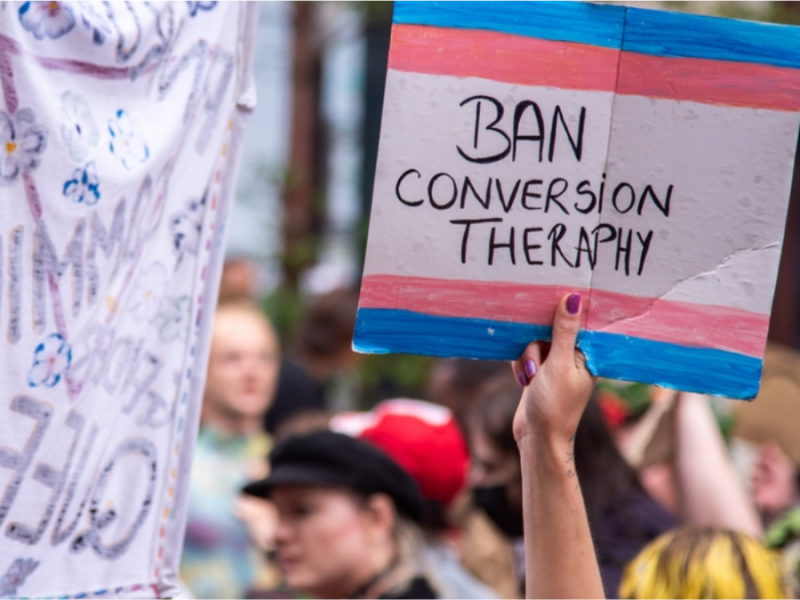
Fallout Over Supreme Court Ruling on Conversion Therapy
Despite the Supreme Court ruling, conversion therapists can still be sued for a practice the United Nations calls “torture.”

On No Kings Day, Millions Rallied to Denounce Trump and “Epstein War”
Anti-Trump protests took place in all 50 states, Puerto Rico and other US territories and in countries around the world.
