Keeping Cell Phones Out of Class Boosts Student Engagement
In Spokane, WA, schools, keeping cell phones in a bag has seen absenteeism drop by 13 percent.
April 10, 2025
By Courtney Wise

Greetings, MindSite News Readers. In today’s Daily, one district finds that school cell phone bans can improve student behaviors and outcomes – but not all on their own. A highly respected Bay Area university debuts a degree program in psychedelics. And, Roblox introduces new parental controls on the gaming platform.
School cell phone bans may work – but not in isolation
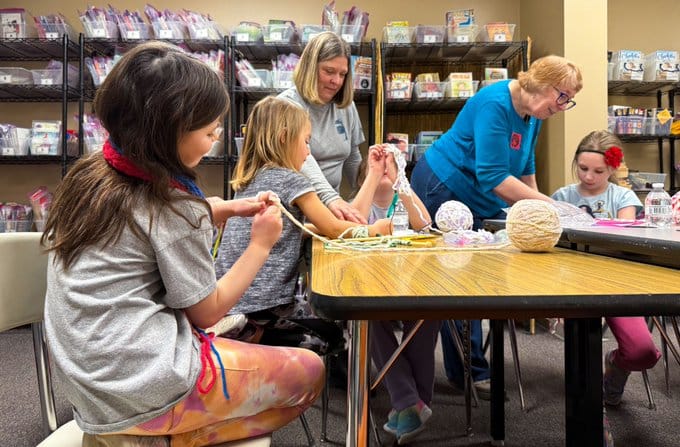
Jetaime Thomas is busy. With high school graduation approaching, she’s juggling roles: as yearbook editor, varsity basketball manager, president of the Black Student Union, in student government, and a member of a comedy improv group at her high school in Spokane, Washington. She told the Hechinger Report she wishes she had time for the angling club and a creative writing group, too. “I do a lot, probably too much,” she said. “It keeps me engaged.”
Students all over her district are taking part in new extracurriculars this school year – 19 percent more students had done one by March compared to all of last year, officials say. They’ve responded to “Engage IRL,” a campaign aimed at replacing screen time with person-to-person activities ‘in real life.’ The district had been contemplating a blanket smartphone ban, but wanted to offer students a positive alternative – since September, younger students must keep phones out of sight in a bag, and older students are only allowed to use them at particular times, like lunch breaks. “We can’t just do the cellphone ban in isolation,” said Superintendent Adam Swinyard. “This is about learning healthy habits.”
The need is urgent. Overall school attendance in the district has declined every year since the COVID-19 pandemic, and youth mental health across Spokane County is in a crisis. From 2010 to 2022, youth suicides and suicide attempts rose more than tenfold, from 54 to 587.
The nonprofit LaunchNW has provided the program with $3 million to cover “engagement navigators” who systematically collect participation data, source new activities, and lower barriers to access. “We have to do something different,” said Ben Small, a former superintendent who now leads LaunchNW. “Belonging is critical, and when it’s created only in a virtual world, it’s not real. We must focus on face-to-face relationships again.”
The program – which has boosted extracurriculars at all 58 schools in the district – seems to be working: chronic absenteeism dropped about 13 percent among students in the program. It’s welcome, as emerging research finds that simple smartphone bans might not be a cure-all for youth mental health.
Thomas has been won over by program. She was annoyed about the cell phone ban at first, but says it’s yielded much positive change. “I’ve been able to focus 100 percent on each of my classes. People seem more into class, more engaged,” she said. And with college applications on her horizon, Thomas appreciates the timing of the new opportunities. But she also worries that the federal strike on DEI in education could snatch some of her groups away. “I’m nervous about the next couple of years,” Thomas said. “In a predominantly white high school, finding comfort in community, it saves you.”
Heading to college this fall? A Bay Area university now offers a degree in psychedelics
There’s no need to rub your eyes or reread the screen. Beginning this fall, the California Institute of Integral Studies (CIIS), a highly-regarded, private, nonprofit university, will debut a bachelor’s degree in psychedelic studies. Courses will cover psychology, neuroscience, law & ethics, and indigenous knowledge.
Previous or current use of psychedelics is not a prerequisite. In fact, it’s explicitly discouraged, said CIIS professor Nick Walker, who will teach “Psychology and Psychedelics.” .That’s disappointing to Barry “The Fish” Melton, co-founder and guitarist of the psychedelic rock band Country Joe and the Fish. “You’re not allowed to take any?” he quipped to the San Francisco Chronicle. “How is anybody gonna get the degree then?”
So far, 15 students have been admitted to do so, and the goal is to have 25 enrolled by August, with 50 in subsequent years. Interested students will first need to earn at least 54 general education credits elsewhere though, because the school only offers specialized major courses. They’ll also need serious money – the program costs $30,000 before financial aid. The goal, for some, may be to work in psychedelic-assisted therapy.
“If psychedelics can save lives – and I truly believe they can – then I want to help legitimize and integrate them into the spaces where they are most needed,” said Michael Bochey, an incoming student who worked as a firefighter and paramedic for 12 years. Now a fire inspector, he’s working on a documentary about firefighters using psychedelics to recover from trauma.
As a group, first responders experience higher rates of suicide than the general population, and firefighters are at the highest risk amongst them. Knowing he would encounter terror and tragedy at work, nothing prepared Bochey for the daily onslaught of trauma, like walking away from a teen who “had to wake up in the hospital to find he didn’t have a family,” or responding to a park where eight people were struck by bullets. “It’s day after day,” like “death by 1,000 cuts,” he said. Ayahuasca, the hallucinogenic plant, helped Bochey confront his emotions and learn to feel and manage them in real time. “The way I live my life now, I actually experience it. I’m more present,” he said.
Still, not everyone is enthusiastic about the program. “The idea of a bachelor’s degree in psychedelic studies seems premature to me, given that the science and scholarship on the topic are still very much in development,” David Yaden, a researcher at Johns Hopkins’ Center for Psychedelic and Consciousness Research, told the Chronicle. Former college adviser Irena Smith agreed, saying she can’t imagine that parents will be willing to pay for it. Other academics who study psychedelics are more supportive, specifically because of the backing of CIIS. “They have a very solid track record,” said University of California-San Francisco professor Jennifer Mitchell. “Academically, they are quite rigorous.”
Walker, for his part, is excited about the program and what’s to come. “The field is going to explode,” said Walker. “We believe that psychedelic-assisted therapy — done well and ethically — can be extremely beneficial.” With evidence to suggest that psychedelics can help treat PTSD, depression, addiction, and anxiety, there’s incentive to learn more too. “We don’t want people to dive in recklessly — a wild cowboy thing,” Walker added. “We’re definitely on the side of doing it carefully. Understanding the science. The risks. The ethics.”
In other news…
A brief series on psychedelics from NPR: This week, Short Wave has been looking at several facets of psychedelic medicine: The difficulty of understanding the mechanisms behind drugs like LSD and psilocybin; whether drugs are still effective treatments in patients unaware they took them; and why scientists are working on psychedelics that won’t cause a trip.
Layoffs at Health and Human Services threaten mental health and addiction research: After 50 years of data collection, the National Survey on Drug Use and Health is at risk. Layoffs across Health and Human Services have hit the entire 17-member team managing the project. Administered to 70,000 people each year, the nationally representative survey has been a rich insight into the challenges around overdose trends, said Lindsey Vuolo of the Partnership to End Addiction. “We use its findings on a near daily basis in our research, educational programming and resources, and communication materials,” she told the Associated Press.
2024’s data was due for analysis when the layoffs took effect. Without experienced researchers to decipher that data – the first, officials say, to offer reliable trends after COVID –, there’s no telling what we could fail to understand, let alone appropriately address.
Roblox launches stronger parental controls: I don’t like Roblox, primarily out of concern for my young daughter’s safety on the platform. The online network, beloved by young children, is populated mainly by user-created games, a wide range of options that aren’t appropriate for all audiences. Friend requests from random strangers are also pretty common – I run a check after every session to ensure my 7 year old hasn’t added malevolent players to her friends list. So I was glad to read this report from Mashable about Roblox’s recent updates to parental controls.
They include new ways for parents to block and report individual friends and individual games, also called experiences. In the past, to block a single game, parents had to block every experience across an entire maturity level. If children under 13 want to unblock a friend or game, they’ll now need parental approval. These changes, along with updates to moderation in voice chat, augment safety features introduced in November, like ID-verified parent accounts, restrictions on messaging for children, screen time limits and remote monitoring tools, and eliminating in-game chats and messaging for kids under 13.
If you or someone you know is in crisis or experiencing suicidal thoughts, call or text 988 to reach the 988 Suicide & Crisis Lifeline and connect in English or Spanish. If you’re a veteran press 1. If you’re deaf or hard of hearing dial 711, then 988. Services are free and available 24/7.
Recent MindSite News Stories
‘All I Did Was Sleep’: Despite Years of Damning Reports, States Fail to Rein in Psych Meds for Foster Youth
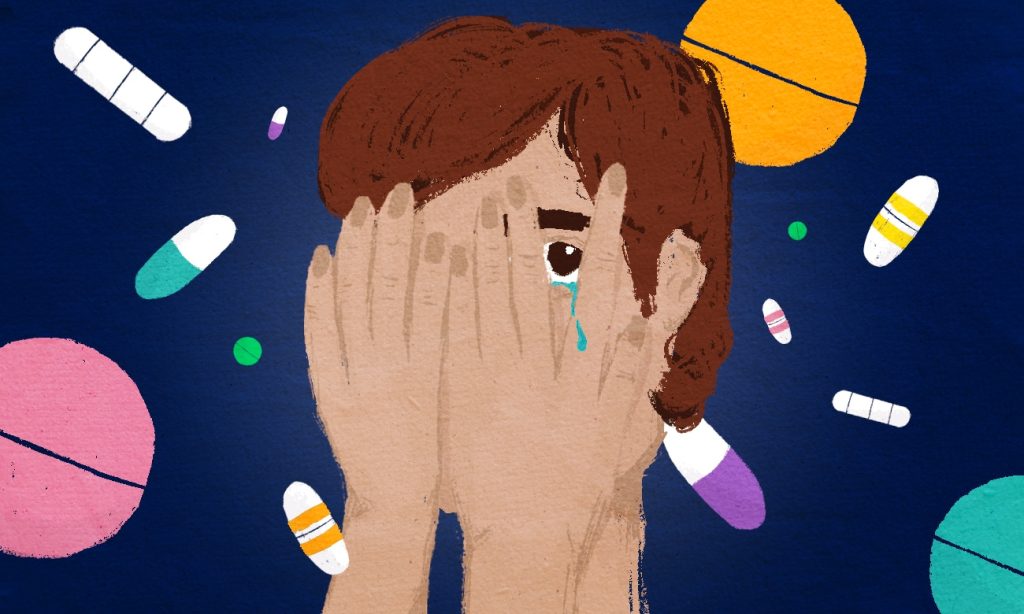
An investigation by The Imprint reveals overmedication and spotty enforcement of federal requirements that child welfare agencies monitor psychiatric prescriptions for foster youth.
A Father Fights Against Mental Health Stigma in Sports

Brian Monday is on a mission to help youth confront the stigma and silence around mental health struggles in sports.
‘The Press Has Sanewashed Trump’s Dementia and Mental Illness’: Dr. John Gartner

The psychologist and founder of Duty to Warn says the aging Trump has dementia and is severely mentally ill.
If you’re not subscribed to MindSite News Daily, click here to sign up.
Support our mission to report on the workings and failings of the
mental health system in America and create a sense of national urgency to transform it.
For more frequent updates, follow us on Facebook, Twitter and Instagram:

The name “MindSite News” is used with the express permission of Mindsight Institute, an educational organization offering online learning and in-person workshops in the field of mental health and wellbeing. MindSite News and Mindsight Institute are separate, unaffiliated entities that are aligned in making science accessible and promoting mental health globally.
Copyright © 2021 MindSite News, All rights reserved.
You are receiving this email because you signed up at our website. Thank you for reading MindSite News.
mindsitenews.org

The name “MindSite News” is used with the express permission of Mindsight Institute, an educational organization offering online learning and in-person workshops in the field of mental health and wellbeing. MindSite News and Mindsight Institute are separate, unaffiliated entities that are aligned in making science accessible and promoting mental health globally.


Author
Related Articles
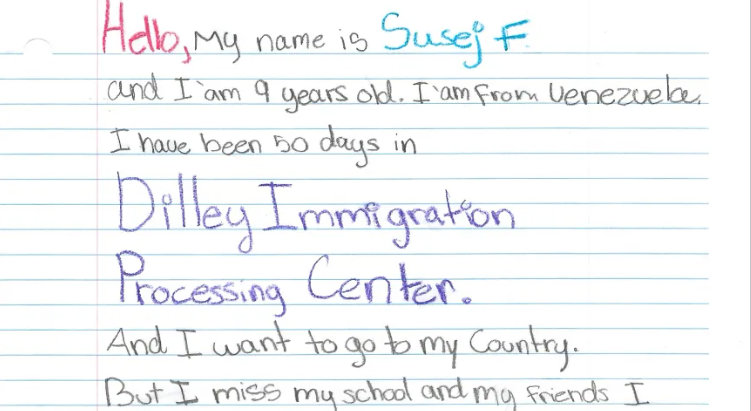
Health Organizations Condemn Traumatic ICE Raids, Family Separation
According to letters from children living in an ICE detention facility, living conditions are inhumane and their mental health is suffering.
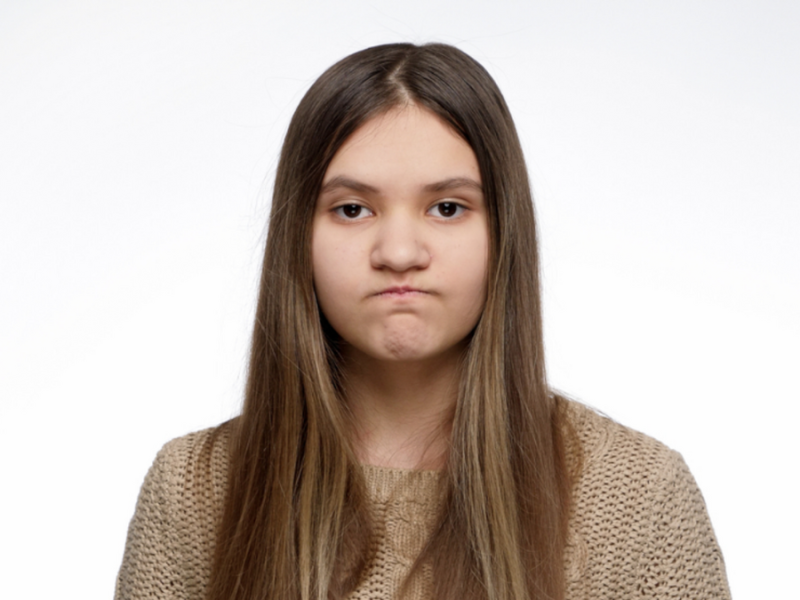
In Teens, Social Anxiety Often Looks Like Anger
A study finds that some teens’ aggressive behavior may be due to social anxiety, not straightforward reactivity.
Expert Calls for Harm Reduction, Not Punishment, to Resolve Our Overdose Crisis
As the Trump administration pulls funding from harm reduction, an expert on the overdose crisis says it’s the best way to save lives.
