A City Fails Its People
A New York Times investigation uncovered a poorly managed system of care for the city’s most severely mentally ill that put lives at risk.

Wednesday, November 22, 2023
By Courtney Wise

Happy Thanksgiving Eve! May any gatherings you indulge in this week be filled with peace and delight. In today’s Daily: A year-long New York Times investigation uncovered a poorly managed system of care for the city’s most severely mentally ill that put lives at risk. Citizens of Flint, Michigan work to heal from the water crisis. And, following World Children’s Day, a call for adults to protect children trapped in war.
Correction: The lead article in yesterday’s newsletter erred in saying that Anh Oppenheimer, the founder of My Happier Mind cue cards, had been diagnosed with autism spectrum disorder. In fact, while a clinician did suggest to her that she is “somewhere on the spectrum,” he was referring to her overall mental health. She has never been diagnosed with autism.
A devastating indictment of a city’s failure – and the steep cost in human suffering and violence
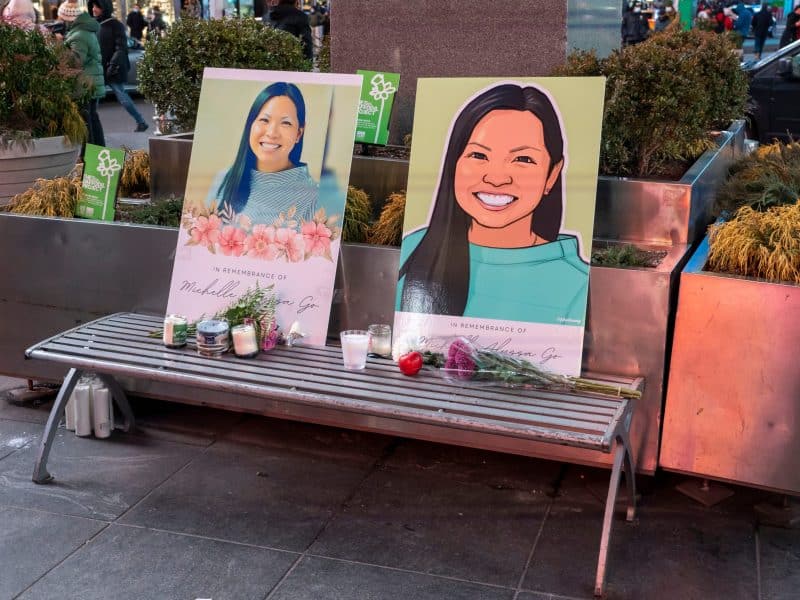
In January 2022, New York City mourned the horrifying death of resident Michelle Go, who died after Simon Martial, a homeless, mentally ill man, shoved her in front of an oncoming subway train. Though, in general, mentally ill people are more likely to be victims of violent crime than perpetrators, Go’s killing was not an isolated case. Indeed, a devastating, year-long investigation by the New York Times revealed that Martial was one of almost 100 recent examples of people discharged from psychiatric hospitals or treatment centers who later carried out violent attacks – in some cases just hours after their release. The story, based on thousands of pages of records and more than 250 interviews, highlights the ongoing failure of the city and state to provide care and protection for people with severe mental illness and city residents.
Go’s killing revived public fears, sparked outrage and prompted Mayor Eric Adams to declare mental health a priority. But two years on, the Times investigation found, little has changed. Adams declined an interview request for the story and instead submitted a statement. “After decades of past administrations ignoring this crisis, we are not going to continue walking by those who need help,” it read. “This is our moral mandate as a city, and we will not fail to deliver for our most vulnerable.”
But mental health advocates say they’re sick of promises. The city has spent more than $1 billion on dedicated mental health shelters yet failed to inconsistently place mentally ill people in them. Public and private hospitals regularly discharge people in severe mental distress – in some cases, violating a federal law requiring hospitals to stabilize patients before releasing them. And on at least 12 occasions, severely mentally ill people who were supposed to be under the care of special street outreach teams committed violence on their watch.
Among the reasons cited by The Times: barebones funding, low wages, overwhelming caseloads and patient privacy laws that keep agencies from communicating with each other and with family members (and also prompt those agencies to deny information to reporters). Some street team workers spent only the minimum amount of time required with patients to bill Medicaid – 15 minutes.
“The public has been gaslit for nearly four decades,” said Mary Brosnahan, a veteran advocate for the unhoused who spent three decades leading the New York City-based Coalition for the Homeless. “We keep being told something is done, but nothing has changed. There is constant finger-pointing at every level of government and dropping the ball with the hopes that it won’t result in another Michelle Go.”
Healing mentally from the fallout of the Flint water crisis

Almost ten years ago, residents of Flint, Michigan – a working-class, mostly Black community – endured a public health catastrophe. State officials, with little planning, switched its water source from Lake Huron to the Flint River, exposing residents to lead and other toxins.
A city of almost 100,000 was left with an array of physical, psychological and neurological illness, from Legionnaires’ disease to lead poisoning. Adding insult to injury, state officials dismissed residents’ fears and concerns, intensifying their depression, anxiety and trauma. “Not only were they not believed, but they weren’t taken seriously,” Evelyn Bromet, a psychiatric epidemiologist, told Science News.
Now residents are trying to emerge from the nightmare through grass-roots efforts. In a low-income city with a dire lack of mental health professionals, neighbors are helping neighbors with resiliency trainings, meditation groups and community conversations. Healing circles that promote “healing of trauma from systems, from oppression, from negativity,” are essential, said Lynn Williams, director of equity and community engagement at the Community Foundation of Greater Flint.
In that spirit, health disparities researcher Kent Key helped create the Flint Public Health Youth Academy to inspire young people to work in public health. “I wanted to create a youth group that did not allow the water crisis to be a sentence of doom and gloom,” he said. One of the group’s programs is a summer camp where youth explore and address a public health topic.
Flint ReCAST – Resiliency in Communities After Stress and Trauma – provides local nonprofits with funds to address trauma and stress in the community, including mindfulness training for police and residents, art, music and dance programs for youth, and free community mental health workshops on recognizing suicidal thinking. Project manager Kristin Stevenson said her next goal is to bring training for mental health ambassadors to Flint. “All of these things combined are what create the impact,” she said.
In honor of World Children’s Day, a plea for children trapped in war

One of the heroes of the Flint water crisis was Mona Hanna-Attisha, the researcher and pediatrician who ran a children’s clinic in Flint and blew the whistle on the poisoning of the city’s children. In a guest column Monday for the Detroit Free Press, Hanna-Attisha celebrated World Children’s Day – “hands-down a pediatrician’s favorite holiday (closely followed by National Ice Cream Day)” – which was established in 1954 to honor, embrace, and protect the rights and welfare of children.
She devoted her column to the children of Gaza, where 5,000 children are estimated to have been killed. At least 29 Israeli children were estimated to have been killed in the October 7 Hamas attack, according to the United Nations, and 30 to have been taken hostage, according to the Associated Press. Here’s an excerpt from her column:
On this World Children’s Day, I’m raising my voice for the children of Gaza who, by no fault of their own, were born on the wrong side of an occupation. Once again, people are looking the other way, blaming parents, dehumanizing children, and, one can’t help but think, telling themselves that it is somehow acceptable to retaliate for the horrendous murder of Israeli children with the many-fold horrendous murder of Palestinian children.
Brutality and savagery are not moral responses to brutality and savagery. Not in our personal lives and not for actors on the global stage. It is not what we teach our own children…
Together, on this World Children’s Day, let’s be the adults that the children of Gaza desperately need. Let’s raise a white flag and absolve them from crimes they didn’t commit, and give them the special protection they require…An immediate ceasefire is the first step.
In other news…
Update your holiday routine for better mental health: When October hits, the end of the year becomes a blur of Halloween parties, Day of the Dead celebrations, Friendsgiving, Duwali, Thanksgiving, Chanukkah, Christmas, The Day After Christmas, and New Year’s Eve. If you’re opting to not attend every gathering, or to cut back on how much food and drink you imbibe, you’re not alone. Lots of folks are reducing their holiday socializing, spending and alcohol intake this year. Or, like Gabi Ramos Caldato, they’re abstaining from alcohol, caffeine and food vices throughout November to get ready for the onslaught of gatherings in December. “Every night there will be dinner at someone’s house, and we are Latin, so there will be like 300 people there,” she told the NY Times. “Not drinking now is giving me more energy to do that.”
Dog lovers, rejoice! Jen Golbeck, who co-wrote The Purest Bond with Stacy Colino told Axios that “incredibly biological, really tightly controlled studies” have demonstrated the mental and physical benefit canine relationships offer to humans. Dogs make exercise feel like less of a chore, lower our stress levels, and even offer a salve to loneliness and a boon to mental health. As Axios also notes: “Because you’re going to ask: Some of this research applies to cats.”
Online community offers support to young people with chronic illness: LC Newman was a college sophomore when she developed long COVID, and found herself dealing with the emotional distress and loneliness that can come from a chronic illness. Now, she told Mother Jones, “I have a Snapchat group of all my Animal Crossing girls” and it provides social interaction and support. Nearly half of Newman’s friends in the group also struggle with chronic illness, and she’s grateful to have them to talk with about tough days and symptoms: They get it in a way non-disabled friends don’t. “They know that you’re not lying,” Newman said. “It helps make closer friendships, because you know that they’re not low-key doubting that.”
If you or someone you know is in crisis or experiencing suicidal thoughts, call or text 988 to reach the 988 Suicide & Crisis Lifeline and connect in English or Spanish. If you’re a veteran press 1. If you’re deaf or hard of hearing dial 711, then 988. Services are free and available 24/7.
Recent MindSite News Stories
Cards to Cue Your ‘Well Self’ to Leave Breadcrumbs for your ‘Unwell Self’ – and Remind it to Remember the Light

Mental illness is a clever, hard-to-kill beast, and escaping it is akin to defeating a cluster of wild boar. But with proper strategy and weaponry, the invasive species can be taken down. These cue cards may help.
Tribute to Rosalynn Carter, a Tireless Voice for Mental Health

Over a span of span of six decades, former First Lady Rosalynn Carter was a tireless advocate who fought to transform the way that mental illness – and the people who experience mental health conditions – were viewed and treated.
Veterans Urge VA to Speed Research, Funding of Psychedelics for PTSD
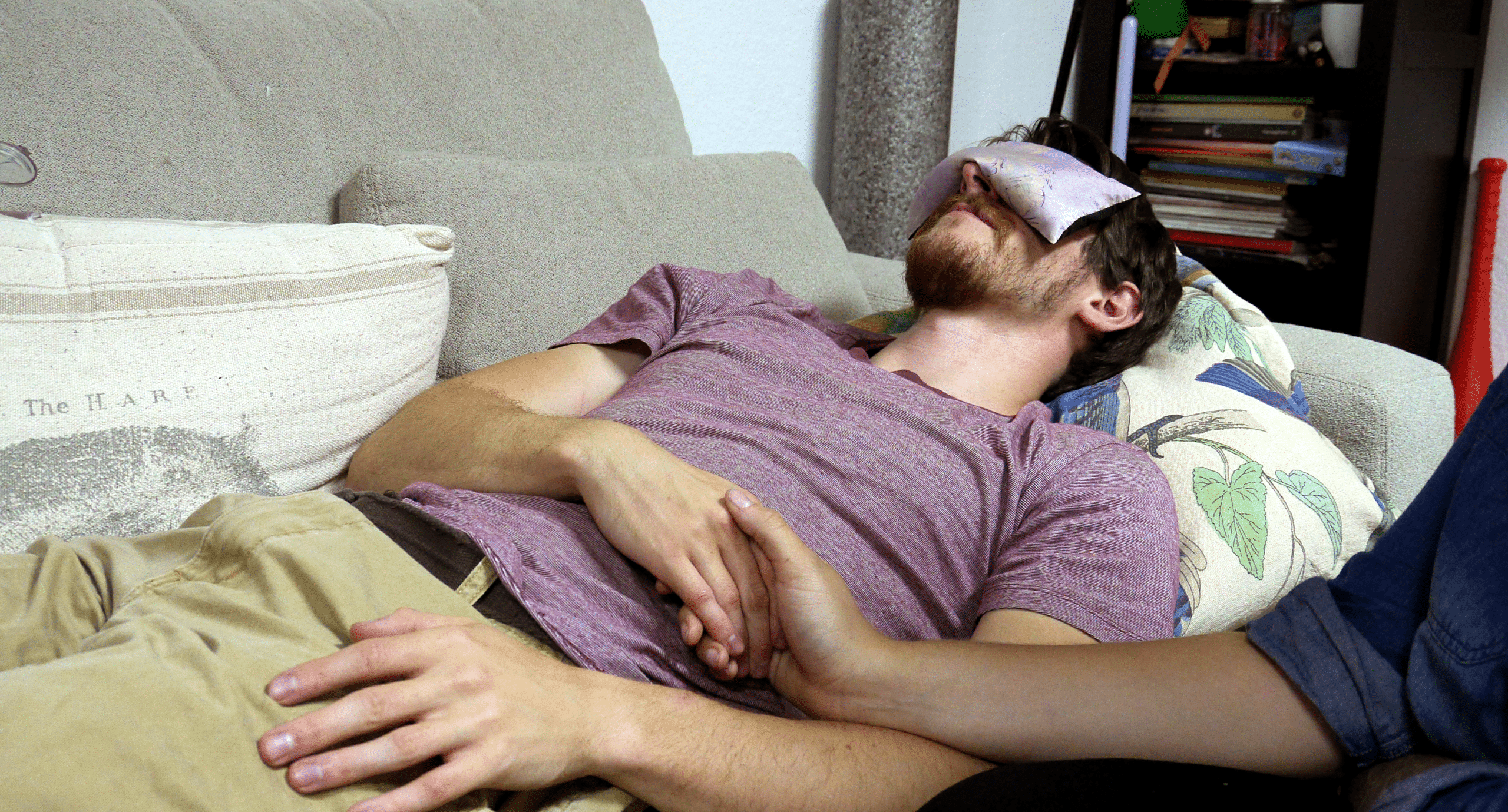
Despite high rates of PTSD and suicide among veterans, and despite the success of MDMA trials for veterans and others with PTSD, the V.A. has not funded any clinical studies of MDMA. That needs to change, advocates say.
If you’re not subscribed to MindSite News Daily, click here to sign up.
Support our mission to report on the workings and failings of the
mental health system in America and create a sense of national urgency to transform it.
For more frequent updates, follow us on Facebook, Twitter and Instagram:

The name “MindSite News” is used with the express permission of Mindsight Institute, an educational organization offering online learning and in-person workshops in the field of mental health and wellbeing. MindSite News and Mindsight Institute are separate, unaffiliated entities that are aligned in making science accessible and promoting mental health globally.
Copyright © 2021 MindSite News, All rights reserved.
You are receiving this email because you signed up at our website. Thank you for reading MindSite News.
mindsitenews.org

Mental health can't wait.
America is in a mental health crisis — but too often, the media overlooks this urgent issue. MindSite News is different. We’re the only national newsroom dedicated exclusively to mental health journalism, exposing systemic failures and spotlighting lifesaving solutions. And as a nonprofit, we depend on reader support to stay independent and focused on the truth.

It takes less than one minute to make a difference. No amount is too small.
The name “MindSite News” is used with the express permission of Mindsight Institute, an educational organization offering online learning and in-person workshops in the field of mental health and wellbeing. MindSite News and Mindsight Institute are separate, unaffiliated entities that are aligned in making science accessible and promoting mental health globally.


Author

Related Articles

How to Help Your Neurodiverse Child Out of the Cocoon
Neurodiverse burnout can leave children stuck in a “cocoon.” Learn how scaffolded parenting helps them move back to the world.

Chatbots May Spark Delusions Even in People With No Mental Illness
Psychologists say AI chatbots have led people to experience delusions, warning that more of us are at risk than we might think.

Minneapolis Mourns Hero Nurse Killed By ICE, Condemns DHS Gaslighting
We look at another ICE killing of a US citizen in Minneapolis, and the federal government’s ensuing firehose of lies and propaganda.
